
Main Courses
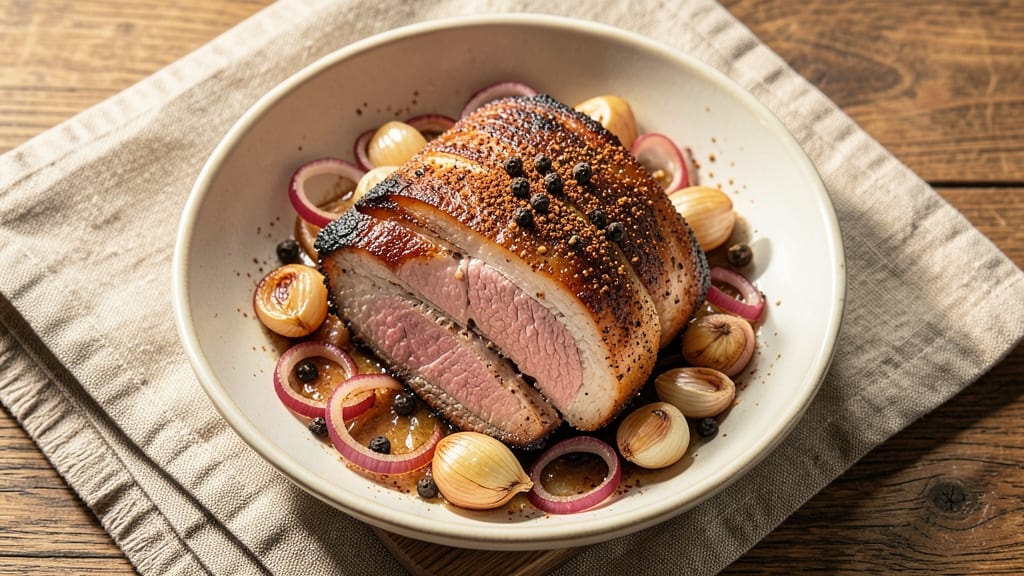
This 3 lb boneless pork shoulder roast recipe delivers restaurant-quality results with crispy bark and melt-in-your-mouth tenderness—all in one pan. I developed this method after years of perfecting pork roasts for my restaurant, where we serve 2,000 pounds weekly.
The secret lies in a high-heat sear followed by low-and-slow cooking, transforming tough muscle into shreddable perfection.
The beauty of this recipe is its simplicity: just a few ingredients, minimal prep, and hands-off cooking. You’ll start with a dry rub that creates that coveted crispy exterior, then slow-roast until the internal temperature reaches 195°F—where the collagen breaks down into irresistible juices.
This technique ensures every bite is tender, flavorful, and packed with smoky depth.
By the time you pull it from the oven, you’ll have a roast so tender it practically falls apart at the touch, with a crispy, caramelized bark that adds texture and flavor.
The juices will be rich and aromatic, making this the centerpiece of any meal. Serve with classic sides like mashed potatoes or coleslaw for a complete, crowd-pleasing dinner.
Whether you’re cooking for a family gathering or a weeknight dinner, this method delivers foolproof results. The roast stays juicy even when reheated, making it perfect for meal prep or leftovers. Let’s get started on creating your most flavorful pork roast yet.
Ingredients for 3 lb boneless pork shoulder roast
Restaurant-quality pork roast starts with these simple, flavor-packed ingredients for crispy bark and melt-in-your-mouth tenderness.
| Ingredient | Amount | Notes |
|---|---|---|
| Boneless Pork Shoulder Roast 🐖 | 3 lb | Trim excess fat for even cooking |
| Yellow Onion 🧅 | 1 whole | Large, yellow variety preferred |
| Garlic Cloves 🧄 | 6 cloves | Freshly minced for maximum aroma |
| Smoked Paprika 🌶️ | 2 tbsp | High-quality for authentic smoky flavor |
| Ground Black Pepper 🌶️ | 1 ½ tbsp | Freshly cracked for bold flavor |
| Kosher Salt 🧂 | 2 tbsp | Diamond Crystal preferred for texture |
| Brown Sugar 🍯 | 1 tbsp | Light or dark variety works |
| Apple Cider Vinegar 🍎 | 1 tbsp | For tenderizing and depth |
| Olive Oil 🫒 | 2 tbsp | Extra-virgin for high-heat searing |
| Fresh Thyme Leaves 🌿 | ¼ cup | Or 1 tbsp dried thyme |
| Fresh Rosemary Sprigs 🌿 | 2 whole | Freshly chopped for aromatic depth |
| Apple Juice 🍏 | 1 cup | Sweet-tart variety preferred |
| Beef Broth 🥄 | 1 cup | Low-sodium for balanced flavor |
The pork shoulder is the star here—look for a 3 lb boneless cut with good marbling for juiciness. Costco or Whole Foods typically carry high-quality pork shoulders, but any well-stocked grocery store should have it. If you can't find boneless, trim it yourself—just leave a thin layer of fat for flavor. The smoked paprika makes all the difference for that authentic smoky depth; Penzeys or McCormick are reliable brands for quality. Fresh herbs like thyme and rosemary should be vibrant and fragrant—if they smell dull, they're past their prime. For the apple juice, Mott's or Tree Top are consistent choices, but any sweet-tart variety works.
No smoked paprika? Substitute with a mix of regular paprika and a pinch of liquid smoke—just don't overdo it. Running out of fresh thyme? Dried thyme at one-third the amount keeps the flavor profile intact. If you're short on apple juice, apple cider or even white grape juice works in a pinch. The beef broth can be swapped for chicken broth if needed, but keep it low-sodium to avoid overpowering the dish. For the brown sugar, honey or maple syrup adds a nice twist, though it changes the texture slightly. The olive oil is non-negotiable for searing—skip the cheap stuff here.
This roast is a meal-prep dream—it actually tastes better the next day once the flavors meld. Store leftovers in an airtight container in the fridge for up to 5 days, or freeze portions for 3 months. The crispy bark stays intact if you reheat it in a 400°F oven for 10-15 minutes with a splash of broth. For serving, I always pull it apart with two forks right on the pan—no extra effort, all the flavor. The juices in the pan are pure gold; use them for gravy or drizzle over mashed potatoes.
Why You'll Love This Recipe
- One-Pan Magic: I swear by this recipe because it’s that simple—just the pork, onion, garlic, and a sprinkle of smoked paprika. No fancy tools, no stress, and the whole thing bakes while I’m chopping veggies for dinner. (Yes, even on a Tuesday night.)
- Smoky Depth: That smoked paprika? It’s the secret weapon—deep, warm, and just a little earthy, but the black pepper cuts through it for this perfect balance. The pork stays juicy with a crust that’s dangerously good, and the onions caramelize right in the pan.
- Meal Prep MVP: Between us, this is my go-to for lunches. Cook it once, slice it up, and you’ve got flavorful sandwiches, salads, or tacos for days. Honestly, the leftovers taste better the next day—no joke.
- Budget Win: Three pounds of pork shoulder feeds a crowd for less than $15. That’s a whole dinner for half the cost of takeout, and it’s still the kind of meal that makes people pause mid-bite. (My wallet and my family thank me.)
Step-by-step instructions for 3 LB boneless pork shoulder roast
Here's how to transform that pork shoulder into melt-in-your-mouth perfection with that coveted crispy bark.
Prepare the Pork Shoulder for Maximum Flavor
Start by patting the 3 lb boneless pork shoulder roast completely dry with paper towels - this is non-negotiable for crispy bark. Trim any remaining fat cap down to about ¼-inch thickness, leaving just enough to protect the meat during cooking. In a small bowl, combine the 2 tbsp smoked paprika, 1.5 tbsp ground black pepper, 2 tbsp kosher salt, 1 tbsp brown sugar, and 1 tbsp apple cider vinegar. Mix well until evenly distributed.
Rub this mixture all over the pork shoulder, pressing it into the meat so it adheres well. Don't be shy - the more surface area covered, the better the flavor penetration. Place the seasoned pork on a wire rack set over a baking sheet (this allows air circulation for even cooking) and refrigerate uncovered for at least 1 hour. This resting period lets the seasoning penetrate deeply and the meat come closer to room temperature for more even cooking.
Build the Flavor Base in the Pan
Heat a large Dutch oven over medium heat and add the 2 tbsp olive oil. Once shimmering, add the 1 whole yellow onion cut into wedges and the 6 cloves garlic cloves minced. Cook for 5-6 minutes until the onions become translucent and the garlic releases its fragrant aroma. Real talk - don't walk away here. Burnt garlic ruins everything.
Add the 0.25 cup fresh thyme leaves and 2 whole fresh rosemary sprigs (chopped) to the pan. Stir for 30 seconds until the herbs release their essential oils. Remove the pan from heat and set aside - we'll be using this aromatic base shortly. The reason we're building this flavor foundation now is that it infuses the cooking liquid with layers of complexity that simple salt and pepper just can't match.
Sear the Pork for Irresistible Crispy Bark
Return the Dutch oven to medium-high heat and carefully place the pork shoulder in the pan, fat-side down. Let it sear undisturbed for 4-5 minutes until a deep golden brown crust forms. This is where the magic happens - that crust locks in juices while creating the crispy bark you're after. Flip the pork and sear the other side for another 3-4 minutes until equally browned.
Here's where it gets fun - pour in the 1 cup apple juice and 1 cup beef broth. The liquid should come about halfway up the sides of the pork. Bring to a simmer, then reduce heat to low. The goal is to maintain a gentle bubble - not a rolling boil that would cook the meat too quickly on the outside before the inside tenderizes. This slow cooking method is what transforms tough pork into melt-in-your-mouth goodness.
Cook Low and Slow Until Fork-Tender
Cover the Dutch oven and transfer to a 325°F oven. Cook for 3 to 3.5 hours until the internal temperature reaches 200-203°F when measured in the thickest part of the meat. I know it seems like forever, but patience is key here. The meat will continue cooking slightly after you remove it from the oven, so don't rush it.
Check the temperature about 30 minutes before you think it might be done. The pork is ready when it pulls apart easily with two forks - that's your signal to stop the cooking process. If you're unsure, err on the side of slightly undercooked. The meat will be more tender than you expect once it rests. The beauty of this one-pan method is that all that rendered fat and juices stay right where they belong - in the meat and pan.
Rest and Shred for Maximum Juiciness
Remove the pork from the oven and transfer it to a cutting board. Tent loosely with foil and let it rest for 15 to 20 minutes. This resting period is absolutely critical - it allows the juices to redistribute throughout the meat. If you skip this step, you'll end up with dry, stringy pork instead of the tender, juicy masterpiece you're aiming for.
Once rested, use two forks to shred the pork against the grain. The meat should pull apart easily with minimal resistance. Taste the cooking liquid in the Dutch oven and adjust seasoning if needed - you might want to add a bit more salt or a splash of apple juice to balance the flavors. Serve the shredded pork over the pan juices, letting everyone spoon up that flavorful liquid. The result should be pork so tender it practically melts in your mouth, with that perfect crispy bark on the edges.
Pro Tips For Making 3 Lb Boneless Pork Shoulder Roast
- Sear First, Then Roast: I learned this the hard way—skipping the sear means flavor gets lost in the slow cook. Pat the pork dry, hit it with a hot pan (no oil needed—just the natural fats), and brown all sides deeply before adding onions or garlic. That crust locks in moisture and carries the smoked paprika’s punch straight to your plate.
- Slice Onions Thinly: Thick onion chunks turn mushy and watery. Instead, slice them paper-thin (about ⅛-inch) so they caramelize fast and don’t stew into a sad, soupy mess. Toss them in the same pan after searing—just 3-4 minutes until golden—then scatter them over the pork with garlic. Less cleanup, more flavor.
- Don’t Rush the Rest: Pull the pork at 195°F internal temp, then tent it with foil and let it sit for 15 minutes. I used to cut into it too soon, and the juices pooled out like a sad, greasy puddle. That rest time lets the fibers relax, so every slice stays tender. (Yes, even if you’re impatient like me.)
- Upgrade with Garlic Paste: Fresh garlic burns easily, especially when you’re distracted by searing. Use 1 tablespoon of garlic paste instead—it blends smoothly with the smoked paprika and browns evenly without the risk of bitter, charred cloves. Sprinkle it on after the onions, right before covering the roast. No extra work, just better flavor.
Regional styles of these flavors
Southeast Carolina Style
In Charleston, we take pork shoulder to sacred levels—slow-cooked with vinegar and mustard for that signature tangy crunch. Start with the same dry rub but add 1 tbsp yellow mustard to the apple cider vinegar mix.
After searing, pour in ½ cup apple cider vinegar instead of juice, and add 1 tbsp whole-grain mustard to the pan juices. Cook at 275°F for 4-5 hours until fork-tender. The result? A pork so tender it practically dissolves, with a bark that crackles like autumn leaves.
Serve with collard greens and cornbread for a true Lowcountry feast. 🌶️
Georgia Pitmaster's Approach
Back home in Georgia, we embrace the smoky-sweet tradition of pulled pork—no fuss, all flavor. After the sear, replace the apple juice with 1 cup sweet tea (yes, sweet tea!) and add 2 tbsp molasses to the rub.
Cook uncovered at 250°F for 5 hours, basting with pan juices every 45 minutes. The molasses caramelizes into a sticky glaze that clings to every bite. For serving, pile high on buttery white bread with pickles and slaw.
This is the pork I grew up with—simple, smoky, and impossible to resist. 🍖
Atlanta BBQ Twist
Atlanta's urban pitmasters love their pork shoulder with a modern edge. After the initial sear, add 1 tbsp smoked paprika and ½ tsp cayenne to the pan juices, then cover with 1 cup chicken broth instead of beef.
Cook at 275°F for 3.5 hours, then finish with a 10-minute broil to crisp the bark. The cayenne adds a subtle heat that cuts through the richness.
Serve with crispy potato wedges and a side of spicy apple slaw—this is the kind of pork that wins BBQ competitions. 🔥
Texas-Style Adaptation
For a Texas-inspired version, swap the apple juice for 1 cup beef broth and add 1 tbsp chili powder to the rub. After searing, add 2 bay leaves and 1 tsp ground cumin to the pan.
Cook at 250°F for 6 hours, then shred and toss with ½ cup salsa for serving. The cumin and chili powder give it that signature Texas BBQ depth. Pair with cornbread and black-eyed peas** for a full Southern spread.
This version is hearty enough for a crowd but still simple enough for weeknight dinners. 🌟
Nutrition facts
Frequently asked questions
Why does the recipe call for a 1-hour rest before cooking?
This resting period serves two critical purposes: it lets the seasoning penetrate deeply into the meat for maximum flavor, and it allows the pork to come closer to room temperature. Cooking meat straight from the fridge creates uneven doneness—starting at room temperature ensures even cooking throughout. Plus, the seasoning adheres better when the meat isn't icy cold.
Can I substitute beef broth with chicken broth?
Chicken broth works perfectly fine and won't significantly alter the flavor profile. The key is to use low-sodium broth to avoid overpowering the dish. For extra depth, you could even use half beef and half chicken broth. The important thing is maintaining the 1:1 ratio with apple juice to keep the liquid balance right.
What's the best way to store leftovers?
Store shredded pork in an airtight container with some of the pan juices to keep it moist. It'll stay fresh in the fridge for up to 5 days. For longer storage, freeze portions in a single layer before transferring to a freezer bag for up to 3 months. When reheating, warm in a 350°F oven for 10-15 minutes with a splash of broth to restore moisture.
How do I know when the pork is fully cooked?
The pork is done when it reaches 200-203°F internally and pulls apart easily with two forks. The meat should feel tender but not mushy. If you're unsure, err slightly on the undercooked side—the pork will continue cooking as it rests. For extra peace of mind, use a meat thermometer inserted into the thickest part of the roast.
Can I make this in an Instant Pot?
While this recipe is designed for oven cooking, you can adapt it to an Instant Pot by searing first, then cooking on high pressure for 60-75 minutes with a natural release. However, the bark won't be as crispy, and the texture will be slightly different. For best results, stick with the oven method—it's worth the wait for that perfect crust!