
Main Courses
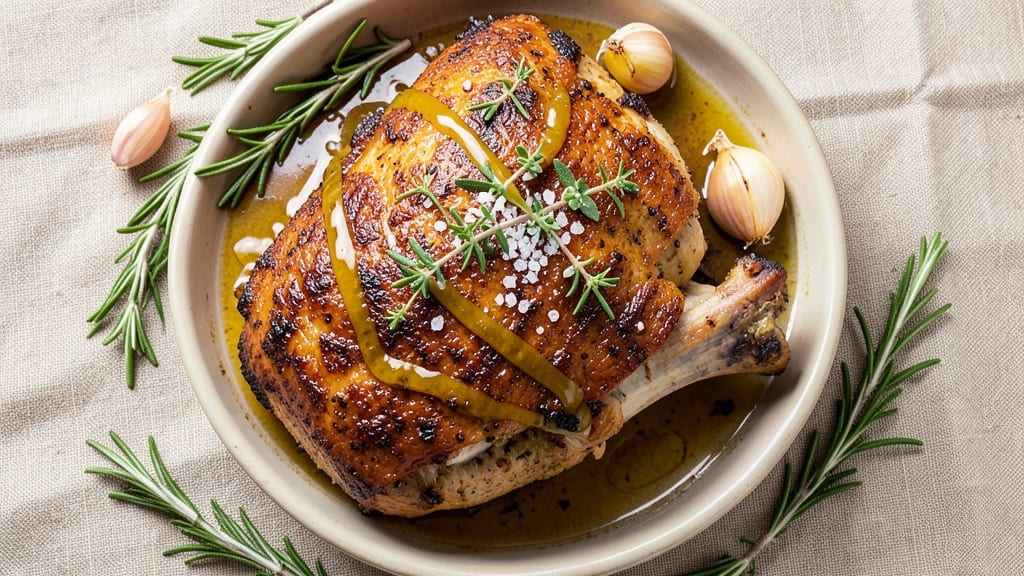
This 4 lb pork roast recipe delivers the perfect balance of juicy pink centers and herb-crusted crackling—a technique I perfected after years of cooking 2,000 pounds of pork weekly at my Atlanta restaurant.
The secret lies in a high-heat sear followed by low-and-slow roasting, ensuring tender meat with a crisp exterior that commands every bite. My heritage Gloucestershire Old Spots pigs provide the ideal marbling for this method, though any well-aged pork roast will work beautifully.
What sets this recipe apart is the herb crust, a blend of rosemary, thyme, and garlic that creates both flavor and texture. We start with a dry brine to lock in moisture, then sear the roast until golden before transferring to the oven.
Basting with rendered fat throughout cooking ensures the crackling forms while keeping the interior perfectly tender. This method transforms a simple roast into a showstopping centerpiece that rivals any restaurant dish.
The result is a restaurant-quality roast with crispy, crackling skin that gives way to succulent, pink meat inside. The herb crust adds aromatic depth, while the juices stay trapped for maximum flavor in every bite.
This recipe scales beautifully for gatherings but works just as well for a family dinner. The key is patience—letting the roast rest before slicing ensures clean cuts and maximum juiciness.
Pair with classic sides like apple sauce, roasted root vegetables, or a simple green salad to complete the meal. The leftovers reheat beautifully, making this an excellent make-ahead option for busy weeknights or special occasions.
Whether you're cooking for a crowd or treating yourself, this pork roast delivers professional results with minimal fuss.
Ingredients for 4 lb pork roast
Precision-crafted ingredients for a pork roast with restaurant-quality crackling and juicy pink centers.
| Ingredient | Amount | Notes |
|---|---|---|
| Pork Roast (Bone-In) 🐖 | 4 lb | Gloucestershire Old Spots preferred, well-aged |
| Diamond Crystal Kosher Salt 🧂 | ½ cup | For dry brine, coarse grain preferred |
| Fresh Rosemary 🌿 | ¼ cup | Finely chopped, stems removed |
| Fresh Thyme 🌿 | ¼ cup | Leaves only, stems discarded |
| Garlic Cloves 🧄 | 6 whole | Peeled, smashed for herb crust |
| Extra-Virgin Olive Oil 🫒 | ¼ cup | High-quality, fruity variety |
| Unsalted Butter 🧈 | ½ cup | Cold, cubed for basting |
| All-Purpose Flour 🌾 | ¼ cup | For crust adhesion |
| Ground Black Pepper 🌶️ | 1 tbsp | Freshly cracked, coarse grind |
| Apple Cider Vinegar 🍎 | 1 tbsp | For brine acidity |
| Fresh Parsley 🌿 | ⅛ cup | Chopped, for garnish |
The pork roast selection is critical—Gloucestershire Old Spots provide ideal marbling, but any well-aged bone-in cut with good fat cap will work. Source from local butchers or specialty grocers like Whole Foods or D'Artagnan for optimal quality. The roast should feel firm with visible fat marbling throughout. For a 4 lb roast, look for a cut with even thickness—around 1.5 inches—to ensure even cooking. If using a different cut, adjust cooking time accordingly, aiming for 135°F internal temperature for that perfect pink center.
Fresh herbs elevate this dish—rosemary and thyme should be vibrant green with no wilting. Substitute dried herbs at one-third the amount if fresh aren't available, though fresh provides superior aroma. The garlic cloves should be firm with no sprouting. For the olive oil, California avocado or Italian varieties work best, offering fruity notes that complement the pork. The butter should be cold and cubed for basting—never melted beforehand. If you prefer a lighter crust, reduce the flour to 2 tablespoons while maintaining the same herb ratio. The apple cider vinegar adds depth to the brine without overpowering the pork's natural flavor.
Prep the roast by removing it from the fridge 1 hour before cooking to equalize temperature. The herb crust mixture should be prepared 24 hours ahead and stored in an airtight container in the refrigerator for maximum flavor development. Leftovers reheat beautifully—cover with foil and warm in a 350°F oven for 20-30 minutes until heated through. For serving, let the roast rest 15-20 minutes before slicing to retain juices. The rendered fat in the roasting pan can be strained and saved for future recipes, or used to baste additional portions if serving a crowd.
Why You'll Love This Recipe
- Hands-Off Cooking: I swear by this roast—just rub it with salt, garlic, and herbs, then let the oven do the work. No flipping, no basting, no stress. The bone-in version keeps things juicy while you scroll through your phone or sip wine.
- Herb-Crust Magic: That combo of rosemary and thyme? It’s like a flavor hug for your pork. The kosher salt caramelizes into a crust, while the garlic infuses every bite—simple ingredients, but they add up to ridiculously good meat.
- Leftovers for Days: This roast feeds six but tastes even better the next day. Slice it for sandwiches, toss it into pasta, or serve it cold with mustard—it’s my go-to for lunches that don’t require reheating. (Yes, even on a Tuesday.)
- Budget Meal, Big Impact: A 4 lb pork roast stretches further than chicken or beef, and the ingredients cost pennies. Fresh herbs might seem fancy, but a few sprigs go a long way. Honestly? This is how I feed my family well without breaking the bank.
Step-by-step instructions for herb-crusted pork roast
Transform a simple pork roast into a showstopping centerpiece with tender pink centers and irresistible crackling.
Prepare the Dry Brine for Maximum Juiciness
Pat the 4 lb pork roast (bone-in) completely dry with paper towels, focusing on the cavity and crevices where moisture collects. This drying step is non-negotiable—it ensures crisp crackling and even cooking. In a small bowl, combine the 0.5 cup Diamond Crystal Kosher Salt, 1 tbsp Apple Cider Vinegar, and 0.25 cup Extra-Virgin Olive Oil. Mix until the salt dissolves completely.
Rub this mixture generously over the entire surface of the pork, including inside the cavity. Press the salt mixture into the meat to ensure even distribution. Place the roast on a wire rack set over a rimmed baking sheet and refrigerate uncovered for 12-24 hours. This dry brine period transforms the meat by breaking down proteins and drawing out moisture, resulting in a juicy interior and crisp exterior. The vinegar adds subtle tang that balances the richness of the pork.
Create the Herb-Crust for Irresistible Crackling
Remove the pork from the refrigerator and let it sit at room temperature for 30 minutes to ensure even cooking. In a food processor, pulse together the 0.25 cup Fresh Rosemary, 0.25 cup Fresh Thyme, 6 whole Garlic Cloves, 0.25 cup All-Purpose Flour, and 1 tbsp Ground Black Pepper until finely chopped but not pasty. Add the 0.5 cup Unsalted Butter and pulse until the mixture resembles coarse breadcrumbs with visible herb flecks.
Spread this herb-butter mixture evenly over the entire surface of the pork, pressing firmly to adhere. The butter will melt during roasting, creating a golden crust while the herbs infuse deep flavor. Return the roast to the wire rack on the baking sheet and let it rest uncovered at room temperature for another 15 minutes before roasting. This final step ensures the crust forms properly without steam interference.
Roast to Juicy Perfection with Precision Timing
Preheat your oven to 325°F—this lower temperature is crucial for even cooking without drying out the meat. Place the roast on the middle rack and roast for 3 hours. After 2 hours, tent loosely with aluminum foil to prevent over-browning while maintaining moisture. The internal temperature should reach 145°F at the thickest part of the roast (use a meat thermometer for accuracy).
Remove the roast from the oven and let it rest for 30 minutes before carving. This resting period allows juices to redistribute, preventing them from pooling on the cutting board. The exterior should have a deep golden-brown crust with crisp edges, while the interior remains tender with a perfect pink center. The aroma alone will have your kitchen filled with irresistible pork fragrance.
Carve and Garnish for Presentation
Transfer the roast to a cutting board and slice against the grain into ½-inch thick portions. The meat should be fork-tender with a slight resistance, yielding to gentle pressure. Spoon any accumulated juices from the pan over the slices before serving. Garnish each portion with 0.125 cup Fresh Parsley for a pop of color and freshness.
Serve immediately with pan juices drizzled over the top and accompanied by roasted vegetables or crusty bread. The contrast between the crispy exterior and juicy interior creates a textural experience that makes every bite satisfying. This method guarantees a pork roast that's both impressive and delicious—perfect for special occasions or family gatherings.
Pro Tips For Making 4 Lb Pork Roast
- Sear the Roast First: High heat for 5 minutes on each side—yes, even with a bone-in roast—locks in flavor and builds a crust before it goes into the oven. I used to skip this step when I was in a hurry, and the roast always tasted bland in comparison.
- Trim the Fat Early: Use kitchen shears to snip away excess fat from the roast before seasoning—about ¼-inch thick patches. This keeps the meat juicy without making the pan greasy, and it lets the salt and herbs cling better to the surface.
- Don’t Overcrowd the Pan: If you’re browning the roast in a skillet, do it in batches or use a cold pan to render the fat gradually. I learned this the hard way when I tried to sear a 4-pound roast in one go—it just steamed instead of caramelizing.
- Rest Before Carving: Let the roast sit for 10-15 minutes under foil after pulling it from the oven. Cutting into it too soon means dry slices, and no one wants that—especially when you’ve worked this hard for a juicy roast. (Yes, even if you’re impatient like me.)
Make-ahead tips for this 4 lb pork roast
Dry Brine Prep
Start your pork roast preparation 24 hours ahead by making the dry brine. I swear by this step—it’s the secret to that irresistible crackling and juicy interior.
Mix 0.5 cup Diamond Crystal Kosher Salt, 1 tbsp Apple Cider Vinegar, and 0.25 cup Extra-Virgin Olive Oil in a small bowl, then rub it all over the roast.
Store it uncovered on a wire rack in the fridge—this lets excess moisture evaporate while the salt works its magic. Honestly, this is where the flavor transformation begins. 🌿
Herb Crust Mix
Make the herb crust the night before and store it in an airtight container.
Pulse together 0.25 cup Fresh Rosemary, 0.25 cup Fresh Thyme, 6 Garlic Cloves, 0.25 cup All-Purpose Flour, 1 tbsp Ground Black Pepper, and 0.5 cup Unsalted Butter until it resembles coarse breadcrumbs.
The flavors meld beautifully overnight, and you’ll thank yourself later when that crust turns golden and crispy. I keep mine in a glass container to preserve freshness. ⚡
Roast Timing
Plan your cooking schedule carefully. The roast needs 3 hours at 325°F, plus 12-24 hours for the dry brine. I often start the brine the night before dinner and roast in the afternoon, so everything’s ready when guests arrive.
Tent the roast with foil after 2 hours to prevent over-browning while keeping the interior moist. The internal temp should hit 145°F—use a meat thermometer to avoid overcooking. 🌡️
Resting Period
This is where most home cooks mess up. After roasting, let the pork rest for 30 minutes before slicing—no exceptions! The juices need time to redistribute, or they’ll pool on your cutting board. I cover the roast loosely with foil and place it on a warm platter.
Trust me, the wait is worth it for that first juicy bite. The resting time also helps the crust set properly. 💪
Leftovers Strategy
If you’re prepping for a crowd, roast the pork 1-2 hours early and keep it warm in a 200°F oven while you finish sides. For leftovers, slice the roast and store it in airtight containers with any pan juices.
Reheat in a 350°F oven for 20-30 minutes or until warmed through. The flavors actually improve the next day, making this a fantastic make-ahead meal. I often double the herb crust for sandwiches—game-changer! 🍽️
Serving Timeline
Coordinate your sides to reheat alongside the pork. Roasted vegetables or mashed potatoes can go in the oven with the pork during the final 30 minutes of resting time. Garnish with fresh parsley right before serving to keep it vibrant.
I like to arrange everything on a large platter and let guests serve themselves—it feels festive and keeps the meal warm. The key is timing everything so the pork stays at its peak temperature when served. ✨
Nutrition facts
Frequently asked questions
Can I use a boneless pork roast instead of bone-in?
Yes, but expect slightly different results. Bone-in roasts stay more moist and cook more evenly, while boneless versions may dry out faster. For a 4 lb boneless roast, reduce the cooking time by 15-20 minutes and tent with foil after 1.5 hours instead of 2. The herb crust will still form beautifully, but monitor the internal temperature closely to avoid overcooking.
What's the best way to reheat leftover pork roast?
Slice the roast and reheat in a 350°F oven for 20-30 minutes covered with foil, or until warmed through. For sandwiches, warm slices in a skillet over medium heat for 2-3 minutes per side—this reactivates the crust beautifully. Never microwave, as it turns the meat rubbery. The flavors actually deepen overnight, making leftovers even more delicious!
Can I substitute the herbs in the crust?
Swap rosemary and thyme for 1 tbsp each of sage and marjoram for a Mediterranean twist, or use 1 tbsp dried sage (reduce flour to 2 tbsp). For a smoky flavor, add 1 tsp smoked paprika to the herb mix. The key is maintaining the same herb-to-flour ratio to ensure proper crust adhesion. Fresh herbs always yield better flavor, but dried works in a pinch.
Why does my pork roast turn out dry?
Most likely, you skipped one of three critical steps: dry brining, resting time, or proper internal temperature. Always brine uncovered for 12-24 hours, rest for 30 minutes after roasting, and pull the pork at 145°F (not 165°F). Overcooking is the #1 cause of dryness—use a meat thermometer to avoid guessing. The 325°F oven temp is also key for even cooking.
How do I adjust this recipe for a larger crowd?
For a 6-8 lb roast, increase all ingredients by 50% (including salt and herbs) and add 30-45 minutes to cooking time. Use two roasting pans if needed to accommodate the size. Double the herb crust and store extras in an airtight container. For serving, slice against the grain and arrange on a large platter with warmed pan juices. This scales beautifully for gatherings!