
Main Courses
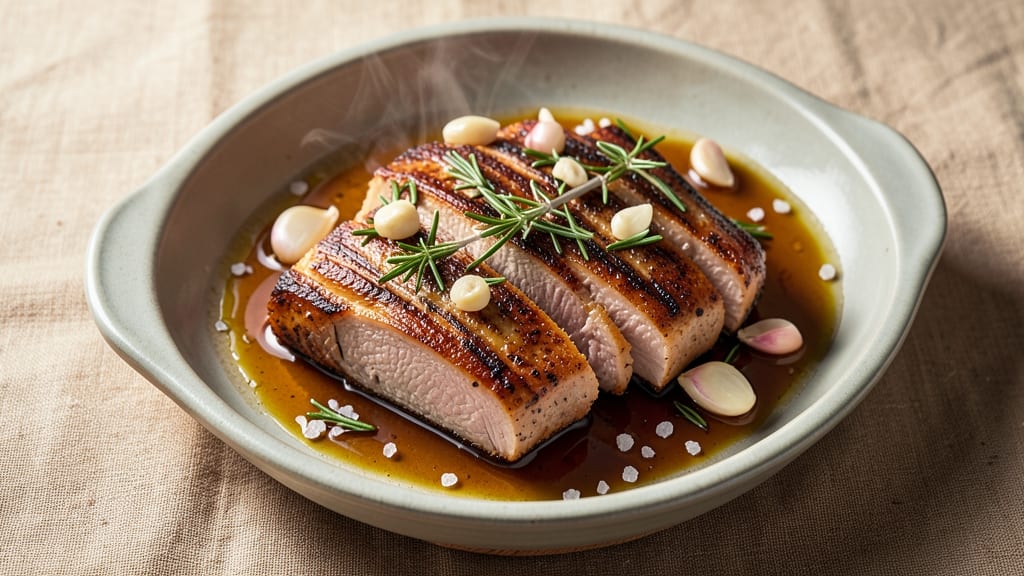
A 4.5 lb pork loin deserves the same care as a centerpiece cut—this recipe delivers restaurant-quality results with a crisp herbed crust and juicy, tender center. The secret lies in proper seasoning, precise cooking temperatures, and a method that transforms tough cuts into melt-in-your-mouth perfection.
I’ve cooked thousands of pounds of pork, and this technique never fails.
Start with a dry brine overnight to ensure moisture retention and depth of flavor, then sear the loin in a hot pan to lock in juices before roasting to an internal temperature of 145°F.
The herbed crust adds texture and aroma without overpowering the natural richness of the pork. This isn’t just a roast—it’s a showstopper that pairs beautifully with roasted vegetables or a crisp apple compote.
What you’ll end up with is a perfectly golden, herb-encrusted pork loin that slices effortlessly into juicy, medium-rare pieces. The crust stays crisp while the interior remains tender, proving that even a large cut like this can be foolproof.
Whether you’re hosting a dinner party or treating yourself to a special meal, this recipe delivers professional-quality results at home.
Serve with a red wine reduction or honey glaze for extra elegance, and don’t forget to let the pork rest for 15 minutes before slicing—this step is non-negotiable for retaining those precious juices. Here’s how to make it happen.
Ingredients for 4.5 lb pork loin
A center-cut pork loin demands precision—these ingredients transform it into a showstopping roast.
| Ingredient | Amount | Notes |
|---|---|---|
| Pork Loin 🐖 | 4 ½ lb | Center-cut, bone-in preferred |
| Kosher Salt 🧂 | 1 ½ tbsp | Diamond Crystal for precise measurement |
| Fresh Rosemary 🌿 | ¼ cup | Finely chopped, stems removed |
| Fresh Thyme 🌿 | ⅛ cup | Leaves only, finely chopped |
| Garlic Cloves 🧄 | 8 cloves | Minced, for herb paste |
| Extra-Virgin Olive Oil 🫒 | ¼ cup | High-quality, fruity variety |
| Unsalted Butter 🧈 | ½ cup | Cold, cubed for crust |
| All-Purpose Flour 🌾 | ¼ cup | For crust texture |
| Black Peppercorns 🌶️ | 1 tsp | Freshly cracked |
| Red Wine 🍷 | ½ cup | Dry, bold variety for deglazing |
| Fresh Parsley 🌿 | 0.1 cup | Chopped, for garnish |
| Apple Cider Vinegar 🍎 | 1 tbsp | For dry brine |
| Granulated Sugar 🍚 | 1 tsp | Balances brine |
The pork loin should be center-cut with visible marbling for optimal tenderness. Whole Foods or specialty butchers carry the best quality, but most grocery stores stock it—just verify it's bone-in for better moisture retention. The herb blend is critical: fresh rosemary and thyme from the market's produce section (not dried) provide the aromatic depth. For the olive oil, California-grown brands like Corto offer the right balance of fruitiness and heat resistance. Don't skip the bone-in cut—it roasts more evenly and adds flavor during cooking. If you can't find center-cut, ask your butcher to trim it from the loin's center section yourself.
No fresh herbs? Dried rosemary and thyme at one-third the amount work in a pinch, though texture suffers. Substitute the red wine with beef broth plus a splash of balsamic vinegar for deglazing. For the crust, panko breadcrumbs can replace flour if you prefer extra crunch. The apple cider vinegar in the brine is non-negotiable—it tenderizes the meat while balancing the salt. If you're short on time, reduce the dry brine to 4 hours, but overnight is ideal. The sugar in the brine isn't just for flavor; it helps caramelize the crust during searing. For a richer crust, add 1 tbsp Dijon mustard to the herb paste.
Prep the pork the night before—pat it dry thoroughly and refrigerate uncovered for 30 minutes to form a better crust. The herb paste should be mixed 2 hours ahead and chilled to firm up. Store any unused herb paste in an airtight container with parchment paper between layers for up to 3 days. Leftovers? Slice the pork within 2 days—it keeps beautifully in the fridge wrapped tightly. For longer storage, freeze portions in vacuum-sealed bags for up to 3 months. Always reheat pork gently in a skillet with a splash of broth to prevent drying.
Why You'll Love This Recipe
- No-Fuss Roast: Between us, this is the kind of recipe that lets you actually use that fancy pork loin without stress. Just season, sear, and let the oven do the work—no basting, no fussing, no "Is it done yet?" panic.
- Herb-Crust Magic: That rosemary and thyme combo? It’s like a little flavor explosion where the garlic ties it all together. The crust gets perfectly crispy while the inside stays juicy—honestly, I’ve had people ask if I bought it pre-seasoned.
- Leftovers Heaven: Roast a big cut once, and you’ve got sandwiches, salads, or tacos for days. I swear, I’ve turned this into breakfast hash (yes, really) and it still tasted amazing—proof that good food just gets better with time.
- Budget-Friendly Crowd-Pleaser: A 4.5 lb loin feeds a family or impresses guests without breaking the bank. The salt and herbs cost pennies, and the pork stretches across meals so you’re not ordering takeout midweek. My secret weapon, and it’s not even fancy.
Step-by-step instructions for juicy center-cut pork loin roast
Master this technique and you'll achieve a perfectly juicy pork loin with a crisp herbed crust every time.
Prepare the Dry Brine for Maximum Juiciness
Remove the pork loin from the refrigerator and place it on a wire rack set over a baking sheet. In a small bowl, combine the 1.5 tablespoons kosher salt, 1 tablespoon apple cider vinegar, and 1 teaspoon granulated sugar. This dry brine mixture creates an even salt distribution while the vinegar tenderizes the meat and the sugar balances flavors.
Pat the pork loin completely dry with paper towels—this is critical for developing a proper crust. Rub the salt mixture evenly over all sides of the pork, pressing it into the surface. Cover loosely with plastic wrap and refrigerate for 24 hours (or at least 12 hours). The dry brine ensures the pork remains moist during roasting while the surface develops flavor and texture.
Create the Herb Butter Crust
In a food processor, combine the 0.25 cup extra-virgin olive oil, 0.5 cup unsalted butter (cold and cubed), 0.25 cup all-purpose flour, 1 teaspoon freshly cracked black peppercorns, 0.25 cup finely chopped fresh rosemary, 0.125 cup finely chopped fresh thyme, and 8 cloves minced garlic. Pulse until the mixture forms a coarse paste with visible herb flecks—this ensures even distribution of flavor while maintaining texture.
Remove the pork loin from the refrigerator and let it sit at room temperature for 30 minutes before cooking. Spread the herb butter mixture evenly over all sides of the pork, including the cut edges. The butter will melt slightly, creating a flavorful crust that locks in moisture during roasting. Return the pork to the refrigerator uncovered for 15 minutes to firm up the butter coating.
Roast to Perfect Doneness
Preheat your oven to 325°F with the rack positioned in the center. Place the pork loin on a wire rack set in a roasting pan to allow air circulation on all sides. Roast for 45 minutes, then increase the oven temperature to 400°F for the final 20-25 minutes. The initial low temperature ensures even cooking while the final high heat creates a golden-brown crust.
Check for doneness using an instant-read thermometer inserted into the thickest part of the pork (avoid touching bone). The internal temperature should reach 145°F for medium-rare pork. The crust should be deep golden brown with visible crisping. If the crust browns too quickly, tent the pork loosely with foil for the last 10 minutes of cooking.
Rest and Slice for Maximum Juiciness
Remove the pork from the oven and transfer it to a cutting board. Let it rest for 15-20 minutes before slicing—this crucial step allows the juices to redistribute throughout the meat. Tent the pork loosely with foil to keep it warm while it rests. The resting time ensures each slice remains moist and flavorful rather than releasing juices onto the cutting board.
Slice the pork loin into ½-inch thick portions against the grain for optimal tenderness. Arrange the slices on a warm serving platter and drizzle with any accumulated pan juices. Garnish with 0.1 cup chopped fresh parsley for a pop of color and freshness. Serve immediately with roasted vegetables or a simple red wine reduction made from the 0.5 cup red wine you reserved for deglazing the roasting pan.
Pro Tips For Making 4.5 Lb Pork Loin
- USE A MEAT THERMOMETER: I learned this the hard way—pork loin looks done when it’s not. Aim for 140°F internal temp (it’ll rise to 145°F while resting). No guessing, no overcooking. Trust the gauge, not the color.
- SALT THE PORK 24 HOURS EARLY: This isn’t optional. Sprinkle 1.5 tsp kosher salt (lightly!) over the loin and refrigerate uncovered for a day. The salt breaks down fibers and seasons deep—no last-minute dryness or blandness. (Yes, even if you’re impatient like me.)
- SMASH THE GARLIC CLOVES: Don’t just chop them—smash them flat with the side of your knife before mincing. This releases more flavor. Tuck the raw, smashed garlic under the skin of the pork loin while roasting. The heat renders the oils right into the meat.
- REST IT COVERED: After pulling the pork from the oven, wrap it loosely in foil and let it sit 10-15 minutes before slicing. This keeps it juicy—no sad, dry ends. (I used to slice too soon and wondered why my pork was tough.)
Storing and reheating this 4.5 lb pork loin
Refrigerator Storage
Slice your cooked pork loin within 2 days for best texture and flavor. Store in an airtight container lined with parchment paper to prevent drying. I like using glass Pyrex containers because they maintain moisture better than plastic.
Keep refrigerated at 40°F or below—this ensures food safety while preserving that perfect juicy consistency. 🥗
Freezer Preservation
For longer storage, freeze portions in vacuum-sealed bags or heavy-duty freezer wrap. I recommend quart-sized bags for individual servings. Label with the date—this pork stays excellent for up to 3 months.
When ready to use, thaw overnight in the fridge for even cooking. Never refreeze once thawed, as it compromises texture. ❄️
Reheating for Leftovers
My go-to method is a skillet reheat with a splash of beef broth or red wine to prevent drying. Heat over medium-low heat for 5-7 minutes, stirring occasionally, until reaching 165°F internal temperature.
For microwave reheating, cover with a damp paper towel and heat in 30-second bursts until warmed through. Always slice thinly before reheating—this ensures even heating. 🔥
Crust Restoration
The herb butter crust can dry out during storage, but you can revive it! Brush slices with melted butter and broil for 2-3 minutes until crisp. For extra flavor, sprinkle with freshly cracked black pepper and chopped parsley before serving.
This trick works especially well for sliced pork that's been refrigerated overnight. ✨
Portioning Tips
When storing leftovers, portion into ½-inch thick slices for even reheating. I like using parchment-lined containers to separate layers—this prevents sticking and makes reheating easier. For meal prep, store individual portions in small glass containers for quick grab-and-go lunches.
Just add a side of roasted potatoes or a fresh salad for a complete meal. 💡
Nutrition facts
Frequently asked questions
Why does the recipe call for a dry brine instead of a wet brine?
A dry brine creates an even salt distribution and forms a better crust than wet brining. The salt penetrates deeply while the surface stays dry for maximum browning. This method also prevents the pork from becoming waterlogged during roasting. For a 4.5 lb pork loin, the overnight dry brine ensures perfect moisture retention throughout the thickest cut.
Can I use bone-in or boneless pork loin for this recipe?
Bone-in pork loin is preferred because the bone helps retain moisture during roasting. However, boneless works fine too—just reduce the cooking time by 10-15 minutes since it cooks faster. The herb butter crust will still form beautifully on either cut. For best results, ask your butcher for center-cut bone-in pork.
What's the best way to check if the pork is fully cooked?
Use an instant-read thermometer inserted into the thickest part (avoiding bone) to reach 145°F for medium-rare. The crust should be deep golden brown with visible crisping. If using a meat thermometer, let it rest 3 minutes before reading—the temperature will rise 5°F during resting. Never rely on color alone!
How do I adjust this recipe for a smaller or larger pork loin?
For every 1 lb of pork, increase cooking time by 10-15 minutes at 325°F and 5-7 minutes at 400°F. Scale the herb butter crust proportionally—2 tbsp per pound. A 2 lb loin would need 4 tbsp herb butter. Always use a meat thermometer to verify doneness.
What if my pork loin turns out dry?
Overcooking is the most common cause. Ensure you're using a meat thermometer and remove the pork when it hits 145°F. If it's slightly undercooked, return to a 275°F oven for 10-15 minutes to finish. For reheating, always use a splash of liquid (broth or wine) to restore moisture. The herb butter crust should stay crisp even if the interior is slightly underdone.