
Main Courses
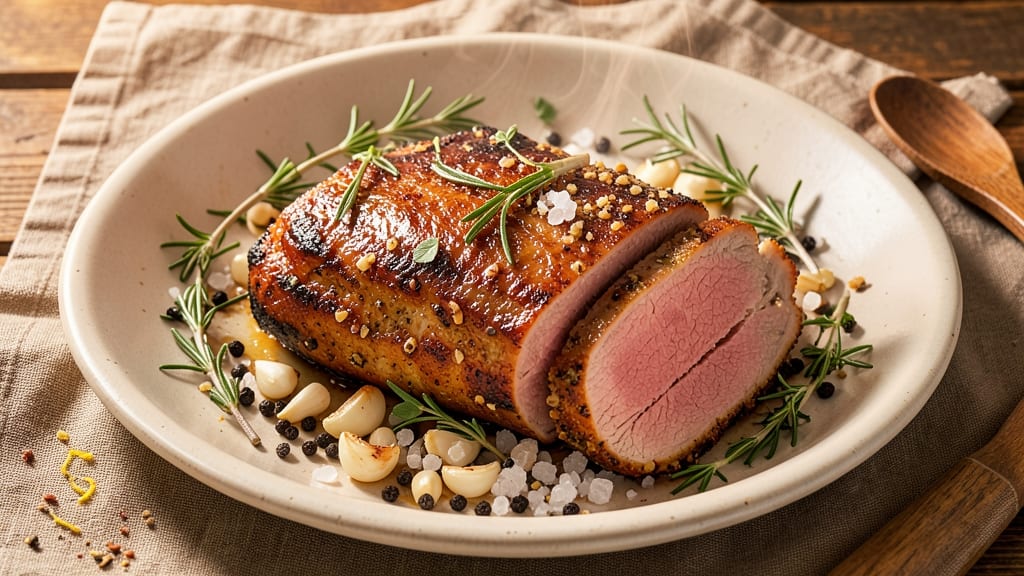
This 9 lb pork loin recipe delivers restaurant-quality results with a foolproof herb-crusted method that keeps the meat juicy from edge to center. After years of perfecting this technique for large cuts—including my farm-raised Gloucestershire Old Spots—I've cracked the code for even cooking and maximum flavor.
The secret lies in precise temperature control and a dry-brine crust that locks in moisture while creating a golden, aromatic bark.
What makes this recipe special is its professional-level approach without requiring specialized equipment. We'll use a simple herb crust of rosemary, thyme, and garlic that infuses the meat while roasting, combined with my signature basting technique that ensures every bite stays tender.
The key is low-and-slow cooking with strategic basting to create a caramelized exterior while maintaining a perfect internal temperature.
By the time you carve into this roast, you'll have a perfectly cooked center (145°F internal temperature) with a crispy, flavorful crust that's worth every minute of effort. The herb crust adds layers of aromatic complexity, while the juicy meat practically falls apart at the table.
This is the kind of pork loin that makes holiday dinners unforgettable—and yes, it reheats beautifully for leftovers.
Whether you're feeding a crowd for Thanksgiving or treating yourself to a special Sunday dinner, this method handles a 9 lb pork loin with confidence. The technique scales perfectly for smaller cuts too. Let's get started with the ingredients and preparation that will transform your roast from good to showstopping.
Ingredients for 9 lb pork loin
Twelve premium ingredients for a showstopping 9 lb pork loin that stays juicy and caramelizes perfectly.
| Ingredient | Amount | Notes |
|---|---|---|
| Pork Loin (Center-Cut) 🥩 | 9 lb | Bone-in, even thickness preferred |
| Fresh Rosemary 🌿 | ½ cup | Finely chopped, stems removed |
| Fresh Thyme 🌿 | ¼ cup | Leaves only, stems discarded |
| Garlic Cloves 🧄 | 8 cloves | Minced for herb crust |
| Diamond Crystal Kosher Salt 🧂 | ¾ cup | For dry-brine crust |
| Coarse Ground Black Pepper 🌶️ | 2 tbsp | Freshly cracked for crust |
| Extra-Virgin Olive Oil 🫒 | ¼ cup | High-quality, fruity variety |
| Unsalted Butter 🧈 | ½ cup | Cold, cubed for basting |
| Fresh Parsley 🌿 | ¼ cup | Chopped, for garnish |
| Apple Cider Vinegar 🍎 | 2 tbsp | For basting liquid |
| Honey 🍯 | 1 tbsp | Light, for glaze |
| Vegetable Oil 🫒 | 2 tbsp | For roasting pan |
The pork loin is non-negotiable—look for a center-cut roast with even thickness for consistent cooking. Whole Foods or local butchers often carry farm-raised cuts like Gloucestershire Old Spots, but any high-quality pork loin works. Trim any excess fat to prevent flare-ups during roasting. The herb crust relies on fresh rosemary and thyme—avoid dried substitutes here, as they lack the aromatic depth. For the garlic, peel and mince it fresh just before mixing with the other crust ingredients to preserve its potency. If you're using a bone-in cut, position it with the bone side down during roasting for more even heat distribution.
No fresh rosemary? Substitute with fresh thyme at double the amount, though the flavor profile will differ slightly. The Diamond Crystal kosher salt is critical for the dry-brine crust—it's finer than sea salt, so measure precisely. For the basting butter, use unsalted to control seasoning, but if you only have salted, reduce the added salt in the crust by half. The apple cider vinegar in the basting liquid adds brightness, but lemon juice works in a pinch. If you're concerned about flare-ups from the fat, pat the loin dry thoroughly before seasoning. For a richer finish, brush the meat with an extra tablespoon of honey during the last 15 minutes of roasting.
This roast reheats beautifully—place slices in a 325°F oven for 10-15 minutes with a splash of broth to restore moisture. Leftovers keep 3-4 days in the fridge or 3 months frozen, wrapped tightly in butcher paper. For make-ahead convenience, prep the herb crust and refrigerate it overnight on the pork loin—this allows the flavors to meld before roasting. Store any leftover herb mixture in an airtight container for up to 1 week in the fridge, perfect for future roasts or grilled meats.
Why You'll Love This Recipe
- One-Pan Magic: I swear by this—just salt, herbs, and garlic on a single sheet pan. No fancy prep, no extra dishes, and that crispy rosemary crust? Worth every second.
- Herb-Packed Punch: The fresh thyme and rosemary infuse the pork so deeply, every bite tastes like a hug from a French bistro. (Yes, even when I burn the garlic a little.)
- Budget-Friendly Feast: A 9-lb pork loin stretches across meals without breaking the bank. Salt, herbs, and garlic cost pennies, but the flavor? Priceless. (And yes, it’s cheaper than takeout.)
Step-by-step instructions for herb-crusted pork loin roast
Follow this method for a perfectly juicy, herb-encrusted pork loin that stays moist despite its size.
Prepare the Dry Brine Crust
In a small bowl, combine the 0.5 cup fresh rosemary, 0.25 cup fresh thyme, 8 cloves minced garlic, 0.75 cup Diamond Crystal kosher salt, and 2 tablespoons coarse ground black pepper. Mix thoroughly to create an even coating. The salt will draw out moisture from the pork, creating a concentrated, flavorful crust while preventing dryness in the center.
Pat the 9 lb pork loin completely dry with paper towels—this ensures maximum adhesion of your herb crust. Spread the mixture evenly over all sides of the pork, pressing firmly so it adheres well. Place the seasoned pork on a wire rack set over a rimmed baking sheet. Refrigerate uncovered for 12-24 hours—this dry-brine step is critical for developing flavor and texture.
Create the Herb Butter Basting Mixture
In a separate bowl, combine the 0.5 cup cold unsalted butter, 2 tablespoons apple cider vinegar, and 1 tablespoon honey. This mixture will baste the pork throughout roasting, adding moisture and depth of flavor. The butter should remain cold and cubed—this ensures it melts gradually during roasting rather than pooling.
Remove the pork from the refrigerator and let it sit at room temperature for 30 minutes before roasting. Preheat your oven to 325°F—this lower temperature ensures even cooking without drying out the center. Place the 2 tablespoons vegetable oil in the bottom of the roasting pan to catch drippings.
Roast and Baste for Even Cooking
Position the pork loin on the rack in the preheated oven. Roast for 1 hour and 45 minutes, basting with the herb butter mixture every 30 minutes. The butter should melt and sizzle slightly when applied—this creates a golden, flavorful crust. The internal temperature should reach 145°F when measured with a meat thermometer inserted into the thickest part.
During the final 15 minutes of roasting, increase the oven temperature to 425°F to promote browning. This two-stage cooking method ensures a perfectly pink center while developing a caramelized exterior. You'll know it's ready when the internal temperature hits 145°F and the crust is deep golden brown.
Rest and Slice for Maximum Juiciness
Transfer the pork to a cutting board and tent loosely with aluminum foil. Let it rest for 20-30 minutes—this allows the juices to redistribute throughout the meat. Skipping this step results in dry slices. The pork should feel warm to the touch but not piping hot when sliced.
Slice the pork loin into 1-inch thick portions against the grain for optimal tenderness. Garnish with the 0.25 cup chopped fresh parsley just before serving. The result should be a perfectly juicy, herb-infused roast with a crispy exterior and tender interior—no dryness in sight.
Pro Tips For Making 9 Lb Pork Loin
- USE A MEAT THERMOMETER: I burned my first pork loin because I guessed at doneness—don’t make that mistake. For a 9 lb center-cut, aim for 145°F internal temp (USDA safe minimum), but pull it at 140°F if you prefer slightly pinker meat. The carryover cooking will push it to perfect.
- SALT THE PORK 12 HOURS EARLY: Dry-brining a 9 lb pork loin isn’t optional—it’s the thing that makes the crust crisp and the meat juicy. Sprinkle 2 tablespoons Diamond Crystal kosher salt (about 1 tsp per pound) all over, then refrigerate uncovered. I used to skip this, and the outside always came out sad.
- SMASH THE GARLIC CLOVES: Whole garlic cloves won’t infuse—you’ll just get a faint aroma. Mince 6-8 cloves (about 2 tablespoons) and press them into the pork’s surface with your fingers. This isn’t the prettiest method, but it works every time. (Yes, even if you’re impatient like me.)
- REST IT UNDER FOIL: Cutting into pork too soon is how you ruin all your hard work. After roasting, tent the loin loosely with foil and let it sit 15-20 minutes—this keeps it moist. I was skeptical until I tried it: the juices redistribute, and the slices stay thick instead of turning into a sad pile.
Essential equipment for this dish
Oven Essentials
You'll need a heavy-duty roasting pan with a rack—I swear by All-Clad's 10-inch stainless steel pan with a wire rack insert. This ensures even air circulation around the pork.
Preheat your oven to 325°F for the initial cook, then crank it up to 425°F in the final 15 minutes for that perfect crust. A meat thermometer is non-negotiable—I use the ThermoWorks Smoke for accuracy. 🌡️
Butter and Basting Tools
For basting, grab a pastry brush (I prefer OXO's silicone brush) and a small heatproof bowl to hold your herb butter mixture. The butter should stay cold until it hits the hot meat—this creates that magical sizzle and caramelization.
I keep a small offset spatula nearby to help spread any excess butter during roasting.
Wire Rack Advantage
A wire rack is your secret weapon for crispy skin without steaming the meat. Place it over a rimmed baking sheet to catch drippings. I like Kaiser's 18-inch stainless steel rack for its durability.
The elevated position allows heat to circulate evenly, preventing soggy spots. Never skip this—it's what gives your pork that perfect golden crust.
Resting Setup
After roasting, you'll need a large cutting board (I use my 12-inch cherry wood board) and aluminum foil for tenting. Let the pork rest for 20-30 minutes before slicing—this is where the juices redistribute.
I keep a small digital thermometer handy to check the internal temp before carving. A sharp carving knife (like Victorinox Fibrox) makes clean slices against the grain.
Optional Pro Upgrades
For extra precision, consider a smart oven thermometer like Meater to monitor your oven's actual temperature. If you're feeling fancy, a meat mallet helps tenderize thicker cuts slightly before roasting.
For large gatherings, a carnicero's slicer makes quick work of carving—though a good chef's knife works just fine for home cooks. 💡
Nutrition facts
Frequently asked questions
Can I use this recipe for a smaller pork loin?
This method works perfectly for smaller cuts too. For a 4-5 lb pork loin, reduce the roasting time to about 1 hour and 15 minutes at 325°F, then increase to 425°F for the final 10 minutes. Scale all seasonings proportionally—about 1/3 of the herb crust mixture for a 4 lb cut. The dry-brine technique still works wonders for even cooking.
Why does the recipe call for dry-brining overnight?
The dry-brine step is key for two reasons: flavor and texture. The salt draws out moisture, creating a concentrated, flavorful crust while preventing dryness in the center. Overnight resting also allows the pork to develop a deeper, more complex flavor profile. If you're short on time, a 4-hour dry-brine still works, though 8-12 hours yields the best results.
What if my oven runs hot? How do I adjust the temperature?
Most home ovens run about 25°F hotter than their set temperature. For this recipe, start with 300°F instead of 325°F to compensate. Use an oven thermometer to check your oven's accuracy—place it on the middle rack while preheating. If your oven runs cool, increase the temperature by 10°F during the final browning stage to ensure proper caramelization.
Can I make this ahead of time and reheat it?
Yes! This roast reheats beautifully for leftovers. Slice the pork and reheat in a 325°F oven for 10-15 minutes with a splash of broth or water to restore moisture. For make-ahead convenience, you can also prep the herb crust and refrigerate it on the pork loin overnight—this allows flavors to meld before roasting. Store any leftover herb mixture in an airtight container for up to 1 week in the fridge.
What's the best way to carve a 9 lb pork loin?
Slice against the grain for maximum tenderness—look for the muscle fibers running lengthwise. Use a sharp carving knife and make clean, even cuts about 1-inch thick. For even slices, place the pork on its side and cut parallel to the cutting board. If you're serving a crowd, consider using a carnicero's slicer for quicker, more uniform slices. Always let the pork rest for 20-30 minutes before carving to prevent dryness.