
Main Courses
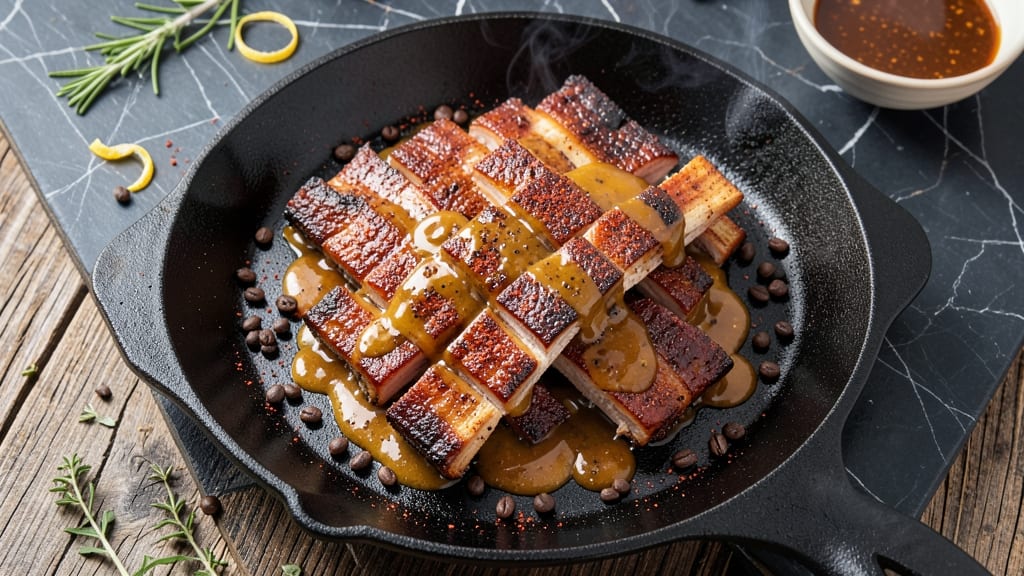
Aaron Franklin's pork ribs recipe delivers the kind of fall-off-the-bone tenderness that makes Texas BBQ legendary. I've spent years perfecting this technique, blending Franklin's signature methods with my own pitmaster insights—because great ribs aren't just about time, they're about precision. The secret starts with a dry rub that builds deep, smoky flavor while the post oak smoke transforms tough meat into melt-in-your-mouth perfection.
What sets these ribs apart is the combination of low-and-slow cooking with strategic sauce application. We'll use a 225°F smoke for hours, letting the wood infuse every bone while the meat breaks down just right.
The rub—equal parts sweet, spicy, and savory—creates a bark that's both crisp and tender, while Franklin's signature sauce adds that signature tangy-sweet balance. This isn't just BBQ; it's a restaurant-quality experience you can recreate at home.
The real magic happens in the details: proper wood selection, temperature control, and knowing exactly when to wrap. We'll cover each step with the precision of a professional pitmaster, ensuring your ribs emerge with that signature Texas BBQ texture and flavor.
The result? Ribs so tender they practically dissolve on your plate, with layers of smoky, sweet, and savory flavors that'll have everyone asking for seconds.
Perfect for feeding a crowd or treating yourself to a Sunday feast, these ribs pair beautifully with classic sides like collard greens and cornbread. Let's get started on creating ribs that'll make you the star of your next cookout.
Ingredients for aaron franklin pork ribs
The essential ingredients for ribs so tender they practically dissolve on your plate.
| Ingredient | Amount | Notes |
|---|---|---|
| Pork Ribs (Baby Back) 🍖 | 4 lb | Bone-in, meaty ends preferred |
| Yellow Mustard 🍯 | ¼ cup | For initial coating |
| Brown Sugar 🍚 | ½ cup | Light or dark preferred |
| Smoked Paprika 🌶️ | 2 tbsp | For deep smoky flavor |
| Chili Powder 🌶️ | 1 tbsp | Medium heat preferred |
| Coffee Grounds ☕ | 1 tbsp | Instant or finely ground |
| Ground Black Pepper 🌶️ | 1 tbsp | Freshly cracked preferred |
| Kosher Salt 🧂 | 1 tbsp | Diamond Crystal preferred |
| Garlic Powder 🧄 | 1 tbsp | Freshly ground preferred |
| Onion Powder 🧅 | 1 tbsp | No added MSG |
| Post Oak Chips 🌳 | 4 lb | For authentic Texas smoke |
| Apple Cider Vinegar 🍎 | ¼ cup | For tangy sauce base |
| Honey 🍯 | ½ cup | Wildflower preferred |
| Tomato Paste 🍅 | ¼ cup | San Marzano preferred |
| Worcestershire Sauce 🍶 | 2 tbsp | Vegetarian version if needed |
The ribs are everything here—baby back with meaty ends is ideal, but spare ribs work too. Costco or H-E-B butcher counters have the best quality, often with the membrane already removed. Look for good marbling and avoid ribs with a grayish tint. The post oak chips are non-negotiable for that signature Texas smoke—Traeger or Cookshack brands deliver the authentic flavor. For the dry rub, Penzeys spices elevate everything, but the grocery store stuff works if you're pinching pennies. Just make sure your coffee grounds are fresh—stale grounds make stale ribs.
No post oak chips? Hickory or pecan in a pinch, but the flavor won't be quite the same. Running short on mustard? Mayonnaise thinned with vinegar works in a bind. The Worcestershire sauce can be swapped for vegetable broth with a dash of soy sauce if you're avoiding anchovies. For the rub, if you're missing one spice, double up on another—just don't skip the salt. The honey should be wildflower or clover for that floral depth, but agave nectar works if you're vegan. And trust me on the tomato paste—San Marzano is worth the splurge for that sweet, rich flavor.
Store your ribs uncovered in the fridge for up to 2 days before cooking—they'll dry out if wrapped. The dry rub keeps for 3 months in an airtight container, so make extra. Once cooked, ribs reheat beautifully—350°F for 10 minutes wrapped in foil. I always portion mine into meal prep containers for easy leftovers. The sauce can be made a day ahead and reheated gently—just add a splash of water if it thickens too much. These ribs are worth the wait, so don't rush the process.
Why You'll Love This Recipe
- Five-Ingredient Magic: I swear, this recipe nails it with just baby back ribs, mustard, brown sugar, and those two smoky spices. No fancy prep—just slather, smoke, and let the flavors do the work.
- Smoky-Sweet Obsession: That brown sugar and smoked paprika dry rub? It caramelizes into a sticky, slightly crispy crust that’s both sweet and spicy—like a hug from Texas. Honestly, I’ve ruined other ribs trying to copy this.
- Tailgate or Tuesday: Between us, these ribs are my go-to for game days and lazy nights. The mustard keeps it tangy enough for a crowd, but the sugar balances it perfectly for when it’s just me and a bad TV show.
- Leftovers I Actually Want: Smoked ribs last in the fridge for days, and they taste even better reheated (yes, really). I’ve sent these to work for lunch—people think I’m a hero. Budget win, flavor win.
Step-by-step instructions for Aaron Franklin's signature pork ribs
Here's how to deliver that legendary Texas BBQ tenderness with a perfect balance of sweet, smoky, and tangy flavors.
Prepare the Ribs with Mustard and Dry Rub
Start by removing the pork ribs from the refrigerator and letting them sit at room temperature for 30 minutes. This ensures even cooking. In a small bowl, whisk together the 0.25 cup yellow mustard—this creates a sticky base that helps the rub adhere and prevents the ribs from drying out during the long cook.
In a separate large bowl, combine the 0.5 cup brown sugar, 2 tablespoons smoked paprika, 1 tablespoon each of chili powder, coffee grounds, ground black pepper, kosher salt, garlic powder, and onion powder. Mix thoroughly until all the spices are evenly distributed. The coffee grounds add depth while the brown sugar provides that signature caramelized crust. Rub this mixture all over the ribs, pressing firmly into the meat so it sticks. Let them rest uncovered for 1 hour at room temperature—this allows the rub to penetrate and develop flavor.
Smoke the Ribs Low and Slow
Set up your smoker using the 4 pounds post oak chips—this wood is essential for that authentic Texas smoke flavor. Preheat the smoker to 225°F and maintain this temperature throughout the cook. Place the ribs bone-side down on the smoker grates, meaty ends toward the front for even heat distribution. Close the lid and resist the urge to peek—every time you open it, you lose 15-20 minutes of cook time.
Smoke the ribs for 4-5 hours until they reach an internal temperature of 195-203°F and the meat is fork-tender. You'll notice the ribs begin to develop a dark mahogany bark—this is your visual cue that the sugars in the rub are caramelizing. The ribs should have a slight wobble when moved, indicating they're ready for the next step. If they stall around 165°F, this is normal—just give them time to push through.
Wrap and Finish the Cook
Once the ribs reach the 195-203°F range, it's time to wrap them. This technique, known as the "Texas crutch," helps break through the stall and ensures fall-off-the-bone tenderness. Line a large piece of aluminum foil with butcher paper (it breathes better than foil alone) and place the ribs on top. In a small bowl, mix together the 0.25 cup apple cider vinegar, 0.5 cup honey, 0.25 cup tomato paste, and 2 tablespoons Worcestershire sauce. Pour this mixture evenly over the ribs, then wrap them tightly, sealing the edges completely. Return the wrapped ribs to the smoker and continue cooking for another 1-2 hours until they reach 203°F internally.
During this final phase, the ribs will absorb the tangy-sweet sauce, which enhances their flavor and keeps them moist. The butcher paper allows just enough steam to develop that signature tender texture. Check occasionally to ensure the ribs aren't sticking to the paper—if they are, add a splash of water to the foil before resealing.
Rest and Serve
Remove the ribs from the smoker and let them rest on a cutting board for 15-20 minutes before serving. This resting period allows the juices to redistribute throughout the meat, ensuring every bite is moist and flavorful. The ribs should pull apart easily at the bones with minimal resistance from a fork or meat thermometer.
To serve, carefully unwrap the ribs and slice them between the bones into individual servings. The sauce should be sticky and glossy, clinging to the meat with each bite. Serve with classic BBQ sides like coleslaw, baked beans, or cornbread to complete the meal. These ribs deliver that perfect balance of smoky, sweet, and tangy flavors—just like Aaron Franklin serves at Franklin Barbecue.
Pro Tips For Making Aaron Franklin Pork Ribs
- Trim the Fat First: Baby back ribs have that thin layer of fat on the bone side—scrape it off before seasoning. I learned this the hard way when my ribs stuck to the smoker and burned unevenly. It’s not just about flavor; it’s about even cooking and that perfect bark.
- Mix Mustard Like a Paste: Don’t just drizzle that yellow mustard—whisk it into a thick paste with brown sugar, smoked paprika, and chili powder. I used to skip this, and the rub would clump or slide off the ribs. A spoonful of apple cider vinegar (just 1 tablespoon) helps it stick better too.
- Skip the Crowding in Smoker: If you’re smoking them, resist the urge to stack ribs bone-to-bone. I’ve done it, and the ones in the middle turn out soggy while the edges burn. Leave at least an inch of space between racks—even if it means two batches.
- Wrap Them Early: Once the ribs hit 160°F (about 2 hours in), wrap them in butcher paper or foil with a splash of apple juice. I used to wait too long, and the bark would turn to ash. The juice keeps them moist without making them greasy—trust me, it’s worth the effort.
Make-ahead tips for this recipe
Prep Ahead Strategy
Start your dry rub 24 hours ahead—it needs time to meld flavors. Store it in an airtight container at room temperature. I make double batches because it keeps for 3 months, perfect for future cookouts.
The mustard coating can also be prepped 1 day ahead and refrigerated, saving you time on cook day. 🌶️
Rib Prep Timeline
Apply the dry rub to ribs 12-24 hours before cooking—this gives the spices time to penetrate deeply. I cover mine loosely with plastic wrap and refrigerate, which prevents drying.
Let them sit at room temperature for 30 minutes before smoking for even cooking. This step is non-negotiable for tender results.
Sauce Prep Shortcut
Make the tangy-sweet sauce 1 day ahead and store it in a sealed jar in the fridge. Reheat gently on the stovetop with 1 tablespoon water to thin it out.
I always double the batch because it disappears fast—great for leftovers or extra servings. The sauce keeps for 1 week, making it a versatile BBQ staple. 🍯
Smoker Prep Night Before
Set up your smoker the night before if possible. Soak your post oak chips in water for 1 hour before adding them to the fire. This ensures steady smoke production from the start.
I also preheat my smoker to 225°F and let it stabilize overnight—this cuts down on morning setup time and guarantees consistent temperature control. 🌳
Leftovers Plan
Ribs reheat beautifully—wrap cooled portions in foil and reheat at 350°F for 10 minutes. I portion leftovers into quart-sized meal prep containers for easy grab-and-go lunches. Store them in the fridge for 4 days or freeze for 3 months.
The sauce thickens when reheated, so add a splash of water or apple cider vinegar to restore consistency. 💪
Equipment Prep
Clean and oil your smoker grates 24 hours ahead to prevent sticking. I use a wire brush and a thin layer of high-smoke-point oil (like Avocado oil). Keep your meat thermometer calibrated and ready—this is your best tool for avoiding overcooked ribs.
I also prep my cutting board and knife by sanitizing them with hot soapy water before the final resting phase. ✨
Nutrition facts
Frequently asked questions
Can I use spare ribs instead of baby back ribs for this recipe?
Spare ribs work beautifully—they just require 1-2 extra hours of cooking time due to their thicker meat. The same rub and sauce will work, but expect to wrap them at 200°F internal temp instead of 195°F. The key is patience—spare ribs need that extra time to become tender. Just monitor closely after wrapping to avoid overcooking.
What's the best wood choice if I don't have post oak?
For authentic Texas flavor, hickory is your best substitute—it's widely available and delivers strong smoke. Pecan works too, offering a sweeter profile. Avoid fruit woods like cherry or apple—they'll overpower the ribs' natural flavors. If using substitutes, soak the chips 1 hour before smoking for better moisture and smoke production.
How do I know when the ribs are done without a meat thermometer?
Look for three key indicators: the ribs should wobble slightly when moved, the bark should be dark mahogany, and the meat should pull apart easily at the bones. For baby backs, they'll typically take 4-5 hours total. The Texas crutch (wrapping) should happen when they reach 195°F—if you're guessing, aim for 3-4 hours of smoking before wrapping. Always err on the side of undercooking slightly.
Can I make this recipe in an oven instead of a smoker?
Yes, but you'll need to recreate the smoke flavor. Use a smoker box with wood chips in your oven set to 225°F. Place a pan of water on the lower rack to add moisture. The ribs will take 5-6 hours total, with wrapping at 195°F internal temp. For extra smokiness, add 1 tablespoon liquid smoke to the sauce. The texture won't be identical, but it's a great backup method.
Why did my ribs turn out dry even though I wrapped them?
This usually happens from one of three issues: overcooking (past 203°F), not enough sauce during the wrap, or opening the smoker too often. Always wrap with butcher paper (not just foil) for better moisture retention. If they're slightly dry after wrapping, brush with extra sauce and reheat at 350°F for 10 minutes wrapped in foil. The sauce helps restore moisture.