
Main Courses
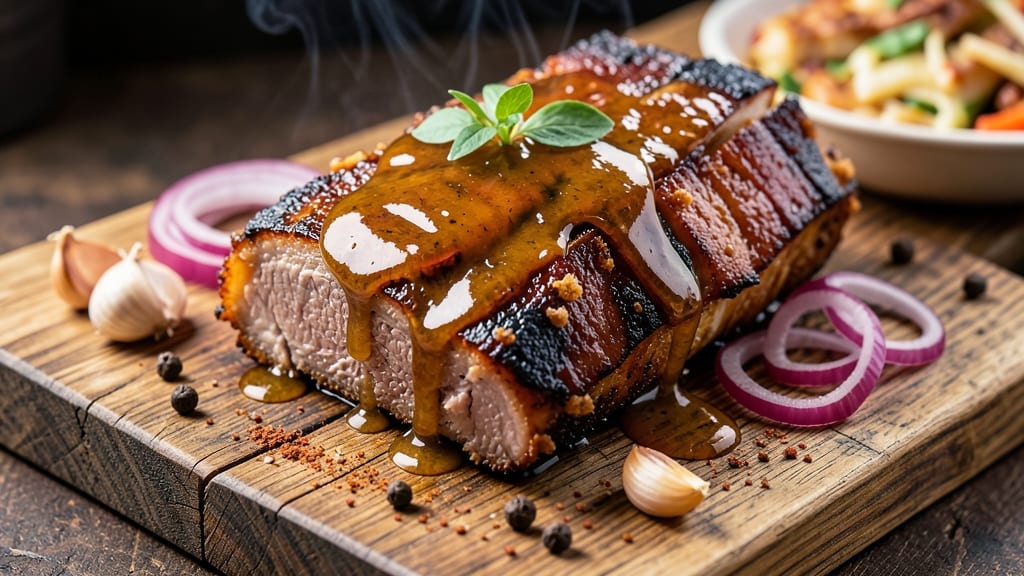
Aaron Franklin's pulled pork recipe delivers the kind of smoky, tender perfection that defines Texas BBQ. 🔥 I've spent years perfecting this technique, and the secret lies in low-and-slow cooking with post oak wood—the same wood Franklin uses at his iconic Franklin Barbecue.
This isn't just pulled pork; it's a celebration of tradition with restaurant-quality results you can achieve at home.
The key to Franklin-style excellence starts with the right cut—pork shoulder with enough fat to self-baste as it cooks. We'll smoke it at 225°F for hours until the bark forms that signature dark crust, then break it down into melt-in-your-mouth shreds.
The post oak wood isn't just flavor; it's the soul of Texas BBQ, creating that unmistakable aroma that'll have everyone gathering around your smoker.
What makes this recipe truly special is how it transforms tough meat into something so tender it practically falls apart at the touch. The sauce application comes later—Franklin's method focuses on the meat first, letting its natural flavors shine before adding that final touch of tangy-sweet sauce.
By the time you're done, you'll have pulled pork that's worth the wait, with a bark that's crisp enough to stand up to even the most ambitious bites.
Serve it on toasted buns with pickles and coleslaw for the full Texas BBQ experience, or let guests build their own plates.
This is the kind of pulled pork that turns casual dinners into memorable gatherings—just like the ones I grew up with in Georgia, where every bite tells a story. Let's get started on creating your own Texas BBQ masterpiece.
Ingredients for aaron franklin pulled pork
Eight pounds of pork shoulder and a handful of Texas BBQ secrets—this is where the magic happens.
| Ingredient | Amount | Notes |
|---|---|---|
| Pork Shoulder (Bone-In) 🐖 | 8 lb | With fat cap intact for flavor |
| Post Oak Wood Chips 🌳 | 2 cups | Or post oak chunks if available |
| Yellow Onion 🧅 | 1 whole | Quartered for bark rub |
| Garlic Cloves 🧄 | 8 cloves | Peeled and smashed |
| Brown Sugar 🍯 | ½ cup | Light or dark variety |
| Smoked Paprika 🌶️ | 2 tbsp | For authentic Texas flavor |
| Ground Black Pepper 🌶️ | 1 ½ tbsp | Freshly cracked |
| Kosher Salt 🧂 | 1 tbsp | Diamond Crystal preferred |
| Mustard Powder 🌶️ | 1 tsp | For subtle tang |
| Apple Cider Vinegar 🍎 | ¼ cup | For bark application |
| Yellow Mustard 🍯 | ¼ cup | For sauce base |
| Catsup 🍅 | ½ cup | For classic tang |
| White Vinegar 🍶 | ¼ cup | For sauce balance |
| Black Peppercorns 🌶️ | 1 tsp | Whole, for sauce |
| Onion Powder 🧅 | 1 tsp | For sauce depth |
The pork shoulder is non-negotiable—look for a cut with a thick fat cap (at least 1/4-inch) at Whole Foods or your local butcher. Costco sells great bone-in shoulders too, but check the fat distribution. If you're buying pre-cut, avoid anything with exposed meat—it dries out faster. The post oak wood? Texas BBQ Supply sells it online, but if you're near Austin, they've got live oak too (close enough). For the bark rub, I toast the spices in a dry skillet first—just 30 seconds—to wake up those flavors.
No post oak? Pecan or hickory chips work in a pinch, though they won't be quite the same. Running short on brown sugar? White sugar plus 1 tsp molasses mimics the depth. The sauce ingredients are all about balance—too much vinegar and it's harsh, too little and it's flat. I always double-check the mustard powder (it's easy to confuse with mustard seeds). For the catsup, Heinz 57 is the classic choice, but any good-quality ketchup works. Pro tip: Let the sauce sit overnight before using—flavors meld better.
The pork shoulder keeps 3-4 days in the fridge once cooked, but trust me, it'll disappear faster. Wrap it tightly in butcher paper (not foil—it steams the bark) and store flat. For leftovers, reheat in a 300°F oven with a splash of broth until warmed through. The sauce? It keeps 1 month in the fridge, but I usually make extra to give away. Freeze portions in ice cube trays if you're not using it all at once—perfect for quick sandwiches.
Why You'll Love This Recipe
- Smoke Magic Simplified: I swear by the bone-in pork shoulder—it stays juicy while the bones infuse flavor. Honestly, the hardest part is waiting for the smoker to heat up, not chopping or prepping.
- Sweet-Smoky Bomb: That brown sugar isn’t just for looks—it caramelizes into a sticky, smoky glaze that makes every bite irresistible. Between us, the garlic and onions turn this into a flavor party.
- Leftovers That Shine: This recipe makes so much pork—perfect for sandwiches, tacos, or even fried rice later. I’ll be real: my freezer’s always stocked with it because reheating? Zero effort.
- Budget Crowd-Pleaser: A single pork shoulder feeds a dozen, and Post Oak wood chips add that Texas BBQ soul without breaking the bank. (Yes, even on a Tuesday night.)
Step-by-step instructions for Aaron Franklin's pulled pork
Here's how Aaron Franklin makes his legendary Texas-style pulled pork—smoky, tender, and packed with flavor.
🔥 Step 1: Prepare the Pork and Smoker
Start by trimming the fat cap of the 8 lb pork shoulder down to about ¼ inch thickness—leave enough fat to protect the meat during the long cook. Pat the entire shoulder dry with paper towels, then apply a bark rub by mixing 0.5 cup brown sugar, 2 tbsp smoked paprika, 1.5 tbsp ground black pepper, 1 tbsp kosher salt, and 1 tsp mustard powder. Press this mixture firmly into the pork, coating all sides.
While the pork rests at room temperature for 30 minutes, set up your smoker using 2 cups post oak wood chips. Preheat to 225°F—this low-and-slow temperature is key for tender, juicy meat. Place a water pan in the smoker to maintain moisture and prevent a dry bark. Once the smoker reaches temperature and you see thin blue smoke, you're ready to cook.
🍳 Step 2: Smoke the Pork Until Probe-Tender
Place the seasoned pork shoulder fat-side up in the smoker. This allows the rendered fat to baste the meat as it cooks, creating that iconic Texas bark. Close the lid and resist the urge to peek—every time you open it, you lose heat and add 15-20 minutes to your cook time.
Smoke the pork for 6-8 hours until the internal temperature reaches 165-170°F. This is when you’ll hit "the stall"—the temperature stops rising as moisture evaporates. Don’t panic; this is normal. Once the pork hits this temperature, it’s ready for the next step. The bark should be dark mahogany with a crispy texture.
🥘 Step 3: Wrap and Finish Cooking
At the 165-170°F mark, wrap the pork tightly in butcher paper (not foil—it breathes better and preserves the bark). This technique, called the "Texas crutch," helps you power through the stall while keeping that crispy exterior. Return the wrapped pork to the smoker and continue cooking until the internal temperature reaches 200-205°F—this usually takes another 4-6 hours.
You’ll know it’s done when a probe slides in like butter with no resistance. The pork should be fork-tender and pull apart easily. Let it rest in the butcher paper for at least 1 hour (I prefer 2 hours) to allow the juices to redistribute. This resting period ensures every bite is moist and flavorful.
🍽️ Step 4: Shred and Mix the Sauce
Unwrap the pork and shred it using two forks or your hands, pulling it apart against the grain. In a large bowl, combine the shredded pork with 0.25 cup yellow mustard, 0.5 cup catsup, 0.25 cup apple cider vinegar, 0.25 cup white vinegar, 1 tsp black peppercorns, and 1 tsp onion powder. Mix everything together until the sauce clings to the pork.
For extra richness, you can also add ½ cup of the pork’s juices from the butcher paper. Taste and adjust the seasoning—you might want to add a pinch more salt or a splash of vinegar to balance the flavors. Serve the pulled pork on toasted buns with pickles and coleslaw for the full Texas BBQ experience.
Pro Tips For Making Aaron Franklin Pulled Pork
- Trim the Fat First: Aaron Franklin’s recipe relies on that crispy bark, so don’t let excess fat steam the meat. Use a sharp knife to score and trim a thin layer off the fat cap—just enough so it renders cleanly without losing flavor. I used to skip this, and my bark turned soggy halfway through.
- Soak Wood Chips Early: Post Oak chips need 30 minutes in warm water to avoid burning. Use a bowl of just-boiled water (not scalding) and let them sit while you prep the rub—this keeps them moist and smoky. I learned this the hard way when my first batch turned to ash in 20 minutes.
- Don’t Crowd the Smoker: If your pork shoulder touches the sides or other meat, it steams instead of smokes. Leave at least 2 inches of space between racks and resist the urge to stack trays. I used to cram everything in, and my bark came out dull—now it’s dark and crackly every time.
- Sweat Onions Low and Slow: Brown sugar burns fast, so cook onions and garlic in the pork fat on medium-low heat until deeply caramelized—not just soft. This takes 15–20 minutes, but rushing means a bitter, cloying sauce. (Yes, even if you’re impatient like me.)
Serving suggestions for leftovers
Classic Texas Sandwich
Serve your pulled pork on toasted brioche buns—the slightly sweet, buttery texture balances the smoky pork perfectly. I like to toast them in the smoker for 5-10 minutes at 225°F before serving.
Add a generous scoop of pulled pork, a handful of dill pickle chips (about ¼ cup), and a dollop of creamy coleslaw on the side. Franklin-style sandwiches are all about simplicity, but the contrast of textures and flavors makes every bite unforgettable. 🥪
BBQ Plates
For a more casual gathering, set up a build-your-own BBQ plate station. Include toasted buns, white corn bread, crusty sourdough, and potato rolls for variety. Add classic sides like creamy potato salad, baked beans, and grilled vegetables (zucchini and bell peppers work well).
Let guests load up their plates with pulled pork, pickles, and coleslaw—this is how we do it at my Atlanta restaurant. 🍽️
Breakfast Adaptation
Turn your pulled pork into a Texas-style breakfast hash by mixing it with diced potatoes, onions, and peppers. Cook in a cast iron skillet with butter and bacon until crispy, then top with a fried egg and hot sauce.
This is a game-changer for brunch—trust me, my farm hands love it after a long morning of feeding pigs. 🍳
Taco Night Twist
Shred the pork extra fine and use it as a taco filling with all the fixings. Warm corn tortillas on the grill, then load them up with pulled pork, diced avocado, pickled red onions, cilantro, and a squeeze of lime.
Serve with chipotle crema or sour cream for dipping. This fusion idea came from a late-night cookout at Franklin Barbecue—it’s a crowd-pleaser every time. 🌮
Leftovers Reinvented
Transform leftover pulled pork into loaded nachos by layering tortilla chips with pork, melted cheddar, jalapenos, and sour cream. Or make pulled pork sliders with mini brioche buns and pickle spears for a quick lunch.
I also love mixing it into mac and cheese—just stir in 1 cup of shredded pork with the cheese sauce before baking. These ideas keep the flavors fresh for days. 🧀
Drink Pairings
Serve your pulled pork with a Texas-style sweet tea (sweetened with ¼ cup sugar per quart) or a light lager like Shiner Bock to cut through the richness.
For a non-alcoholic option, try sparkling lemonade with a splash of apple cider vinegar—it’s refreshing and balances the smoky flavors perfectly. I always keep a pitcher of iced tea on hand at gatherings. 🍹
Nutrition facts
Frequently asked questions
Can I use a different wood than post oak for this recipe?
Post oak is ideal because it creates that signature Texas BBQ flavor, but you can substitute with pecan or hickory chips if needed. Just know the flavor profile will be slightly different—post oak has a sweeter, more delicate smoke. For best results, soak your wood chips for 30 minutes before using to prevent flare-ups.
How do I know when the pork is done without a meat thermometer?
If you don't have a thermometer, look for these signs: the pork should feel fork-tender (easy to pierce with minimal resistance) and the bark should be dark mahogany with a crispy texture. Also, the meat should pull apart easily when you try to separate it with two forks. However, a meat thermometer is the most reliable method—aim for 200-205°F.
Can I make this recipe in an oven instead of a smoker?
Yes, but you'll need to use a smoker box or wood chips in your oven to mimic the smoke flavor. Place the pork on a rack over a tray of water, then add post oak chips to the smoker box. Cook at 225°F for 6-8 hours, wrapping in butcher paper when it hits 165°F. The bark won't be as crispy as with a smoker, but the meat will still be tender.
What's the best way to reheat leftover pulled pork?
Reheat gently in a 300°F oven with a splash of apple cider vinegar or beef broth to keep it moist. Avoid microwaving—it makes the pork rubbery. For extra flavor, reheat in a skillet with a little butter or bacon grease until warmed through. Leftovers keep 3-4 days in the fridge or 3 months in the freezer.
Why does the pork sometimes turn out dry?
Overcooking or cutting into the meat too early are the most common causes. Always let the pork rest 2 hours after cooking before shredding. Also, avoid using foil—it steams the meat instead of letting it breathe. The Texas crutch (butcher paper wrap) helps maintain moisture while keeping the bark crispy. If the pork is still dry, try adding a splash of broth or apple juice when reheating.