
Main Courses
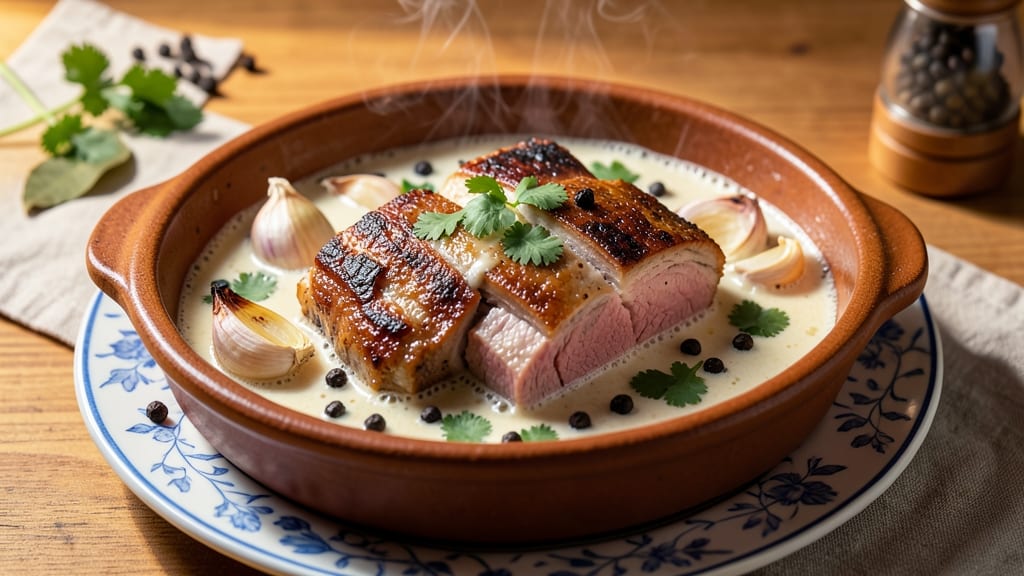
This adobong puti pork recipe transforms humble pork into a luxurious dish with a silky coconut milk velvety sauce and crispy golden topping. The secret lies in balancing tangy vinegar with rich coconut milk, creating a sauce that's both creamy and complex.
I first discovered this technique while studying Filipino cuisine in Manila, where home cooks elevate simple ingredients into restaurant-worthy meals.
The magic happens in the braising process, where pork shoulders become fork-tender while absorbing the aromatic flavors of garlic, bay leaves, and black peppercorns. Unlike traditional adobo, this version replaces vinegar with coconut milk for a milder, more approachable profile that still packs bold Filipino character.
The crispy topping comes from a quick pan-fry of the reserved pork fat and flour mixture, adding texture contrast that makes every bite exciting.
By the time you serve this dish, you'll have pork that's impossibly tender yet holds its shape, coated in a glossy sauce that's rich but not heavy. The aroma alone will have everyone gathering around the table - that perfect balance of sweet coconut, tangy vinegar notes, and smoky garlic.
This is comfort food at its finest, with the kind of depth that makes it special for family gatherings or celebration meals.
Pair with steamed jasmine rice to soak up every last drop of that velvety sauce, or serve with atchara for the perfect balance of sweet, sour, and savory.
The leftovers reheat beautifully too, making this a perfect recipe for meal prep. Let's get cooking this Filipino classic that's sure to become a family favorite.
Ingredients for adobong puti pork
Six ingredients transform simple pork into restaurant-worthy Filipino comfort food.
| Ingredient | Amount | Notes |
|---|---|---|
| Pork Shoulder 🍖 | 3 lb | Bone-in for flavor, cut into 2-inch chunks |
| Coconut Milk 🥥 | 2 cans | Full-fat, 13.5 oz each, unsweetened |
| White Vinegar 🍶 | ½ cup | White or apple cider vinegar |
| Garlic Cloves 🧄 | 8 cloves | Peeled, smashed for deeper flavor |
| Bay Leaves 🌿 | 2 whole | Dried, standard size |
| Black Peppercorns 🌶️ | 1 tbsp | Whole, lightly crushed |
| All-Purpose Flour 🌾 | ½ cup | For crispy topping |
| Olive Oil 🫒 | ¼ cup | For pan-frying topping |
| Sugar 🍚 | ¼ cup | White granulated sugar |
| Salt 🧂 | 1 ½ tsp | Kosher or sea salt |
| Jasmine Rice 🍚 | 2 cups | Uncooked, for serving |
| Green Onions 🧅 | 4 whole | Sliced, for garnish |
The pork shoulder is non-negotiable here—bone-in, 3 lbs minimum for that deep flavor. Filipino markets or Asian grocery stores often have the best cuts, but your local butcher can help too. Look for well-marbled meat with a nice pink hue. I like to ask for it pre-cut into 2-inch chunks to save time, but if you're doing it yourself, cut against the grain for even cooking. The coconut milk? Full-fat only—the richness is key to that velvety sauce. If you can't find unsweetened, just reduce the sugar slightly.
No vinegar? Lemon juice works in a pinch, but it'll be slightly less tangy. Short on garlic? Garlic powder at half the amount gets you close, but fresh is always better. The sugar might seem odd in a savory dish, but trust me—it balances the acidity and makes the sauce shine. For the crispy topping, Panko breadcrumbs can replace regular flour if you're feeling fancy. The green onions are just for garnish, but don't skip them—they add that fresh pop of color that makes the dish look restaurant-worthy.
This sauce gets better with time, so make a double batch if you can. Leftovers keep for 5 days in the fridge, and the pork reheats beautifully—just add a splash of water or coconut milk to loosen it up. Freezes for 3 months too, which is perfect for meal prep. I always serve it with jasmine rice, but steamed white rice works just as well. The crispy topping stays crunchy for about 20 minutes after frying, so make it fresh when serving.
Why You'll Love This Recipe
- Few Ingredients, Big Payoff: I swear by this one—just pork, coconut milk, vinegar, and garlic. No fancy pantry trips, no confusing steps. The vinegar and garlic mellow into something rich and tangy without you having to babysit the stove.
- Creamy-Tangy Magic: That balance of coconut’s richness and vinegar’s bite? It’s the kind of flavor that makes you pause mid-bite. The pork stays tender while soaking up the sauce, and the bay leaves add this earthy depth that feels chef’s kiss without the fuss.
- Weeknight to Potluck: Make a big batch on Sunday—it reheats like a dream for lunches all week. Or bring it to a gathering; it’s hearty enough for a main but fancy enough to impress. (Yes, even on a Tuesday night.)
- Budget-Friendly Luxury: Pork shoulder is cheap, and coconut milk stretches far. I’ve fed six people for under $15 with this, and no one ever guesses it’s not a restaurant dish. Leftovers? They’re the best kind—better the next day.
Step-by-step instructions for adobong puti pork recipe
This creamy, velvety pork dish delivers perfect balance—tender meat in silky coconut sauce with a golden, crispy topping.
Sear the Pork Shoulder for Maximum Flavor
Heat a large Dutch oven over medium-high heat until hot. Add the 3 lb pork shoulder cut into 2-inch chunks, working in batches if needed. Sear each piece for 2-3 minutes per side until deeply browned and caramelized. This step builds rich, meaty flavor that infuses the sauce later.
As you sear, you'll notice the pork releases juices and fat—this is good. Don't crowd the pan or the pork will steam instead of brown. Once all pieces are golden brown, transfer them to a plate and set aside. The remaining browned bits in the pot will form the base of your sauce.
Build the Coconut Milk Velout Sauce
In the same Dutch oven, reduce heat to medium and add 0.25 cup olive oil. Toss in the 8 smashed garlic cloves and 2 whole bay leaves, cooking for 30 seconds until fragrant. Add the 1 tbsp black peppercorns (lightly crushed) and cook for another 1 minute to toast them lightly.
Pour in the 0.5 cup white vinegar and scrape up all those delicious browned bits from the bottom of the pot. Let it simmer for 2 minutes until the vinegar reduces slightly. Then add the 2 cans coconut milk, 0.25 cup sugar, and 1.5 tsp salt. Stir gently and bring to a simmer.
Simmer the Pork Until Tender
Return the seared pork to the pot, spooning some of the sauce over the top to coat it. Bring everything to a gentle simmer, then cover and reduce heat to low. Let it cook for 1 hour 30 minutes, stirring occasionally, until the pork is fork-tender and easily pulls apart.
Here's the thing—you want the sauce to reduce slightly but still remain velvety. If it gets too thick, add ¼ cup water to loosen it. The pork should be falling off the bone, and the sauce should coat the back of a spoon with a silky texture. This is where patience pays off for that perfect adobong puti texture.
Create the Crispy Flour Topping
While the pork simmers, prepare the crispy topping. In a small skillet, heat 0.25 cup olive oil over medium heat. Add the 0.5 cup all-purpose flour and stir constantly for 3-4 minutes until it turns a rich golden brown color and smells toasty.
This is your crispy topping—it should look like fine, toasted crumbs rather than raw flour. Watch it carefully as it cooks; if it starts to darken too quickly, reduce the heat slightly. Once golden brown, immediately remove from heat and set aside. The residual heat will keep it warm while you serve.
Serve with Jasmine Rice and Garnish
Cook the 2 cups jasmine rice according to package instructions until tender and fluffy. To serve, spoon the pork and coconut milk sauce over the rice, then sprinkle the crispy flour topping evenly on top. The contrast between the creamy sauce and crunchy topping is what makes this dish special.
Garnish with sliced 4 whole green onions for a fresh pop of color and flavor. The pork should be perfectly tender, the sauce rich and velvety, and that crispy topping should add just the right amount of texture with every bite. Serve immediately while the topping is still crunchy and the pork is steaming hot.
Pro Tips For Making Adobong Puti Pork
- CRANK THE HEAT FIRST: Don’t simmer the pork in coconut milk right away—sear the shoulder in a hot pan until it’s deep golden brown before adding liquids. I learned this the hard way: skipping the sear means the sauce turns gray and the pork stays bland. Two minutes per side, high heat, until it’s got that crust.
- PEEL GARLIC LAST MINUTE: Store your garlic cloves whole in the fridge until you’re ready to crush them, then peel them right before tossing into the pot. Whole cloves stay fresher longer, and crushing them fresh makes a real difference in flavor. (Yes, even if you’re impatient like me.)
- STIR THE COCONUT MILK: Before adding coconut milk, give the can a good shake—especially if it’s been sitting for a while. The cream settles at the bottom, and if you don’t stir it, your sauce will turn lumpy. I’ve ruined batches by forgetting this, and it’s a fast fix.
- SKIP THE BOILING VINEGAR: Don’t dump white vinegar straight into the hot pot—it’ll turn your sauce cloudy and harsh. Instead, mix it with a splash of water first, then slowly stir it in while the pork is already simmering. Your future self will thank you.
Wine and beer pairings for adobong puti pork
Filipino White Wine
For this creamy coconut dish, I reach for Fernando Placer—a crisp, dry white from the Philippines that mirrors the dish's bright acidity. This locally produced wine cuts through the richness of the coconut milk while complementing its subtle sweetness.
The citrus notes in the wine echo the vinegar in the sauce, creating a perfect harmony. Serve slightly chilled to enhance its refreshing quality. 🍷
Light-Bodied Beer
A Filipino lager like San Miguel Light works beautifully with adobong puti. The light body and mild maltiness won't overpower the dish but instead highlight the pork's tenderness and the sauce's velvety texture.
For a craft option, try a Belgian witbier—its coriander and citrus notes play nicely with the coconut and vinegar. Avoid heavy stouts or IPAs that could clash with the delicate flavors. 🍺
Rum-Based Cocktail
For a festive touch, mix a rum-based cocktail like a Piña Colada (with coconut milk!) or a Filipino rum punch using Tanduay or Lambanog. The rum's warmth complements the dish's richness, while the tropical fruit notes bridge the flavors beautifully.
Serve in a chilled glass to keep the drink refreshing alongside the warm pork. 🍹
Non-Alcoholic Pairings
For a non-alcoholic option, sparkling coconut water (like Vita Coco) mirrors the dish's creamy base while adding a refreshing fizz. Alternatively, a hibiscus iced tea (sarsapilla) provides tartness that balances the pork's richness. Both options highlight the dish's tropical Filipino roots without overpowering its flavors. 💧
Nutrition facts
Frequently asked questions
Why does this recipe use coconut milk instead of vinegar like traditional adobo?
This version replaces vinegar with coconut milk to create a milder, creamier sauce that's more approachable for those new to Filipino flavors. The vinegar is still used in small amounts (½ cup) to balance the richness, but the coconut milk gives that signature velvety texture that makes this dish so special. It's essentially a "white wine" version of adobo—just like how some cooks make adobong puti (white adobo).
Can I substitute bone-in pork shoulder with pork loin or tenderloin?
Not ideal! Bone-in pork shoulder is key for maximum flavor and tenderness. Pork loin or tenderloin will cook much faster and become dry. If you must use them, cut into 1-inch cubes (not 2-inch) and reduce simmering time to 45-60 minutes. For best results, stick with pork shoulder—it's what gives this dish its rich, meaty depth.
How do I fix the sauce if it separates or becomes too thick?
If the sauce separates, whisk in 1 tbsp cornstarch mixed with 2 tbsp water to thicken it back up. For a too-thick sauce, add ¼ cup water or coconut milk while stirring. The sauce should coat the back of a spoon but still be silky, not gluey. If it gets too thin, simmer uncovered for 5-10 minutes to reduce it naturally.
Can I make this dish in an Instant Pot or slow cooker?
Yes! For Instant Pot: Sear pork first, then add all ingredients except flour topping. Cook on high pressure for 40 minutes, then natural release. For slow cooker: Use low heat for 6-8 hours or high heat for 4-5 hours. The flour topping should be made separately and added just before serving—it won't crisp properly in a slow cooker or Instant Pot.
What's the best way to reheat leftovers?
Gently reheat in a skillet over low heat with 1-2 tbsp water or coconut milk to prevent drying. Avoid microwave—it makes the sauce watery. For crispy topping, toast fresh flour in a dry pan until golden before serving. Leftovers keep for 5 days in the fridge or 3 months frozen.