
Main Courses
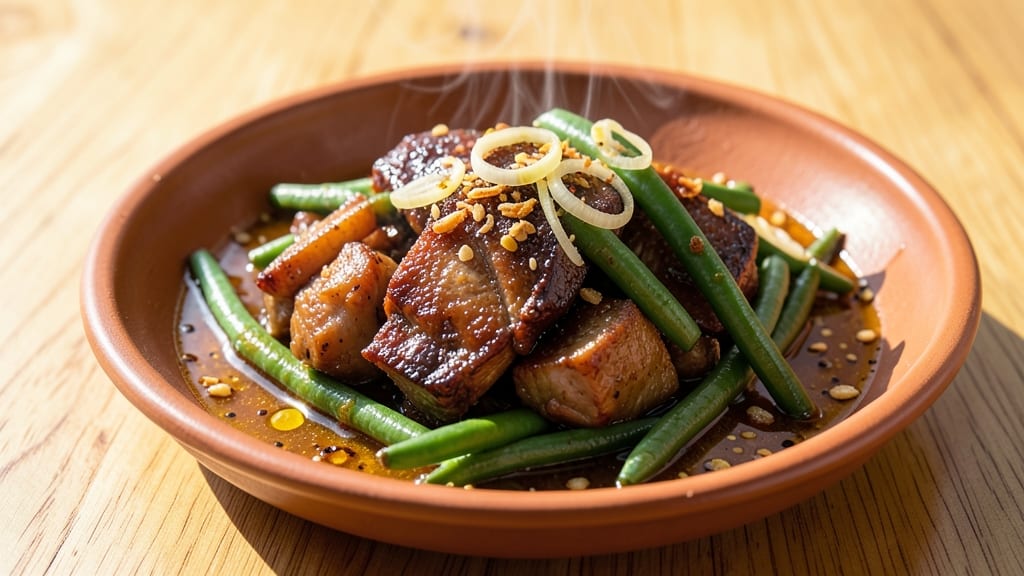
This adobong sitaw with ground pork recipe brings the bold, tangy-savory flavors of Filipino home cooking to your table. 🔥 I first discovered this dish while traveling through the Philippines, where it's a staple in family meals—simple yet deeply flavorful.
The magic lies in the soy-vinegar marinade that tenderizes the pork while infusing it with that signature umami depth. The beauty of this recipe is its balance: tender, savory ground pork meets crisp-tender string beans in a sauce that's both rich and tangy.
Unlike many adobo dishes that require long marinating, this version uses a quick prep method that still delivers restaurant-quality results. The soy sauce and vinegar combination creates that perfect harmony of sweet, salty, and acidic notes that define Filipino adobo.
What makes this dish truly special is how it transforms ordinary ingredients into something extraordinary. The pork develops a caramelized crust from the braising process, while the string beans stay crisp enough to provide texture contrast. The aroma alone—warm soy, tangy vinegar, and garlic—will have everyone gathering around your table.
Serve it over steamed rice to soak up every last drop of that flavorful sauce. This is comfort food at its finest—simple to make but impossible to resist. Let's get cooking!
Ingredients for adobong sitaw with ground pork
Nine simple ingredients transform into a restaurant-worthy Filipino classic—rich, tangy, and deeply flavorful.
| Ingredient | Amount | Notes |
|---|---|---|
| Ground Pork 🐷 | 1 ½ lb | Lean or fatty works fine |
| String Beans 🌱 | 2 cups | Trimmed and cut into 2-inch pieces |
| Soy Sauce 🍶 | ½ cup | Light or dark preferred |
| White Vinegar 🍋 | ¼ cup | Distilled or white vinegar |
| Garlic Cloves 🧄 | 6 cloves | Minced for marinade |
| Onion 🧅 | 1 whole | Medium, diced |
| Tomato Paste 🍅 | 2 tbsp | Smooth, not chunky |
| Brown Sugar 🍯 | 2 tbsp | Light or dark |
| Olive Oil 🫒 | 2 tbsp | For cooking |
| Bay Leaves 🌿 | 2 whole | Dried, for depth |
| Black Peppercorns 🌶️ | ½ tsp | Ground for seasoning |
| Salt 🧂 | 1 tsp | Kosher or sea salt |
| White Rice 🍚 | 2 cups | Uncooked, for serving |
The ground pork is the heart of this dish, so pick a quality cut—ask your butcher for the leanest option if you prefer less fat. Most grocery stores carry ground pork in the meat section, usually near the ground beef. If you can't find it, substitute ground chicken in a pinch, though the flavor will differ slightly. The string beans should be crisp—farmers market or Asian grocery stores often have the freshest selection. Look for vibrant green beans with no blemishes, as they'll hold their texture best during cooking. For the soy sauce, Filipino brands like Silver Swan or Toyo add authentic depth, but any good-quality soy sauce will work.
No white vinegar? Apple cider vinegar or rice vinegar both work well, though the flavor will shift slightly. Running short on tomato paste? Fresh crushed tomatoes can substitute at double the amount, but you'll need to adjust the sugar to balance acidity. The brown sugar is key for that caramelized finish—don't skip it, even if you're watching sugar intake. For a quicker prep, pre-mince the garlic and onion while the pork browns. And if you're feeling adventurous, add a splash of shrimp paste (bagoong) for an extra umami kick, though it's not traditional for this dish. The bay leaves might seem small, but they're essential for that authentic Filipino flavor—don't omit them.
This dish tastes even better the next day as the flavors meld. Store leftovers in an airtight container in the fridge for up to 5 days. For longer storage, portion into freezer-safe containers and freeze for up to 3 months. The sauce thickens as it cools, so add a splash of water or vinegar when reheating. Serve over steamed rice to soak up every last drop of that savory sauce. If you make extra, freeze portions for quick meals—just thaw and reheat gently to preserve texture.
Why You'll Love This Recipe
- One-Pan Magic: I swear by this recipe when I’m too tired to scrub pots—just brown the pork, toss in the sitaw (string beans), and let the vinegar and soy sauce work their sauce magic. No extra dishes, no stress, just flavor.
- Umami Bomb: That balance of salty soy sauce and tangy vinegar? It’s chef’s kiss with the pork. The garlic cloves sizzle into crispy bits, and the sitaw soaks up just enough sauce to be tender but still snappy.
- Lunchbox Hero: Between us, this is my go-to for packed lunches. The flavors actually improve overnight—yes, even the next day—so it’s perfect for meal prep. I just portion it into containers and grab it on my way out the door.
- Piggy Bank Friendly: Ground pork stretches far here, and string beans are cheap but pack a punch. A single batch feeds four for dinner and leaves enough for leftovers—no wasted ingredients, just pure value. My wallet thanks me every time.
Step-by-step instructions for adobong sitaw with ground pork
Here's how to create this rich, savory Filipino dish with balanced flavors and tender pork.
🍳 Step 1: Sauté Aromatics Until Fragrant
Heat the 2 tablespoons olive oil in a large pot or deep skillet over medium heat. Add the minced 6 cloves garlic and diced 1 whole onion, stirring constantly for 3-4 minutes until the onion becomes translucent and the garlic releases its aroma. You'll know it's ready when the mixture smells deeply aromatic and the onions begin to soften.
Here's the thing—don't let the garlic burn. It should be golden brown but not dark or bitter. If it starts to darken too quickly, reduce the heat slightly and give it another minute. This aromatic base forms the flavor foundation for your entire dish.
🍳 Step 2: Cook the Ground Pork Until Browned
Add the 1.5 lb ground pork to the pot, breaking it up with a wooden spoon as it cooks. Increase heat to medium-high and stir frequently for 5-6 minutes until the pork is no longer pink in the center and has browned evenly. The pork should release its juices and create a rich brown crust at the bottom of the pot.
Don't drain the fat—it's essential for flavor. If the pork starts sticking too much, add 1-2 tablespoons water to help it release. The goal is to develop that deep, meaty flavor that will carry through the entire dish. Once fully browned, remove the pork from the pot and set it aside temporarily.
🥘 Step 3: Build the Soy-Vinegar Sauce
Return the pot to medium heat and add the 2 tablespoons tomato paste, stirring to coat the browned bits at the bottom. Cook for 1 minute until the tomato paste darkens slightly. Then pour in the 0.5 cup soy sauce and 0.25 cup white vinegar, scraping up any stuck-on bits with a wooden spoon.
Add the 2 tablespoons brown sugar, 1 teaspoon salt, and 0.5 teaspoon ground black peppercorns, stirring until the sugar dissolves completely. This is where the sweet-savory balance comes together—don't skip tasting at this stage. The sauce should be tangy, slightly sweet, and deeply umami. Add a pinch more salt if needed.
🍳 Step 4: Simmer the String Beans and Combine
Add the 2 cups string beans and 2 whole bay leaves to the pot, stirring to coat them in the sauce. Return the browned pork to the pot and bring everything to a gentle simmer. Reduce heat to low and cover partially, allowing the steam to escape. Let it cook for 20-25 minutes until the string beans are tender but still hold their shape.
Here's what to watch for: the beans should be bright green and slightly crisp with a bite, not mushy. If the sauce thickens too much during cooking, add 2-3 tablespoons water to maintain the right consistency. The pork should be fully cooked and infused with all the flavors by this point.
🍚 Step 5: Serve Over Steamed Rice
Remove the 2 whole bay leaves from the pot and discard them. Taste the final mixture and adjust seasoning if needed—you might need a bit more soy sauce for saltiness or a splash of vinegar for tang. The perfect adobong sitaw should have a balance of sweet, sour, and umami flavors with tender pork and string beans.
Serve immediately over 2 cups steamed white rice, spooning generous portions of the pork and string beans over each serving. The rice helps balance the rich, savory flavors of the dish. This complete meal delivers the perfect combination of textures and flavors that make adobong sitaw so beloved in Filipino cuisine.
Pro Tips For Making Adobong Sitaw With Ground Pork
- CRISP THE GARLIC FIRST: I learned this the hard way—when you toss minced garlic straight into the vinegar, it burns and turns bitter. Instead, cook it in oil until it’s golden (about 30 seconds) before adding vinegar. That nutty aroma is what makes the dish sing.
- CUT BEANS IN HALF: String beans stay crunchy but cook faster if you halve them lengthwise. No need to go smaller—just a quick trim at the ends and a single snip down the middle. This keeps them from turning mushy while ensuring they absorb the adobo flavor evenly.
- DON’T RUSH THE PORK: Low and slow is the name of the game here. After browning the ground pork, simmer it on medium-low heat for at least 10 minutes. Skipping this step leaves it greasy and undercooked—you want it to render fat and develop that rich, tender texture.
- USE LESS VINEGAR AT FIRST: Add only half the vinegar called for upfront, then taste and adjust. The acidity builds as the dish cooks, and dumping it all in too soon can make the beans tough. You can always add more later, but you can’t take it out.
Flavor customization for adobong sitaw with ground pork
Spicy Heat Boost
For those who love a kick, add 1-2 teaspoons of chili flakes or 1 sliced Thai chili when sautéing the aromatics. I often reach for Penzeys brand chili flakes—they're consistent and add a deep, smoky heat.
For an extra punch, stir in ½ teaspoon ground black pepper or 1 teaspoon sriracha at the end. This variation is perfect when you want to wake up your taste buds without overpowering the dish's natural balance. 🌶️
Sweet and Tangy Twist
Balance the savory flavors by adding 1 tablespoon of pineapple juice or 2 tablespoons of mango puree to the sauce. This sweet-tangy addition complements the soy and vinegar beautifully. I've found that Dole brand pineapple juice works well—it adds just the right amount of brightness.
You can also add ½ teaspoon of grated ginger for a zesty kick that pairs perfectly with the pork.
Umami Depth Upgrade
Elevate the dish with 1 tablespoon of fish sauce or 1 teaspoon of oyster sauce for an extra layer of umami. I keep Red Boat fish sauce on hand—it's clean and potent.
For a vegetarian option, ½ teaspoon of mushroom powder works wonders. These additions deepen the sauce's complexity, making it even more satisfying. Trust me, a little goes a long way.
Herbaceous Freshness
Brighten the dish with 2 tablespoons of chopped cilantro or 1 tablespoon of chopped green onions at the end. These herbs add a fresh, vibrant note that cuts through the richness. I like to garnish with cilantro for a pop of color and green onions for a mild onion flavor.
For an extra touch, add a few slices of lime to serve—it adds a citrusy zing that pairs perfectly with the savory pork.
Creamy Texture Variation
For a richer texture, stir in 2 tablespoons of coconut milk or ¼ cup of heavy cream at the end. This creates a velvety sauce that contrasts beautifully with the crisp string beans.
I often use coconut milk for an authentic Filipino touch, but heavy cream works well too. If you're feeling adventurous, add a pinch of turmeric for a golden hue and earthy flavor.
Smoky Charred Flavor
Take your dish to the next level by adding ½ teaspoon of smoked paprika or 1 teaspoon of liquid smoke to the sauce. This adds a subtle smokiness that enhances the depth of the adobo flavors.
I've used La Boîte smoked paprika before, and it adds a rich, smoky aroma without overpowering the dish. For a bolder flavor, char 1 clove of garlic and ½ onion in a dry skillet before mincing and adding to the pot.
Nutrition facts
Frequently asked questions
Can I substitute ground pork with another meat?
Yes! Ground chicken works well for a lighter option, though the flavor will be milder. For a richer taste, try ground beef (80/20 blend) or even pork shoulder diced small. If using beef, reduce cooking time slightly as it browns faster. For a seafood twist, shrimp or mussels can replace pork, but adjust cooking time to 5-7 minutes until just cooked.
Why does my adobong sitaw sauce turn out too thin?
This usually happens when too much liquid is added or the beans release excess moisture. The key is simmering uncovered for the last 5 minutes to reduce the sauce naturally. If needed, remove the pork and beans, then reduce the sauce alone over medium-high heat until thickened. A splash of cornstarch slurry (1 tbsp cornstarch + 2 tbsp water) can also help thicken it instantly.
How do I make this dish less acidic?
Reduce the white vinegar to 2 tablespoons instead of ¼ cup, or replace half with pineapple juice or coconut milk for sweetness. For extra richness, add 1 tablespoon of oyster sauce or ½ teaspoon of sugar to balance the tang. Taste as you go—Filipino adobo should have a bright acidity, but you can mellow it to preference.
Can I prepare this dish ahead of time?
This dish tastes even better the next day as flavors meld. Store in an airtight container in the fridge for up to 5 days. For longer storage, freeze portions for 3 months. When reheating, add 1-2 tablespoons water or vinegar to restore moisture and prevent the sauce from becoming too thick. Gently warm over low heat to preserve texture.
What’s the secret to perfectly tender string beans?
Don’t overcook them! String beans should be bright green with a slight bite—20-25 minutes of simmering is ideal. For extra tenderness, blanch them in boiling water for 2 minutes before adding to the pot. If using frozen beans, add them 5 minutes earlier and check for doneness. Never skip the bay leaves—they add subtle earthiness that enhances bean flavor.