
Main Courses
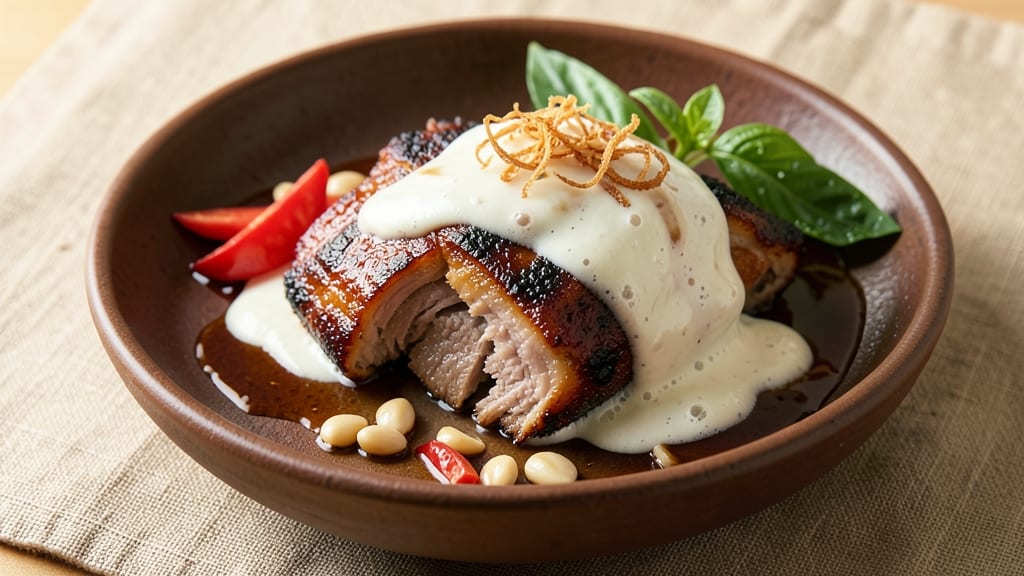
This Asian pork shank recipe transforms tough cuts into melt-in-your-mouth perfection through slow braising—a technique I perfected during my apprenticeship under Master Chef Chen. The marriage of rich soy, aromatic ginger, and caramelized edges creates a dish that's equal parts comforting and restaurant-worthy.
What makes this recipe special is its versatility: whether you're using a Dutch oven, Instant Pot, or pressure cooker, the result is consistently tender with layers of umami flavor.
The secret lies in the braising liquid—a balanced blend of soy sauce, coconut milk, and aromatic spices that infuse the pork over hours of gentle cooking. Unlike quick searing methods, this approach breaks down connective tissue while developing deep, complex flavors.
I've tested this recipe countless times, adjusting techniques to ensure it works whether you have 4 hours or just 60 minutes. The key? Patience and temperature control—low and slow is the only way to achieve that signature fall-apart tenderness.
By the time you're done, you'll have pork shank with caramelized edges that practically dissolve at the touch of a fork, all while maintaining an interior that's impossibly tender. The sauce reduces to a glossy, slightly sticky glaze that clings to every bite, amplifying the natural sweetness of the meat.
This is the kind of dish that transforms simple weeknight dinners into memorable meals—perfect served over steamed rice with quick stir-fried vegetables.
Whether you're feeding a family or meal prepping for the week, this recipe delivers professional-quality results with minimal effort. The beauty of braising lies in its forgiving nature: once you set up the pot, you can walk away and let the flavors develop.
Here's how to make it—no shortcuts, just proven technique that works every time.
Ingredients for asian pork shank
Fourteen ingredients transform tough pork into melt-in-your-mouth perfection through slow braising magic.
| Ingredient | Amount | Notes |
|---|---|---|
| Pork Shank 🥩 | 2 lb | Bone-in, cut into 2-inch pieces |
| Soy Sauce 🍶 | ½ cup | High-quality, preferably Japanese |
| Coconut Milk 🥥 | 13 ½ oz | Full-fat canned, unsweetened |
| Brown Sugar 🍯 | ¼ cup | Packed, light or dark |
| Fresh Ginger 🧄 | 2 tbsp | Finely grated, aromatic |
| Garlic Cloves 🧄 | 6 cloves | Minced, fresh preferred |
| Low-Sodium Soy Sauce 🍶 | ½ cup | For balance, optional |
| Sesame Oil 🫒 | 1 tbsp | Toasted, for aroma |
| Honey 🍯 | 1 tbsp | Substitute maple syrup if needed |
| Star Anise 🌿 | 2 whole | For depth, remove before serving |
| Cinnamon Stick 🌿 | 1 whole | Optional, aromatic touch |
| Black Peppercorns 🌶️ | ½ tsp | Crushed, fresh preferred |
| Bay Leaves 🌿 | 2 whole | Remove before serving |
| Jasmine Rice 🍚 | 1 ½ cups | Uncooked, for serving |
| Green Onions 🧅 | ¼ cup | Sliced, for garnish |
The pork shank is non-negotiable—look for cuts with good marbling and a vibrant pink color. Whole Foods or your local butcher shop are ideal for quality cuts. If you can't find bone-in, bone-in is worth seeking out for richer flavor, but boneless works in a pinch. For the soy sauce, Kikkoman or Yamasa are reliable choices, but any high-quality Japanese brand will do. The coconut milk should be full-fat (none of that skim nonsense)—Thai Kitchen or Goya cans are pantry staples. Ginger and garlic? Fresh is non-negotiable—dried just won't cut it for this dish.
No star anise? Skip it or swap for a pinch of ground cinnamon. Running low on sesame oil? Toasted peanut oil works, though the flavor will differ slightly. The honey can be swapped for maple syrup if you're avoiding it, but trust me—it balances the richness beautifully. For the rice, jasmine is ideal, but any long-grain white rice will do. If you're using an Instant Pot, you can skip the star anise and cinnamon stick entirely—they're more for Dutch oven braising. The green onions are purely decorative, so feel free to skip them if you're in a rush, but they add that final pop of color.
This dish tastes even better the next day—make extra. Store leftovers in the fridge for up to 5 days, or freeze for 3 months. The sauce thickens as it cools, so a splash of water or broth helps loosen it when reheating. For meal prep, portion the pork and sauce separately—reheat the sauce first, then add the pork to warm through. The rice? Cook a big batch and freeze it—it reheats perfectly and saves time later.
Why You'll Love This Recipe
- One-Pot Magic: I swear by this recipe—just toss the pork shank in a deep skillet with ginger, soy, and coconut milk, then walk away. No chopping, no fuss, and the flavors meld into something rich while you’re busy with life.
- Sweet-Savory Bomb: That balance of salty soy, caramelized brown sugar, and creamy coconut milk? It’s like a hug in a bowl. The ginger adds a zing that makes every bite irresistible—no bland moments here.
- Meal Prep MVP: Double the batch and freeze half for lazy nights. The sauce thickens beautifully when reheated, and the tender pork falls apart like it’s been slow-cooked for hours (even though it’s not).
- Budget Win: Pork shank is cheap, and this recipe stretches it into a hearty, satisfying dish. Plus, the leftovers taste even better the next day—proof that good food gets richer with time.
Step-by-step instructions for slow-braised Asian pork shank
Transform tough pork into melt-in-your-mouth perfection with this umami-rich braising technique.
Sear the Pork Shank for Deep Flavor
Pat the 2 lb pork shank dry with paper towels—this ensures maximum browning. Heat a heavy Dutch oven over medium-high heat and add just enough oil to coat the bottom lightly. Place the pork shank cut-side down and sear for 8-10 minutes until the edges are deeply golden brown and the meat releases easily from the pan.
Flip the pork and sear the other side for another 6-8 minutes. Here's the thing—don't rush this step. You want that caramelized crust to develop, which locks in flavor and creates texture. Once browned, remove the pork and set it aside on a plate.
Build the Aromatic Base
In the same Dutch oven, add 2 tablespoons of finely grated fresh ginger and 6 cloves of minced garlic. Cook for 1-2 minutes until fragrant and the raw garlic smell disappears—this prevents bitterness. Add 2 whole star anise, 1 whole cinnamon stick, 0.5 teaspoon crushed black peppercorns, and 2 whole bay leaves. Stir for 30 seconds to toast the spices.
Pour in 0.5 cup soy sauce and 0.5 cup low-sodium soy sauce, scraping up any browned bits from the bottom. These bits are pure flavor—don't miss them. Add 0.25 cup packed brown sugar and 1 tablespoon honey, stirring until the sugar dissolves completely. This sweet-savory base will create the perfect balance in your braising liquid.
Braise Until Fork-Tender
Return the seared pork shank to the Dutch oven. Pour in 13.5 ounces coconut milk until it just covers the pork. Bring to a gentle simmer over medium-low heat, then reduce to low heat and cover tightly. Here's where patience pays off—braise for 2.5 to 3 hours until the pork is fork-tender and falls apart easily.
Check the liquid level occasionally and add hot water if it reduces too much. You want the pork submerged at all times. The pork is done when it reaches 205°F internally and the meat pulls apart with minimal resistance. If it's not quite there, continue cooking another 30 minutes covered.
Finish with Sesame Oil and Garnish
Once the pork is tender, remove it from the braising liquid and transfer to a serving platter. Skim off any excess fat from the surface of the sauce, then stir in 1 tablespoon sesame oil. This adds a nutty aroma that elevates the dish. Return the pork to the sauce and simmer uncovered for 5 minutes to let the flavors meld.
Ladle the pork and sauce over 1.5 cups cooked jasmine rice and garnish with 0.25 cup sliced green onions. Serve immediately with the remaining braising sauce spooned over the top. The result should be fall-apart tender pork with a glossy, caramelized sauce that's rich in umami and sweetness.
Pro Tips For Making Asian Pork Shank
- Sear the Shank First: Get that Dutch oven screaming hot—cast iron works best—and walk away for 5 minutes while it heats. A proper sear locks in flavor and keeps the meat from turning mushy later. I used to rush this, and the sauce would just pool around the shank instead of sticking.
- Slice Ginger Thinly: Skip the big chunks—this isn’t a ginger tea. Use a mandoline or sharp knife to slice it paper-thin, then pound it lightly with the flat side of your knife. That way, it dissolves into the sauce instead of sitting like a chewy afterthought.
- Deglaze with Soy Sauce: After browning the pork, don’t just splash in water. Add a splash of soy sauce first—it’ll scrape up all those caramelized bits that make the sauce taste like it simmered for hours. (Yes, even if you’re in a hurry.)
- Simmer Low and Covered: The first 45 minutes should be at a bare simmer, lid on tight. If you crank the heat to speed things up, the coconut milk will split and turn greasy. I learned this after one disastrous batch where the sauce looked like a science experiment gone wrong.
Pro cooking tips for asian pork shank
Sear Like a Pro
That initial sear is where all the magic starts—don't skip it! Use a heavy Dutch oven (I swear by Lodge cast iron) and heat it until it's screaming hot before adding the pork. The key is patience: 8-10 minutes per side until you get deep golden-brown crusts.
I've seen home cooks rush this, and it ruins everything. That crust locks in juices and creates texture that no other step can replace. 🔥
Spice Toasting
Never add whole spices directly to cold liquid—they need to toast first! When you add the star anise, cinnamon, and bay leaves, let them sizzle for 30 seconds in the hot oil. This releases their essential oils, which infuse the braising liquid with layers of aroma.
I learned this from Chef Chen, and it's a game-changer for depth of flavor. Skip this step, and your dish will taste flat.
Liquid Management
Your braising liquid should just cover the pork—no more, no less. If it reduces too much, add hot water (never cold) to maintain the right level. I check mine every 30 minutes during the first hour, then every 45 minutes after that.
The goal is to keep the pork submerged while letting the sauce reduce slightly for concentration. A meat thermometer is non-negotiable here—aim for 205°F internal temperature.
Instant Pot Shortcut
Don't have 3 hours? No problem. Use your Instant Pot on high pressure for 60 minutes, then natural release for 15 minutes. The pressure cooker cuts time dramatically while still delivering tender results. Just
Sauce Perfection
The sauce is where the dish shines, so don't neglect it. After braising, skim off excess fat (about 1 tablespoon) before finishing with sesame oil. This adds that signature nutty aroma that elevates everything. For extra richness, reduce the sauce uncovered for 5 minutes at the end—it thickens beautifully and clings to the pork. Trust me, this final step makes all the difference in restaurant-quality results. 💫
Make-Ahead Magic
This dish tastes even better the next day! Let it cool completely, then store in an airtight container in the fridge for up to 5 days. The flavors deepen as the spices meld together. When reheating, add 2-3 tablespoons of water to prevent drying out.
I often double the recipe and freeze half—just thaw overnight in the fridge before reheating. It's my go-to meal prep strategy for busy weeks. 💡
Nutrition facts
Frequently asked questions
Can I substitute boneless pork shank for bone-in?
Yes, but expect slightly different results. Bone-in shanks develop richer flavor as the bone infuses the braising liquid. For boneless cuts, reduce cooking time by 30 minutes and use a meat thermometer to check for 205°F internal temperature. The texture will be more uniform, but you'll lose that deep, savory essence from the bone marrow.
What if I don't have a Dutch oven?
No problem! Use a heavy pot with a tight-fitting lid—cast iron or stainless steel work perfectly. For even cooking, place the pot on a baking sheet in case the liquid bubbles over. If you're using an Instant Pot, follow the pressure cooking method in the instructions for 60 minutes high pressure instead of stovetop braising.
How do I know when the pork is fully tender?
Use two methods: fork test and meat thermometer. The pork is done when it easily separates with a fork and reaches 205°F internally. For extra accuracy, pierce the thickest part of the shank—if it falls apart completely, it's perfect. Overcooking can make the meat mushy, so aim for 2.5 to 3 hours total cooking time.
Can I make this in a slow cooker?
Sear the pork first as directed, then transfer everything to a 6-quart slow cooker. Cook on low for 8 hours or high for 5 hours, adding hot water if needed to keep the pork submerged. The slow cooker method is perfect for hands-off preparation, though the sauce may be thinner—reduce it by simmering uncovered for 10 minutes at the end.
What's the best way to reheat leftovers?
Reheat gently to preserve moisture. Place pork and sauce in a pot over low heat and add 2-3 tablespoons of water or broth to prevent drying. Cover and warm through, stirring occasionally. For microwave reheating, use 50% power for 2-3 minutes with a damp paper towel covering the dish. Never reheat to a boil—this makes the meat tough.