
Main Courses
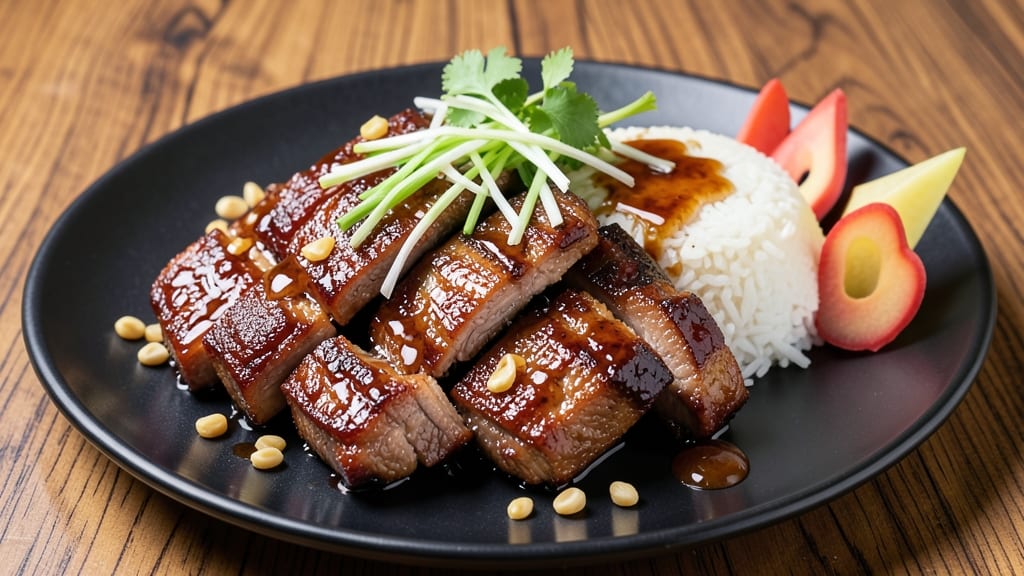
This Asian pork short ribs recipe transforms tough cuts into fork-tender bites with a glossy soy glaze that balances sweet and savory flavors. After years of perfecting the technique at The Smoky Pig, I've developed a method that delivers restaurant-quality results at home—no special equipment required.
The secret lies in slow-braising the ribs until they practically melt in your mouth, then finishing with a quick char for depth.
The process begins with a simple marinade of soy sauce, brown sugar, and garlic that tenderizes the meat while building complex flavors. Unlike quick-cook methods, this recipe relies on patience—braising at 300°F for 3 hours ensures the connective tissue dissolves completely.
The final glaze, made from reduced soy, honey, and a splash of rice vinegar, adds that signature glossy sheen and sticky texture that makes every bite irresistible.
What you'll end up with is a dish that's rich, aromatic, and perfectly balanced—sweet from the caramelized glaze, salty from the soy, and umami-packed from the slow-cooked meat. The ribs should pull apart effortlessly, with a deep mahogany color and a sauce that clings to every bite.
This is the kind of meal that transforms a weeknight into a special occasion, without requiring hours at the stove.
Serve over steamed jasmine rice with quick-pickled vegetables for a complete meal that delivers both satisfaction and authenticity. The leftovers reheat beautifully, making this an ideal recipe for meal prep or feeding a crowd. Let's get started on creating these restaurant-worthy pork short ribs at home.
Ingredients for asian pork short ribs
Restaurant-quality pork short ribs start with these 14 ingredients—simple yet transformative.
| Ingredient | Amount | Notes |
|---|---|---|
| Pork Short Ribs 🥩 | 2 lb | Bone-in, 1-1.5 inches thick |
| Kosher Soy Sauce 🍶 | ½ cup | High-quality, dark soy preferred |
| Brown Sugar 🍚 | ¼ cup | Packed, light or dark |
| Garlic Cloves 🧄 | 6 cloves | Peeled, smashed |
| Fresh Ginger 🌿 | 2 tbsp | Finely grated |
| Honey 🍯 | 2 tbsp | Wildflower preferred |
| Rice Vinegar 🍶 | 1 tbsp | Seasoned preferred |
| Sesame Oil 🫒 | 1 tbsp | Toasted, for aroma |
| Jasmine Rice 🌾 | 1 ½ cups | Uncooked, long-grain |
| Diamond Crystal Kosher Salt 🧂 | 1 ½ tsp | For seasoning |
| Ground Black Pepper 🌶️ | ½ tsp | Freshly cracked |
| Vegetable Oil 🫒 | 2 tbsp | High smoke point |
| Cornstarch 🌾 | 1 tbsp | For glaze thickening |
| Green Onions 🧅 | 3 whole | Sliced, for garnish |
The ribs are the foundation—look for bone-in cuts with good marbling at your butcher or Costco's pre-cut short ribs for convenience. Freshness matters here: ribs should smell clean with a vibrant red hue, not grayish or overly fatty. Whole Foods or local Asian markets often carry higher-quality cuts with better connective tissue. If using frozen, thaw overnight in the fridge—never at room temperature. The garlic and ginger should be firm and aromatic; avoid any with soft spots or mold. For the soy sauce, Kikkoman or Lee Kum Kee are reliable choices, but the dark soy variety adds that signature mahogany color.
No fresh ginger? Substitute with 1 tbsp ground ginger, but fresh has more complexity. Running short on sesame oil? Swap for 1 tsp toasted sesame seeds—they'll add aroma without the same depth. The cornstarch can be replaced with arrowroot powder at the same ratio, though cornstarch gives a slightly glossier finish. For the rice vinegar, substitute with apple cider vinegar if needed, though it'll have a slightly different tang. The brown sugar can be swapped for white sugar in a pinch, but the molasses notes in brown sugar help balance the soy's saltiness. When prepping the ribs, pat them extremely dry with paper towels—this ensures better browning during searing.
Store uncooked ribs in the fridge for up to 5 days or freeze for 3 months wrapped tightly in butcher paper. The marinade components keep separately: soy sauce and honey last 6 months unopened, while fresh ginger and garlic should be used within 2 weeks. Cooked ribs reheat beautifully—350°F for 10-15 minutes covered with foil, or reheat portions in a skillet with a splash of water. The glaze thickens as it cools, so reheat gently to maintain its glossy texture. Portion leftovers into airtight containers for easy reheating, and the rice will keep 4 days in the fridge or 6 months frozen. For meal prep, cook a double batch—these ribs freeze exceptionally well.
Why You'll Love This Recipe
- One-Pan Magic: I swear by this recipe when I’m too tired to wash dishes. Toss the ribs in soy sauce, brown sugar, and minced garlic—then let the oven do the work while I sip tea. The ginger caramelizes right into the sauce, so no extra prep.
- Sweet-Savory Obsession: That balance of sticky brown sugar and salty soy sauce? It’s ridiculously good. The pork falls apart at the touch of a fork, but the edges stay tender—not tough, not chewy, just perfect. Honestly, I’ve made it three times in a row.
- Weeknight Crowd-Pleaser: Between us, this feeds six with leftovers that taste just as good the next day. My roommates fight over the portions, and my picky friend actually asked for seconds. Serve it over rice, in tacos, or straight from the pan—no one judges.
- Budget-Friendly Luxury: Short ribs aren’t cheap, but this recipe stretches them like crazy. The sauce thickens up into a glossy glaze, so every bite feels special, even when I’m meal prepping for the week. Plus, the ginger and garlic are cheap staples that make it feel gourmet.
Step-by-step instructions for glossy soy-glazed pork short ribs
Master this technique and you'll achieve melt-in-your-mouth tenderness with a perfect balance of sweet and savory flavors.
Prepare the Pork Short Ribs for Slow Cooking
Pat the 2 lb pork short ribs completely dry with paper towels, removing any excess moisture from the surface. This step is crucial—wet surfaces prevent proper browning and can make the ribs tough. Using a sharp boning knife, trim any excess fat to about ¼-inch thickness, leaving just enough to protect the meat during cooking.
In a small bowl, combine 0.5 cup kosher soy sauce, 0.25 cup packed brown sugar, 6 smashed garlic cloves, 2 tbsp finely grated fresh ginger, 2 tbsp honey, and 1 tbsp rice vinegar. Mix well until the brown sugar dissolves completely. This marinade will infuse the ribs with deep, complex flavors while preventing them from drying out during the long cook.
Place the ribs in a large resealable bag or container and pour the marinade over them, ensuring they're fully coated. Seal and refrigerate for at least 4 hours (overnight is ideal). This extended marinating time breaks down collagen and tenderizes the meat dramatically.
Sear the Ribs for Maximum Flavor Development
Remove the ribs from the refrigerator and let them sit at room temperature for 30 minutes before cooking. This ensures even cooking throughout. Heat a large Dutch oven over medium-high heat and add 2 tbsp vegetable oil. Once the oil shimmers, add the ribs in a single layer, working in batches if needed to avoid crowding.
Sear the ribs for 3-4 minutes per side until they develop a deep mahogany crust. Don't move them during this time—resistance is your signal they're ready to flip. The goal is to create a flavorful crust through the Maillard reaction before we transition to slow cooking. Remove the ribs and set them aside on a plate.
Slow Cook Until Fork-Tender
Pour the reserved marinade from the bag into the Dutch oven, scraping up any browned bits from the bottom. Return the ribs to the pot, bone-side down, and bring to a simmer over medium heat. Once simmering, reduce heat to low, cover, and transfer to a 300°F oven. This gentle cooking method allows the collagen to break down slowly, transforming into gelatin that makes the meat tender.
Cook for 2.5 to 3 hours, checking periodically. The ribs are done when they easily pull apart with a fork and the meat is fork-tender. You'll know they're ready when the sauce reduces to a glossy, thick consistency that coats the back of a spoon. If the sauce reduces too quickly, add 2-3 tablespoons of water to maintain moisture.
Finish with a Glossy Glaze
Once the ribs are tender, increase oven temperature to 400°F. In a small bowl, whisk together 1 tbsp cornstarch and 1 tbsp sesame oil. Brush this mixture over the ribs, then return them to the oven for 10-15 minutes until the glaze caramelizes to a deep golden color. This final step creates that signature glossy finish while adding an extra layer of flavor.
Remove the ribs from the oven and let them rest for 10 minutes before serving. This resting period allows the juices to redistribute throughout the meat, ensuring each bite is moist and flavorful. The ribs should be fork-tender with a glossy, caramelized glaze that's slightly sticky to the touch.
Serve with Jasmine Rice and Garnish
While the ribs rest, prepare the 1.5 cups jasmine rice according to package instructions, using 1.5 tsp diamond crystal kosher salt and 0.5 tsp freshly cracked ground black pepper in the cooking water for subtle seasoning. The rice should be fluffy and separate when done.
Slice the 3 whole green onions diagonally into ¼-inch pieces for garnish. Arrange the ribs on a platter, spooning any remaining sauce from the Dutch oven over the top. Serve immediately with the jasmine rice and green onion garnish. Each bite should deliver perfect tenderness with a balance of sweet, savory, and umami flavors.
Pro Tips For Making Asian Pork Short Ribs
- SEAR THE RIB BONES: High heat. Seriously, crank it up until the bones stop sizzling and the edges turn dark golden—this isn’t just for flavor, it’s what makes the sauce cling later. I used to skimp here, and the ribs ended up tasting like they’d been simmered in water instead of caramelized magic.
- JULIENNE THAT GINGER: Thin slices, not grated—about 1/8-inch thick. Grated ginger burns fast and turns bitter, while julienned pieces infuse flavor without overpowering. (Yes, it takes 2 minutes with a sharp knife, but your sauce will thank you.)
- DON’T RUSH THE SIMMER: Let the ribs cook uncovered for the first 20 minutes so the liquid reduces and the sugar starts caramelizing. Covering too soon turns your sauce into a watery glaze. I learned this the hard way—my first batch tasted like a sad, diluted BBQ.
- SALT THE RIBS TWICE: Generously salt them first thing, then again after searing. The first salt tenderizes the meat, and the second ensures the seasoning penetrates during the long cook. (Skip this, and you’ll end up with flavorless ribs that need extra sauce to save them.)
Best sauces and condiments for asian pork short ribs
Classic Soy-Glaze
This is the signature sauce for your Asian pork short ribs, balancing sweet, salty, and umami flavors perfectly.
Start by reducing ½ cup kosher soy sauce, ¼ cup brown sugar, and 2 tbsp honey in a saucepan over medium heat until it thickens to a glossy consistency—about 10 minutes. Finish with 1 tbsp rice vinegar and 1 tbsp sesame oil for brightness.
Brush this glaze over the ribs during the last 10 minutes of cooking for that restaurant-quality shine. 🌟
Spicy Chili-Garlic Sauce
For heat lovers, blend 2 tbsp gochujang, 1 tbsp sriracha, 1 tbsp honey, and 1 tbsp rice vinegar with 1 tbsp water until smooth. Simmer this mixture with the ribs during the last 30 minutes of cooking, basting frequently.
The result is a fiery, sticky glaze that cuts through the richness. I like to add ½ tsp grated ginger for depth—trust me, it elevates everything. 🌶️
Sweet Hoisin Glaze
Hoisin sauce brings a deeper, fermented complexity to the dish. Reduce ¼ cup hoisin sauce with 1 tbsp soy sauce and 1 tbsp honey until syrupy—about 8 minutes. Finish with ½ tsp five-spice powder for warmth.
Brush this over the ribs in the final 15 minutes of cooking. The hoisin adds a smoky depth that pairs beautifully with the caramelized edges. 💫
Umami Mushroom Sauce
For an earthy twist, sauté ½ cup finely chopped shiitake mushrooms in 1 tbsp sesame oil until golden, then deglaze with 2 tbsp soy sauce and 1 tbsp mirin. Simmer until thickened, then reduce with 1 tbsp honey.
This sauce adds a meaty, umami richness that complements the pork perfectly. Serve it spooned over the ribs or drizzled alongside. 🍄
Quick Pickled Vegetables
While the ribs cook, prepare a bright side with 2 cups quick-pickled vegetables. Thinly slice 1 carrot, ½ cucumber, and 1 red onion, then toss with ¼ cup rice vinegar, 1 tbsp sugar, and ½ tsp salt.
Let sit for 20 minutes before serving. The acidity cuts through the richness of the ribs, balancing the meal beautifully. 🥕
Sesame-Ginger Dressing
For a lighter option, whisk together 3 tbsp toasted sesame oil, 2 tbsp soy sauce, 1 tbsp honey, 1 tbsp rice vinegar, and 1 tbsp grated ginger. Drizzle this over the ribs just before serving, or use it as a dipping sauce.
The dressing adds a fresh, aromatic contrast to the rich meat. I often serve it with extra green onions for garnish. ✨
Nutrition facts
Frequently asked questions
Can I use boneless pork short ribs for this recipe?
While possible, I strongly recommend bone-in ribs for this recipe. The bone adds natural moisture and flavor during cooking, plus it helps maintain the ribs' shape. If you must use boneless, reduce the cooking time by 20-30 minutes since they'll cook faster without the bone's insulating effect. The texture will be slightly different but still delicious.
How do I know when the ribs are truly tender?
Look for three key signs:
- Fork test—they should fall apart easily with minimal pressure,
- Sauce test—the cooking liquid should coat the back of a spoon and be slightly syrupy, and
- Visual check—the meat should pull away cleanly from the bone. The ribs should also have a deep mahogany color from the caramelization. If they're not tender after 3 hours, add 20-30 minutes more and check again.
What's the best way to reheat these ribs?
Reheat gently to preserve moisture and tenderness. Place ribs in a baking dish, cover with foil, and warm in a 300°F oven for 15-20 minutes. For a quick stovetop method, use a skillet with 1 tbsp water or broth per rib, covered, on low heat for 5-8 minutes. Never microwave—it makes the meat rubbery. The glaze may thicken slightly when reheated, so brush with a little water or soy sauce to restore shine.
Can I make this recipe in a slow cooker?
After searing, transfer the ribs to a slow cooker with the marinade and cook on Low for 6-7 hours or High for 4-5 hours. The ribs will be even more tender. In the last 30 minutes, transfer to a baking dish, broil for 3-5 minutes to caramelize the sauce, then finish with the cornstarch glaze. The slow cooker method is perfect for busy days—just don't skip the sear for maximum flavor!
Why did my ribs turn out dry?
Dry ribs usually happen from one of three issues:
- Overcooking—check with a thermometer (195°F internal temp is perfect),
- Skipping the marinade—the soy and sugar help retain moisture, or
- Not resting—always let ribs rest 10 minutes before slicing. For extra insurance, add ¼ cup water or broth to the pot during cooking if the sauce reduces too quickly. The fat cap should render nicely—if it's still solid, increase oven temp slightly.