
Main Courses
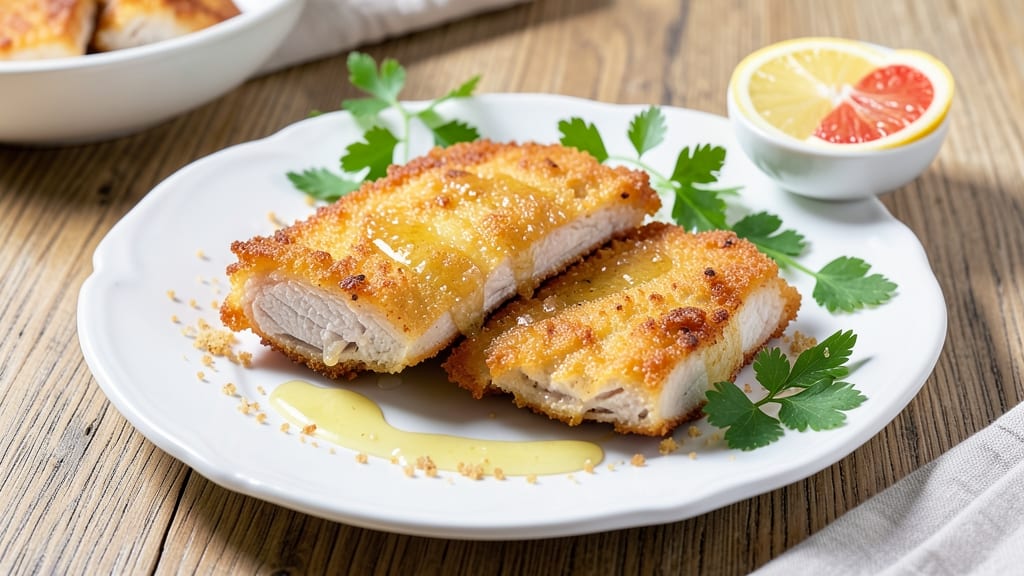
This authentic pork schnitzel recipe delivers the crispy-golden crunch and tender interior that makes it a classic Austrian centerpiece. I learned the proper technique from a German butcher in Charleston—thin-cut pork, precise breading, and controlled heat are non-negotiable for that perfect crunch.
The secret isn't just the breadcrumbs, but how you handle the meat before it hits the pan.
The traditional method starts with pounding the pork cutlets paper-thin—this ensures even cooking and that signature shatteringly crisp exterior. A simple three-step breading (flour, beaten egg, fine breadcrumbs) creates the perfect barrier, while high heat in the pan transforms it into golden perfection in under 20 minutes.
The key is patience: don't rush the frying, and let each side develop that deep golden color before flipping.
What you'll end up with is a restaurant-quality schnitzel that's crispy enough to stand up to lemon wedges but tender enough to melt in your mouth. Serve it with classic sides like potato salad or a fresh cucumber salad to complete the Austrian experience.
This isn't just a recipe—it's a taste of tradition that belongs on any dinner table.
For those who want to go further, I'll show you how to adapt this for Wiener schnitzel (using veal) or regional variations with different breading techniques.
The beauty of schnitzel is in its simplicity—once you master the basics, the possibilities are endless. Let's get started on making this classic dish at home.
Ingredients for authentic pork schnitzel
Pantry staples meet butcher-quality pork for that legendary Austrian crunch.
| Ingredient | Amount | Notes |
|---|---|---|
| Pork Cutlets 🥩 | 1 ½ lb | Paper-thin, pounded to even thickness |
| All-Purpose Flour 🌾 | 1 cup | Fine white flour for breading |
| Large Eggs 🥚 | 2 whole | Room temperature, beaten |
| Fine Breadcrumbs 🍞 | 1 ½ cups | Panko or fresh fine breadcrumbs |
| Unsalted Butter 🧈 | ½ cup | Melted for frying, full-fat preferred |
| Vegetable Oil 🫒 | ½ cup | High smoke point for frying |
| Diamond Crystal Kosher Salt 🧂 | 1 ½ tsp | Fine grain for seasoning |
| Freshly Ground Black Pepper 🌶️ | ½ tsp | Cracked peppercorns preferred |
| Lemon Wedges 🍋 | 4 whole | For serving, fresh squeezed |
| Fresh Parsley 🌿 | ¼ cup | Chopped, for garnish |
| Ice Cold Water 💧 | ½ cup | For egg wash consistency |
The pork cutlets are non-negotiable—look for center-cut pork loin chops at your butcher, about ½-inch thick. If buying pre-cut, ask for the leanest portion near the loin. The German butcher I learned from swore by pounding to ¼-inch thickness—use a meat mallet or rolling pin to avoid tearing. For breadcrumbs, Trader Joe's panko is my go-to, but fresh fine breadcrumbs (like those from a food processor) give the best texture. Keep everything ice cold until ready to bread—this prevents the meat from cooking prematurely.
No panko? Crush plain white bread into fine crumbs—toast it first for extra crispiness. Short on eggs? Aquafaba (chickpea brine) works at a 1:1 ratio, though texture won't be identical. The butter and oil combo is key—European-style unsalted butter adds richness, while the oil ensures even browning. For salt, Diamond Crystal kosher dissolves better than table salt. Fresh parsley isn't just garnish—it balances the richness with a bright finish. If you're feeling fancy, add a pinch of nutmeg to the breadcrumbs for that authentic Austrian touch.
Pound the pork and store it between parchment paper in the fridge for up to 24 hours—this keeps it tender. Breadcrumbs? Keep them in an airtight container for 1 week or freeze for 3 months. The beaten egg mixture stays fresh for 2 days in the fridge, covered. For maximum crispiness, pat the breaded cutlets dry before frying—this is where the magic happens. Leftovers? Store in a single layer on a wire rack to maintain crispness for 2 days—reheat in a 350°F oven for 5 minutes.
Why You'll Love This Recipe
- Three-Ingredient Crunch: The breading combo—flour, egg, breadcrumbs—is that perfect trio. No fancy mix-ins, just the classic trio that gives you that golden, shatteringly crisp crust every time. Honestly, the first time I nailed this, I did a little happy dance over the pan.
- Butter-Basted Magic: That sizzle in the butter? Pure flavor alchemy. The pork stays juicy while the crust turns into a caramelized dream—no oil splatter, no fuss, just rich, buttery goodness. Between us, I’ve tried other methods, but nothing beats the simplicity of melting butter for this.
- Weeknight to Dinner Party: Same recipe, different vibes. Toss it together for a lazy Tuesday or impress guests with minimal effort. My college roommate’s first bite at my schnitzel led to her asking for the recipe—and my phone number. (Okay, maybe I’m exaggerating, but still.)
- Budget-Friendly Leftovers: Pork cutlets stretch far, and the breading costs pennies. Double the batch, freeze half, and you’ve got a quick lunch or late-night snack ready in minutes. I’ll be real: my freezer is packed with these because they’re that reliable.
Step-by-step instructions for authentic pork schnitzel
Here's how to achieve that legendary crispy-golden crust while keeping the inside juicy and tender.
Prepare the Pork Cutlets
Start by placing the 1.5 lb pork cutlets between two sheets of plastic wrap. Using a meat mallet or rolling pin, pound them to an even ¼-inch thickness—this ensures even cooking. I press firmly but gently to avoid tearing the meat. The goal is uniform thickness so every bite cooks at the same rate and develops that perfect crunch.
Season both sides generously with 1.5 tsp Diamond Crystal kosher salt and 0.5 tsp freshly ground black pepper. The salt should visibly cling to the surface. Let the cutlets sit at room temperature for 15 minutes before breading. This resting period prevents cold spots in the oil that could make the breading soggy.
Create the Breading Station
Set up three shallow dishes: one with the 1 cup all-purpose flour, one with a mixture of the 2 whole large eggs and 0.5 cup ice cold water (whisked until smooth), and one with the 1.5 cups fine breadcrumbs. I like to use panko for extra crunch, but fresh fine breadcrumbs work beautifully too.
Dip each cutlet first into the flour, shaking off any excess. Then dip into the egg wash, letting any drips fall back into the dish. Finally, press the cutlet into the breadcrumbs, coating both sides completely. Place the breaded cutlets on a wire rack set over a plate—this prevents soggy bottoms from sitting on a surface. Repeat until all cutlets are breaded.
Heat the Oil to Peak Temperature
In a large skillet, combine the 0.5 cup unsalted butter and 0.5 cup vegetable oil. Heat over medium-high heat until the mixture reaches 350°F—this is crucial for that signature schnitzel crunch. I test the temperature by dropping in a small piece of breadcrumb; it should sizzle immediately and float to the surface. If it browns too quickly, the oil's too hot; if it doesn't bubble, it needs more time.
Once the oil is ready, carefully add the breaded cutlets, working in batches if needed to avoid crowding the pan. The cutlets should sizzle vigorously and turn golden brown within 3-4 minutes per side. Don't move them around—let the breading crisp evenly. Flip only when the edges lift easily and the bottom is deeply golden.
Drain and Serve Immediately
Transfer the crispy schnitzels to a wire rack set over paper towels to drain excess oil. They'll be glossy and golden with a crackly crust that shatters slightly when pressed. Serve immediately with the 4 lemon wedges and 0.25 cup chopped fresh parsley sprinkled on top. The acidity of the lemon cuts through the richness while the parsley adds a fresh finish.
For an authentic touch, I like to serve these with a simple side of lemon-dill potatoes or a crisp green salad. The key is to eat them right away while the crust is at its peak—schnitzel loses its crunch as it cools. Each bite should deliver that satisfying contrast between the crispy exterior and the juicy, tender pork inside.
Pro Tips For Making Authentic Pork Schnitzel
- Pound Thin, Not Perfect: Use a meat mallet or rolling pin to flatten the pork to about ¼-inch thickness—thinner than you think. I learned the hard way that even thickness cooks evenly, and over-flattening turns it rubbery. Aim for slightly uneven edges; they’ll crisp better than a laser-cut cutlet.
- Salt the Eggs: Add a pinch of salt to your beaten eggs before dredging the pork. The breading sticks tighter, and the salt balances the richness of the butter. (Yes, even if you’re using unsalted butter—trust me on this.)
- Start Hot, Finish Patient: Get your pan screaming hot with butter before adding the schnitzel, then immediately turn the heat to medium. High heat sears the crust, but too much burns the breadcrumbs before the meat’s done. Watch for golden edges, not black spots.
- Dry the Meat Like a Pro: Pat the pork cutlets thoroughly with paper towels after pounding—no wet spots. Damp meat steams instead of crisps, and the breading won’t adhere properly. I skip this step sometimes, and the difference in texture is night and day.
Essential equipment for this dish
Meat Mallet Essentials
Your first tool is a meat mallet—I use my vintage Lodge cast iron model with a 1.5 lb head. The weight is crucial: too light and you'll struggle to get even thickness; too heavy and you risk tearing the tender pork.
Look for one with a non-slip grip like the OXO Good Grips—it's a game-changer when your hands are wet from handling raw meat. For budget options, a 1 lb stainless steel mallet from Williams Sonoma works well. 💪
Skillet Selection
Cast iron is non-negotiable for schnitzel—it retains heat perfectly and creates that signature crisp. My go-to is a 10-inch Lodge pre-seasoned skillet, but a Le Creuset stoneware pan also works beautifully.
Avoid non-stick coatings: they can't handle the high heat needed for proper browning. For electric stoves, I recommend a heavy-bottomed stainless steel skillet like All-Clad—it heats evenly and prevents hot spots.
Temperature Control Tools
You'll need a thermometer to monitor your oil temperature—nothing ruins schnitzel like oil that's too hot or too cool. I swear by the Thermoworks Thermapen ONE for its instant-read accuracy. For a budget option, the Taylor Precision Products digital thermometer works well.
Keep it handy to check that 350°F temperature—this is where the magic happens for that perfect golden crust. 🌡️
Breading Station Setup
Three shallow dishes are essential for your breading station. I use glass baking dishes (like Pyrex) because they're easy to clean and show when breadcrumbs need refreshing. For the egg wash, a whisk (I prefer OXO Good Grips) ensures a smooth, lump-free mixture.
Keep your breadcrumbs in a fine-mesh sieve or paper bag to prevent clumping—this makes dredging the cutlets much easier. A wire cooling rack placed over a plate is your best friend for keeping breaded cutlets crisp.
Optional Pro Upgrades
For the ultimate schnitzel experience, consider a deep-fat fryer like the Presto 03710—it gives you more precise temperature control and makes batch cooking easier. If you're serious about your schnitzel game, invest in a meat thermometer with a probe (like Meater) to monitor internal temperatures.
And for that authentic Austrian touch, a small mortar and pestle lets you crush fresh breadcrumbs with herbs like parsley or nutmeg right at your station. 🌟
Nutrition facts
Frequently asked questions
Can I use chicken or veal instead of pork?
This technique works beautifully with chicken breast (pounded to ¼-inch) for a lighter version, or veal for the classic Wiener schnitzel. Just note that veal needs slightly less pounding than pork—it's more delicate. The breading method stays identical, but veal cooks faster (2-3 minutes per side) due to its tenderness.
Why is my schnitzel soggy instead of crispy?
Three common culprits: oil that's too cool (350°F is non-negotiable), breading that's too thick, or not draining properly between breading steps. Pro tip: Pat breaded cutlets with a paper towel before frying to remove excess moisture. Also, never overcrowd the pan—this lowers oil temperature and steams the breading instead of crisping it.
How do I keep the pork tender?
Start with the right cut: center-cut pork loin chops are lean but tender when pounded properly. Never overcook—3-4 minutes per side is perfect. The secret? Let the meat rest 15 minutes after pounding and seasoning before breading. This relaxes the muscle fibers, preventing them from tightening up during cooking.
Can I make schnitzel ahead of time?
Not successfully! Schnitzel loses its crispiness as it cools. For make-ahead prep, bread the cutlets and freeze them on a wire rack (unfrozen). When ready to cook, thaw in the fridge overnight, then fry immediately. Serve with prepped sides like potato salad to keep the experience seamless.
What's the best way to reheat leftovers?
Schnitzel leftovers are rare, but if you have extras, reheat in a 350°F oven for 5-7 minutes on a wire rack (not a plate). For the stovetop, use low heat in a dry skillet for 1-2 minutes per side—just enough to warm through. Microwaving destroys the crispiness, so avoid it entirely.