
Main Courses
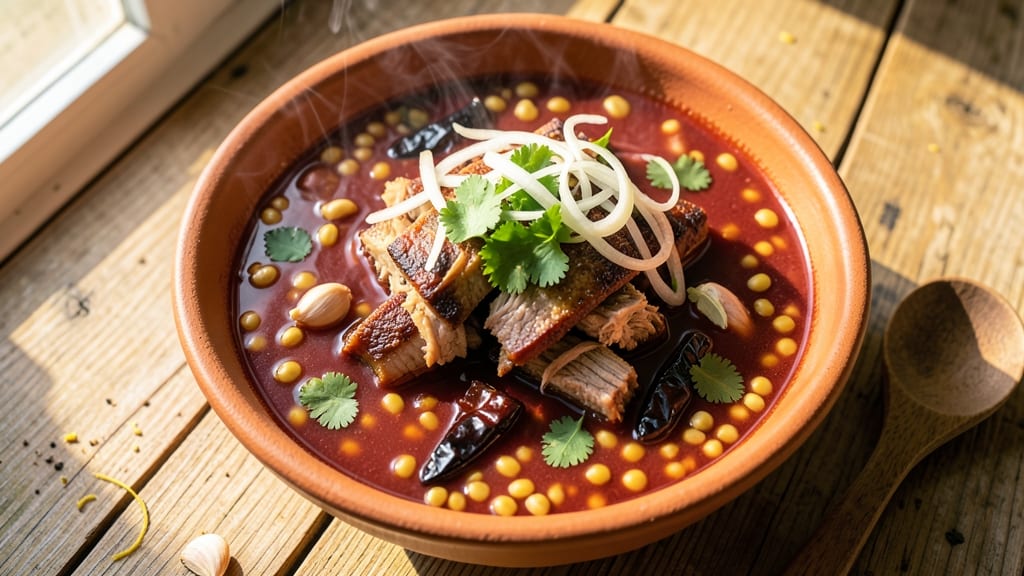
This authentic red pozole recipe brings the soul of Mexican home cooking to your table with its smoky depth and tender pork. The secret lies in slow-cooked pork shoulder and dried chilies that transform into a rich, complex broth.
I've perfected this recipe over years of studying traditional techniques—every element matters for that true homestyle taste.
The foundation starts with properly toasted guajillo and ancho chilies, which form the heart of the red broth. These chilies release their natural sweetness and smoky aroma when simmered with garlic, onions, and spices.
Meanwhile, the pork shoulder becomes fork-tender after hours of slow cooking, absorbing all those vibrant flavors. The hominy adds that signature creamy texture that balances the rich broth.
What you'll end up with is a steaming bowl of pozole that's deeply satisfying—tender pork, hearty hominy, and a broth so flavorful it makes every spoonful worth savoring. The traditional garnishes of shredded lettuce, radishes, lime, and onion add freshness and crunch, creating that perfect contrast.
This is comfort food at its finest, a dish that brings people together.
Perfect for gatherings or cozy weeknight dinners, this pozole serves as both a meal and an experience. The aroma alone will have everyone gathering around the table. Let's create this authentic Mexican classic that tastes like home.
Ingredients for authentic red pork pozole
Sixteen ingredients for a dish that tastes like Mexican home cooking. Every element matters for that true pozole experience.
| Ingredient | Amount | Notes |
|---|---|---|
| Pork Shoulder 🥩 | 4 lb | Bone-in for extra flavor |
| Yellow Hominy 🌽 | 3 cans | 15 oz each, drained |
| Guajillo Chilies 🌶️ | 6 whole | Stems/seeds removed |
| Ancho Chilies 🌶️ | 4 whole | Stems/seeds removed |
| White Onion 🧅 | 1 whole | Quartered, skin on |
| Garlic Cloves 🧄 | 8 cloves | Peeled, smashed |
| Cumin Seeds 🌿 | 1 tbsp | Toasted lightly |
| Ground Cumin 🌿 | 1 tsp | For depth |
| Oregano 🍃 | 1 tbsp | Mexican preferred |
| Bay Leaves 🍃 | 2 whole | Dried, standard size |
| Chicken Broth 💧 | 6 cups | Low-sodium preferred |
| Salt 🧂 | 2 tsp | Adjust to taste |
| Lime 🍋 | 4 whole | For serving |
| Radishes 🥕 | 1 lb | Sliced thin, for garnish |
| Iceberg Lettuce 🥬 | 1 head | Shredded, for garnish |
The chilies are non-negotiable—guajillo and ancho are the soul of red pozole. MexGrocer or Latin markets carry them dried and packed, but if you can only find them fresh, toast and dry them yourself. Look for chilies that are plump, not shriveled, and have a deep, rich color. The pork shoulder should have good marbling—Costco or local butchers often have excellent cuts. For the hominy, Goya brand is widely available and reliable, but any canned hominy will work. Toast your cumin seeds in a dry pan until fragrant—this adds depth that ground cumin can't match.
No guajillo or ancho? Ancho alone works in a pinch, but the flavor won't be as complex. Substitute 1 tbsp chili powder plus 1 tsp smoked paprika if you're completely out. Mexican oregano is different from regular oregano—find it at Latin markets for that authentic taste. The chicken broth can be homemade or store-bought, but avoid high-sodium versions. For the garnishes, radishes add crunch and color, while the lettuce keeps it fresh. If you can't find iceberg, romaine or butter lettuce work too, though the texture will differ slightly.
Pozole tastes even better the next day as flavors meld. Store leftovers in the fridge for 4-5 days, or freeze for 3 months. I like to portion mine into containers with a little broth—just reheat and add fresh garnishes. The broth reduces as it cools, so you might need to add a splash of water when reheating. Garnishes like lime, radishes, and lettuce should be added fresh when serving, not stored with the pozole.
Why You'll Love This Recipe
- I’ll be real: this makes enough for a party or a week of leftovers. My family fights over seconds, and I still have jars of broth in the fridge for lazy lunches. It’s the kind of dish that feels special enough for guests but easy enough to make when you’re just craving comfort.
- One-Pot Wonder: I swear by this recipe because it’s all in one pot—no chopping chaos, no last-minute scrambling. The pork shoulder simmers until tender while the chilies and onions build flavor right in the broth, so you’re not stuck with a million dirty dishes. Honestly, I’ve made it on nights when I’m too tired to do more than stir.
- Deep, Smoky Richness: Between the guajillo and ancho chilies, this broth has a warmth that just hits—not too spicy, not too sweet, but perfectly balanced. The hominy adds that satisfying chew, and the pork shoulder? It falls apart like it’s been slow-cooked for hours (even though it’s not). That crispy edge on the meat? Chef’s kiss.
- Feeds a Crowd (or Me): I’ll be real: this makes enough for a party or a week of leftovers. My family fights over seconds, and I still have jars of broth in the fridge for lazy lunches. It’s the kind of dish that feels special enough for guests but easy enough to make when you’re just craving comfort.
Step-by-step instructions for authentic red pozole
Here's the traditional method for crafting pozole that delivers smoky depth and perfectly tender pork.
Prepare the Chiles and Aromatics
Toast the 6 whole Guajillo Chilies and 4 whole Ancho Chilies in a dry skillet over medium heat for 1-2 minutes per side until fragrant and slightly charred. This step develops their natural sweetness and removes any bitterness. Transfer the toasted chiles to a bowl and cover with 6 cups hot Chicken Broth to soften for 15 minutes.
While the chiles soak, toast the 1 tbsp Cumin Seeds in the same skillet for 30 seconds until aromatic. Let cool, then grind with the 1 tsp Ground Cumin and 1 tbsp Oregano using a mortar and pestle or spice grinder. This creates a fragrant base for the pozole.
Cook the Pork Shoulder Until Tender
In a large Dutch oven, combine the 4 lb Pork Shoulder, 1 whole White Onion (quartered), 8 cloves Garlic Cloves (smashed), 2 whole Bay Leaves, and the toasted spice blend. Add enough water to cover the meat by 2 inches. Bring to a boil, then reduce heat to low and simmer uncovered for 3-4 hours until the pork is fork-tender and easily pulls apart.
The pork should have very little resistance when pierced with a fork, and the broth should be deeply infused with flavor. Skim any foam that rises to the surface during cooking to keep the broth clear.
Build the Pozole Base
Drain the soaked chiles and blend them with 1 cup of their soaking liquid in a food processor until smooth. Strain the mixture through a fine-mesh sieve to remove any fibrous bits. Return the chile paste to the Dutch oven with the cooked pork and remaining broth.
Add the 3 cans drained Yellow Hominy and 2 tsp Salt. Bring the mixture to a gentle simmer and cook for 30-45 minutes, stirring occasionally, until the hominy is heated through and the flavors have melded. The pozole should have a rich, slightly thick consistency with a deep red hue.
Serve with Traditional Garnishes
Ladle the pozole into bowls and let each person customize their serving with the prepared toppings. Thinly slice the 1 lb Radishes and shred the 1 head Iceberg Lettuce for fresh contrast. Cut the 4 whole Lime into wedges for a bright finish.
Serve immediately with warm corn tortillas. The combination of tender pork, smoky chiles, and fresh garnishes creates an authentic pozole experience that balances hearty flavors with refreshing textures.
Pro Tips For Making Authentic Red Pork Pozole
- Char the Chilies Right: I learned this the hard way—skipping the char makes the sauce taste flat. Toast the dried guajillo and ancho chilies in a dry skillet over medium-high heat until they smell smoky and their edges blacken. Flip them often so they don’t burn into bitter ash. This step unlocks the deep, earthy flavor that separates good pozole from great pozole.
- Salt the Pork Early: Don’t wait until the meat is tender to season. Rub the pork shoulder with salt, garlic powder, and a splash of vinegar the night before you cook it. Let it sit uncovered in the fridge—this draws out moisture, so the meat browns better and stays juicier during the long braise. (Yes, even if you’re impatient like me.)
- Simmer Low and Slow: After browning the pork and adding the broth, resist the urge to crank the heat. Pozole needs a steady simmer at 180°F (82°C) for at least 3 hours—this breaks down collagen into gelatin, making the broth rich and the meat fall-off-the-bone tender. If the pot foams too much, lower the heat or skim the foam. Patience here makes all the difference.
- Toast the Hominy First: Drain the canned hominy, rinse it well, and spread it on a baking sheet. Toast it in a 400°F (200°C) oven for 10-15 minutes until the edges crisp slightly. This step adds texture and prevents the hominy from turning mushy when it soaks up the broth later. (Skip this, and your pozole will taste like a sad, watery stew.)
Make-ahead tips for this authentic red pork pozole
Prep Ahead
Start by prepping the chiles and aromatics the night before. Toast and soak the guajillo and ancho chilies in 6 cups hot chicken broth for 15 minutes, then store in the fridge. This jumpstarts flavor development and saves you time the next day.
I always prep my spice blend too—grind the toasted cumin seeds, ground cumin, and oregano together and store it in a small jar. This way, when you're ready to cook, the prep work is already done. 💫
Pork Pre-Cook
For maximum tenderness, I recommend pre-cooking the pork shoulder in the Dutch oven for 2 hours before adding the chiles. This gets it partially tender and infused with the aromatics. After the initial cook, let it cool completely, then refrigerate overnight.
When you're ready to finish the pozole, simply reheat the pork with the chile mixture and hominy. This method ensures the pork falls apart beautifully without overcooking. Trust me, it's worth the extra effort.
Hominy Prep
Drain and rinse the 3 cans of hominy the day before and store them in an airtight container in the fridge. This removes excess sodium and makes them ready to add straight to the pot.
I also like to prep my garnishes ahead of time—slice the radishes and shred the lettuce and store them separately in containers with paper towels to keep them crisp. The lime wedges can be cut and stored in the fridge for up to 2 days without losing their brightness. ❄️
Broth Base
Make the chile paste a day ahead and store it in the fridge. Blend the soaked chiles with 1 cup of their soaking liquid, strain, and refrigerate in an airtight container. When you're ready to cook, simply reheat the paste with the pork and broth.
This concentrated flavor base ensures your pozole has that deep, smoky taste without you having to spend hours blending fresh. It's a game-changer for busy days.
Reheating Leftovers
Pozole tastes even better the next day, so don't hesitate to make extra. Store leftovers in airtight containers in the fridge for up to 4 days. To reheat, place the pozole in a pot over medium-low heat and add ¼ cup water or broth to prevent sticking.
Stir occasionally until heated through to 165°F. Garnish with fresh toppings before serving to keep everything crisp and vibrant. 🔥
Freezing Tips
For longer storage, freeze pozole in airtight containers for up to 3 months. I like to portion it into individual servings so I can pull out just what I need.
When reheating from frozen, thaw overnight in the fridge first, then reheat on the stovetop with a splash of water. The broth may thicken as it cools, so add a little extra liquid when reheating.
This method preserves the texture and flavor perfectly, making it easy to enjoy pozole anytime. ❄️
Nutrition facts
Frequently asked questions about authentic red pozole
Can I substitute regular cornmeal for hominy?
No, hominy is essential for authentic pozole—it's pre-cooked dried corn treated with lime, which gives it that signature creamy texture and mild flavor. Regular cornmeal won't provide the same tender, slightly sweet bite that makes pozole special. If you absolutely must substitute, try canned white corn (like sweet corn), but it won't be the same.
How do I know when the pork is fully tender?
The pork shoulder should be fork-tender with very little resistance when pierced—it should fall apart easily. For extra assurance, check by pressing between your fingers: if it crumbles like pulled pork, it's ready. If you're still concerned, cook 15-30 minutes longer—better to overcook slightly than have tough meat. The broth should also be deeply infused with flavor and slightly reduced.
What's the best way to make this dish vegetarian?
Replace the pork shoulder with 4 cups of extra-firm tofu or 2 large sweet potatoes (cubed). For the meaty texture, marinate the tofu in 1 tbsp lime juice + 1 tsp smoked paprika for 30 minutes before cooking. The broth will still be rich, but the dish loses its traditional soul—pozole is fundamentally a pork dish in Mexican culture.
Can I make this in a slow cooker?
Brown the pork shoulder first in a skillet, then transfer it to your slow cooker with all aromatics. Cook on low for 8 hours or high for 4-5 hours. After the pork is tender, remove it, blend the chiles, and return everything to the slow cooker for 30-45 minutes to meld flavors. The slow cooker method actually enhances the tenderness and depth of flavor.
Why does my pozole taste too bitter?
Bitter flavor usually comes from over-toasted chilies or using stems/seeds. Always remove stems and seeds before toasting—just the chile walls contain the sweet, smoky flavor. If it's too late, balance the bitterness with 1 extra lime wedge per serving or a pinch of sugar (just ½ tsp) to round out the flavors. The key is proper toasting—30-60 seconds per side until fragrant but not blackened.