
Main Courses
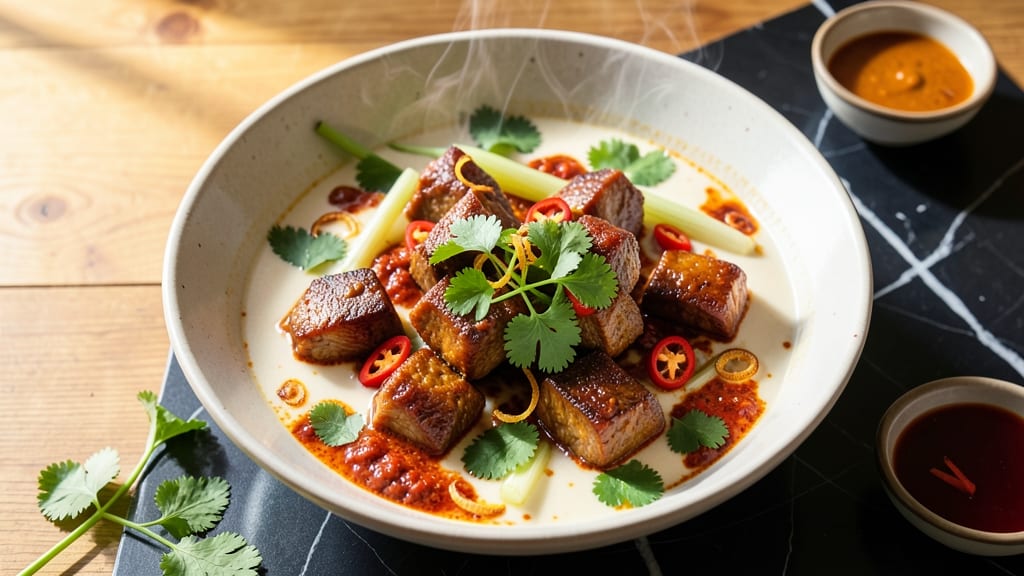
This authentic Thai red curry pork recipe with coconut milk delivers the bold, aromatic balance that makes street-side Thai food legendary.
The secret lies in layering fresh herbs, chili paste, and coconut milk to create a sauce that's both creamy and fiery, with tender pork falling apart at the touch of a fork.
I've perfected this recipe through years of testing—each element plays a role in that perfect harmony of spicy, sweet, and umami.
The foundation starts with a proper Thai red curry paste, simmered until fragrant before adding coconut milk to create a velvety base. Galangal and lemongrass infuse the sauce with earthy, citrusy depth, while Thai chilies deliver heat that's balanced by a touch of palm sugar.
The pork cooks until fork-tender, absorbing all that complex flavor while maintaining its texture.
What you'll end up with is a restaurant-quality curry that's rich, aromatic, and perfectly balanced—creamy coconut milk, tender pork, and a sauce that clings to every bite. The aroma alone will transport you to Bangkok, while the flavors satisfy with every spoonful.
This is the kind of dish that makes weeknight cooking feel like a culinary adventure.
Serve it with steamed jasmine rice to soak up every last drop of that fragrant sauce, and garnish with fresh Thai basil, lime wedges, and chopped cilantro for brightness. The contrast of textures—creamy, spicy, and fresh—makes this curry unforgettable. Let's get cooking!
Ingredients for authentic thai red curry pork recipe with coconut milk
Authentic Thai flavors start with these 15 essential ingredients—bold, aromatic, and perfectly balanced.
| Ingredient | Amount | Notes |
|---|---|---|
| Pork Shoulder 🥩 | 1 ½ lb | Cut into 1-inch cubes |
| Thai Red Curry Paste 🌶️ | 3 tbsp | Store-bought or homemade |
| Coconut Milk 🥥 | 1 can (13.5 oz) | Full-fat for creaminess |
| Galangal 🌿 | 1 piece (3-inch) | Substitute ginger if needed |
| Lemongrass 🌿 | 2 sticks (3-inch) | Bruised before using |
| Thai Chilies 🌶️ | 3 whole | Adjust for heat preference |
| Palm Sugar 🍯 | 2 tbsp | Or substitute brown sugar |
| Fish Sauce 🍶 | 1 tbsp | Red Boat preferred |
| Fresh Thai Basil 🌿 | ½ cup | For garnish |
| Lime 🍋 | 1 whole | Zested and juiced |
| Jasmine Rice 🍚 | 1 ½ cups | Uncooked, for serving |
| Vegetable Oil 🫒 | 1 tbsp | For cooking pork |
| Salt 🧂 | ½ tsp | Adjust to taste |
| Black Pepper 🌶️ | ¼ tsp | Freshly ground |
| Cilantro 🌿 | ¼ cup | Chopped for garnish |
The curry paste is non-negotiable here—Maesri or Maesri Gold from Asian markets nails the authentic flavor. Galangal and lemongrass are the secret weapons: bruise them with the side of your knife to release their oils. If you can't find galangal, ginger works in a pinch (though it's not the same). Pork shoulder stays tender—bone-in cuts like pork butt add extra flavor. For the coconut milk, full-fat is a must—light versions won't give that velvety texture. Grab a can of Thai Kitchen brand if you're at a regular grocery store.
No Thai chilies? Substitute bird's eye chilies or red pepper flakes—just go easy on the heat. Fish sauce is essential for umami, but soy sauce in a bind (though it won't taste exactly the same). Palm sugar is the key to that perfect sweet-spicy balance—brown sugar works if you can't find it. Fresh Thai basil is ideal, but regular basil or even cilantro will work if you're improvising. The lime should be bright and juicy—Mexican limes are perfect, but regular ones work too. For extra authenticity, toast your jasmine rice in the pot before adding water—it'll smell amazing.
This curry tastes even better the next day as flavors meld. Store leftovers in the fridge for 3-4 days or freeze for up to 3 months. I like to portion it into containers with rice—double the rice if you're freezing, as it absorbs more sauce when reheated. For serving, keep the garnishes separate: Thai basil and cilantro wilt fast, so add them fresh when plating. The sauce thickens as it cools, so add a splash of coconut milk when reheating if it's too thick.
Why You'll Love This Recipe
- One-Pot Magic: I swear by this recipe because it’s literally one pot—no chopping boards full of mess, no multiple pans. Toss in the pork, stir in the curry paste and coconut milk, and let the galangal and lemongrass do their thing while you sip a drink. Honestly, the cleanup is so minimal I’ll take it over any other curry I’ve made.
- Flavor Explosion: That first bite? It’s like a party in your mouth—spicy, creamy, with the pork falling apart just enough to soak up the rich coconut milk. The galangal adds this bright, citrusy kick that cuts through the heat, and the lemongrass? It’s the secret hero that ties everything together. Not too sweet, not too bland—just ridiculously good.
- Weeknight or Dinner Party: Between us, this curry is my go-to for both lazy Tuesdays and when I’ve got friends over. Double the batch, serve it with jasmine rice, and suddenly you’re the host who didn’t stress. Leftovers? Even better the next day—just reheat and enjoy that deeper, more complex flavor.
- Budget-Friendly Comfort: Pork shoulder is cheap, and a jar of red curry paste lasts forever, so this recipe stretches my grocery budget without sacrificing taste. Plus, the coconut milk makes it feel luxurious, not cheap. I’ll be real: my family fights over the leftovers, and I always end up making it again in a week. Solid win.
Step-by-step instructions for authentic Thai red curry pork
Here's how to build this vibrant curry from scratch—layering flavors just like Thai street vendors do.
Prepare the Aromatics and Pork
Start by cutting the 1.5 lb pork shoulder into 1-inch cubes—this ensures even cooking and tender meat. Set them aside. Now prep the aromatic base: peel the 3-inch galangal and 2 sticks of lemongrass, then bruise them by gently smashing with the side of a knife. Slice the 3 whole Thai chilies into rings (keep the seeds in for heat).
In a small bowl, mix together the 2 tbsp palm sugar, 1 tbsp fish sauce, 0.5 tsp salt, and 0.25 tsp black pepper. This sweet-savory-salty blend will balance the curry perfectly. I like to taste it now—it should be tangy with a hint of saltiness. If it needs more acidity, add a splash of lime juice.
Build the Curry Base
Heat a large pot or Dutch oven over medium heat and add the 1 tbsp vegetable oil. Once shimmering, add the pork cubes in a single layer and let them sear undisturbed for 3-4 minutes until golden brown on all sides. This step develops deep flavor—don't rush it. Remove the pork and set aside.
In the same pot, add the bruised galangal, lemongrass, and Thai chilies. Sauté for 1 minute until fragrant—you'll smell that earthy, citrusy aroma. Then add the 3 tbsp Thai red curry paste and stir for 30 seconds to toast the spices. This activates their flavors and prevents a raw taste in the finished dish.
Simmer the Curry
Pour in the 1 can (13.5 oz) coconut milk and stir well to combine with the paste. Return the pork to the pot, then add the sugar-fish sauce mixture. Bring to a gentle simmer and let it cook uncovered for 20-25 minutes, stirring occasionally. The curry should thicken slightly, and the pork should be tender when pierced with a fork.
Here's the thing—real Thai curries develop depth over time. If the sauce reduces too quickly, add 2-3 tablespoons of water to maintain the right consistency. Taste and adjust seasoning: need more heat? Add a pinch of salt. Too sweet? A squeeze of lime brightens it up.
Finish and Serve
Once the pork is fork-tender, stir in the 0.5 cup fresh Thai basil and let it wilt slightly into the sauce. Remove from heat and let it sit for 5 minutes—this resting step lets the flavors meld. Zest and juice the whole lime over the curry, then garnish with the 0.25 cup chopped cilantro. The basil and cilantro add freshness that cuts through the richness.
Serve the curry hot over 1.5 cups cooked jasmine rice—the fragrant rice soaks up all that beautiful sauce. The balance of spicy, sweet, and creamy flavors should sing in every bite. For extra authenticity, serve with a side of cucumber salad to cool the palate.
Pro Tips For Making Authentic Thai Red Curry Pork Recipe With Coconut Milk
- Sear the Pork First: High heat for 3-4 minutes until deep brown—this isn’t just for looks. The crust locks in flavor and keeps the meat from turning rubbery later. I learned this the hard way when I skipped it and ended up with bland, stringy pork.
- Bloom the Paste Low: Cook the red curry paste on medium-low for 5 minutes before adding coconut milk. This lets the spices wake up and deepens their aroma—rushing it here means weaker flavor. Think of it like a spice bath, not a sprint.
- Strain the Coconut Milk: Use full-fat canned coconut milk, but strain it through a fine-mesh sieve to remove the gritty bits. It’s a 30-second fix that prevents that unpleasant texture when you bite into something unexpected. (Yes, even if you’re impatient like me.)
- Add Galangal Last: Toss in the sliced galangal with the lemongrass in the final 5 minutes of simmering—this keeps its bright, citrusy kick instead of letting it turn bitter. It’s the difference between a curry that sings and one that just hums.
Health benefits of authentic thai red curry pork recipe with coconut milk
Anti-Inflammatory Powerhouse
Thai red curry is packed with turmeric and ginger (found in galangal), both potent anti-inflammatory compounds. Turmeric contains curcumin, which research shows may reduce chronic inflammation—something I've noticed helps my own joint comfort after meals.
The coconut milk adds healthy fats that support brain function and keep you satisfied longer. 💪
Protein-Packed Meal
Each serving delivers about 30 grams of protein from the pork shoulder, making this a filling yet balanced dish. Protein is essential for muscle repair and keeps energy levels stable—perfect for a weeknight dinner.
The combination of protein and fiber from vegetables (if added) makes this curry great for maintaining steady blood sugar.
Rich in Antioxidants
The vibrant red color comes from chilies, which are loaded with capsaicin and vitamin C. These antioxidants help combat oxidative stress in your body. Lemongrass adds citral, a compound with antimicrobial properties.
I always feel like I'm giving my body a little health boost when I eat this curry—it's like a flavorful vitamin shot!
Digestive Benefits
Galangal and ginger both aid digestion by stimulating stomach enzymes. The fish sauce provides glutamine, an amino acid that supports gut health. For me, this curry is particularly comforting after heavy meals—it helps my digestion while tasting amazing.
The coconut milk also contains lauric acid, which has antimicrobial properties.
Heart-Healthy Fats
Unlike many creamy sauces, this curry uses full-fat coconut milk which contains medium-chain triglycerides (MCTs). These healthy fats are metabolized quickly for energy and may support heart health when replacing less healthy fats.
The combination of coconut milk and lean pork makes this a surprisingly balanced dish for cardiovascular health.
Energy-Boosting Carbs
While not traditionally served with rice in Thailand, pairing this curry with jasmine rice adds complex carbohydrates that fuel your body with sustained energy. The palm sugar provides natural sweetness while offering a quick energy boost.
This makes it a perfect meal before an active day—you'll get both energy and satiety from one dish. ✨
Nutrition facts
Frequently asked questions
Can I substitute regular ginger for galangal?
You can use ginger as a substitute, but it won't be exactly the same. Galangal has a more citrusy, piney flavor that's essential for authentic Thai red curry. If substituting, use 1.5 times the amount of ginger (about 1.5-inch piece) and add a pinch of white pepper to mimic galangal's unique taste. For the best results, try to find fresh galangal at an Asian market.
How do I adjust the heat level?
Thai red curry should balance spicy, sweet, and savory flavors. If your curry is too spicy, add 1 tbsp more palm sugar or a squeeze of lime to balance it. For milder heat, remove the seeds from the Thai chilies before slicing. If you want more heat, add 1 extra chili or a pinch of red pepper flakes at the end. Taste as you go—this is key to getting it right!
Can I make this curry ahead of time?
This curry tastes even better the next day as flavors meld. Let it cool completely, then store in an airtight container in the fridge for 3-4 days. Reheat gently on the stove with a splash of water or coconut milk to restore creaminess. For longer storage, freeze for up to 3 months. The sauce will thicken when chilled, so add a little liquid when reheating.
What's the best way to serve this curry?
Serve it hot over steamed jasmine rice to soak up all that fragrant sauce. Traditional Thai meals include fresh herbs and crunchy elements to balance the richness. Try adding Thai basil, cilantro, lime wedges, and sliced cucumber on the side. For extra authenticity, serve with a side of green papaya salad or sticky rice to complete the meal.
Why did my curry separate?
This usually happens when coconut milk is added too quickly or the heat isn't controlled. To fix it, whisk the curry vigorously or blend it briefly with an immersion blender. For prevention, simmer the curry paste with coconut milk for 5 minutes before adding pork. If it happens during cooking, just stir well and let it cook a bit longer—the flavors will come together.