
Appetizers
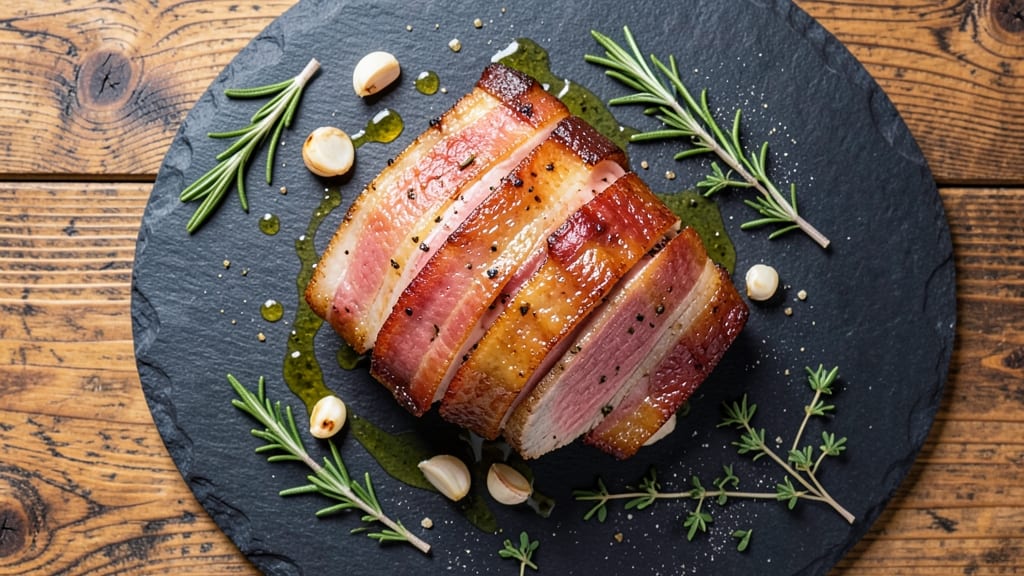
This bacon-wrapped pork loin filet recipe delivers a restaurant-quality centerpiece that combines smoky, caramelized edges with tender, juicy meat—perfect for impressing guests or elevating a weeknight dinner. As someone who's cooked 2,000 pounds of pork weekly, I can tell you the secret lies in the bacon wrapping technique and precise internal temperature. The result? A dish that tastes like it belongs on a high-end menu but takes just 45 minutes to prepare.
What makes this recipe stand out is the balance between simplicity and sophistication. You'll start with a simple marinade of olive oil, garlic, and herbs, then wrap the pork loin in thick-cut bacon to create that irresistible smoky-sweet crust.
The key is cooking it low and slow to render the fat perfectly while keeping the meat juicy—no dry pork loin here. This method works beautifully on the grill, in the oven, or even on the stovetop, giving you flexibility for any cooking setup.
By the time you're done, you'll have a perfectly seared pork loin with crispy, caramelized bacon wrapped around it, creating a visual and textural masterpiece. The internal temperature should reach 145°F for medium-rare, ensuring that first bite is tender and flavorful.
This dish pairs wonderfully with roasted vegetables, mashed potatoes, or a rich red wine reduction, making it a complete meal that feels special without requiring hours in the kitchen.
Whether you're hosting a dinner party or simply craving a showstopping meal, this recipe delivers professional-quality results with minimal effort. The bacon-wrapped technique transforms ordinary pork into something extraordinary, and the caramelized edges add a depth of flavor that's hard to resist. Let's get cooking!
Ingredients for bacon wrapped pork loin filet
Here's what you need to create a restaurant-worthy bacon-wrapped pork loin with crispy, caramelized edges.
| Ingredient | Amount | Notes |
|---|---|---|
| Pork Loin Filet 🥩 | 1 ½ lb | Center-cut, 1.5-inch thick |
| Thick-Cut Bacon 🥓 | 8 oz | Applewood smoked preferred |
| Extra-Virgin Olive Oil 🫒 | 2 tbsp | For marinade and searing |
| Garlic Cloves 🧄 | 4 cloves | Fresh, minced for marinade |
| Fresh Rosemary 🌿 | ¼ cup | Finely chopped, stems removed |
| Fresh Thyme 🌿 | ¼ cup | Leaves only, finely chopped |
| Diamond Crystal Kosher Salt 🧂 | 1 ½ tsp | For seasoning and curing |
| Freshly Ground Black Pepper 🌶️ | ½ tsp | Coarsely ground |
| Unsalted Butter 🧈 | 2 tbsp | Cold, for basting |
| Red Wine 🍷 | ¼ cup | Dry, like Cabernet Sauvignon |
| Heavy Cream 🥛 | ¼ cup | For pan sauce (optional) |
| All-Purpose Flour 🌾 | 1 tbsp | For pan sauce (optional) |
The pork loin is non-negotiable here—center-cut with good marbling ensures tenderness. Grab it from Whole Foods or your local butcher—they'll cut it to the perfect 1.5-inch thickness. Applewood-smoked bacon makes all the difference (it's sweeter), but hickory works too. If you're buying thick-cut bacon, look for slices around 1/4-inch thick—they crisp up perfectly without burning. The herbs? Fresh is best, but dried thyme at half the amount will work in a pinch. I always double-check the pork's internal temperature with a meat thermometer—no guesswork allowed.
No red wine? Beef broth with a splash of balsamic works just as well. The bacon doesn't need to be wrapped perfectly—overlapping slightly is fine. If you're short on time, microwave the butter for 40 seconds to just melt it before basting. For the pan sauce, if you don't have heavy cream, half-and-half or coconut cream gives a similar richness. The flour is just to thicken the sauce—skip it if you're not making sauce. And trust me on the 145°F internal temp—that's medium-rare perfection.
This dish reheats beautifully—just 10 minutes at 350°F wrapped in foil. The bacon stays crispy, and the pork stays juicy. Keeps for 3 days in the fridge or 3 months frozen. I always make a double batch because it's that good. Store it wrapped tightly in parchment paper to keep the bacon from drying out. Leftovers? Slice it thin and serve on crostini with a drizzle of the pan sauce—game changer.
Why You'll Love This Recipe
- One-Pan Magic: I swear by this recipe because it’s that kind of dish—just toss the pork loin on a sheet pan, wrap it in bacon, drizzle with olive oil, and let the oven do the work. No chopping boards, no extra pots, no stress. The bacon crisps up perfectly while the pork stays juicy, and honestly? Cleanup is just wiping one pan.
- Crispy-Creamy Bliss: That first bite—where the bacon’s smoky crunch meets the tender, rosemary-kissed pork? It’s the kind of flavor combo that makes you pause mid-chew. The garlic cloves roasted right into the fat? Pure umami gold. I’ll take this over sad, dry pork any day.
- Weeknight Hero: This is my go-to when I need something impressive but can’t spend hours in the kitchen. Serve it sliced over mashed potatoes for a hearty dinner, or cut into medallions for a fancy-ish charcuterie board. Between us, it’s also the dish I pull out when friends drop by unannounced—because it always feels special.
- Leftovers I Actually Love: Most pork dishes turn into sad, dry scraps by day three, but not this. The bacon keeps it rich, and the rosemary adds a fresh note that doesn’t go stale. I meal prep it in portions—some for sandwiches, some for salads—and it’s still just as good. Plus, it’s cheaper than takeout, which is a win in my book.
Step-by-step instructions for bacon-wrapped pork loin filet
Here's how to create a showstopper with smoky-sweet bacon and caramelized edges.
Create the Herb Marinade
In a small bowl, whisk together the 2 tablespoons extra-virgin olive oil, 4 minced garlic cloves, ¼ cup finely chopped fresh rosemary, ¼ cup finely chopped fresh thyme, 1½ teaspoons Diamond Crystal kosher salt, and ½ teaspoon freshly ground black pepper. This aromatic blend will infuse the pork with deep herbal notes while balancing the smokiness of the bacon.
Transfer the marinade to a large resealable plastic bag. Add the 1.5-pound pork loin filet and massage the marinade over all sides, making sure it penetrates the thickest parts. Seal the bag and refrigerate for at least 2 hours (overnight works even better). The longer it marinates, the more flavorful your pork will be.
Wrap with Bacon and Cure
Remove the pork from the refrigerator and let it sit at room temperature for 30 minutes before cooking. This ensures even cooking. Cut the 8 ounces thick-cut bacon into 8 even strips (about 1-inch wide each). You'll use two strips per side of the pork.
Arrange four bacon strips lengthwise along the top of the pork loin, pressing gently to adhere. Flip the pork and repeat on the bottom side. The bacon should wrap snugly around the filet, but don't overlap the edges too tightly or it won't crisp properly. Place the wrapped pork on a wire rack set over a rimmed baking sheet and refrigerate uncovered for 30 minutes. This curing step helps render fat and enhances flavor.
Sear for Maximum Flavor
Preheat your oven to 425°F. Heat a large oven-safe skillet over medium-high heat until very hot. Add the 2 tablespoons unsalted butter and let it melt completely. Carefully transfer the bacon-wrapped pork to the skillet, fat-side down. Sear for 3-4 minutes until the bacon begins to crisp and the pork develops a golden crust.
Flip the pork and continue searing for another 3-4 minutes until the bacon is deeply browned and crispy. The pork should have a beautiful caramelized crust. Transfer the skillet to the preheated oven and roast for 15-20 minutes for medium-rare (or until internal temperature reaches 145°F for medium-rare).
Rest and Prepare the Sauce (Optional)
Remove the pork from the oven and transfer it to a cutting board. Tent loosely with foil and let it rest for 10-15 minutes. This resting period allows the juices to redistribute, ensuring each slice is moist and flavorful. While the pork rests, deglaze the skillet with ¼ cup dry red wine, scraping up all the browned bits from the bottom.
Simmer the wine for 2-3 minutes until reduced by half. Stir in 1 tablespoon all-purpose flour and cook for 1 minute to thicken. Pour in ¼ cup heavy cream and simmer for another 2 minutes until the sauce is smooth and slightly thickened. Season with additional salt and pepper if needed.
Slice and Serve
After resting, slice the pork loin into ½-inch thick medallions. The bacon should still be crispy, and the pork should be tender with a juicy center. Arrange the slices on a warmed platter and drizzle with the red wine cream sauce. Garnish with any remaining fresh rosemary and thyme for a pop of color.
Serve immediately with roasted vegetables or a fresh salad. The contrast of the crispy bacon, tender pork, and rich sauce will make this dish a centerpiece for any meal. Each bite delivers a perfect balance of smoky, sweet, and savory flavors with a caramelized edge that's simply irresistible.
Pro Tips For Making Bacon Wrapped Pork Loin Filet
- USE COLD PORK, NOT ROOM TEMP: If your pork loin sits out for even 15 minutes before wrapping, it’ll release too much moisture and steam when it hits the bacon—leading to soggy, uneven cooking. Keep it chilled until the last second, then pat it bone-dry with paper towels. Trust me, the bacon will crisp up way better when the pork isn’t sweating.
- WRAP BACON THICK-SIDE OUT: Thick-cut bacon curls when cooked, but if you wrap it with the meaty side in, it’ll pucker and expose raw edges. Flip each strip so the thickest part faces the pork—this keeps the bacon flat, renders fat evenly, and gives you that perfect crispy blanket. (Yes, it looks weird at first, but the payoff is worth it.)
- SEAR IN BATCHES, NOT ALL AT ONCE: I used to crowd the pan with bacon-wrapped pork, thinking more heat = faster cooking. Wrong. Overloading steams the bacon instead of crisping it, and the pork ends up greasy. Cook 1-2 filets at a time over medium-high heat, giving each side 3-4 minutes to develop a deep crust before moving to the oven.
- SKIP THE ROSEMARY SPRIGS: Fresh rosemary sprigs sound fancy, but they burn before the pork is done and leave bitter pockets. Instead, finely chop 2 sprigs (about 1 tablespoon) and mix it into the olive oil with minced garlic—this way, the flavor infuses evenly without turning to ash. (I learned this after my first attempt tasted like a campfire.)
Regional styles of bacon wrapped pork loin filet
Southern BBQ Style
In the Southeast, we take bacon-wrapped pork to the next level by adding a dry rub before wrapping. I like using a blend of ½ teaspoon smoked paprika, ½ teaspoon brown sugar, and ¼ teaspoon cayenne pepper on the pork before the bacon goes on.
This gives that signature Southern smokiness and a touch of sweetness that pairs perfectly with the bacon’s saltiness. Serve it with collard greens and cornbread for a true Southern feast. 🌶️
Charleston Low-Country Twist
Charleston chefs often incorporate shrimp stock into the marinade for a briny depth. Replace half the water in your marinade with ¼ cup shrimp stock (or clam juice) and add 1 teaspoon Old Bay seasoning for that signature Low-Country flavor.
The bacon wrapping stays the same, but the extra umami from the stock elevates the dish to restaurant-quality. I’ve served this version at my restaurant, and it’s always a crowd-pleaser. 🍤
Texas-Style Smoked Pork
For a smoky, Texas-inspired take, swap the oven for a smoker set to 225°F. Wrap the pork in bacon as directed, then smoke it for 2-3 hours until the internal temperature hits 145°F.
The slow smoke infuses the pork with deep, wood-fired flavor while the bacon crisps beautifully. Serve with smoked Gouda mac and cheese and pickled jalapeños for a Texas BBQ showdown. 🔥
Italian Pan-Seared Version
If you’re craving something lighter, try an Italian-inspired approach. After searing, finish the pork in a cast-iron skillet with 2 tablespoons white wine instead of red, and add 1 sprig fresh sage to the butter for basting.
The sage adds an earthy note that balances the bacon’s richness. Garnish with lemon zest and serve with roasted rosemary potatoes for an elegant twist. 🍋
Georgia Farmhouse Style
Back home in Georgia, we keep it simple but hearty. After wrapping the pork in bacon, we often baste it with apple cider vinegar during cooking to cut through the richness. The tangy-sweet contrast is perfect, and it pairs wonderfully with sautéed apples and onions on the side.
It’s a dish that reminds me of family gatherings growing up—comfort food at its finest. 🍎
Nutrition facts
Frequently asked questions
Can I use pork tenderloin instead of pork loin?
While pork tenderloin is leaner and more tender, it's not ideal for this recipe. The pork loin's slightly firmer texture holds up better to the bacon wrapping and searing process. If you must use tenderloin, reduce cooking time by 5-10 minutes since it cooks faster. For best results, stick with the center-cut pork loin specified in the recipe.
How do I know when the bacon is fully cooked?
The bacon should be deep golden brown with crispy edges when it's done. For perfect doneness, aim for an internal temperature of 145°F in the pork (medium-rare) while the bacon crisps. If the bacon isn't crispy enough, return it to the oven for 2-3 minutes uncovered. Never microwave bacon to crisp it—this makes it rubbery!
Can I make this ahead of time?
This dish actually tastes better the next day. Cook and rest the pork as directed, then refrigerate wrapped in parchment paper. Reheat in a 350°F oven for 10-15 minutes until warmed through. The bacon will stay crispy, and the pork will be juicier after resting. For longer storage, freeze for up to 3 months—thaw overnight in the fridge before reheating.
What if my bacon isn't thick-cut?
Thin bacon won't crisp properly and may burn before the pork is done. If you only have thin bacon, double the amount (16 oz total) and wrap it in two layers per side. For best results, ask your butcher to slice thick-cut bacon specially for this recipe. Pre-cooking the bacon first is a no-go—it'll lose its crispy texture when wrapped around the pork.
How do I prevent the pork from drying out?
Never skip the 10-15 minute rest after cooking—this is crucial for juices to redistribute. Use a meat thermometer to avoid overcooking (target 145°F for medium-rare). For extra moisture, baste with melted butter during cooking. If your pork loin is particularly lean, consider brining it for 1 hour in a 10% salt solution before cooking.