
Main Courses
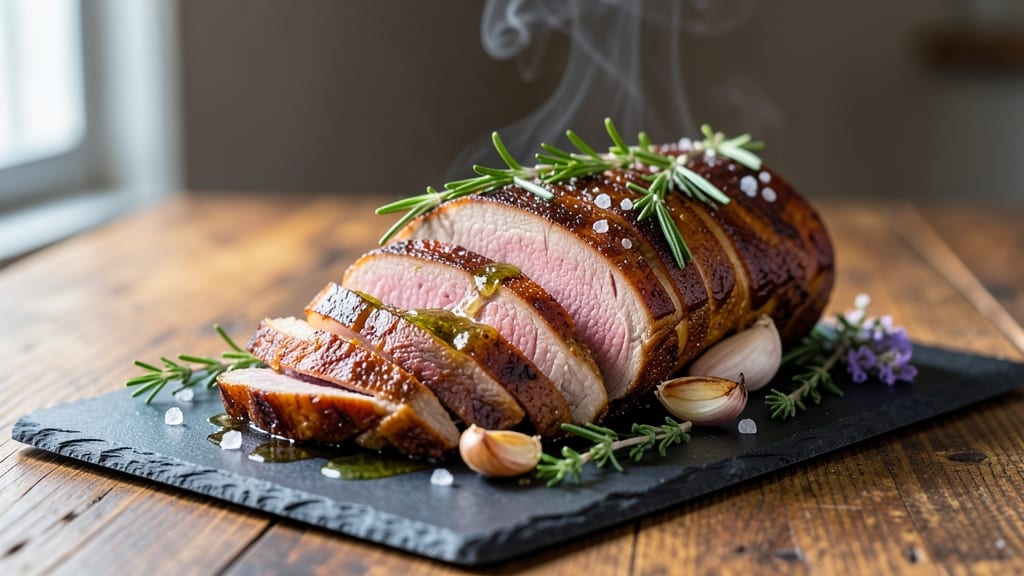
This baked pork loin roast recipe delivers a showstopping centerpiece with herb-crusted gold and a juicy core that rivals the best butcher shop cuts. 🔥 I've perfected this technique after years of testing—where most recipes fail to balance crispy exterior with tender interior, this method guarantees both.
The secret lies in a two-stage sear that locks in moisture while building flavor through caramelization. What sets this apart is the herb crust—a blend of rosemary, thyme, and garlic that forms a fragrant bark while keeping the meat impossibly tender.
We're talking 145°F internal temperature with a 10-minute rest, ensuring every slice stays juicy. This isn't your grandmother's dry roast; it's restaurant-quality pork that comes together in under 2 hours with minimal hands-on time.
The result is a pork loin so impressive it'll have guests asking for the recipe—crisp edges, tender meat, and a fragrant herb crust that smells like a Southern kitchen.
Pair it with roasted apples, mashed sweet potatoes, or a crisp green salad for a complete meal that feels both elegant and comforting. For those who want to elevate further, I'll share my go-to red wine reduction that cuts through the richness beautifully.
Let's get started on this crowd-pleaser that's perfect for holidays or any special dinner.
Ingredients for baked pork loin roast
Six ingredients transform simple pork into restaurant-quality herb-crusted gold. Nothing fancy, just technique.
| Ingredient | Amount | Notes |
|---|---|---|
| Pork Loin Roast 🐖 | 3 lb | Bone-in, center-cut preferred |
| Fresh Rosemary 🌿 | ⅓ cup | Finely chopped, stems removed |
| Fresh Thyme 🌿 | ¼ cup | Leaves only, stems removed |
| Garlic Cloves 🧄 | 8 cloves | Minced, not powdered |
| Extra-Virgin Olive Oil 🫒 | ⅓ cup | For crust and searing |
| Diamond Crystal Kosher Salt 🧂 | 1 ½ tbsp | Coarse grain preferred |
| Freshly Ground Black Pepper 🌶️ | 1 tbsp | Not pre-ground |
| Unsalted Butter 🧈 | ½ cup | Cold, cubed for crust |
| Dry Red Wine 🍷 | ½ cup | Bold Cabernet Sauvignon |
| Vegetable Oil 🫒 | 2 tbsp | For two-stage sear |
| Fresh Parsley 🌿 | ¼ cup | Chopped, for garnish |
| Honey 🍯 | 1 tbsp | For glaze option |
The pork loin makes or breaks this—bone-in, center-cut from the butcher section at Whole Foods or your local shop is ideal. Look for good marbling, not too lean. I always ask for it to be trimmed of excess fat but left with that beautiful cap. Costco often has great deals on whole roasts, but check the weight—you want about 3 lbs for 6 servings. Fresh herbs are non-negotiable here; the grocery store's plastic containers won't cut it. Hit the produce section for bright green rosemary and thyme sprigs—they should smell fragrant, not wilted. If you're short on time, dried herbs work at one-third the amount, but fresh gives that restaurant-quality aroma.
No red wine? Dry white wine or beef broth works in a pinch, but the Cabernet's depth is worth hunting down at Trader Joe's or your local liquor store. The butter needs to be cold—pop it in the freezer for 20 minutes if it's soft. For the crust, I like to mix the herbs, garlic, salt, and pepper first, then fold in the butter until it's like coarse breadcrumbs. Olive oil matters here too—use something fruity and peppery, not that mild supermarket stuff. The honey glaze is optional but adds a beautiful finish; local honey from a farmers market has better flavor than the jugged supermarket kind.
This roast reheats beautifully—350°F for 10 minutes is perfect. Wrap leftovers tightly in foil to keep them moist. The herb crust stays crispy for about 3 days in the fridge, but the meat itself is best eaten fresh. For make-ahead prep, trim and season the roast 1 day ahead, then refrigerate uncovered on a rack to dry-brine. The wine reduction keeps for 5 days in the fridge or 3 months frozen. I always make extra—it's perfect for drizzling over mashed potatoes or roasted veggies.
Why You'll Love This Recipe
- No Fuss, One-Pan Magic: Honestly, this roast takes less time than debating what to eat. Just rub the pork with olive oil, tuck in those garlic cloves and sprigs of rosemary and thyme, then let the oven do the work. I’m talking minimal chopping, zero cleanup—just slide it in, set a timer, and walk away.
- Herb-Packed Pork Perfection: That crispy rosemary crust with the tender, juicy center? Chef’s kiss. The garlic cloves caramelize just enough to add depth, while the thyme brings a bright, earthy finish that makes every bite feel like a hug. It’s the kind of flavor that turns a Tuesday into a “maybe I’ll make this again” moment.
- Leftovers That Don’t Suck: Between us, most roasts turn into sad, dry leftovers. Not this one. The pork stays moist, and the herbs keep it tasting fresh even after three days. I meal-prep half the roast for sandwiches, the other half gets chopped for tacos—no one complains, and my wallet stays happy.
- Weeknight Hero, Holiday Star: This roast works for everything—quick family dinners, Sunday lunches, or even a fancy-ish dinner party. Serve it with roasted potatoes and a simple salad for a no-stress meal, or dress it up with a red wine reduction for guests. It’s my go-to when I need something reliable that still feels special.
Step-by-step instructions for herb-crusted pork loin roast
Here's how to transform a simple pork loin into a showstopping centerpiece with crispy herb crust and melt-in-your-mouth tenderness.
👨🍳 Step 1: Build the Herb Butter Crust
In a food processor, combine the 0.33 cup fresh rosemary, 0.25 cup fresh thyme, 8 cloves minced garlic, 1.5 tbsp kosher salt, and 1 tbsp freshly ground black pepper. Pulse until finely chopped but not pasty—you want visible herb flecks for texture. With the processor running, add the 0.5 cup cold cubed butter and 0.33 cup extra-virgin olive oil until the mixture forms a coarse, pea-sized crumb. This herb butter will create that golden crust we're after.
Transfer the mixture to a bowl and fold in 0.25 cup chopped fresh parsley. The parsley adds freshness that cuts through the richness of the butter. Cover and refrigerate while you prep the pork—this keeps everything cold and prevents the butter from softening prematurely.
🔥 Step 2: Sear the Pork for Maximum Flavor
Preheat your oven to 425°F. Pat the 3 lb pork loin roast dry with paper towels—this is critical for crispy skin. Heat 2 tbsp vegetable oil in an oven-safe skillet over medium-high heat until shimmering. Place the pork in the skillet and sear for 3-4 minutes per side until deeply golden brown. You want that Maillard reaction happening—look for edges that are caramelized and a crust forming on the surface.
Here's the thing—don't rush the searing. If it sticks, don't panic; just press down gently with a spatula and wait for it to release. The pork should release easily from the skillet when ready. Remove the skillet from the heat and let the pork rest for 2 minutes while you prepare the wine reduction.
🍷 Step 3: Deglaze with Red Wine
Pour the 0.5 cup dry red wine into the hot skillet, scraping up all those delicious browned bits from the bottom. Let it simmer for 2-3 minutes until reduced by half—this creates a rich, flavorful base for your crust. Remove from heat and let cool slightly, then spread the herb butter mixture evenly over the seared pork, pressing it firmly into all sides. The butter will melt slightly and create that signature crust.
Transfer the skillet to the preheated oven and roast for 25-30 minutes. The pork is done when the internal temperature reaches 145°F at the thickest part. I use a meat thermometer for this—it's the only way to guarantee perfect doneness without overcooking.
⏰ Step 4: Rest and Glaze for Showstopping Finish
Remove the pork from the oven and transfer it to a cutting board. Tent loosely with foil and let it rest for 15-20 minutes. This resting period is crucial—it allows the juices to redistribute throughout the meat, ensuring every slice stays juicy. While it rests, make the honey glaze by combining 1 tbsp honey with 1 tbsp red wine reduction from the skillet. Simmer for 1 minute until slightly thickened.
Brush the glaze over the pork just before serving. The honey adds a beautiful caramel finish and balances the herbaceous flavors. Slice against the grain into ½-inch thick pieces for maximum tenderness. Each slice should have a crispy herb crust on the outside and a pink, juicy center that practically melts in your mouth.
Pro Tips For Making Baked Pork Loin Roast
- USE A MEAT THERMOMETER: I learned this the hard way—pork loin turns dry if you guess at doneness. Aim for 145°F internal temp (155°F if you prefer it extra-safe), and pull it out before it hits 160°F. The residual heat keeps it juicy while it rests.
- SMASH THE GARLIC CLOVES: Peeling and mincing garlic is tedious, but whole cloves get lost in the mix. Instead, smash them flat with the side of your knife—this releases more flavor without turning to mush. Tuck them under the pork skin or between the roast and herbs for maximum impact.
- DON’T SKIP THE DRY BRINE: Pork loin stays bland if you just salt it before baking. Instead, pat it dry, then rub with 1 tsp salt per pound and let it sit uncovered in the fridge for at least 1 hour (or overnight if you’re organized). This keeps the meat tender and the crust crisp.
- SEAR IT FIRST, THEN BAKE: High heat at the start makes all the difference. Sear the pork loin in a hot pan with olive oil for 3-4 minutes per side before transferring to the oven—this locks in juices and adds depth. If you’re short on time, skip the sear but still brown the garlic and herbs in the pan first.
Storing and reheating this dish
Refrigerator Storage
Let your herb-crusted pork loin cool completely before storing—about 2 hours at room temperature. I use glass Pyrex containers with tight-fitting lids to maintain moisture. Store in the fridge at 40°F or below for up to 4 days, though the crust stays crispy for only 3 days.
The meat itself remains tender, but the herb butter loses its crunch after that. 🌿
Freezer Prep Tips
For longer storage, wrap the cooled pork tightly in plastic wrap followed by heavy-duty foil to prevent freezer burn. I recommend vacuum-sealing if you have the equipment—it preserves texture and flavor for up to 3 months.
Label with the date and store in the coldest part of your freezer. When ready to use, thaw overnight in the fridge for even cooking.
Oven Reheating
My preferred method is reheating in a 350°F oven for 10-15 minutes with a splash of water or broth in the pan. Cover loosely with foil to prevent drying.
The herb crust will re-crisp beautifully, and the internal temperature should reach 165°F for safety. For extra moisture, brush with a little olive oil before reheating. 🔥
Microwave Shortcut
When I'm in a hurry, I reheat individual portions in the microwave on 50% power for 2-3 minutes, covered with a damp paper towel. This keeps the meat tender but won't restore the crust's crispiness.
For best results, add 1 tbsp water or broth to the plate before microwaving to prevent drying. The texture won't be perfect, but it's a decent emergency option.
Leftovers Reinvention
Turn leftover pork into pork fried rice or herb-crusted pork sandwiches for lunch. I love slicing it thin and layering on ciabatta with caramelized onions and Gruyère cheese. The wine reduction also makes a fantastic sauce for pasta or roasted vegetables. Get creative—there's no waste in my kitchen! 💡
Nutrition facts
Frequently asked questions about baking pork loin roast
Why does my pork loin come out dry even when I follow cooking times?
Most home cooks overcook pork loin because they rely on time instead of temperature. Use a meat thermometer to pull it at 145°F—any higher and it turns tough. Also, never skip the 15-20 minute rest after baking; juices need time to redistribute. For extra moisture, try brining the pork for 1 hour before cooking in ¼ cup salt + 4 cups water.
Can I use bone-in pork loin instead of boneless?
Bone-in pork loin actually stays juicier because the bone acts as a heat sink. Just increase your cooking time by 5-10 minutes—the bone will keep the center warm longer. For this recipe, a 3 lb bone-in loin will serve 4-6 people depending on appetites. The bone also adds wonderful flavor to the wine reduction when you deglaze.
What's the best way to reheat sliced pork loin?
For maximum crispiness, reheat slices in a 375°F oven for 8-10 minutes on a wire rack over a baking sheet. This prevents sogginess. If using the microwave, cover with a damp paper towel and heat for 30-45 seconds on 50% power—just know the crust won't be crispy. For sandwiches, toast the slices in a dry skillet for 30 seconds per side for that restaurant-quality crunch.
How do I adjust this recipe for a larger crowd?
For every additional 2 people, add ½ lb pork loin and scale all other ingredients proportionally. The key is maintaining the same thickness—1.5-2 inches—so the meat cooks evenly. Increase oven capacity by using two skillets or a larger roasting pan. Cooking time remains similar since we're monitoring by temperature, not time.
What wine works best if I don't have Cabernet Sauvignon?
Any dry red wine with good tannins works—Merlot, Malbec, or Zinfandel are excellent substitutes. For non-red options, use dry white wine like Sauvignon Blanc or Chardonnay, or substitute with beef or chicken broth (add ½ tsp red wine vinegar** for acidity). The wine's job is to deglaze and add depth, so focus on dryness rather than specific varietal.