
Main Courses
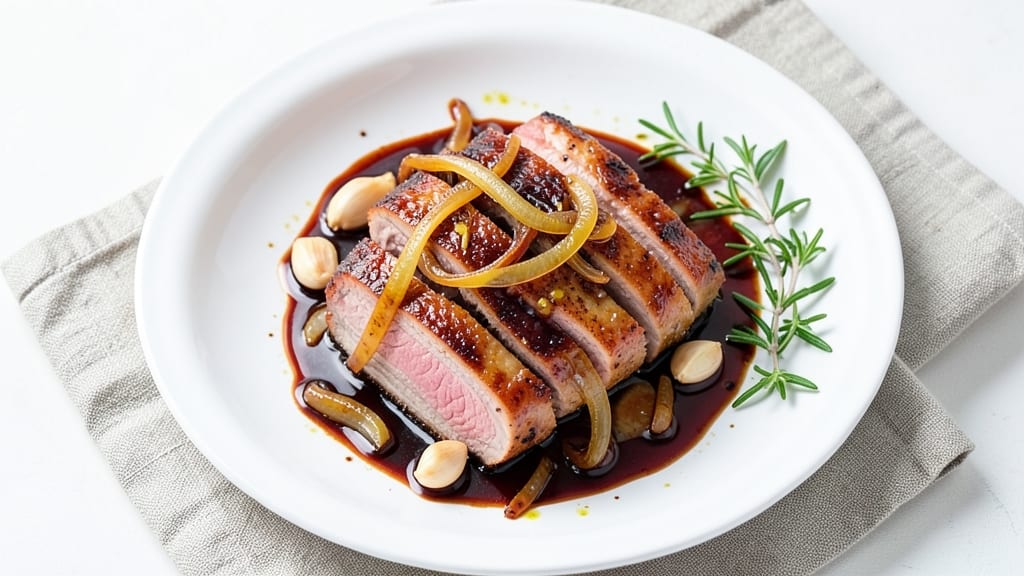
This balsamic pork recipe delivers a perfect balance of caramelized crust and tangy sweetness that transforms simple pork into an unforgettable centerpiece. After years of perfecting the technique at The Smoky Pig, I’ve streamlined it for home cooks—no fancy equipment needed, just precision timing and a few key steps.
The secret lies in slow-braising the pork to tender perfection before finishing with a glossy balsamic reduction that cuts through the richness.
The process starts with a simple marinade of olive oil, garlic, and herbs, ensuring the pork stays juicy while developing deep flavor. As it braises, the balsamic vinegar reduces into a thick, syrupy glaze that clings to every bite, adding a bright acidity that elevates the dish.
This method works beautifully with pork tenderloin, chops, or even ribs—each cut benefits from the same tenderizing technique and bold finishing touch.
What you’ll end up with is restaurant-quality pork that’s crisp on the edges, melt-in-your-mouth tender inside, and drizzled with a glossy glaze that adds both sweetness and complexity.
The aroma alone will have everyone gathered at the table, and the first bite delivers that perfect harmony of caramelized pork and tangy balsamic. Serve with roasted root vegetables or a crisp green salad to balance the richness.
Whether you’re hosting a dinner party or just craving a standout weeknight meal, this recipe delivers consistent, professional results. The technique is foolproof, and the flavors are undeniably impressive—exactly the kind of dish that makes cooking feel like a true accomplishment. Let’s get started!
Ingredients for balsamic pork
Restaurant-quality pork starts with these carefully chosen ingredients for perfect caramelized crust and tangy balsamic balance.
| Ingredient | Amount | Notes |
|---|---|---|
| Pork Tenderloin 🐖 | 1 ½ lb | Center-cut, trimmed of fat |
| Extra-Virgin Olive Oil 🫒 | ½ cup | High-quality, fruity variety |
| Garlic Cloves 🧄 | 6 cloves | Fresh, peeled and minced |
| Fresh Rosemary 🌿 | ¼ cup | Finely chopped, stems removed |
| Fresh Thyme 🌿 | ¼ cup | Leaves only, finely chopped |
| Balsamic Vinegar 🍷 | ½ cup | Aged, high-quality preferred |
| Brown Sugar 🍚 | ¼ cup | Packed, light variety |
| Dijon Mustard 🥬 | 1 tbsp | Mild or medium heat |
| Salt 🧂 | 1 ½ tsp | Diamond Crystal kosher |
| Black Pepper 🌶️ | 1 tsp | Freshly ground preferred |
| Yellow Onion 🧅 | 1 whole | Medium, sliced into rounds |
| Carrots 🥕 | ½ lb | Baby or sliced into chunks |
| Vegetable Broth 💧 | 1 ½ cups | Low-sodium preferred |
| Fresh Parsley 🌿 | ¼ cup | Chopped, for garnish |
The pork tenderloin is non-negotiable for this recipe—look for center-cut pieces with even thickness to ensure consistent cooking. Whole Foods or high-end butchers carry the best quality, but any reputable grocery store will have suitable options. Trim any visible fat before cooking to prevent excess grease. For the herbs, fresh is essential—Trader Joe's often has excellent pre-bundled rosemary and thyme, but if you're buying whole sprigs, strip the leaves carefully. The balsamic vinegar should be aged at least 12 years for optimal depth of flavor; Giovanni Rossi or Balsamic Vinegar of Modena are excellent choices.
No aged balsamic? Substitute with 3 tbsp balsamic glaze plus 2 tbsp red wine vinegar—it won't be identical but works in a pinch. Fresh herbs missing? Dried oregano at one-third the amount will suffice, though fresh always delivers superior flavor. The Dijon mustard adds necessary tang—if you only have whole-grain mustard, blend it briefly to achieve a similar texture. For the vegetables, baby carrots or pre-sliced onions save time, but whole roots work just as well if chopped uniformly. The vegetable broth should be low-sodium to avoid overpowering the delicate balance of flavors.
This dish reheats beautifully—simply cover with foil and warm in a 300°F oven for 15-20 minutes. For best results, make the balsamic glaze ahead and store it separately; combine just before serving to maintain its glossy finish. The cooked pork keeps well in the refrigerator for 3-4 days, though the glaze should be added fresh. Portion the vegetables separately if prepping ahead, as they hold up better when reheated alone. Freeze the pork (without glaze) for up to 3 months—thaw overnight in the fridge before reheating.
Why You'll Love This Recipe
- Foolproof Ingredients: I swear by this combo—pork tenderloin stays juicy, and the olive oil, garlic, and herbs caramelize into a sticky, fragrant crust without fail. No fancy techniques, just searing and simmering.
- Weeknight Magic: Honestly, this is my "I have 20 minutes and a headache" go-to. Toss the pork in oil, herbs, and garlic, let it roast while I chop veggies for the side—done before the timer goes off.
- Leftovers That Shine: Between us, this recipe begs to be made extra. Slice the cooled pork for sandwiches, toss with pasta, or shred it into tacos—every time, it’s just as good (if not better) the second day.
- Herb-Packed Umami Bomb: That rosemary-thyme-garlic trio with balsamic? It’s the kind of flavor that makes you pause mid-bite. The pork’s tender, the sauce clings like a hug, and it’s got this bright, savory depth that cuts through even the simplest sides.
Step-by-step instructions for balsamic glazed pork tenderloin
This method delivers a perfectly caramelized crust with a tangy-sweet glaze that balances rich pork flavors.
Prepare the Pork and Herb Marinade
Pat the 1.5 lb pork tenderloin completely dry with paper towels—this step is critical for achieving that crispy crust. In a small bowl, combine the 0.5 cup extra-virgin olive oil, 1 tbsp Dijon mustard, 1.5 tsp salt, and 1 tsp black pepper. Whisk until fully emulsified, then stir in the 0.25 cup finely chopped fresh rosemary and 0.25 cup fresh thyme. Rub this mixture all over the pork, pressing it into the surface so it adheres evenly.
Place the pork on a plate and refrigerate uncovered for at least 2 hours (or up to overnight). This drying and marinating process ensures maximum flavor penetration and that signature caramelized crust. The herb oil will develop a fragrant aroma—this is your first sensory checkpoint that the marinade is working.
Sear the Pork for Maximum Crust Development
Remove the pork from the fridge and let it sit at room temperature for 30 minutes before cooking. Heat a large oven-safe skillet over medium-high heat until very hot. Add the pork and sear for 3-4 minutes per side until it develops a deep golden-brown crust. You'll see the edges begin to caramelize—this is when the Maillard reaction kicks in, creating that rich, complex flavor.
Once seared on all sides, transfer the skillet to a 400°F preheated oven. The residual heat in the pan will continue cooking the pork while allowing the crust to develop further. Roast for 15-20 minutes or until the internal temperature reaches 145°F when measured with an instant-read thermometer. The pork should feel firm to the touch but still yield slightly at the center.
Build the Balsamic Glaze and Caramelize
While the pork roasts, prepare the glaze by combining 0.5 cup balsamic vinegar, 0.25 cup packed brown sugar, and 6 minced garlic cloves in a small saucepan. Bring to a simmer over medium heat and reduce by half—this should take about 5 minutes. The mixture will darken and thicken into a syrupy consistency with a rich, tangy aroma.
Once the pork reaches 145°F, remove it from the oven and increase the oven temperature to 425°F. Pour the reduced balsamic mixture evenly over the pork, then return it to the oven for 5-7 minutes. Watch closely as the glaze caramelizes and forms a glossy crust. The pork should develop a deep mahogany color with a sticky, glaze-coated surface—this is your visual cue that the glaze is perfectly set.
Roast Vegetables and Finish the Dish
While the pork finishes, prepare the vegetables by tossing the 1 whole yellow onion (sliced into rounds) and 0.5 lb carrots (cut into chunks) with 0.5 cup extra-virgin olive oil, 0.5 tsp salt, and 0.5 tsp black pepper. Spread them on a separate baking sheet and roast alongside the pork for the final 10 minutes at 425°F. The vegetables should be tender with caramelized edges and a golden hue.
Remove the pork from the oven and let it rest for 10 minutes before slicing. This resting period allows the juices to redistribute, ensuring each slice remains moist and flavorful. Garnish with 0.25 cup chopped fresh parsley and serve the pork alongside the roasted vegetables. The glaze should be sticky and glossy, with a perfect balance of sweetness and tang that complements the tender pork.
Pro Tips For Making Balsamic Pork
- SEAR UNTIL GOLDEN: Pork tenderloin’s lean—don’t walk away when it hits the pan. Push that heat until the edges turn deep golden brown, about 3-4 minutes per side. I used to pull it too soon, and the balsamic sauce just sat there, not caramelizing into something rich.
- SLICE GARLIC THIN: Crush those cloves first, then slice them paper-thin lengthwise. Whole cloves burn before the pork’s done, and crushed ones turn to paste. Thin slices mingle with the balsamic without overpowering—just like my first try, where I ended up fishing out charred chunks.
- REST BEFORE SLICING: Let the pork sit under foil for 5-10 minutes after cooking. Skipping this means dry slices, and no one wants that. I learned this after serving a plate where the meat pulled apart like overworked dough—now I wait, even when guests are already at the table.
- DEGLAZE WITH PATIENCE: After searing, let the pan cool for 30 seconds before adding balsamic. Rushing it makes the sauce split into greasy pools. Pour in slowly, scraping up browned bits—those are flavor bombs. I used to dump it all at once, and the sauce turned bland. Now I take my time.
Make-ahead tips for this recipe
Marinade Prep
I always recommend prepping the herb marinade at least 4 hours ahead—this gives the flavors time to meld deeply into the pork. Store it in an airtight container in the fridge, and the pork can marinate right alongside it.
The longer it sits, the more complex the flavors become, especially that rosemary's piney aroma and thyme's earthiness. 🌿
For a make-ahead shortcut, I sometimes make the marinade base (olive oil, mustard, salt, and pepper) up to 2 days in advance and add the fresh herbs just before using.
This keeps the herbs vibrant and prevents them from turning bitter in the fridge. Just whisk everything together right before applying to the pork.
Glaze Prep
The balsamic glaze is the star of this dish, and it actually tastes better when made ahead. Reduce the glaze ingredients (balsamic, brown sugar, and garlic) to a thick syrup and store it in a small glass jar in the fridge for up to 1 week.
When ready to use, simply reheat it gently in a small saucepan until warm and glossy. This pre-reduction step ensures you'll have a perfectly balanced glaze every time. 🍷
Pork Pre-Cooking
Cook the pork completely through (until 145°F internal temperature) and let it cool completely before storing. I wrap it tightly in plastic wrap and refrigerate for up to 3 days. The glaze should be added fresh just before serving to maintain its glossy finish and vibrant color.
This approach lets you handle the most time-consuming part (cooking the pork) ahead of time while keeping the final presentation restaurant-quality.
Vegetable Prep
Roast the vegetables separately and store them in an airtight container in the fridge for up to 2 days. They'll keep their caramelized edges and sweetness much better when reheated alone.
When ready to serve, simply warm them in a 350°F oven for 10 minutes—they'll taste almost as good as fresh. This method saves you from having to cook everything last-minute on a busy day. 🥕
Reheating Strategy
For the best results, I recommend reheating the pork in a skillet over medium heat for 5-7 minutes with a splash of water or broth to keep it moist. If using the oven, wrap the pork in foil and warm at 300°F for 15-20 minutes.
The glaze can be reheated separately in a small saucepan over low heat—just stir occasionally to prevent burning. This two-step reheating process ensures the pork stays juicy and the glaze remains glossy. 🔥
Nutrition facts
Frequently asked questions
Can I use this recipe with pork chops instead of tenderloin?
Bone-in or boneless pork chops (1-inch thick) work beautifully. Increase the oven time to 20-25 minutes at 400°F after searing, checking for 145°F internal temp. For bone-in chops, add 5-7 minutes to ensure the center cooks through. The glaze will cling just as well, though you may need slightly more to cover the larger surface area.
How do I adjust the recipe for a slow cooker?
Place the seared pork in a slow cooker with 1 cup vegetable broth, 0.25 cup balsamic vinegar, and 1 tbsp brown sugar. Cook on Low for 6-7 hours or High for 3-4 hours, then transfer to a skillet to caramelize the glaze. The slow cooker keeps the pork incredibly tender, while the final sear adds that restaurant-quality crust.
What's the best way to store leftovers?
Store the pork in an airtight container in the fridge for up to 4 days. Keep the glaze separate and reheat it separately to maintain its glossy finish. For reheating, use a skillet over medium heat with a splash of water for 5-7 minutes. The vegetables can be stored separately and reheated in a 350°F oven for 10 minutes.
Can I substitute balsamic vinegar with something else?
For a similar tangy-sweet profile, use 3 tbsp balsamic glaze + 2 tbsp red wine vinegar. If you only have white vinegar, combine 0.5 cup white vinegar + 2 tbsp honey to mimic the balance. For a fruitier alternative, try 0.5 cup apple cider vinegar + 1 tbsp maple syrup. Remember, aged balsamic provides depth that's hard to replicate, but these substitutes work in a pinch.
Why did my glaze turn out too thin?
This usually happens when the balsamic mixture doesn't reduce enough. For a thicker glaze, simmer the balsamic, sugar, and garlic until it coats the back of a spoon. If it's too thin after cooking, place the pan over high heat and reduce it further, stirring constantly. Alternatively, mix 1 tbsp cornstarch with 1 tbsp water, stir into the glaze, and simmer until thickened.