
Main Courses
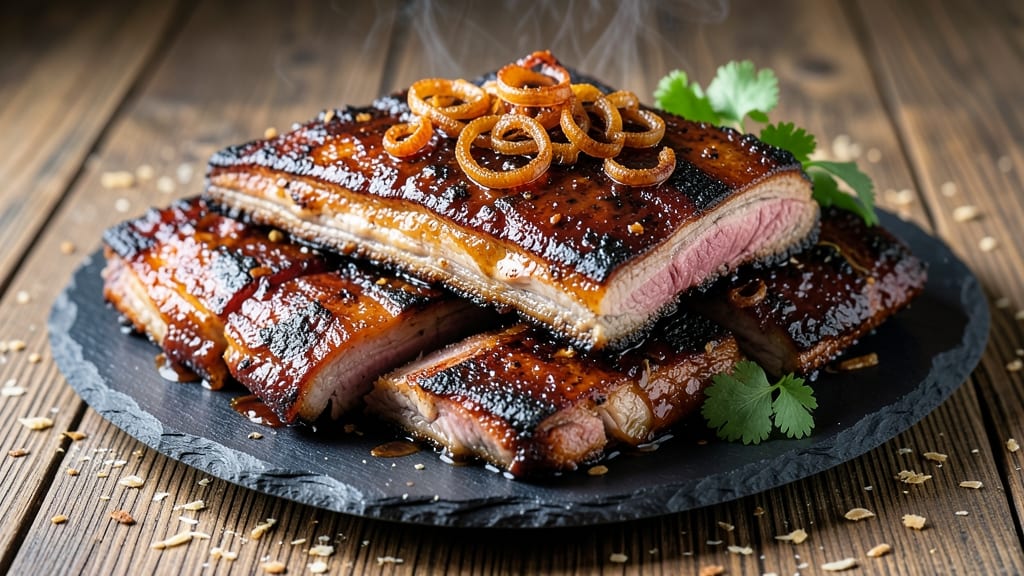
This barbecue pork spareribs recipe delivers the perfect balance of smoky crispy bark and sticky sweet glaze that makes every bite unforgettable. 🔥 As someone who's cooked thousands of pounds of pork, I know the secret lies in low-and-slow cooking with a well-crafted dry rub—trust me, this method transforms tough ribs into melt-in-your-mouth perfection.
The key is patience and precision, which I'll walk you through step by step.
The foundation starts with a rich dry rub that clings to the ribs while they cook, creating that coveted dark, flavorful crust. We'll use a mix of brown sugar, paprika, and spices that develop deep, complex flavors during the long cook.
What sets this recipe apart is the balance—enough sweetness to caramelize beautifully, but with just the right amount of heat to keep it authentic and satisfying.
By the time you're done, you'll have ribs with a shatteringly crispy exterior that gives way to tender, juicy meat underneath. The glaze—made from a simple blend of vinegar, molasses, and spices—adds that signature sticky finish that makes every bite worth the wait.
This is the kind of dish that turns casual cookouts into memorable gatherings, where people linger over the table because they can't get enough.
Whether you're smoking them low and slow or grilling them with a dry rub, this recipe works for any method. The beauty of pork spareribs is their versatility—they're hearty enough for a crowd but special enough for a weekend dinner.
Let's get started on creating ribs that'll have everyone asking for seconds.
Ingredients for barbeque pork spareribs
Six pounds of ribs plus spices that transform tough meat into melt-in-your-mouth perfection.
| Ingredient | Amount | Notes |
|---|---|---|
| Pork Spareribs 🥓 | 6 lb | Bone-in, meaty ends preferred |
| Brown Sugar 🍚 | ½ cup | Light or dark, packed |
| Smoked Paprika 🌶️ | 2 tbsp | For deep smoky flavor |
| Ground Black Pepper 🌶️ | 1 ½ tsp | Freshly cracked for heat |
| Kosher Salt 🧂 | 1 ½ tsp | Diamond Crystal preferred |
| Garlic Powder 🧄 | 1 tbsp | Freshly ground preferred |
| Onion Powder 🧅 | 1 tbsp | Adds sweet depth |
| Cayenne Pepper 🔥 | ½ tsp | Adjust for heat preference |
| Apple Cider Vinegar 🍏 | ½ cup | For tangy glaze balance |
| Molasses 🍯 | ¼ cup | Blackstrap for richness |
| Yellow Mustard 🍯 | 1 tbsp | Dijon for extra tang |
| Honey 🍯 | 2 tbsp | Wildflower preferred |
| Yellow Onion 🧅 | 1 whole | Thinly sliced for glaze |
| Extra-Virgin Olive Oil 🫒 | 1 tbsp | For glaze richness |
| Fresh Cilantro 🌿 | ¼ cup | Chopped, for garnish |
The ribs are non-negotiable—meaty ends are worth hunting down at Costco or your local butcher. Look for good marbling and avoid those skinny ones that won't hold flavor. Trader Joe's often has pre-cut spareribs that work great for weeknight cooking. For the dry rub, Penzeys smoked paprika is my go-to, but any quality brand will do. The brown sugar is where the magic happens—pack it tightly so every rib gets that caramelized crust. Pro tip: Toast your spices in a dry pan for 30 seconds before mixing to wake up their flavors.
No smoked paprika? Regular paprika plus a pinch of liquid smoke gets you close. Running short on molasses? Maple syrup at half the amount works in a pinch. The apple cider vinegar can be swapped for white vinegar, but you'll lose some depth. For the glaze, balsamic vinegar adds extra richness if you're feeling fancy. Want more heat? Add a dash of cayenne to the glaze too. The honey matters here—wildflower or clover has more complexity than store-brand versions. And if you're grilling instead of smoking, add a splash of beer or bourbon to the glaze for extra depth.
These ribs are best made ahead—plan for at least 4 hours of cooking time. Store prepped ribs in the fridge for up to 2 days before cooking. The glaze can be made 3 days ahead and kept in a sealed jar. Once cooked, ribs reheat beautifully in the oven at 300°F for 10-15 minutes with a splash of apple juice. For leftovers, wrap tightly in foil and store for 4 days. Freeze cooked ribs for up to 3 months—they actually taste better after resting a few days as the flavors meld.
Why You'll Love This Recipe
- One-Pan Magic: I swear by this recipe because it’s that simple—just ribs, sugar, and spices on a sheet pan. No fancy prep, no mess, and honestly? That’s all you need for ribs that’ll have your whole table begging for seconds.
- Sweet-Smoky Crave: The brown sugar caramelizes into a sticky, glossy glaze while the smoked paprika gives it that deep, smoky punch. Between us, that crispy edge with the tender center? It’s the kind of flavor that sticks with you long after dinner.
- Tailgate to Tuesday: Serve these at a backyard BBQ or toss them in a wrap for a lazy night in. I’ll be real: my kids grab them straight from the pan (yes, even on a Tuesday night), and they’re just as good reheated as they are fresh.
- Budget Stretch: A whole pack of ribs costs less than takeout, and this recipe stretches it perfectly. Leftovers? They’re even better the next day—just reheat and watch them disappear faster than you can say “more sauce.”
Step-by-step instructions for smoky crispy pork spareribs
Here's how to build that perfect balance of crispy bark and sticky-sweet glaze.
👨🍳 Step 1: Prepare the Dry Rub and Glaze Base
In a medium bowl, combine the 0.5 cup brown sugar, 2 tbsp smoked paprika, 1.5 tsp ground black pepper, 1.5 tsp kosher salt, 1 tbsp garlic powder, 1 tbsp onion powder, and 0.5 tsp cayenne pepper. Mix thoroughly with your fingers until the sugar crystals are evenly coated with spices—this ensures maximum flavor penetration.
In a separate bowl, whisk together the 0.5 cup apple cider vinegar, 0.25 cup molasses, 1 tbsp yellow mustard, 2 tbsp honey, and 1 tbsp extra-virgin olive oil. This glaze mixture should be smooth and slightly syrupy—if it's too thick, add 1 teaspoon water at a time until it reaches a pourable consistency. The vinegar will cut through the sweetness while the molasses adds that deep, caramelized richness we're after.
🔥 Step 2: Apply Rub and Sear the Ribs
Pat the 6 lb pork spareribs completely dry with paper towels—this is critical for developing that crispy bark. Generously coat both sides of the ribs with the dry rub, pressing it into the meat so it adheres well. For extra flavor, rub the rub into the bone crevices too. Let the ribs sit at room temperature for 30 minutes while you preheat your smoker or grill to 250°F.
Once your cooking surface reaches temperature, place the ribs meat-side down and cook for 2 hours without moving them. This initial sear creates the foundation for that beautiful bark. You'll know it's time to flip when you see the rub start to darken and form a crust. Flip the ribs and continue cooking for another 1 hour, basting occasionally with the glaze mixture you prepared earlier.
🍳 Step 3: Build the Glaze and Finish Cooking
After the initial sear, transfer the ribs to a baking sheet and brush them generously with half of the glaze mixture. Return them to the smoker or grill and cook for another 1-2 hours until the internal temperature reaches 195-203°F—this is when the collagen breaks down and the meat becomes tender. During this time, baste the ribs every 30 minutes with more glaze, letting it caramelize slightly each time.
The glaze should develop a glossy sheen and darken to a deep amber color. You're aiming for that perfect balance where each bite delivers both crispy bark and sticky-sweet glaze. The ribs are done when they pull apart easily with a fork and the edges are caramelized. If the glaze starts to burn before the ribs are fully cooked, tent them loosely with aluminum foil to protect them while they finish.
🥘 Step 4: Rest and Garnish
Once the ribs reach the proper internal temperature, transfer them to a cutting board and let them rest for 15-20 minutes before serving. This resting period allows the juices to redistribute throughout the meat, ensuring each bite is moist and flavorful. While they rest, thinly slice the 1 whole yellow onion and sauté it in a separate pan with 1 tablespoon olive oil until caramelized—this adds another layer of depth to your presentation.
Before serving, garnish the ribs with the chopped 0.25 cup fresh cilantro and drizzle with any remaining glaze from the pan. The contrast of the bright cilantro against the dark, caramelized ribs makes for an incredibly visual dish. Serve with the caramelized onions on the side and watch as everyone digs in for seconds. The crispy bark should crackle with each bite, giving way to tender meat and that perfect balance of sweet, smoky, and tangy flavors.
Pro Tips For Making Barbeque Pork Spareribs
- Trim the Fat First: I learned this the hard way—skipping this step means fighting for flavor later. Use kitchen shears to slice off the thick fat cap on the bone side before seasoning; it renders faster and keeps the ribs from turning greasy. (Yes, even if you’re impatient like me.)
- Start Hot, Finish Slow: High heat for the first 10 minutes sears the ribs and locks in juices, but after that, drop to 250°F (120°C) for low-and-slow. I used to rush the cook time, and the ribs ended up tough—this is the thing that matters most for tender results.
- Skip the Crowding: Piling ribs too close in the pan or smoker traps steam, turning them soggy. Leave at least an inch of space between each rack—crowding is the fastest way to ruin crispy edges. (Your future self will thank you.)
- Dry the Ribs Well: Pat them thoroughly with paper towels before seasoning—moisture makes the crust stick instead of crisp. I was skeptical until I tried it: the difference between a sticky mess and perfect bark is just a few extra minutes with the towels.
Make-ahead tips for leftovers
Prep Ahead Strategy
The dry rub can be mixed and stored in an airtight container for up to 1 week in your pantry. I keep mine in a glass jar with a tight-sealing lid from Weck—it preserves flavors perfectly.
The glaze base (vinegar, molasses, honey) stays fresh in the fridge for 3 days or frozen for 3 months. I often make a big batch on Sunday for my weekly BBQs. 💡
Rib Prep Timeline
Pat and dry the ribs completely, then coat them with rub up to 2 days ahead. Store them uncovered on a wire rack in the fridge—this prevents moisture buildup that ruins bark.
I wrap mine in parchment paper and place them in a plastic container to catch any drips. The rub will cure overnight, intensifying flavors.
Glaze Prep Shortcut
Make the full glaze 3 days ahead and store it in a small mason jar in the fridge. Shake well before using—it thickens slightly over time. I like to add 1 tsp bourbon to my glaze when prepping ahead; it adds depth without overpowering.
For grilling, reduce the glaze by 10% water since it won't have as long to caramelize. 🍯
Cooking Day Efficiency
Preheat your smoker or grill while the ribs come to room temperature. I use a Traeger Pellet Grill set to 250°F—it maintains temperature perfectly. Keep a spray bottle of apple juice cider handy to prevent flare-ups.
The ribs should spend 3 hours total on the grill, with 1 hour dedicated to bark development before glazing.
Resting and Serving
Let ribs rest 15-20 minutes before slicing—this is non-negotiable for juicy meat. I wrap them in towel-lined foil and place them in a cooler to maintain temperature.
For parties, slice them into individual portions and arrange on a platter with caramelized onions. The glaze will keep them moist for 2 hours at room temperature.
Leftovers Magic
Store cooked ribs in vacuum-sealed bags for 4 days in the fridge or 3 months frozen. Reheat at 300°F for 10 minutes with a splash of apple juice. The flavors actually improve as they rest!
I often use leftover ribs for tacos or sandwiches—just shred the meat and toss with a little of the original glaze. 🥓
Nutrition facts
Frequently asked questions
Can I cook these ribs in an oven instead of a smoker or grill?
Use a 275°F oven with a water pan on the bottom rack for moisture. Place ribs on a wire rack over a baking sheet and cook for 4-5 hours, flipping halfway. Brush with glaze in the last 30 minutes for that signature finish. The bark won't be as crispy as smoked ribs, but the tenderness will be perfect.
How do I know when the ribs are fully cooked?
Use the fork test—when the ribs pull apart easily with minimal resistance and the meat slides off the bone, they're done. The internal temperature should reach 195-203°F in the thickest part. For extra assurance, check the connective tissue—it should be gelatinous rather than firm.
What's the best way to store leftover ribs?
Wrap them tightly in foil or vacuum-sealed bags to preserve moisture. Store in the fridge for 4 days or freeze for 3 months. Reheat at 300°F for 10-15 minutes with a splash of apple juice to maintain tenderness. The flavors actually deepen as they rest!
Can I make this recipe with baby back ribs instead?
Yes, but adjust the cooking time to 3-4 hours instead of 4-5. Baby backs are smaller and cook faster. Reduce the glaze by 25% since they absorb less. The dry rub ratio remains the same, but you may need slightly more since baby backs have less surface area.
Why did my ribs turn out dry?
Overcooking or skipping the resting period are the most common causes. Always cook to 195-203°F internal temp, then rest for 15-20 minutes before slicing. For extra moisture, wrap ribs in butcher paper during the last hour of cooking instead of foil—it creates steam while allowing bark formation.