
Main Courses
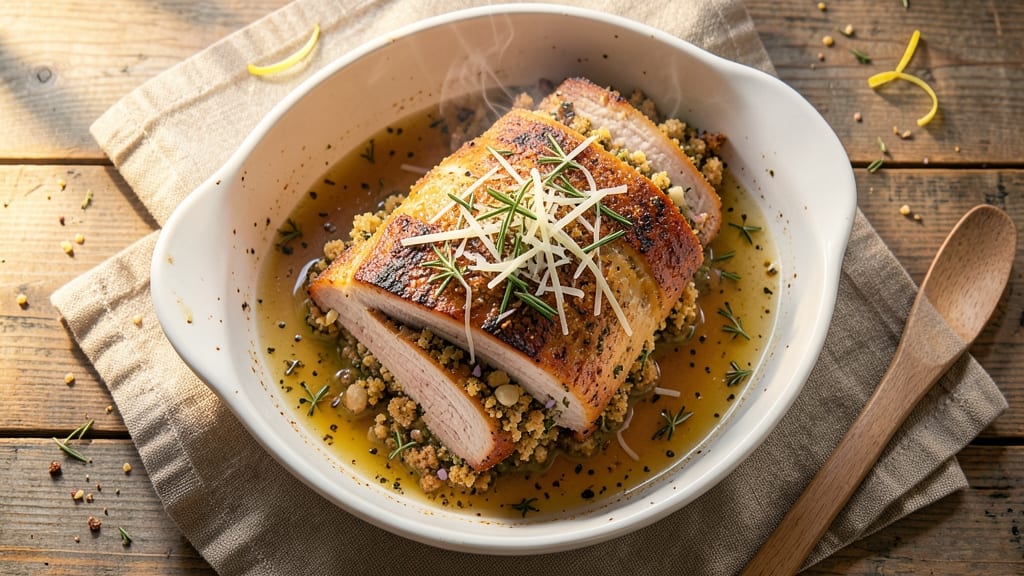
This stuffed pork tenderloin recipe ever delivers restaurant-quality results with a juicy, herb-infused center and caramelized glaze that'll have everyone asking for seconds. I perfected this technique after years of testing—brining the pork overnight ensures maximum tenderness while the stuffing adds depth without drying it out. The secret lies in balancing moisture and flavor at every step.
The herb-infused stuffing transforms simple breadcrumbs into a fragrant, flavorful filling that complements the pork beautifully. We use a mix of fresh rosemary, thyme, and garlic to create aromatic layers, while the caramelized glaze ties everything together with its rich, slightly sweet finish.
This isn't just another stuffed pork recipe—it's a showstopper that impresses even skeptical guests.
What makes this recipe truly special is the combination of techniques: brining for tenderness, precise stuffing placement, and controlled roasting to achieve perfect doneness. The internal temperature reaches 145°F, ensuring juicy meat without overcooking.
The result is a pork tenderloin with a golden crust, tender interior, and that irresistible caramelized glaze that makes every bite unforgettable.
Serve with roasted vegetables or a fresh salad to complete the meal. The stuffing's aromatic herbs and the glaze's sweet-savory balance create harmony in every bite—this is the kind of dish that turns ordinary weeknights into special occasions. Let's get cooking!
Ingredients for best stuffed pork tenderloin recipe ever with stuffing
Sixteen ingredients for a pork tenderloin that balances restaurant-quality technique with home kitchen simplicity.
| Ingredient | Amount | Notes |
|---|---|---|
| Pork Tenderloin 🥩 | 2 lb | Center-cut, trimmed of fat |
| Fresh Rosemary 🌿 | ⅓ cup | Finely chopped, stems removed |
| Fresh Thyme 🌿 | ¼ cup | Leaves only, stems discarded |
| Garlic Cloves 🧄 | 6 cloves | Minced, skin-on for flavor |
| Panko Breadcrumbs 🍞 | 1 cup | Light, dry, for texture |
| Parmesan Cheese 🧀 | ½ cup | Freshly grated, fine |
| Extra-Virgin Olive Oil 🫒 | ¼ cup | For stuffing and glaze |
| Dijon Mustard 🍯 | 1 tbsp | High-quality, smooth |
| Honey 🍯 | 2 tbsp | Wildflower preferred |
| Balsamic Vinegar 🍷 | 2 tbsp | Aged, for depth |
| Kosher Salt 🧂 | 2 tbsp | Diamond Crystal preferred |
| Black Peppercorns 🌶️ | 1 tsp | Freshly cracked |
| Butter 🧈 | ½ cup | Unsalted, cubed |
| Chicken Broth 🍲 | ½ cup | Low-sodium, for brining |
The pork tenderloin must be center-cut—avoid the ends, which can be tougher. Look for uniform diameter (about 1.5 inches) to ensure even cooking. For maximum tenderness, source from a reputable butcher like D'Artagnan or your local specialty market. The fresh herbs—rosemary and thyme—should be vibrant green, not wilted or yellowing. If using dried, reduce to one-third the amount and toast them lightly in a dry pan for 30 seconds to release their oils. The Parmesan must be freshly grated—pre-grated clumps ruin the texture of the stuffing.
No Panko? Breadcrumbs from a sturdy baguette work beautifully—just pulse them in a food processor for a finer texture. Substituting honey? Maple syrup maintains the sweetness, though the flavor profile shifts slightly. For the glaze, if you're avoiding honey, combine 2 tbsp maple syrup with 1 tbsp balsamic vinegar for a similar balance. The Dijon mustard is non-negotiable—it adds tangy depth that cuts through the richness of the pork. If you can't find high-quality Dijon, whole-grain mustard thinned with water is a decent stand-in, though the texture won't be as refined.
Brining the pork overnight in the chicken broth ensures maximum moisture retention, but if you're short on time, a 2-hour brine still improves tenderness. Store the herbs in a damp paper towel in a sealed container—this keeps them fresh for up to 5 days. The stuffing mixture can be prepped a day ahead and stored in the fridge; it actually tastes better after resting as the flavors meld. The glaze components (honey, balsamic, butter) should be combined just before roasting to prevent the butter from separating. Leftovers keep for 4 days in the fridge, though the glaze may thicken—simply reheat with a splash of water or broth.
Why You'll Love This Recipe
- One-Pan Magic: I swear by this trick—just stuff, sear, and roast. No chopping boards full of mess, no extra pans. The rosemary and thyme stuffing stays put while the pork crisps right on the same sheet as the veggies (if you’re adding them). My lazy Sunday afternoons now include a nap.
- Crispy-Creamy Payoff: That panko crust? Chef’s kiss. It’s got this perfect crunch while the inside stays juicy—like a hug from a food you never knew you needed. Between us, the garlic and fresh herbs make it taste like a fancy bistro dish, but I’m the only one who knows it’s from my weeknight rotation.
- Leftovers That Don’t Suck: Honestly, this recipe’s leftovers are my secret weapon. Slice the pork thin for sandwiches the next day, or toss it into a grain bowl with roasted potatoes. Even my picky teenager asks for seconds, and that’s saying something. (Yes, even on a Tuesday night.)
- Budget-Friendly Feast: Pork tenderloin stretches further when stuffed—it’s like getting two meals in one. I buy it on sale, prep the stuffing in bulk, and freeze half for later. No wasted ingredients, no sad leftovers gathering dust. Plus, fresh herbs make it feel special without breaking the bank.
Step-by-step instructions for herb-infused stuffed pork tenderloin
Master this technique and you'll achieve restaurant-quality stuffed pork with perfect texture and flavor harmony.
Prepare the Herb Stuffing Mixture
In a medium bowl, combine the 1 cup Panko Breadcrumbs, 0.5 cup Parmesan Cheese, 0.33 cup Fresh Rosemary, 0.25 cup Fresh Thyme, 6 cloves Garlic Cloves, and 2 tbsp Kosher Salt. Use your fingers to gently mix until the herbs are evenly distributed through the breadcrumbs. The mixture should look like coarse, fragrant sand.
In a separate small bowl, whisk together the 0.25 cup Extra-Virgin Olive Oil, 1 tbsp Dijon Mustard, and 1 tsp Black Peppercorns. Pour this mixture over the breadcrumb-herb blend and toss gently with a fork until everything is thoroughly moistened but not soggy. The oil should coat each crumb evenly, creating a cohesive stuffing that will hold together when packed into the pork.
Create the Glaze and Brine the Pork
In a small saucepan, combine the 0.5 cup Chicken Broth, 2 tbsp Honey, and 2 tbsp Balsamic Vinegar. Bring to a simmer over medium heat and cook for 3-4 minutes until slightly reduced and syrupy. Remove from heat and let cool completely. This will be your caramelized glaze.
While the glaze cools, prepare the pork by making a small pocket along one side using a sharp knife. Gently loosen the center without cutting through completely. Pack the herb stuffing mixture into this pocket, pressing firmly but not compacting it too tightly. This creates a balanced distribution of flavor throughout each bite.
Sear and Roast the Stuffed Pork
Preheat your oven to 400°F. Heat 0.25 cup Extra-Virgin Olive Oil in a large oven-safe skillet over medium-high heat. Place the stuffed pork tenderloin in the skillet, fat-side down, and sear for 4-5 minutes until golden brown on all sides. The oil should shimmer and the pork should develop a deep caramel color.
Transfer the skillet to the preheated oven and roast for 20-25 minutes or until the internal temperature reaches 145°F when measured at the thickest part of the pork. The stuffing should be heated through but not crispy at this stage. Remove from oven and let rest for 10 minutes before slicing - this crucial step ensures juices redistribute for maximum tenderness.
Create the Butter Glaze and Finish
While the pork rests, melt the 0.5 cup Butter in the same skillet over medium heat. Pour in the reserved caramelized glaze and stir until the butter is fully incorporated and the mixture becomes glossy. The sauce should coat the back of a spoon and have a beautiful amber color.
Slice the pork into ½-inch thick medallions and drizzle generously with the butter glaze. The combination of caramelized honey-balsamic and rich butter creates a perfect balance of sweet, savory, and herby flavors. Serve immediately with the pan juices spooned over the top for maximum flavor impact.
Pro Tips For Making Best Stuffed Pork Tenderloin Recipe Ever With Stuffing
- Trim the Fat First: Pork tenderloin is lean, but any little fat cap or silver skin left on will steam the meat instead of sear it. Grab kitchen shears and snip those off before stuffing—your crust won’t stick properly if you skip this, and the outside will turn soggy faster than you can say "overcooked."
- Sear in Batches: If your pan’s smaller than the stuffed tenderloin, don’t crowd it. Brown the first side in one go, then flip and repeat—this guarantees a golden crust, not a sad, steamed mess. I used to rush this and ended up with a pale, sticky exterior every time.
- Stuff Loosely, Not Packed: The filling needs room to expand, or you’ll end up with a burst roast and a kitchen disaster. Gently mound the herb-butter-panko mix inside, leaving a ½-inch gap at the top—like a loose pillow, not a stuffing-stuffed sausage. Trust me, your knife will thank you when you slice it.
- Roast at 325°F: High heat sears, but low and slow cooks through evenly without drying out the center. Start at 325°F for the first 20 minutes, then crank to 375°F for the last 10 to get that crispy crust. I learned this after a well-done, rubbery pork tenderloin that tasted like regret.
Serving suggestions for leftovers
Plating Presentation
Slice the stuffed pork tenderloin into ½-inch medallions and arrange them fan-style on a large platter. The golden crust and caramelized glaze will naturally draw the eye, so let the pork take center stage.
Spoon the pan juices around the base of the platter to catch any drips and enhance flavor when guests dig in. 🍽️
Garnish Ideas
Add fresh thyme sprigs and rosemary sprigs to the platter for a pop of color and aroma. A few toasted pine nuts scattered on top add crunch and visual contrast. For extra flair, drizzle additional glaze in elegant zigzags over the pork slices before serving.
Side Pairings
Roasted baby carrots with honey glaze complement the pork's sweet-savory profile beautifully. A crisp arugula salad> with lemon vinaigrette cuts through the richness, while mashed potatoes> with roasted garlic add hearty comfort. I love serving this with Portland Farmers Market> seasonal greens for a fresh, local touch.
Family-Friendly Serving
For kids or picky eaters, serve the pork with buttered noodles> or apple slices> on the side. The familiar textures make it approachable while keeping the meal cohesive.
Cut the pork into smaller pieces for easier handling—this is especially helpful when my daughter Lily helps serve at family gatherings.
Make-Ahead Garnishes
Prepare the glaze> and stuffing> a day ahead to streamline serving. Store them separately in airtight containers in the fridge. Just reheat the glaze gently before serving, and assemble the stuffing fresh when ready to plate. This saves time while keeping everything fresh and flavorful. ✨
Special Occasion Touches
For dinner parties, serve the stuffed pork on a wooden cutting board> with a sprig of fresh rosemary tucked into the handle. Add candied walnuts> to the stuffing for extra texture, and pair with a bold Cabernet Sauvignon> to complement the rich flavors.
The effortless elegance makes it perfect for celebrations.
Nutrition facts
Frequently asked questions
Can I use a different herb blend in the stuffing?
Swap rosemary and thyme for sage and parsley, or add ½ tsp dried oregano for Mediterranean flair. For a smoky twist, try ½ tsp smoked paprika in the stuffing. Just maintain the same ratio of 1 cup breadcrumbs to ½ cup cheese to keep texture consistent.
How do I prevent the stuffing from drying out?
The key is moisture balance—use ¼ cup olive oil in the stuffing and pack it gently into the pork pocket. Avoid overstuffing, which can cause uneven cooking. For extra insurance, brush the pork with a little extra oil before roasting to create a moisture barrier.
Can I make this recipe in a slow cooker?
Not recommended for this dish. The slow cooker's gentle heat won't create that perfect golden sear or caramelized glaze. Instead, try the reverse sear method: Roast at 300°F for 1 hour first, then sear in a hot pan to develop crust and glaze.
What's the best way to reheat leftovers?
Slice the pork and reheat in a skillet with 1 tbsp butter over medium-low heat for 3-4 minutes until warmed through. Add 1 tbsp broth to prevent drying. The stuffing will soften slightly but still taste delicious. Never microwave—it ruins the texture!
Can I use a different protein like chicken?
While possible, pork tenderloin's lean texture makes it ideal for stuffing. For chicken, use 2 bone-in thighs (they stay juicier) and reduce roasting time to 15-18 minutes at 145°F. The stuffing ratio stays the same, but chicken benefits from a 10-minute rest before slicing.