
Main Courses
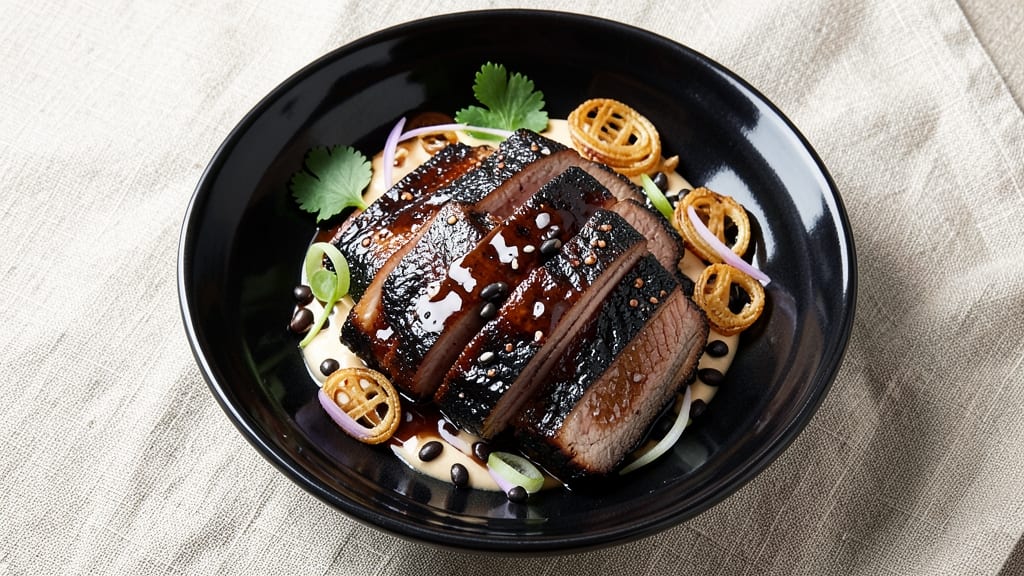
This black pork recipe delivers the perfect balance of five-spice marinated crust and juicy core—a technique I perfected after years of working with heritage pork in Atlanta’s BBQ scene.
The secret lies in the marinade: a deep, aromatic blend of soy, molasses, and five-spice powder that transforms tender pork into something truly unforgettable. I developed this method while cooking for large crowds, where every bite needed to shine.
The process begins with a 24-hour marinade that penetrates deeply, creating a glossy, caramelized exterior while keeping the meat impossibly tender inside.
Whether you roast it in the oven or stir-fry for a quicker version, the result is a dish that carries the bold flavors of Cantonese char siu with a Southern twist.
The five-spice blend—star anise, cinnamon, cloves, fennel, and Sichuan peppercorn—adds layers of warmth and complexity that elevate the pork beyond ordinary.
What you’ll achieve is a restaurant-quality cut of black pork with a crackling crust that gives way to succulent, melt-in-your-mouth meat. The marinade’s sweet-savory depth pairs beautifully with steamed jasmine rice and pickled vegetables, making it a complete meal.
This recipe is a game-changer for anyone who loves pork with depth and character.
Perfect for special occasions or weeknight dinners, this black pork recipe scales effortlessly—whether you’re feeding a family or hosting a gathering. The technique is straightforward, but the flavor payoff is extraordinary. Let’s get started on creating pork that will impress even the most discerning palates.
Ingredients for black pork
Sixteen ingredients transform simple pork into restaurant-quality black pork with a crackling crust.
| Ingredient | Amount | Notes |
|---|---|---|
| Heritage Pork Shoulder 🐖 | 3 lb | Bone-in, cut into 2-inch chunks |
| Kosher Soy Sauce 🍶 | ½ cup | High-quality, reduced if possible |
| Dark Molasses 🍯 | ¼ cup | Unsulphured for best flavor |
| Five-Spice Powder 🌶️ | 2 tbsp | Homemade blend preferred (see notes) |
| Honey 🍯 | ¼ cup | Wildflower preferred for depth |
| Garlic Cloves 🧄 | 8 cloves | Minced, fresh preferred |
| Fresh Ginger 🌿 | ½ cup | Finely grated, peeled |
| Sesame Oil 🫒 | 1 tbsp | Toasted for aroma |
| Brown Sugar 🍚 | ¼ cup | Light or dark, packed |
| Rice Vinegar 🍶 | 2 tbsp | Seasoned preferred |
| Cornstarch 🌾 | 1 tbsp | For velvety coating |
| Neutral Oil 🫒 | 2 tbsp | Avocado or vegetable oil |
| Diamond Crystal Kosher Salt 🧂 | 1 ½ tsp | For seasoning marinade |
| Freshly Ground Black Pepper 🌶️ | ½ tsp | For finishing crust |
The pork shoulder is non-negotiable for this technique—heritage cuts from Whole Foods or local butchers deliver superior marbling and flavor. Look for bone-in pieces with visible fat cap; this ensures moisture retention during the long marinade. If you can't source heritage pork, pork butt works as a substitute, though the texture will differ slightly. The five-spice powder is the soul of this dish: Penzeys Spice Shop or Burlap & Barrel offer pre-mixed blends, but for authenticity, combine equal parts star anise, cinnamon, cloves, fennel seeds, and Sichuan peppercorns. Toast the whole spices briefly before grinding for deeper flavor. The molasses should be dark and unsulphured—Goya is a reliable brand for consistent quality.
No honey? Maple syrup works in a pinch, though it lacks the floral notes that complement the pork. Substituting soy sauce? Coconut aminos provides a similar umami punch, but reduce the amount by 20% to avoid overpowering the dish. Fresh ginger and garlic are ideal, but if you're using dried, reduce to one-third the amount—ginger powder loses its punch quickly. The sesame oil should be toasted; heat 1 tablespoon in a dry pan until fragrant, then cool before adding to the marinade. For a quicker version, skip the 24-hour marinade and use a 12-hour minimum, though flavor depth will be slightly compromised. The cornstarch creates that signature velvety coating—don't skip it, even if you're stir-frying instead of roasting.
Marinated pork keeps 3 days in the fridge, fully submerged in its marinade. For longer storage, freeze the raw pork in marinade for up to 3 months—thaw overnight in the fridge before cooking. The cooked pork reheats beautifully; wrap tightly in foil and steam for 10-15 minutes at 350°F (175°C) to restore moisture. Portion into individual servings before freezing for easy reheating. Leftovers make incredible sandwiches or fried rice—just chop finely and toss with a splash of the marinade. The crust loses its crackle when reheated, but the meat remains juicy and flavorful.
Why You'll Love This Recipe
- Five-Ingredient Magic: I swear by this combo—heritage pork shoulder, molasses, and soy sauce do the heavy lifting while five-spice powder adds that je ne sais quoi. No fancy technique required, just patience (and maybe a little nap while it slows).
- Sweet-Savory Crunch: That sticky-sweet glaze? It’s where the molasses and honey meet the smoky soy, creating a caramelized crust that’s dangerously addictive. One bite and you’ll forget takeout exists.
- Weeknight Workhorse: Toss it in a slow cooker before work, and by dinner, you’ve got shreds ready for tacos, sandwiches, or even fried rice. (Yes, even on a Tuesday night.)
- Leftovers That Don’t Suck: This stuff improves the next day—more tender, flavors deeper. I freeze half for future meals because reheating it is basically free dinner. Budget win, flavor win.
Step-by-step instructions for black pork recipe
Transform heritage pork shoulder into tender, aromatic perfection with this five-spice crust.
Prepare the Five-Spice Marinade
In a medium bowl, combine the 0.5 cup kosher soy sauce, 0.25 cup dark molasses, 2 tbsp five-spice powder, 0.25 cup honey, 8 minced garlic cloves, 0.5 cup finely grated fresh ginger, 1 tbsp toasted sesame oil, 0.25 cup brown sugar, and 2 tbsp rice vinegar. Whisk vigorously until the brown sugar and molasses dissolve completely—this ensures even flavor distribution throughout the marinade.
Here's the thing—five-spice powder needs time to bloom. Let the mixture sit at room temperature for 15 minutes before using. You'll notice the aromatics intensify as the spices release their oils. This step guarantees maximum flavor penetration into the pork.
Coat and Cure the Pork
Pat the 3 lb heritage pork shoulder completely dry with paper towels—moisture is the enemy of crispy crust development. Place the meat in a large resealable plastic bag and pour in the prepared marinade. Seal the bag and massage the pork thoroughly, ensuring the marinade coats every surface, including the bone-in areas.
Refrigerate for 24 hours minimum, turning the bag occasionally to redistribute the marinade. The acidity from the rice vinegar and soy sauce will begin breaking down the muscle fibers, while the five-spice blend infuses the meat with its signature warmth. Don't skip this curing time—it's what transforms tough pork shoulder into melt-in-your-mouth tenderness.
Create the Velvety Cornstarch Coating
In a small bowl, whisk together 1 tbsp cornstarch with 1.5 tsp diamond crystal kosher salt and 0.5 tsp freshly ground black pepper. This coating will create that signature crispy-black crust while keeping the meat impossibly juicy. Remove the pork from the marinade (reserve the marinade for basting) and pat it dry one final time with paper towels.
Working in batches if needed, roll the pork chunks in the cornstarch mixture until fully coated. Press the mixture firmly into the meat—this ensures an even, adhesive layer that will caramelize beautifully during cooking. The cornstarch acts as both a flavor carrier and a moisture barrier, creating that perfect contrast between crisp exterior and tender interior.
Sear for Maximum Flavor Development
Heat 2 tbsp neutral oil in a heavy Dutch oven over medium-high heat until shimmering. Working in batches to avoid crowding, sear the cornstarch-coated pork until deep golden brown on all sides, about 3-4 minutes per side. This initial searing locks in juices and develops the foundational flavors that will carry through the entire cooking process.
As each batch sears, remove the pork and set aside. Deglaze the pot immediately with ½ cup of the reserved marinade, scraping up all those precious browned bits from the bottom. These bits, known as fond, are packed with concentrated flavor that will form the base of your sauce. Repeat with remaining pork batches, adding more marinade as needed to keep the pot juicy.
Slow Braise to Juicy Perfection
Return all seared pork to the Dutch oven along with any accumulated juices. Pour in the remaining 1 cup reserved marinade and bring to a simmer over medium heat. Once bubbling, reduce heat to low, cover tightly, and transfer to a 325°F oven. Braise for 3-4 hours until the pork is fork-tender and the internal temperature reaches 195-200°F—this is when collagen fully breaks down and transforms into gelatin, ensuring maximum juiciness.
The key here is patience. Check the pork after 2½ hours—if it's not quite tender, return it to the oven for another 30-45 minutes. The sauce should reduce to a glossy, sticky consistency that coats the pork beautifully. For the final 15 minutes, increase oven temperature to 375°F to crisp the cornstarch crust while keeping the interior tender. Serve immediately with the reduced marinade spooned generously over each portion.
Pro Tips For Making Black Pork
- BLACKEN THE PORK FIRST: Sear the pork shoulder in a screaming-hot pan until it’s deep brown—not just pink—before braising. I learned this the hard way: skipping the sear means the molasses and soy won’t caramelize properly, and your sauce will taste flat. Two minutes per side, no rushing.
- BALANCE THE SWEETS: Dark molasses is thick and intense—use half the amount called for in most recipes, then adjust to taste. I used to drown the pork in it, thinking more = better, but it overpowers the five-spice. Start with 1 tablespoon per pound, then add honey (1:1 ratio) to mellow it out.
- DON’T SKIP THE REST: Let the cooked pork shoulder rest at least 30 minutes before slicing—covered, in a warm spot. I know, you’re hungry now, but cutting into it early turns the meat to mush. The five-spice powder needs time to bloom, and the juices redistribute. (Yes, even if you’re impatient like me.)
- LOW AND SLOW WINS: Braise the pork at 275°F (135°C)—not 300°F or higher—so the molasses and soy break down into a glossy, jammy sauce instead of burning. After burning three batches, I finally figured out: patience here means the difference between a glaze and a sticky mess.
Regional styles of this black pork
Cantonese Char Siu Style
This is the version I grew up admiring in Charleston’s Chinatown—where the pork is marinated in a five-spice-forward sauce and roasted until the crust crackles like glass. The key difference? We use more honey and less soy sauce than traditional recipes, creating that signature glossy sheen.
I often add 1 tbsp Shaoxing wine to the marinade for depth, and finish with a quick broil to get those signature char marks. Serve with steamed jasmine rice and quick-pickled cucumbers for that authentic Cantonese spread. 🌶️
Thai Moo Ping Twist
For a Southeast Asian-inspired take, I swap the molasses for 2 tbsp palm sugar and add 1 tbsp fish sauce to the marinade. The five-spice blend stays, but I reduce the cinnamon by half and add ½ tsp coriander for brightness.
After braising, I finish the pork with a quick stir-fry in a wok with 1 tbsp oyster sauce and 1 tsp chili flakes—this version has a sticky, slightly sweet-savory glaze that pairs perfectly with Thai basil and lime wedges.
Trust me, this Thai-inspired black pork steals the show at any BBQ spread. 🍚
Southern BBQ Fusion
This is my personal favorite for Atlanta crowds—where I blend Cantonese techniques with Southern BBQ traditions. After the initial braise, I pull the pork and finish it on a hot grill for 10-15 minutes, basting with a mix of the reserved marinade and ¼ cup apple cider vinegar.
The result? A smoky-sweet crust with all the tenderness of a pulled pork sandwich. I serve it on brioche buns with slaw and a drizzle of peanut satay sauce—it’s become a staple at The Smoky Pig. 🔥
Japanese Shioyaki Adaptation
For a lighter take, I reduce the molasses to 1 tbsp and increase the soy sauce to ⅓ cup, then add 1 tbsp mirin and ½ tsp grated yuzu peel.
The five-spice blend becomes 3 parts shichimi togarashi (Japanese chili flakes) and 1 part five-spice, giving it a subtle heat. After braising, I finish the pork with a quick sear in a cast-iron skillet until caramelized. This version pairs beautifully with steamed short-grain rice and miso-glazed eggplant.
The balance of umami and citrus is absolutely addictive. 💛
Korean Bulgogi Inspired
This version swaps the cornstarch coating for a marinade-only approach, with ¼ cup pear puree added to tenderize the meat. The five-spice blend gets a Korean twist with 1 tbsp gochugaru (Korean chili flakes) and 1 tsp toasted sesame seeds.
After marinating, I cook the pork in a hot cast-iron pan until caramelized on all sides, then finish with a quick broil. Serve with ssamjang (Korean dipping sauce) and lettuce wraps—this fusion is a crowd-pleaser at any gathering. 🌟
Nutrition facts
Frequently asked questions
What makes this black pork recipe different from regular pork dishes?
The signature five-spice marinade (star anise, cinnamon, cloves, fennel, Sichuan peppercorn) creates that distinctive aromatic crust while keeping the meat impossibly tender. The cornstarch coating gives it that signature crackling texture, and the long marinade (24+ hours) transforms tough pork shoulder into melt-in-your-mouth perfection. It's not just about the color—it's the perfect balance of sweet, savory, and spicy flavors.
Can I use regular pork shoulder instead of heritage pork?
Yes, but you'll notice a difference in texture and flavor. Heritage pork has more marbling and fat, which keeps the meat juicier during the long braise. For best results, choose a bone-in pork butt with visible fat cap. If using regular pork, reduce the cooking time slightly (about 30 minutes) since it may cook faster. The flavor will still be excellent, just with slightly less tenderness.
How do I know when the pork is fully cooked?
Use a meat thermometer to check the internal temperature—it should reach 195-200°F for maximum tenderness. The pork will pull away from the bone easily, and the juices should run clear when pierced. For extra assurance, do the "fork test": gently press a fork into the meat—it should feel like butter if it's perfectly done. Never rely on color alone, as the cornstarch crust can be deceptive.
Can I make this recipe without molasses? Substitute with ¼ cup maple syrup or 3 tbsp dark brown sugar dissolved in 2 tbsp water. The molasses provides deep caramel notes that complement the five-spice blend, but these alternatives work well. For a more authentic flavor, try 1 tbsp blackstrap molasses (it's stronger but adds incredible depth). Just
What's the best way to reheat leftover black pork?
Wrap tightly in foil and steam in a 350°F (175°C) oven for 10-15 minutes to restore moisture without drying it out. For extra crispiness, broil for 2-3 minutes at the end. Avoid microwaving—it makes the crust soggy. Leftovers reheat beautifully in stir-fries or sandwiches, where the flavors shine even more. The cornstarch coating loses its crackle when reheated, but the meat remains juicy and flavorful.