
Main Courses
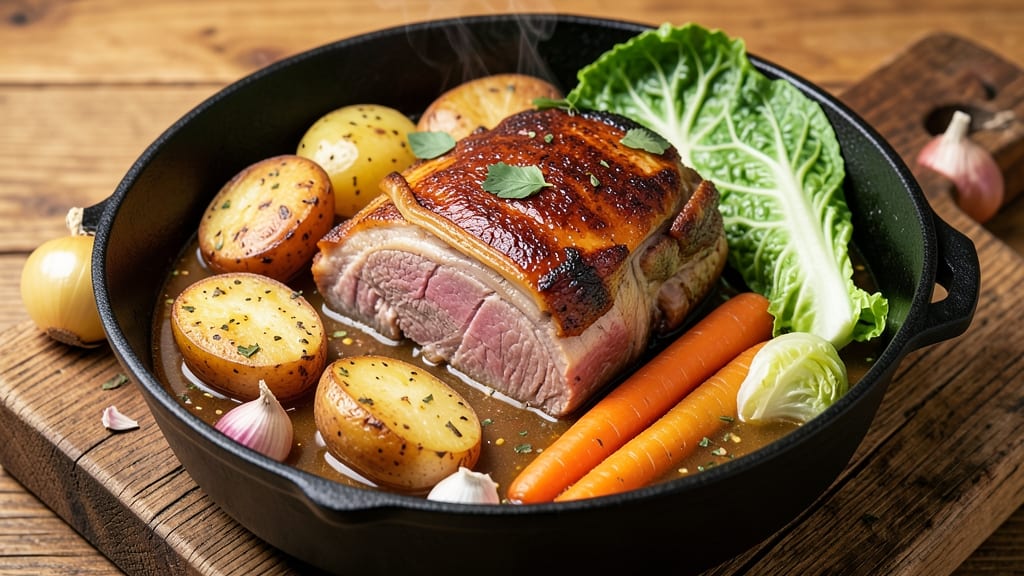
This boiled dinner recipe with pork shoulder brings back the soul of Southern family gatherings—tender meat, hearty vegetables, and rich broth all simmered together. The secret lies in low-and-slow cooking, where the pork shoulder transforms from tough to fork-tender while absorbing the flavors of carrots, potatoes, and cabbage.
I’ve perfected this over years of cooking for crowds, and it’s the one dish that always gets seconds.
The magic happens in the broth, where simple ingredients like onions, garlic, and bay leaves build depth over hours. Unlike quick meals, this dish rewards patience—every bite delivers melt-in-your-mouth pork and vegetables that stay vibrant, not mushy.
The result? A restaurant-quality meal that’s still approachable for home cooks, with a technique even beginners can master.
What you’ll end up with is a steaming pot of comfort food—golden, savory, and packed with the kind of flavor that lingers long after the last bite. The pork shoulder falls apart easily, the carrots caramelize slightly, and the cabbage stays crisp with just the right bite.
It’s the kind of meal that makes you want to gather your family around the table, no matter the season.
Serve with crusty bread to soak up the rich broth or pair it with a simple green salad for balance. For those who love tradition, stick to the classic combo. For a modern twist, try roasting the potatoes instead of boiling them—it’s a game-changer. Let’s get cooking!
Ingredients for boiled dinner recipe pork shoulder
Pantry staples plus a few fresh touches for that Southern comfort food magic.
| Ingredient | Amount | Notes |
|---|---|---|
| Pork Shoulder 🥩 | 3 lb | Bone-in for best flavor |
| Yellow Onions 🧅 | 2 whole | Quartered for even cooking |
| Garlic Cloves 🧄 | 6 cloves | Smashed for aromatic release |
| Carrots 🥕 | 4 whole | Large, peeled, cut into chunks |
| Russet Potatoes 🥔 | 4 whole | Medium, unpeeled, quartered |
| Green Cabbage 🥬 | 1 small head | Cut into wedges, core removed |
| Bay Leaves 🍃 | 2 whole | Fresh preferred, dried works |
| Salt 🧂 | 2 tbsp | Kosher or sea salt |
| Black Peppercorns 🌶️ | 1 tsp | Freshly cracked preferred |
| Water 💧 | 4 cups | Enough to cover ingredients |
| Apple Cider Vinegar 🍎 | 1 tbsp | Brightens flavors |
| Fresh Thyme 🌿 | ¼ cup | Stems removed, chopped |
The pork shoulder is the star—look for one with good marbling at Costco or your local butcher. Bone-in stays juicier than boneless, and a 3-pound cut feeds a crowd. If you can't find fresh thyme, dried works at one-third the amount. For the cabbage, green or red both work, but green stays slightly crisper. The carrots should be firm and vibrant—no rubbery ones. Bay leaves? Fresh is ideal, but dried is fine if that's what you've got. Just remove them before serving.
No apple cider vinegar? White vinegar or lemon juice works in a pinch. Swap russet potatoes for Yukon gold if you prefer creamier texture. The water amount is flexible—just make sure everything's covered by a few inches. For extra richness, add 1/4 cup heavy cream at the end. If you're short on time, parboil the veggies 5 minutes first to speed things up. The broth will be even more flavorful if you brown the pork shoulder first—just sear it in a pan before adding to the pot.
Leftovers reheat beautifully—just add a splash of water or broth. Keeps for 4-5 days in the fridge or 3 months frozen. I always double the recipe because it's that good. The broth freezes perfectly for future soups or gravies. Store in airtight containers, and the meat will stay tender. For serving, I like to shred the pork and mix it back into the broth—game-changer for flavor distribution.
Why You'll Love This Recipe
- One-Pot Magic: I swear by this—just toss everything in a big pot with the pork shoulder, cover it with water, and let it simmer. No chopping like a fine-diner, no fancy techniques. The onions and garlic soften into the meat, and the potatoes soak up all that savory broth like sponges. Honestly, I’ve made this while scrolling through my phone.
- Deep, Rich Payoff: That pork shoulder? It turns incredibly tender—fall-apart tender—while staying juicy. The carrots caramelize just enough to add natural sweetness, and the potatoes get that buttery, fluffy inside with a hint of crisp at the edges. (Yes, even on a Tuesday night.) The garlic cloves? They infuse the whole thing with a warmth that makes it taste like you spent hours cooking.
- Leftovers for Days: Between us, this recipe makes way more than I need for one meal. The pork stays moist for reheating, and the veggies hold up perfectly—just warm them in a skillet with a splash of broth. I’ve fed my family for three lunches from a single batch, and no one complains. (My daughter picks out the best pieces, but still asks for seconds.)
- Budget-Friendly Crowdpleaser: Pork shoulder is cheap, and this recipe stretches it across a whole meal—no wasted bits. The onions and carrots add bulk without breaking the bank, and the potatoes? They’re the ultimate filler. I’ve made this for game days, potlucks, and even a last-minute dinner when I forgot to grocery shop. It’s my go-to when I need to feed people without stressing.
Step-by-step instructions for boiled dinner with pork shoulder
This hearty dish comes together with simple steps and minimal fuss—just patience and time.
Prepare the Pork Shoulder and Vegetables
Start by trimming any excess fat from the 3 lb pork shoulder, leaving about ¼ inch of fat cap for flavor. Place the pork in a large stockpot and add the 2 whole yellow onions, 4 whole carrots, and 4 whole russet potatoes. I like to quarter the potatoes and leave the skins on for texture—just scrub them clean first.
Next, cut the 1 small head green cabbage into wedges, removing the core. Add these to the pot along with the 6 cloves garlic (smashed with the side of your knife for maximum flavor) and the 0.25 cup fresh thyme. This prep ensures everything cooks evenly and infuses the meat with aromatic goodness right from the start.
Season and Add Liquid
Sprinkle the 2 tbsp salt and 1 tsp black peppercorns directly over the pork shoulder, pressing gently to help the seasoning adhere. Add the 4 cups water and 1 tbsp apple cider vinegar, then place the 2 whole bay leaves on top. The vinegar brightens the flavors and helps tenderize the meat over time.
Here's the thing—I always add the vegetables in layers. First, place the potatoes and carrots around the pork, then nestle the cabbage wedges and onions on top. This arrangement ensures the potatoes and carrots cook through while the cabbage softens just enough to be tender without falling apart.
Simmer Low and Slow
Bring the pot to a gentle boil over medium-high heat, then immediately reduce the heat to low to maintain a barely simmering temperature. Cover the pot with a lid and let it cook for 2 hours. You'll see the liquid reduce slightly as the pork renders its natural juices, creating a flavorful broth.
After 2 hours, check the pork with a meat thermometer—it should register 195-200°F in the thickest part. If it's not there yet, continue cooking for another 30-45 minutes. The key is patience; rushing this step results in tough meat. The vegetables should be tender but still hold their shape.
Rest and Serve
Once the pork reaches the perfect temperature, remove it from the pot and let it rest on a cutting board for 15 minutes. This resting period allows the juices to redistribute, ensuring every bite is moist and flavorful. While it rests, skim any excess fat from the broth if desired.
Slice the pork shoulder against the grain into ½-inch thick slices and serve it with the vegetables and broth. The cabbage should be tender-crisp, the potatoes fluffy, and the carrots caramelized at the edges. This dish tastes even better the next day as the flavors meld further—just reheat gently with a splash of water.
Pro Tips For Making Boiled Dinner Recipe Pork Shoulder
- PARBOIL ONIONS FIRST: Cut your yellow onions into even chunks—about 1-inch pieces—and drop them straight into boiling water for 3-4 minutes before adding the rest. This softens them just enough so they don’t turn to mush later, and they’ll actually absorb flavor instead of sitting like wet rocks. (I used to skip this, and the onions always ended up either raw or falling apart.)
- SALT THE POTATOES: Toss your Russet potatoes in a bowl with 1 teaspoon of salt before adding them to the pot. The salt gets under the skin while they cook, so they don’t need extra seasoning later—just a sprinkle of pepper at the end. (Yes, even if you’re impatient like me, wait until they’re fully submerged before adding them.)
- DON’T OVERCROWD THE POT: If your pot looks like it’s doing a crowded bar scene, the carrots and potatoes will steam instead of simmer. Aim for a loose fit—about 1-inch gap between ingredients—so the water can circulate and cook everything evenly. (I learned this the hard way when my carrots came out pale and sad.)
- USE COLD WATER FOR PORK: Start the pork shoulder in cold water, even if the recipe says otherwise. The shock of hot water can make the meat tough, and you want that shoulder tender enough to pull apart. Bring it to a boil, then reduce to a gentle simmer—this keeps the meat juicy. (Sounds weird, but it works every time.)
Health benefits of this dish
Protein Powerhouse
This boiled dinner delivers a whopping 40 grams of protein per serving from the pork shoulder alone—perfect for muscle repair and keeping you full for hours.
The slow cooking method preserves all the amino acids while breaking down connective tissue into gelatin, making it one of the most bioavailable protein sources you can eat. I always double-check the internal temperature to ensure maximum tenderness and protein yield at 195-200°F. 💪
Rich in B Vitamins
Pork shoulder is packed with B vitamins, especially B12 and niacin, which support energy metabolism and nervous system function. A 3-pound shoulder serves six, so each portion gives you about 25% of your daily B12 needs.
These nutrients are particularly important for active individuals or anyone recovering from illness. The bone-in cut adds extra flavor and nutrients like calcium and phosphorus.
Fiber from Vegetables
The cabbage, carrots, and potatoes provide fiber that aids digestion and keeps blood sugar stable. One serving delivers about 8 grams of fiber, thanks to the green cabbage's crisp texture and the potatoes' skin-on goodness.
I always keep the skins on for maximum fiber and nutrients—just scrub them clean first. This fiber combo helps balance the meal's richness while supporting gut health. 🥬
Iron for Energy
Both the pork shoulder and cabbage contribute iron, an essential mineral for oxygen transport in your blood. The cabbage's dark green leaves contain more iron than you might expect, while the pork provides heme iron, which your body absorbs more efficiently.
Aim for 2-3 servings per week to maintain healthy iron levels, especially if you're active or prone to fatigue.
Low-Fat, High-Flavor
While pork shoulder does contain fat, the slow cooking process renders much of it out, leaving you with a leaner final product. The broth becomes rich and flavorful without being heavy.
I always skim excess fat after cooking to make the dish even lighter. This makes it a surprisingly healthy option for a comfort food classic—packed with nutrients without the guilt. 💛
Hydration Boost
The broth itself is hydrating and packed with electrolytes from the vegetables and pork juices. Sipping on this flavorful liquid helps replenish fluids while providing minerals like potassium from the potatoes.
It's the perfect post-workout meal or comforting option when you're feeling under the weather. The apple cider vinegar adds a tangy note that enhances both flavor and hydration benefits. 💧
Nutrition facts
Frequently asked questions
Why does pork shoulder need to cook so long in this recipe?
The long 2-3 hour simmer at low heat breaks down collagen in the meat, transforming tough connective tissue into gelatin. This creates the signature tender, fork-shreddable texture while infusing the pork with deep flavor from the vegetables and broth. The patience pays off with melt-in-your-mouth results!
Can I use boneless pork shoulder instead of bone-in?
Yes, but expect slightly less flavor and moisture. Bone-in pork stays juicier as the bone helps retain heat and adds natural richness to the broth. If using boneless, add 1 extra cup of water and consider wrapping the meat loosely in cheesecloth before cooking to help it hold its shape.
What if my cabbage turns mushy?
This happens when cabbage cooks too long in liquid. To fix it, add cabbage only in the last 30 minutes of cooking or cook it separately in a steamer basket over the pot. For extra crispness, use green cabbage (it stays firmer than red) and avoid overcrowding the pot.
How can I make this dish ahead of time?
This recipe actually tastes better the next day! Cook completely, then refrigerate in an airtight container for up to 5 days. Reheat gently with ½ cup water per serving until steaming hot. For freezing, portion the meat and veggies separately—freeze for 3 months and thaw overnight in the fridge before reheating.
What's the best way to use the leftover broth?
Strain and reduce it for a rich gravy by simmering uncovered for 15-20 minutes, or freeze it for future soups and stews. For extra depth, add 1 tbsp tomato paste or a splash of Worcestershire sauce when reheating. The broth also makes excellent dumplings or mashed potato topping.