
Main Courses
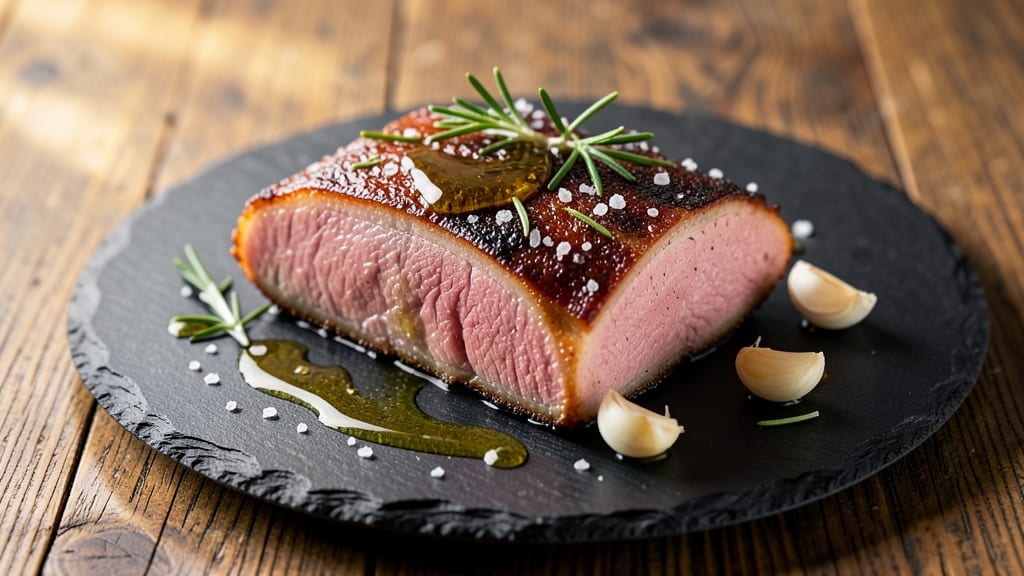
Bone-in center-cut pork loin delivers restaurant-quality results with every bite—juicy, tender meat and rich bone marrow that transforms a simple roast into a showstopper. 🔥 As a pitmaster who's cooked thousands of pounds of pork, I know the secret to perfecting this cut lies in the crust, the sear, and knowing exactly when to pull it from the heat. This isn't your average pork loin; it's a dish that commands attention at the table.
The herb crust locks in moisture while creating a flavorful bark that contrasts beautifully with the tender meat inside. We'll start with a dry brine to ensure maximum juiciness, then sear the pork to develop deep caramelization before finishing it in the oven.
The bone marrow, when exposed, adds a luxurious richness that turns this into a truly memorable centerpiece.
What you'll end up with is pork that's perfectly medium-rare at the center—145°F internal temperature—with crisp edges and a bone cavity filled with golden, buttery marrow. The herb crust adds aromatic depth, while the juices stay trapped inside, making each bite impossibly tender.
This is the kind of pork that makes guests ask for seconds before they even finish their first plate.
Pair it with roasted root vegetables or a crisp apple salad to round out the meal, and you've got a dinner that feels special without requiring hours in the kitchen. Let's get cooking—this is pork loin done right.
Ingredients for bone in center cut pork loin
Pork loin, herbs, and a crisp crust—everything you need to impress with this juicy roast.
| Ingredient | Amount | Notes |
|---|---|---|
| Bone-In Center-Cut Pork Loin 🐖 | 2 lb | Center-cut, 1.5-inch thick |
| Kosher Salt 🧂 | 1 ½ tbsp | For dry brine, coarse grain |
| Fresh Rosemary 🌿 | ½ cup | Chopped, stems removed |
| Fresh Thyme 🌿 | ¼ cup | Leaves only, stems removed |
| Fresh Garlic 🧄 | 4 cloves | Minced, for crust |
| Extra-Virgin Olive Oil 🫒 | ¼ cup | For crust, fruity variety |
| All-Purpose Flour 🌾 | ¼ cup | For crust, light coating |
| Unsalted Butter 🧈 | ½ cup | Cold, cubed for sear |
| Bone Marrow 🦴 | 1 piece | From pork loin, exposed |
| Black Peppercorns 🌶️ | 1 tbsp | Freshly cracked |
| Dijon Mustard 🍯 | 1 tbsp | For crust, optional |
The pork loin is non-negotiable here. Center-cut with the bone ensures maximum tenderness and flavor—Costco or Whole Foods carry excellent quality. Look for a thick cut (1.5 inches) with good marbling. The bone marrow is the star, so don't skip it. If your butcher doesn't expose it, ask them to crack the bone before you take it home. For the herbs, farmers markets have the freshest rosemary and thyme, but the grocery store works too—just make sure the stems are green and the leaves smell vibrant. If you're prepping ahead, trim the fat cap to 1/4-inch thickness for even cooking.
No Dijon mustard? Skip it—this crust works perfectly without it. Fresh herbs wilt fast, so if you're prepping ahead, chop them and store in an airtight container with a damp paper towel. For the crust, lightly toast the flour in a dry pan for 2 minutes—this deepens the flavor. The olive oil should be fruity and peppery, not mild. Trader Joe's or Whole Foods carry great options. If you can't find bone marrow, substitute extra butter (1/4 cup) mixed with 1 tbsp melted bone-in chicken fat—it won't be identical, but it adds richness. The kosher salt is for the dry brine, so grab the coarse kind—it clings better to the meat.
Pork loin keeps best in the fridge for 2 days before cooking, but you can prep the crust ingredients ahead and store them separately for up to 3 days. The herb mixture stays fresh for 5 days in the fridge if wrapped tightly. After roasting, the leftovers reheat beautifully—350°F for 15 minutes with a splash of water or broth. The bone marrow, once exposed, should be eaten immediately for maximum flavor. Portion it into small ramekins for easy serving, and keep the rest refrigerated for up to 3 days—it's too good to waste.
Why You'll Love This Recipe
- I’ll be real: most pork leftovers turn into sad, dry slabs. Not this. The bone keeps the meat moist, and the crust stays intact. I’ve reheated slices in a pan with a splash of broth—tastes like it just came out of the oven. Budget-friendly? Absolutely. Reliable? Even more so.
- No Chopping Chaos: I swear by this recipe because it only asks for two things from me: a knife to score the pork (five minutes max) and a spoon to mix the herbs. That’s it. The bone-in cut handles all the heavy lifting—juicy, tender, and no fussing with trimming.
- Herb-Crusted Magic: Between us, the rosemary and thyme clinging to that crispy skin? Chef’s kiss. The garlic tucked into the scoring? It melts into the meat like a secret weapon. Honestly, I’ve made this with dried herbs before—don’t. Fresh is the only way.
- Weeknight to Dinner Party: This is my go-to when I need to feed a crowd or just myself. Roast it for 45 minutes, slice it, and suddenly you’ve got a meal that works for: a lazy Sunday lunch, a last-minute dinner guest, or even packed leftovers that taste better the next day.
Step-by-step instructions for herb-crusted bone-in pork loin
Let's create a showstopper roast with crispy crust and melt-in-your-mouth juiciness.
👨🍳 Step 1: Prepare the Herb Crust and Dry Brine
In a food processor, pulse the 0.5 cup fresh rosemary, 0.25 cup fresh thyme, 4 cloves fresh garlic, 1 tbsp cracked black peppercorns, and 1 tbsp Dijon mustard until finely chopped. With the processor running, slowly add the 0.25 cup extra-virgin olive oil until the mixture forms a coarse paste. This becomes our flavor-packed crust.
In a small bowl, whisk together the 0.25 cup all-purpose flour and 1.5 tbsp kosher salt. Pat the 2 lb bone-in center-cut pork loin completely dry with paper towels—this is crucial for crispy skin. Rub the flour-salt mixture all over the meat, pressing gently to adhere. Then spread the herb paste evenly over the entire surface, including the bone marrow cavity.
🥘 Step 2: Dry Brine and Prep the Roast
Place the seasoned pork loin on a wire rack set over a baking sheet. Cover loosely with plastic wrap and refrigerate for 12-24 hours. This dry brining process creates an incredible crust while keeping the meat incredibly juicy. I know it seems like a long wait, but trust me—it's worth every minute for that perfect balance of flavor and texture.
Before roasting, remove the pork from the fridge and let it sit at room temperature for 30 minutes. This ensures even cooking throughout. While it's coming to temperature, preheat your oven to 425°F with the rack positioned in the middle position.
🔥 Step 3: Sear the Pork for Maximum Flavor
Heat a large oven-safe skillet over medium-high heat. Add the 0.5 cup cold cubed unsalted butter and let it melt until the butter turns golden brown and foaming—this should take about 3-4 minutes. Carefully place the pork loin in the skillet, bone-side down, and sear for 5 minutes until a deep golden crust forms.
Flip the pork and continue searing for another 3 minutes on the other side. The butter will bubble vigorously—this is normal and creates that incredible flavor base. Transfer the skillet to the preheated oven and roast for 25-30 minutes until the internal temperature reaches 140°F (medium-rare).
⏰ Step 4: Rest and Prepare the Bone Marrow
Remove the pork from the oven and let it rest on a cutting board for 15 minutes. This resting period is absolutely critical—it allows the juices to redistribute throughout the meat, ensuring each bite is perfectly juicy. While it rests, use a sharp knife to carefully cut along the seam of the bone marrow, being careful not to cut into the bone itself.
Place the exposed marrow in a small baking dish and roast at 400°F for 10-12 minutes until it's soft and easily scooped out with a spoon. The marrow should be golden and slightly crispy at the edges—this is when you know it's perfectly cooked.
🍽️ Step 5: Carve and Serve with Flavorful Accompaniments
After resting, carefully slice the pork loin into ½-inch thick slices, cutting against the grain for maximum tenderness. The meat should be pink in the center with a beautiful golden crust. Serve immediately with the roasted bone marrow spooned alongside—it's rich, buttery, and packed with flavor that complements the pork perfectly.
For extra presentation, spoon some of the pan juices over the sliced pork and garnish with additional fresh rosemary sprigs. The combination of the crispy crust, juicy meat, and velvety marrow makes this dish truly unforgettable. Each bite delivers that perfect harmony of textures and flavors we're after.
Pro Tips For Making Bone In Center Cut Pork Loin
- Dry the Meat First: Pat that pork loin thoroughly with paper towels—even if it feels obsessive. I learned this the hard way when my first batch turned out sodden instead of crispy, no matter how hot the pan. A dry surface = better browning and a crust that actually sticks.
- Salt the Meat Overnight: Toss the pork loin with salt at least 4 hours (or overnight) before cooking. Sounds weird, but it works: the salt breaks down the proteins, keeping the meat juicy and the crust golden. I skip this when I’m lazy, and the difference in texture is noticeable.
- Start Hot, Then Slow: Sear the pork loin over maximum heat until deep brown—about 2 minutes per side—then drop the heat to medium-low. After burning three batches, I finally figured out that high heat first locks in flavor, while low and slow finishes it evenly without drying it out.
- Stuff the Bone: Slide a whole garlic clove and a sprig of rosemary inside the bone channel before roasting. It infuses the meat from the inside out, giving you flavor where you’d never expect it. (Yes, even if you’re skeptical—your future self will notice.)
Wine and beer pairings for this bone in center cut pork loin
Red Wine Pairings
For this herb-crusted pork loin, I reach for a bold red wine with enough structure to stand up to the rich, buttery flavors. A Cabernet Sauvignon from Napa Valley—like a 2018 Cakebread—is my go-to choice.
Its dark fruit notes and firm tannins complement the pork's caramelized crust while cutting through the richness of the bone marrow. 🍷 The acidity in the wine also cleanses your palate between bites, making each flavor experience feel fresh.
If you prefer something slightly lighter, a Syrah from the Rhône Valley—such as a 2019 Guigal Côte-Rôtie—works beautifully. The smoky, peppery notes in the wine mirror the black peppercorns in the crust, while its bright acidity balances the dish's richness.
Both wines age well, so you can decant them for an hour before serving to open up their full potential.
White Wine Alternatives
Don't overlook white wines if you're serving this pork loin during warmer months or to guests who prefer them. A Chardonnay with good acidity, like a 2022 Meursault from Burgundy, pairs surprisingly well.
The buttery notes in the wine echo the crust, while its crisp finish refreshes the palate. 🍷 For a lighter option, try a Viognier from Condrieu—its floral and stone fruit flavors contrast nicely with the herb crust.
If you're feeling adventurous, a skin-contact white wine like Orange Wine adds an unexpected twist. The tannins in these wines handle the richness of the pork beautifully, and the earthy notes complement the rosemary and thyme in the crust.
Look for a 2021 Domaine Pichot from Croatia for a unique pairing that will impress your guests.
Beer Pairings
For beer lovers, a Belgian-style Dubbel—like a Westvleteren 12—is a fantastic match.
The malt sweetness and caramel notes in the beer harmonize with the pork's crust, while the slight bitterness balances the richness. 🍺 If you prefer something lighter, a German Helles Lager—such as Weihenstephaner Original—provides a crisp, clean contrast that lets the pork's flavors shine.
For a bold beer option, try a Barleywine with deep caramel and toffee notes, like The Abyss Barleywine from Deschutes Brewery. The alcohol content in these beers helps cut through the fat, making each bite more enjoyable.
If you're serving this during summer, a Belgian Witbier—such as Stella Artois—adds a refreshing, citrusy lift that complements the herb crust beautifully.
Non-Alcoholic Options
No alcohol? No problem. A sparkling apple cider—like Martinelli's Sparkling—adds a festive touch and pairs wonderfully with the pork's sweetness. The effervescence cleanses the palate, making each bite feel fresh. 🍏 For a more sophisticated option, try a non-alcoholic red wine like Freixenet 0.0%.
It mimics the structure of a traditional red wine while keeping the richness in check.
Herbal infusions, such as rosemary or thyme-infused sparkling water, also work beautifully. The herbs echo the crust's flavors, creating a cohesive experience. For a richer option, a chilled hibiscus tea—like Tazo Hibiscus—adds a tart, fruity contrast that balances the dish's richness without overpowering it.
Nutrition facts
Frequently asked questions
Why is bone-in pork loin better than boneless?
The bone adds incredible flavor and moisture during cooking—it acts like a natural thermometer, keeping the meat juicier longer. The bone marrow also transforms into a rich, buttery side dish when exposed. Plus, the bone helps stabilize the cut during roasting, preventing curling or uneven cooking.
Can I cook this pork loin without the dry brine?
You can, but you'll lose that perfect crust-to-juice ratio. The 12-24 hour dry brine is key for maximum tenderness and flavor penetration. If short on time, try a quick brine with 1/4 cup salt in 4 cups water for 4 hours—it won't be identical, but better than no brine at all.
What's the best way to carve bone-in pork loin?
First, let it rest 15 minutes after cooking. Then slice against the grain (perpendicular to the muscle fibers) at a 45-degree angle for elegant slices. Use a sharp boning knife to separate the meat from the bone cleanly. For presentation, arrange slices fan-style on a platter with the bone in the center.
How do I know when the pork is fully cooked?
Use a meat thermometer—145°F internal temperature for medium-rare (the safest doneness for pork loin). The bone marrow should be golden and soft when pierced with a knife. Never rely on color alone—pork can stay pink even when fully cooked. Pull it out 5°F before target temp to carry over to perfect doneness.
What if I don't have bone marrow?
No problem! Substitute with 1/4 cup extra butter mixed with 1 tbsp melted bone-in chicken fat for richness. Or simply increase the butter in the searing step to 3/4 cup total. The dish will still be delicious—just without the luxurious marrow element.