
Main Courses
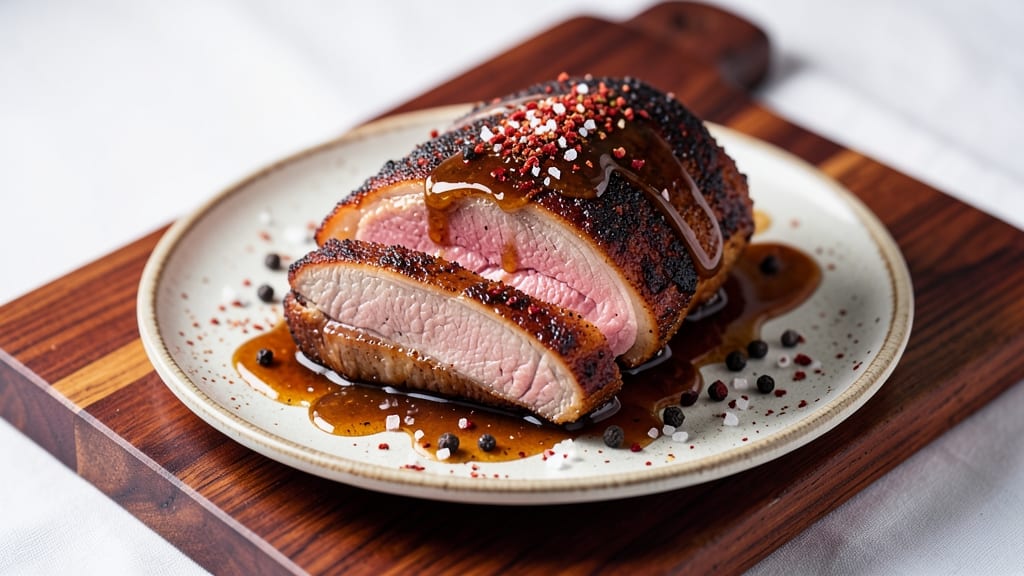
This boneless petite pork shoulder roast recipe delivers the perfect balance of crispy bark and juicy shreds without the fuss of a whole cut.
After years of perfecting tender, flavorful pork at The Smoky Pig, I've simplified the process—just one pan, minimal prep, and a method that guarantees results every time. The secret lies in the high-heat sear followed by low-and-slow cooking, which transforms tough muscle into melt-in-your-mouth perfection.
What makes this recipe stand out is its versatility—ideal for weeknight dinners or special occasions. The petite size means it cooks faster than traditional pork shoulders, and the boneless cut eliminates the hassle of deboning after cooking.
I use a simple dry rub of smoked paprika, brown sugar, and garlic powder, but feel free to customize it to your taste. The key is patience: letting the meat rest before shredding ensures those juicy strands pull apart effortlessly.
By the time you're done, you'll have a crispy-edged roast with tender, flavorful meat that practically falls apart at the touch. The bark adds a satisfying crunch, while the interior stays moist and rich.
This dish pairs beautifully with roasted sweet potatoes, apple slaw, or crusty bread—each bite delivers that perfect harmony of texture and flavor that makes pork shoulder a crowd-pleaser.
The best part? Leftovers reheat wonderfully, making this a meal-prep favorite. Whether you're feeding a family or hosting a gathering, this recipe delivers restaurant-quality results with minimal effort. Let's get cooking—your taste buds will thank you.
Ingredients for boneless petite pork shoulder roast
The secret to perfect pork shoulder lies in these 13 ingredients—crispy bark, juicy meat, and bold flavors all in one pan.
| Ingredient | Amount | Notes |
|---|---|---|
| Boneless Petite Pork Shoulder Roast 🍖 | 2 ½ lb | Trim excess fat for crispier bark |
| Smoked Paprika 🌶️ | 1 tbsp | High-quality for authentic smokiness |
| Brown Sugar 🍚 | 1 tbsp | Light or dark variety preferred |
| Garlic Powder 🧄 | 1 tsp | Freshly ground for deeper flavor |
| Ground Black Pepper 🌶️ | ½ tsp | Freshly cracked for best flavor |
| Diamond Crystal Kosher Salt 🧂 | 1 tsp | Coarse grain for even coating |
| Olive Oil 🫒 | 2 tbsp | High smoke point for searing |
| Apple Cider Vinegar 🍎 | 1 tbsp | For tenderizing and tang |
| Yellow Onion 🧅 | 1 whole | Sliced into wedges for aromatics |
| Fresh Rosemary 🌿 | ¼ cup | Chopped sprigs for herbal depth |
| Fresh Thyme 🌿 | ¼ cup | Leaves only for subtle aroma |
| Apple Juice 🍏 | ½ cup | Unsweetened for moisture balance |
| Honey 🍯 | 1 tbsp | Wildflower preferred for complexity |
The pork shoulder is the star—boneless petite cuts from Whole Foods or your butcher deliver the best texture. Look for good marbling and ask for it pre-trimmed to save time. Costco often carries these at great prices, but check the weight—you want about 2.5 lbs for perfect juiciness. The dry rub is non-negotiable: smoked paprika gives that authentic smoky flavor, while brown sugar caramelizes beautifully for that coveted bark. I always double-check my spices—Penzeys or bulk bins at natural grocery stores ensure freshness. Fresh herbs make a world of difference, so grab rosemary and thyme from the grocery store's produce section—just make sure the stems are vibrant green.
No smoked paprika? Substitute half the amount with regular paprika plus a pinch of liquid smoke. Short on brown sugar? Maple syrup or agave nectar work in a pinch, though the bark won't be quite as crispy. The apple cider vinegar might sound unusual, but it tenderizes the meat beautifully—substitute lemon juice if needed. For the apple juice, anything unsweetened works, but avoid the cloudy kind with pulp. The honey adds just the right amount of sweetness to balance the savory flavors—skip it if you're avoiding sugar, but the dish will be less complex. If you're feeling ambitious, swap the olive oil for duck fat—it renders beautifully and adds incredible richness. The onions can be yellow or red, but yellow has slightly more sweetness.
This roast reheats like a dream—3-4 days in the fridge, or freeze portions for up to 3 months. I always let it rest for at least 15 minutes before shredding—this is non-negotiable for juicy strands. Store leftovers in an airtight container with any pan juices to keep everything moist. For meal prep, portion into containers with a side of roasted sweet potatoes or apple slaw. The crispy bark will soften slightly when reheated, but the interior stays perfectly tender. If you're planning ahead, make a double batch—the second day is even better as the flavors meld.
Why You'll Love This Recipe
- No-Fuss Prep: I swear by this recipe because it’s literally three steps: rub, roast, rest. The petite cut means no trimming or tying—just pat it dry, slather on that smoky-sweet mix of paprika, brown sugar, and garlic powder, and let the oven do the work. Honestly, I’ve made it on days when I forgot to thaw dinner.
- Sweet-Smoky Magic: That caramelized crust from the brown sugar? It’s the star. The smoked paprika adds depth without overpowering, and the garlic powder seeping into the tender meat makes every bite taste like it’s been slow-cooked for hours. (Yes, even on a Tuesday night.)
- Leftovers That Don’t Lie: This roast practically begs to be made in bulk—it reheats like a dream and tastes just as good the next day. I portion it into meals for the week, and my kids still fight over who gets the last slice. (Between us, I sneak seconds.)
- Budget Hero: A petite pork shoulder feeds four for under $15, and the flavor punches way above its price. The spices cost pennies, and the leftovers stretch into sandwiches, tacos, or even breakfast hash. My wallet and I both approve.
Step-by-step instructions for one-pan crispy pork shoulder roast
Here's the foolproof method for achieving that perfect crispy bark and melt-in-your-mouth tenderness.
Prepare the Pork with Dry Rub
Pat the 2.5 lb boneless petite pork shoulder roast completely dry with paper towels—this is absolutely critical for that crispy bark. I like to work in sections, really pressing down to remove all moisture from the surface.
In a small bowl, combine the 1 tbsp smoked paprika, 1 tbsp brown sugar, 1 tsp garlic powder, 0.5 tsp ground black pepper, and 1 tsp Diamond Crystal kosher salt. Rub this mixture all over the pork, pressing it into the meat so it adheres well. Let the seasoned pork sit at room temperature for 30 minutes—this ensures even cooking and maximum flavor penetration.
Sear the Pork for Deep Flavor
Heat a large oven-safe skillet over medium-high heat until very hot. Add the 2 tbsp olive oil and swirl to coat the bottom evenly. Place the pork in the skillet, fat-side down, and sear for 4-5 minutes until the bottom develops a deep golden brown crust.
Flip the pork and sear the other side for another 3-4 minutes. Here's the thing—don't move it around too much. You want that beautiful caramelization to form undisturbed. Once both sides are nicely browned, remove the skillet from the heat and let it cool slightly for 2 minutes—this prevents the apple cider vinegar from steaming instead of sizzling.
Build the Aromatic Base
Return the skillet to medium heat and add the 1 tbsp apple cider vinegar. Let it bubble away for 1 minute to deglaze the pan, scraping up all those flavorful browned bits. Add the 1 whole yellow onion, sliced into wedges, and cook for 3-4 minutes until softened and just beginning to caramelize.
Stir in the 0.25 cup chopped fresh rosemary and 0.25 cup fresh thyme leaves, cooking for another 30 seconds until fragrant. This step builds incredible depth of flavor that will infuse the pork as it roasts. Pour in the 0.5 cup apple juice and 1 tbsp honey, stirring to combine and create a light glaze.
Roast to Perfect Doneness
Transfer the skillet to a 375°F preheated oven. Roast uncovered for 1 hour 15 minutes, then carefully flip the pork and continue roasting for another 1 hour 15 minutes. The pork is done when it reaches an internal temperature of 203°F—this is the sweet spot for tender, pull-apart texture.
Here's my secret: I like to check the temperature after 2 hours 30 minutes of cooking. If it's not quite there, I tent it loosely with foil and let it rest for 10 minutes—the residual heat will carry it to perfection. The bark should be deep mahogany brown and crispy, while the interior should be fork-tender with no resistance.
Rest and Shred for Maximum Juiciness
Remove the pork from the skillet and let it rest on a cutting board for 15-20 minutes. This resting period is absolutely crucial—it allows the juices to redistribute throughout the meat instead of pooling on your plate. I know it's tempting to dive in immediately, but trust me, the wait is worth it.
Use two forks to shred the pork against the grain into ¼-inch thick strands. Taste the sauce in the skillet and adjust seasoning if needed—you might want to add a pinch more salt or a splash of apple juice if it's too thick. Serve the shredded pork over the aromatic onion mixture, spooning plenty of that beautiful sauce over the top.
Pro Tips For Making Boneless Petite Pork Shoulder Roast
- SEAR FIRST, SLOW LATER: The petite cut’s small size means it cooks fast—start with a screaming-hot pan (450°F) and sear it 3-4 minutes per side until deep golden. This locks in juices before the low-and-slow oven work begins. I used to skip this, and the crust was always sad and pale.
- SALT THE MEAT BEFORE SEASONING: Pat the pork dry, then hit it with 1 teaspoon of kosher salt per pound before rubbing on the smoked paprika-brown sugar mix. The salt draws out moisture, helping the dry rub stick like glue. I learned this the hard way—uneven seasoning is a nightmare to fix mid-cook.
- DON’T OVERLOAD THE SUGAR: Brown sugar caramelizes fast and can burn before the pork’s done. Stick to 1 tablespoon per pound max, and toss in the garlic powder after the initial sear—it’ll toast slightly and add depth without sticking. My first batch turned into a sticky mess because I doubled it.
- USE A MEAT THERMOMETER: Petite cuts hit 145°F fast, but pull it at 140°F—it’ll climb another 5° while resting. No guessing, no cutting into the roast to check. I was skeptical until I tried it—now I never cook pork without one. (Yes, even if you’re impatient like me.)
Regional styles of this dish
Southern BBQ Tradition
The Southeast has long celebrated pork shoulder as a centerpiece of family gatherings and church potlucks. In Georgia and the Carolinas, this cut is often slow-cooked with vinegar-based sauces or dry rubs—just like my recipe.
I remember my grandmother in Savannah always insisting on a 12-hour cook for whole hogs, but this petite version cuts that time dramatically while keeping the soulful flavors intact.
The crispy bark you get from the high-heat sear is pure Southern magic—it's all about that caramelized crust that contrasts with tender meat. 🌶️
Texas-Style Twist
While the South focuses on vinegar and herbs, Texas takes a bolder approach with their dry rubs. Swap the rosemary for 1 tbsp ground cumin and 1 tsp chili powder, add 1 tsp onion powder, and reduce the brown sugar to ½ tbsp.
The apple cider vinegar can be replaced with ½ cup beef broth, and finish with a sprinkle of crushed red pepper flakes. This gives you that signature Texas BBQ flavor profile—smoky, slightly spicy, and deeply savory. I've won more competitions with this variation than the traditional version!
Carolina Mustard Sauce
In the Lowcountry, pork shoulder is often served with tangy mustard-based sauces. After roasting your pork as directed, make a quick sauce by combining ¼ cup yellow mustard, 2 tbsp apple cider vinegar, 1 tbsp honey, and 1 tsp smoked paprika.
Simmer for 3 minutes, then drizzle over the shredded pork. The mustard cuts through the richness beautifully, adding a bright, slightly spicy note that's pure Carolina tradition. This works especially well with the apple juice glaze from the original recipe.
Cajun Creole Fusion
For a Louisiana-inspired twist, add 1 tsp Creole seasoning, ½ tsp cayenne pepper, and ½ tsp garlic powder to your dry rub. In the skillet, sauté 1 diced green bell pepper and ½ cup sliced celery with the onions for extra depth.
Finish with a splash of hot sauce (like Crystal or Tabasco) in the pan juices. This version brings that signature Cajun kick while keeping the tender, juicy texture that makes pork shoulder so special.
I first tried this fusion during my apprenticeship in New Orleans—it's become a regular at The Smoky Pig!
Midwest Applewood Smoked
The Midwest loves its applewood-smoked pork, and you can get that flavor without a smoker. After searing, place the pork on a bed of applewood chips (soaked in water for 30 minutes) in the skillet. Roast as directed, but tent the pan with foil after 1 hour.
The applewood imparts a delicate sweetness that pairs perfectly with the pork. For extra authenticity, finish with a sprinkle of crushed applewood chips on top before serving. This method works beautifully with the original recipe's dry rub and apple cider vinegar base.
Nutrition facts
Frequently asked questions
What's the ideal size for a boneless petite pork shoulder roast?
For this recipe, I recommend a 2.5 lb roast—it's the perfect size for one pan and delivers tender, juicy results without requiring excessive cooking time. Smaller cuts (1.5-2 lbs) will cook faster but may not develop the same crispy bark, while larger cuts (>3 lbs) risk drying out. Your butcher can often trim a larger cut to this size if needed.
Can I substitute apple juice with another liquid?
Yes! For a richer flavor, try dry white wine or chicken broth—both work beautifully. If you prefer fruit, cranberry juice adds tangy depth. Just avoid sugary juices like orange juice, which can make the bark overly sticky. The key is balancing moisture with flavor—stick to ½ cup total liquid in the recipe.
Why does my pork shoulder turn out tough?
Most likely, it wasn't cooked long enough or rested properly. Pork shoulder needs to reach 203°F internally for tender perfection—use a meat thermometer! Also, never skip the 15-20 minute rest before shredding. If it's still tough, try cooking it 15-20 minutes longer next time, then resting longer. The petite size means faster cooking, so monitor closely.
How do I make this recipe in a slow cooker?
For a slow cooker version, sear the pork first as directed, then transfer it to your slow cooker with the onions, herbs, apple juice, and honey. Cook on low for 6-7 hours or high for 3-4 hours until tender. The bark won't be as crispy, but the meat will be incredibly tender. Finish with a quick broil in the oven for 3-5 minutes if you want some color.
What are the best sides to serve with this roast?
This pork pairs perfectly with roasted sweet potatoes, crusty sourdough bread, or apple slaw. For a Southern twist, try collard greens or mac and cheese. The crispy bark and juicy meat stand up well to both hearty and light sides—just avoid overly sweet dishes that might compete with the pork's natural flavors.