
Main Courses
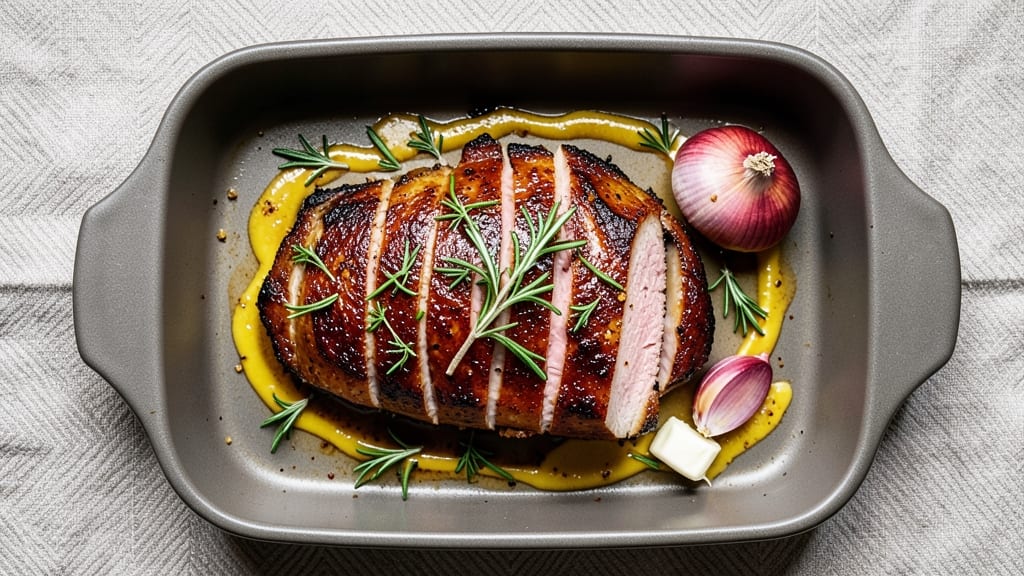
This boneless pork tenderloin roast delivers restaurant-quality tenderness with a golden herb-infused crust every time. After years of perfecting my technique at Atlanta The Smoky Pig, I’ve simplified it for home cooks—no fancy equipment, just precise timing and a few key ingredients that transform lean pork into melt-in-your-mouth perfection.
The secret lies in the crust: a blend of fresh herbs, mustard, and Dijon that locks in juices while creating that coveted caramelized exterior.
What sets this recipe apart is the balance—juicy pink centers (not overcooked) and a crisp exterior that holds its shape when sliced. We’re talking 20-25 minutes at 375°F, with a mandatory 10-minute rest to let those juices redistribute.
The herb crust isn’t just decorative; it’s functional, adding layers of aroma while preventing the pork from drying out. This is the kind of dish that turns a weeknight dinner into something special without requiring hours in the kitchen.
The result is a pork roast so tender it nearly falls apart at the touch, with a crust that’s crisp enough to stand up to fork pressure but still yields to each bite. The aroma alone—rosemary, thyme, and garlic wafting through your kitchen—will have everyone gathering at the table.
Serve it with roasted root vegetables or a simple green salad to let the pork shine as the star of the meal.
For those who love leftovers (and trust me, you will), this recipe scales beautifully—just adjust the cooking time proportionally. The crust technique works for larger cuts too, making it versatile for everything from family dinners to holiday feasts. Let’s get to that perfectly cooked pork tenderloin.
Ingredients for boneless pork tenderloin roast
Pantry staples plus a handful of fresh herbs transform simple pork into restaurant-quality perfection.
| Ingredient | Amount | Notes |
|---|---|---|
| Boneless Pork Tenderloin 🥩 | 1 ½ lb | Center-cut, even thickness preferred |
| Fresh Rosemary 🌿 | ¼ cup | Finely chopped, stems removed |
| Fresh Thyme 🌿 | ⅛ cup | Leaves only, stems removed |
| Garlic Cloves 🧄 | 4 cloves | Minced, not pre-minced jar |
| Dijon Mustard 🍯 | 1 tbsp | High-quality, not prepared |
| Yellow Mustard 🍯 | 1 tbsp | Smooth, not coarse |
| Extra-Virgin Olive Oil 🫒 | 2 tbsp | For crust and searing |
| Kosher Salt 🧂 | 1 ½ tsp | Diamond Crystal preferred |
| Freshly Ground Black Pepper 🌶️ | ½ tsp | Coarse grind preferred |
| Unsalted Butter 🧈 | 2 tbsp | Cold, cubed for crust |
| Fresh Lemon Juice 🍋 | 1 tbsp | From organic lemons |
| All-Purpose Flour 🌾 | 1 tbsp | For dusting cutting board |
The pork tenderloin is your canvas here—center-cut ensures even cooking, while 1.5 lbs serves four with generous leftovers. Atlanta's Whole Foods or Kroger's butcher counter carry excellent quality, but any reputable grocer will have it. Look for pieces with good marbling—just a few specks of fat keep it juicy. The herbs? Fresh is non-negotiable—dried won't give that same aromatic punch. If you're prepping ahead, wrap the pork in paper towels and refrigerate for up to 2 days, but bring it to room temperature before cooking for even results.
No fresh rosemary? Dried at one-third the amount works in a pinch, but trust me, fresh is worth the trip to the market. Substituting mustard? Whole-grain mustard works, but the smooth texture of Dijon and yellow mustard creates that perfect crust. Short on olive oil? Avocado oil has a higher smoke point. The butter in the crust is crucial—cold cubes create steam for that crisp exterior. For extra flavor, add a pinch of smoked paprika to the crust mix. And if you're feeling fancy, truffle oil in place of olive oil adds a gourmet touch that pairs beautifully with the herbs.
This roast reheats like a dream—350°F for 10-15 minutes wrapped in foil keeps it juicy. Store leftovers in an airtight container for 4 days, or freeze for 3 months by wrapping tightly in plastic and foil. The crust stays crisp for about 2 days if you reheat it uncovered at 400°F for 5 minutes. I always make double batches—pork tenderloin sandwiches the next day are a game-changer for lunch. For larger gatherings, simply scale the crust ingredients proportionally while keeping the pork at 1.5 lbs per 4 servings.
Why You'll Love This Recipe
- No Fuss Roast: I swear by this recipe because it’s actually hands-off. Slice the pork, slather on the Dijon, tuck in the garlic and herbs, and let the oven do the work. No basting, no fussing—just 20 minutes of active time tops.
- Herb Bomb Flavor: That rosemary and thyme combo with garlic? It’s ridiculously good. The Dijon mustard adds a little tang, and when the pork gets that golden crust? Every bite tastes like a fancy restaurant, but I’m the one who made it.
- Weeknight to Dinner Party: Same recipe, different vibes. Weeknights? Serve it with roasted potatoes and green beans. Fancy dinner? Add a red wine reduction and crusty bread. It’s my secret weapon for looking like a pro without trying.
- Leftovers That Don’t Suck: Between us, most roasts turn dry or boring by day three. Not this one. The tenderloin stays juicy, and the herbs keep it fresh-tasting. I meal prep half the roast for sandwiches the next day—no one complains.
Step-by-step instructions for herb-infused pork tenderloin roast
This method delivers melt-in-your-mouth tenderness with a perfectly crisp herb crust every time.
Prepare the Herb Butter Mixture
In a small bowl, combine the 2 tablespoons cold unsalted butter, 1 tablespoon Dijon mustard, 1 tablespoon yellow mustard, 1 tablespoon fresh lemon juice, 1.5 teaspoons kosher salt, and 0.5 teaspoon freshly ground black pepper. This forms the flavorful base that will create our signature crust.
Next, add the 0.25 cup finely chopped fresh rosemary and 0.125 cup fresh thyme leaves, mixing until the herbs are evenly distributed throughout the butter. The cold butter should create a soft, spreadable compound that will cling beautifully to the pork. This herb blend is what transforms an ordinary roast into something extraordinary.
Create the Herb Crust on the Pork
Pat the 1.5 lb boneless pork tenderloin completely dry with paper towels—this is crucial for achieving that perfect crisp crust. Dust the cutting board lightly with 1 tablespoon all-purpose flour to prevent sticking, then place the pork on top.
Gently spread half of the herb butter mixture evenly over the surface of the pork, pressing lightly to ensure good contact. Fold the pork in half lengthwise so the butter sides meet, then secure with kitchen twine. This technique creates a compact shape that cooks evenly while maximizing surface area for that crispy herb crust.
Sear for Maximum Flavor Development
Heat 2 tablespoons extra-virgin olive oil in a large oven-safe skillet over medium-high heat until shimmering. Carefully place the butter-coated pork in the skillet and sear on all sides for 3-4 minutes per side until golden brown. The oil should sizzle vigorously—this is your signal that the crust is forming properly.
While searing, press down gently on the pork with a spatula during the first minute of each side. This prevents curling and ensures even contact with the hot pan. The pork should develop a deep golden crust while remaining pink in the center—this is the hallmark of perfect doneness.
Finish in the Oven for Juicy Perfection
Transfer the skillet to a preheated 400°F oven and roast for 15-20 minutes or until the internal temperature reaches 145°F when measured with a meat thermometer. The pork is done when it's just slightly pink in the center—this ensures maximum juiciness without overcooking.
Remove from the oven and let the pork rest for 10 minutes before slicing. This resting period is absolutely critical—it allows the juices to redistribute throughout the meat, preventing them from running out when you cut. The crust will remain crisp while the interior stays impossibly tender.
Garnish and Serve Immediately
Carefully remove the twine and slice the pork into ½-inch thick medallions. Spoon any accumulated pan juices over the top for extra flavor. Garnish with additional fresh thyme sprigs and a final sprinkle of freshly ground black pepper for presentation.
Serve immediately with roasted vegetables or a fresh herb salad. Each bite should deliver that perfect contrast of crispy herb crust and juicy pink center—this is what makes this recipe truly special. The combination of Dijon and yellow mustard in the crust adds just the right tangy depth to complement the herbal notes.
Pro Tips For Making Boneless Pork Tenderloin Roast
- Pat the meat dry: I learned this the hard way—wet pork tenderloin steams instead of browns. Grab paper towels and press firmly all over, even if it feels excessive. That crust from the Dijon and herbs won’t form properly if moisture’s lingering.
- Sear first, then roast: High heat for 2-3 minutes per side in a hot pan with oil—yes, even if you’re roasting later. The Maillard reaction from that quick sear makes the herb crust stick and adds depth the oven alone can’t match. (And no, you don’t need a fancy pan.)
- Don’t overstuff the garlic: Two whole cloves max, sliced thin and spread evenly. I used to jam 4-5 in there like it was a garlic braid, and it turned bitter. The tenderloin’s small—herbs and mustard should shine, not the garlic.
- Rest under foil: Give it a solid 5-10 minutes off the heat, wrapped loosely in foil. Skipping this step means juices pooling on your cutting board instead of redistributing. (Your first slice will tell you if you believed me.)
Make-ahead tips for boneless pork tenderloin roast
Prep Ahead Strategy
Start your prep the night before—mix the herb butter and store it in an airtight container in the fridge. The flavors meld beautifully overnight, and the cold butter stays firm for easier spreading.
I like to wrap the raw pork in paper towels and refrigerate it uncovered for 12-24 hours to dry the surface further, which guarantees an extra-crisp crust. 🌿
Make-Ahead Cooking
Cook the pork tenderloin up to 2 days ahead and store it in an airtight container in the fridge. The crust stays crisp for about 48 hours if you reheat it properly—wrap it in foil and warm at 350°F for 10-15 minutes before serving.
For longer storage, freeze the cooked roast for up to 3 months by wrapping it tightly in plastic and foil.
Herb Prep Shortcut
If fresh herbs aren't available, make a quick herb blend by finely chopping 2 tablespoons dried rosemary and 1 tablespoon dried thyme and mix them into the butter. While not identical, this still adds great flavor.
For extra convenience, I keep pre-chopped herb blends in my freezer—just store them in ice cube trays with olive oil for easy portioning later.
Leftovers Reinvented
Transform leftover pork into delicious sandwiches by slicing it thin and serving it on toasted brioche buns with caramelized onions and a smear of Dijon aioli. For a hearty salad, toss the sliced pork with arugula, cherry tomatoes, crumbled goat cheese, and a balsamic glaze.
These ideas keep the herb crust intact while giving you variety.
Crust Preservation
To maintain that perfect crisp crust when reheating, place the sliced pork on a baking sheet and warm it in the oven at 400°F for 5-7 minutes uncovered. This method keeps the crust crispy while gently warming the meat.
If you're reheating from frozen, thaw it in the fridge overnight first—never microwave frozen pork, as it can lead to uneven cooking and dryness. 🔥
Nutrition facts
Frequently asked questions
Why is my pork tenderloin roast coming out dry?
Overcooking is the #1 cause of dry pork tenderloin. Use a meat thermometer and remove it when it hits 145°F—not 160°F—and always let it rest for 10 minutes before slicing. The resting time lets juices redistribute, keeping every bite moist. Also, avoid cutting into it too soon!
Can I use this recipe for larger pork tenderloins?
For a 2.5 lb tenderloin, increase cooking time by 5-7 minutes and double the crust ingredients. The key is maintaining a 400°F oven temp and using a meat thermometer. For extra-large cuts, consider butterfly-folding the meat to create even thickness before securing with twine.
What's the best way to store leftovers?
Store cooked pork in an airtight container in the fridge for 4 days or freeze for 3 months. For reheating, wrap slices in foil and warm at 350°F for 10 minutes. The crust stays crisp if reheated uncovered at 400°F for 5 minutes—just don't overheat or it'll dry out!
Can I substitute other herbs in the crust?
Yes! Swap rosemary for fresh sage or thyme for parsley, but keep the mustard and butter base—they're essential for that signature crust. For a smoky flavor, add ½ teaspoon smoked paprika to the herb butter. The key is balancing fresh and aromatic herbs with the tangy mustard foundation.
How do I keep the crust from falling off?
Press the herb butter firmly onto the pork and fold it lengthwise before securing with twine—this creates surface area for adhesion. Also, sear the pork thoroughly in the skillet before roasting. The initial high-heat contact helps the crust set properly. For extra insurance, chill the pork for 30 minutes before cooking to firm up the butter.