
Main Courses
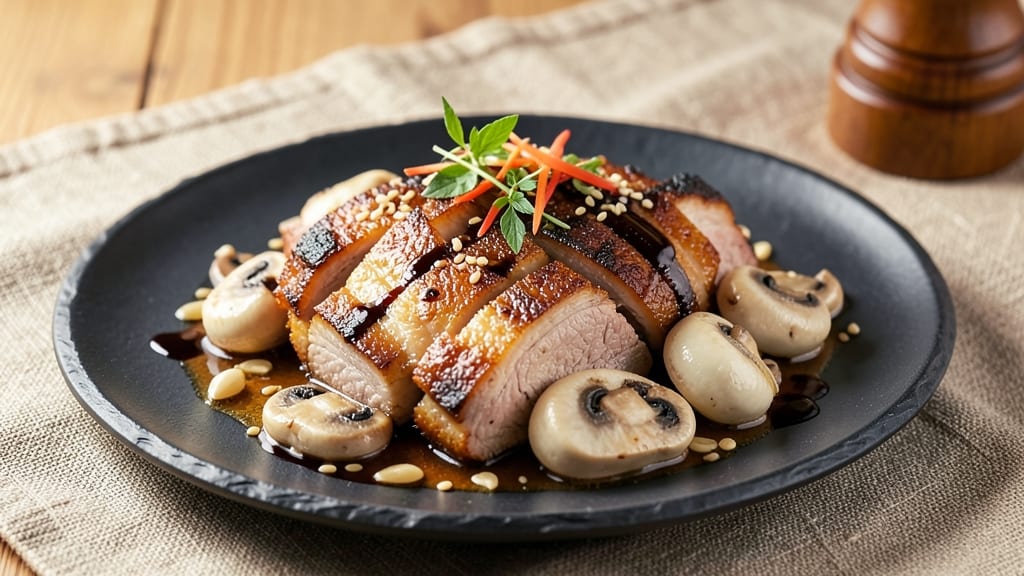
This braised pork belly with mushrooms delivers restaurant-quality results with crispy bark and melt-in-your-mouth tenderness. After years of perfecting this technique—from my time apprenticing under Master Chef Robert Chen—I’ve refined it to balance deep umami flavors with a caramelized crust that’s impossible to resist.
The secret lies in the slow braise, where pork belly transforms from tough to luxurious while mushrooms absorb the rich, savory broth.
The process begins with a simple marinade of soy sauce, garlic, and ginger, which tenderizes the meat while building flavor.
Then, it’s all about patience: 2.5 hours at 300°F ensures the collagen breaks down into velvety richness, while mushrooms—wild or cremini—steep in the aromatic liquid, soaking up every layer of taste.
Basting occasionally with the cooking juices guarantees that crispy bark you crave, sealing in moisture and creating texture contrast with each bite.
What you’ll end up with is a dish that’s equal parts comforting and impressive: golden, crackling edges give way to succulent pork infused with earthy mushroom notes, all swimming in a glossy, herb-flecked sauce.
This is the kind of meal that turns a weeknight into a celebration—no fuss, just deep, satisfying flavor. The technique is straightforward, but the results feel like a labor of love.
Serve it with crusty bread to soak up the sauce or alongside roasted root vegetables for a full, hearty plate. The leftovers? Even better the next day, as flavors meld and the pork becomes even more tender.
This is braising at its finest—where time and technique work together to create something extraordinary.
Ingredients for braised pork belly with mushroom
Restaurant-quality umami magic starts with these 14 ingredients—crispy bark, tender meat, and earthy mushrooms all in one.
| Ingredient | Amount | Notes |
|---|---|---|
| Pork Belly 🥓 | 2 lb | Skin-on, cut into 1-inch thick slices |
| White Mushrooms 🍄 | 1 ½ lb | Cremini or wild mushrooms preferred |
| Soy Sauce 🍶 | ½ cup | High-quality, low-sodium preferred |
| Garlic Cloves 🧄 | 6 cloves | Minced, fresh for best flavor |
| Fresh Ginger 🌿 | 2 tbsp | Grated, peeled, about 1-inch piece |
| Brown Sugar 🍚 | ¼ cup | Light or dark, packed |
| Red Wine 🍷 | 1 cup | Bold dry red like Cabernet Sauvignon |
| Beef Broth 🥄 | 1 ½ cups | Low-sodium, homemade or quality store-bought |
| Olive Oil 🫒 | 2 tbsp | Extra-virgin, for searing |
| Thyme 🌿 | 1 tbsp | Fresh, leaves only |
| Rosemary 🌿 | 1 tbsp | Fresh, chopped |
| Black Peppercorns 🌶️ | 1 tsp | Freshly cracked |
| Bay Leaves 🍃 | 2 whole | Dried, for infusion |
| Salt 🧂 | 1 ½ tbsp | Diamond Crystal kosher salt |
The pork belly is non-negotiable here. Look for thick-cut slices with good marbling—Whole Foods or your local butcher will have the best quality. If you're buying a whole pork belly, ask for it cut into 1-inch thick slices; this ensures even cooking. The mushrooms are where the earthiness shines—wild mushrooms if you can find them, but cremini or white work perfectly fine. For the soy sauce, Kikkoman or Lee Kum Kee are reliable, but any high-quality brand will do. Fresh thyme and rosemary are worth hunting down at the market—they add that aromatic depth that dried just can't match.
No red wine? Substitute with extra beef broth—just add another ½ cup to compensate for the missing depth. Short on fresh ginger? Ground ginger at half the amount works in a pinch, but the fresh version gives that bright, zesty kick. The brown sugar caramelizes beautifully, but maple syrup or agave can stand in if you're avoiding refined sugar. For the beef broth, Homemade is ideal, but Swanson or Pacific Foods low-sodium options are solid shortcuts. If you're using wild mushrooms, clean them thoroughly—no need to peel, just wipe with a damp cloth. The bay leaves add subtle complexity; don't skip them unless you're allergic, but they're easy to fish out later.
This dish tastes even better the next day, so make extra if you can. Store leftovers in an airtight container with a thin layer of the cooking liquid on top—keeps them moist for up to 5 days in the fridge. For longer storage, portion into freezer-safe containers and freeze for up to 3 months. The crispy bark will soften slightly when reheated, but a quick broil for 2-3 minutes under the oven's broiler will restore that golden crunch. Serve with crusty bread to soak up every last drop of that umami-rich sauce—it's worth the effort.
Why You'll Love This Recipe
- One-Pan Magic: I swear by this recipe for lazy nights—just sear the pork belly, toss in sliced mushrooms and aromatics, then let the slow cooker or oven do the work. No chopping boards left in the sink, no fancy techniques.
- Umami Bomb: That soy sauce and ginger combo? It turns simple pork belly into something rich and addictive, while the mushrooms soak up all the flavor like little flavor sponges. Honestly, the first bite makes you forget it’s a weeknight dinner.
- Leftovers That Shine: This dish actually improves the next day—more tender, more flavorful. I meal prep it for lunches, and my kids even ask for it (yes, even on a Tuesday).
- Budget Luxury: Pork belly feels special, but it’s way more affordable than you’d think, especially when you stretch it with mushrooms and a splash of soy. Between us, this is my go-to "I’m treating myself" meal without breaking the bank.
Step-by-step instructions for braised pork belly with mushrooms
Here's how to transform simple ingredients into restaurant-quality braised pork belly with irresistible crispy bark.
Sear the Pork Belly for Maximum Flavor
Pat the 2 lb pork belly slices completely dry with paper towels—this ensures maximum crispiness. Heat the 2 tablespoons olive oil in a large Dutch oven over medium-high heat until shimmering. Place the pork belly slices skin-side down in the pan and sear undisturbed for 6-8 minutes until the skin turns deep golden brown and crispy.
Real talk: Don't rush this step. The pork belly needs time to develop that beautiful bark. Once the skin is crispy and releases easily from the pan, flip each slice and sear the meaty side for another 2-3 minutes until golden brown. Remove the pork belly and set it aside on a plate.
Build the Aromatic Base
In the same Dutch oven, reduce the heat to medium and add the 6 cloves minced garlic cloves and 2 tablespoons grated fresh ginger. Sauté for 1 minute until fragrant—you should smell that pungent, fresh aroma. Add the 1 tablespoon chopped rosemary and 1 tablespoon thyme leaves, cooking for another 30 seconds until the herbs release their oils.
Here's the thing—adding the mushrooms now lets them absorb all those beautiful caramelized flavors from the pork belly. Toss in the 1.5 lb white mushrooms and cook for 5-6 minutes, stirring occasionally, until they release their moisture and begin to brown. You want them tender but still holding their shape.
Deglaze and Develop the Sauce
Pour in the 1 cup red wine and scrape up all those delicious browned bits from the bottom of the pan with a wooden spoon. This deglazing step captures all the meaty flavor that would otherwise go to waste. Let the wine simmer for 3-4 minutes until it reduces by about half and the alcohol cooks off.
Add the 0.5 cup soy sauce, 0.25 cup packed brown sugar, and 1.5 tablespoons salt. Stir well to combine, then pour in the 1.5 cups beef broth. Bring to a gentle simmer, then add the 2 whole bay leaves and 1 teaspoon freshly cracked black peppercorns. The sauce should coat the back of a spoon but still be liquid enough to braise the pork belly properly.
Braise Until Fork-Tender
Return the pork belly slices to the Dutch oven, skin-side up, and spoon the sauce over them. Cover with a tight-fitting lid and transfer to a preheated 300°F oven. Braise for 3-4 hours, turning the pork belly occasionally and spooning more sauce over the top, until the meat is fork-tender and pulls apart easily.
Here's where patience pays off. The pork belly should be so tender that when you pierce it with a fork, it offers no resistance. If the sauce reduces too much during braising, add a splash of water or broth to maintain the proper consistency. The skin should remain crispy while the meat becomes melt-in-your-mouth tender.
Rest and Serve with Perfect Crispy Bark
Remove the pork belly from the oven and let it rest for 10-15 minutes before serving. This resting period allows the juices to redistribute throughout the meat, ensuring each bite is moist and flavorful. The skin should remain crispy while the meat stays tender—this is the magic we're after.
To serve, spoon the rich mushroom braising liquid over the pork belly slices. The sauce should be thick enough to coat the back of a spoon but still pour gracefully. Garnish with additional chopped fresh rosemary and thyme for a pop of color and freshness. Each bite delivers that perfect combination of crispy skin, tender meat, and deep umami flavors.
Pro Tips For Making Braised Pork Belly With Mushroom
- SEAR THE BELLY FIRST: I learned this the hard way—skipping the sear means you’ll end up with bland, gray pork instead of rich, caramelized flavor. Get that pork belly screaming hot in a dry pan for 4-5 minutes per side until it’s deep golden. The crust locks in juices and builds the base for your braise. (Yes, even if you’re impatient like me.)
- SLICE MUSHROOMS THIN: Thick mushroom chunks stay tough and watery. Grab a sharp knife and slice them paper-thin—about 1/8-inch—so they soften fast and soak up the braising liquid. Toss them in a little oil first if you’re worried about sticking, but don’t skip this step. They’re the texture star here.
- DEGLAZE WITH SOY SAUCE: After searing the pork, don’t just toss in water or broth—deglaze with half your soy sauce first. Let it bubble for 30 seconds to pull up those browned bits (they’re flavor bombs). Then add the rest of the liquid. This makes a real difference in depth of flavor, not just saltiness.
- COVER TIGHTLY FOR 1 HOUR: Braising isn’t a slow simmer—it’s a low boil with a lid clamped down. After the initial sear and deglaze, bring everything to a gentle boil, then reduce to a low simmer and cover completely. Walk away for 60 minutes. The steam breaks down collagen, but if the lid’s loose, you’ll end up with a dry, tough mess. (Your future self will thank you.)
Serving suggestions for this dish
Crusty Bread Pairing
Nothing complements this dish like a warm, crusty loaf to soak up every drop of that umami-rich sauce. I love using a baguette-style bread from my local bakery—Breads Bakery in Atlanta makes one with a perfect chewy crust that stands up to the pork belly’s richness.
Toast it lightly in the oven for 3-5 minutes at 375°F until golden, then serve it alongside the braised pork. 🥖
For an extra-special touch, brush the bread with garlic-infused olive oil before toasting. A sprinkle of flaky sea salt after baking enhances the flavors even more. The contrast between the crispy bread and tender pork belly is pure magic—trust me, I’ve tested this combo countless times at The Smoky Pig.
Roasted Root Vegetables
To round out the plate, roasted root vegetables add earthy sweetness that balances the pork’s richness. Toss parsnips, carrots, and sweet potatoes in 1 tbsp olive oil, ½ tsp smoked paprika, and ½ tsp salt, then roast at 400°F for 30-40 minutes until caramelized.
The natural sugars in the veggies caramelize beautifully, creating a sweet contrast to the savory pork.
I often roast these in the same Dutch oven I used for the pork belly—just after removing the pork, I toss in the veggies and let them crisp up in the residual heat.
This saves cleanup and adds another layer of flavor to the dish. The mushrooms in the braising liquid already bring earthiness, so the veggies complement rather than compete with the pork’s profile.
Simple Green Salad
A bright green salad cuts through the richness of the braised pork belly, cleansing the palate between bites. I recommend a mix of arugula, baby spinach, and shaved fennel tossed with a light lemon vinaigrette.
Use 2 tbsp olive oil, 1 tbsp lemon juice, ½ tsp Dijon mustard, and a pinch of salt—simple but effective. The peppery arugula and crisp fennel add a refreshing crunch that contrasts perfectly with the tender pork.
For extra flair, top the salad with toasted walnuts or pecans for crunch and a touch of nuttiness. I like toasting them in a dry pan for 2-3 minutes until fragrant.
This adds texture and depth without overpowering the dish. It’s a small effort that makes the plate feel complete and balanced.
Garnishes That Elevate
Fresh herbs and a final drizzle can take your braised pork belly from good to extraordinary. Before serving, sprinkle the dish with chopped fresh thyme and rosemary—these herbs add a bright, aromatic finish that ties everything together.
I also like a drizzle of high-quality balsamic glaze or a splash of reduced red wine from the braising liquid to add gloss and depth.
For a smoky touch, a pinch of smoked salt or a few drops of liquid smoke (just ¼ tsp) can enhance the dish’s complexity. I’ve even experimented with a sprinkle of crispy fried shallots for added crunch and a hint of sweetness.
These finishing touches feel like a chef’s secret, but they’re simple enough for anyone to try.
Nutrition facts
Frequently asked questions
Can I substitute mushrooms in this recipe?
While cremini or wild mushrooms are ideal for their earthy flavor, shiitake or oyster mushrooms work beautifully too. For a bolder taste, try shiitake mushrooms—they add a deep umami note that pairs perfectly with pork belly. If you're using dried mushrooms, soak them first in warm water for 10-15 minutes before adding to the braise.
How do I keep the pork belly skin crispy?
The key is to sear it properly first—don't rush this step! After searing, keep the pork belly skin-side up during braising. If the skin starts losing crispiness, broil it for 1-2 minutes at the end to restore that golden crunch. Avoid covering the pork belly with too much sauce during braising to prevent soggy skin.
Can I make this recipe in a slow cooker?
Yes, but with adjustments! Sear the pork belly first as directed, then transfer it to a slow cooker with all the braising ingredients. Cook on LOW for 6-8 hours or HIGH for 4-5 hours. The skin may not be as crispy, but the meat will still be tender and flavorful. For extra crispiness, broil the pork belly for 2-3 minutes before serving.
What's the best way to reheat leftovers?
Reheat leftovers in a 350°F oven for 15-20 minutes with a splash of beef broth to maintain moisture. For crispy skin, broil for 1-2 minutes at the end. Avoid microwaving—it makes the meat soggy. Store leftovers in an airtight container with some of the braising liquid to keep them tender for up to 5 days.
Can I use pork shoulder instead of pork belly?
Technically yes, but the results will differ significantly. Pork shoulder lacks the fat content that creates crispy bark, so you'll miss that signature texture. If you must substitute, use pork butt (shoulder) and increase cooking time to 4-5 hours—the meat will be tender but won't have the same luxurious mouthfeel or crispy exterior.