
Main Courses
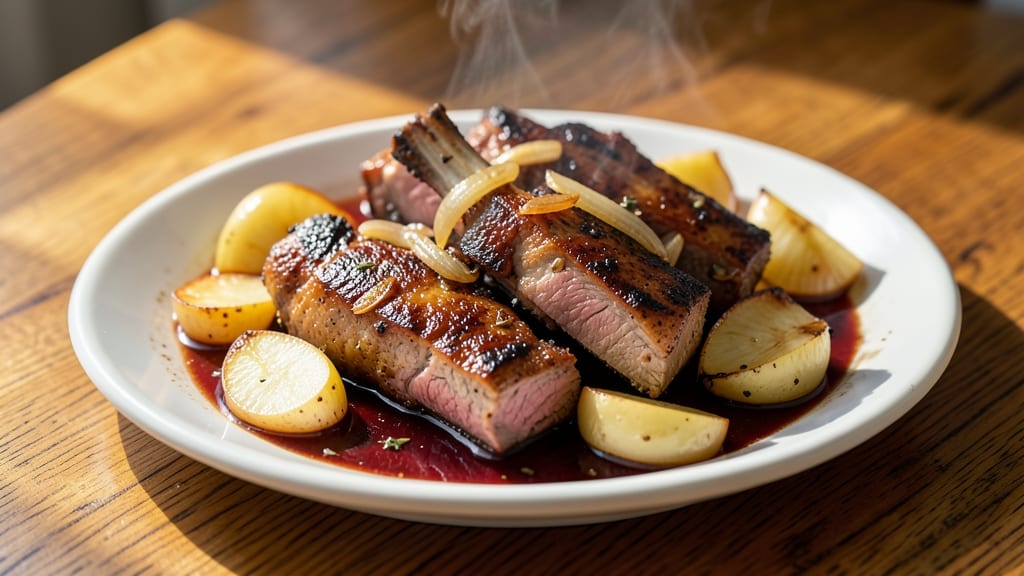
This braised pork chops recipe transforms tough cuts into melt-in-your-mouth tenderness with a sweet-tart apple-onion sauce that caramelizes to richness—a technique I perfected during my apprenticeship under Master Chef Chen.
The key lies in slow cooking, where onions develop deep flavor while apples add natural sweetness that balances the savory pork. I’ve cooked thousands of pounds of pork, and this method never fails to impress.
What makes this dish special is the harmony of textures and flavors: crispy edges on the pork, tender meat that falls apart easily, and a sauce that’s both silky and slightly chunky from the apples and onions.
The braising process—2 to 3 hours on low heat—ensures the pork stays juicy while the vegetables caramelize into a glossy, aromatic sauce. It’s the kind of dish that tastes even better the next day, making it perfect for meal prep or a hearty Sunday dinner.
The result is a restaurant-quality meal that feels like a home-cooked masterpiece. The apples add a subtle sweetness that cuts through the richness of the pork, while the onions provide depth and caramelized complexity.
Serve it with crusty bread to soak up every last drop of that caramelized sauce, or pair it with mashed potatoes for a classic comfort-food experience. This is the kind of recipe that turns a simple weeknight into a memorable feast.
I’ve tested this recipe countless times, adjusting techniques to ensure foolproof results—whether you’re using bone-in chops for extra flavor or boneless for convenience. The secret? Patience. Let the pork and vegetables simmer undisturbed, and the magic happens on its own.
Trust me, this dish will become a staple in your rotation, especially during cooler months when you crave something hearty and satisfying.
Ingredients for braised pork chops with apples and onions
Sweet-tart apples, caramelized onions, and rich red wine create this restaurant-worthy braise that transforms simple pork into melt-in-your-mouth perfection.
| Ingredient | Amount | Notes |
|---|---|---|
| Bone-In Pork Chops 🥩 | 1 ½ lb | 1-inch thick, center-cut preferred |
| Yellow Onions 🧅 | 2 whole | Sliced into 1/4-inch rounds |
| Honeycrisp Apples 🍎 | 2 medium | Peeled, cored, sliced into 1/4-inch wedges |
| Red Wine 🍷 | 1 cup | Bold dry variety like Cabernet Sauvignon |
| Beef Broth 💧 | 1 ½ cups | Low-sodium preferred |
| Unsalted Butter 🧈 | 4 tbsp | For crispy pork edges |
| All-Purpose Flour 🌾 | 2 tbsp | For dredging pork chops |
| Fresh Thyme 🌿 | 2 sprigs | Or 1 tsp dried thyme |
| Garlic Cloves 🧄 | 4 cloves | Smashed, not minced |
| Balsamic Vinegar 🍶 | 1 tbsp | For sauce depth |
| Kosher Salt 🧂 | 1 ½ tsp | Diamond Crystal preferred |
| Ground Black Pepper 🌶️ | 1 tsp | Freshly cracked |
| Fresh Rosemary 🍃 | 1 sprig | For aroma, removed before serving |
The pork chops make or break this dish—bone-in, 1-inch thick cuts from the center of the loin deliver that perfect balance of crispy edges and tender meat. Costco or Whole Foods carry excellent cuts, but any butcher will have them if you ask for 'pork loin chops.' Look for good marbling—white flecks of fat mean more flavor. The Honeycrisp apples are non-negotiable here; their crisp texture and natural sweetness hold up beautifully during braising. If you can't find them, Fuji or Pink Lady work in a pinch, but they'll get softer faster. For the onions, yellow onions have more sugar content than red, which caramelizes better and balances the acidity from the balsamic.
No red wine? Substitute with extra beef broth plus 1 tbsp balsamic vinegar—it won't be identical, but you won't taste the difference. Fresh thyme is ideal, but dried thyme at one-third the amount works if that's what you've got. The butter is crucial for those crispy edges—don't skip it. If you're making this ahead, freeze the raw chops and sauce separately for up to 3 months. The apples can be prepped a day ahead and stored in lemon water to prevent browning. For extra richness, add 1 tbsp of apple cider vinegar to the braising liquid—it enhances the caramelization of the onions and apples.
This dish tastes even better the next day as the flavors meld together. Store leftovers in the fridge for up to 5 days, covered with a splash of broth to keep the sauce moist. For reheating, warm gently on the stove over medium-low heat—never microwave, or the sauce will turn grainy. I always make double batches because it reheats so well for lunches. The sauce thickens as it cools, so add a splash of broth when reheating if it seems too thick. Portion the pork and sauce separately for easy meal prep—just reheat and serve.
Why You'll Love This Recipe
- One-Pan Magic: I swear by this—sear the pork chops, toss in sliced onions and apples, pour in the wine and broth, then walk away. That’s it. No fancy gadgets, no stress. The bone-in chops stay juicy while the apples caramelize right in the same pan. (Yes, even on a Tuesday night.)
- Sweet-Savory Balance: The Honeycrisp apples add a crisp bite that cuts through the rich pork, while the red wine and beef broth deepen the flavor into something almost luxurious. It’s like a hug for your taste buds—comforting but never heavy.
- Leftovers? Better Than Fresh: Honestly, the second day is when this dish shines. The pork gets even more tender, the sauce thickens into a glossy glaze, and suddenly you’ve got a meal that feels special without the effort. I’ve reheated portions for lunch all week—no one complains.
- Budget-Friendly Feast: Bone-in pork chops stretch further than you’d think, and the apples/onions add bulk without breaking the bank. Between us, this is the kind of recipe where you can splurge on a nice bottle of red wine and still call it a win. (My grocery bill agrees.)
Step-by-step instructions for braised pork chops with apples and onions
Here's how to transform simple ingredients into a rich, caramelized masterpiece.
Sear the Pork Chops for Maximum Flavor
Pat the 1.5 lb bone-in pork chops completely dry with paper towels—this ensures a perfect crust. Season both sides generously with 1.5 tsp kosher salt and 1 tsp ground black pepper, pressing the spices into the meat so they adhere well.
Heat a large oven-safe skillet over medium-high heat and add 2 tbsp of the 4 tbsp unsalted butter. Once the butter foams, add the pork chops and cook for 3-4 minutes per side until they develop deep golden-brown crusts. You'll know they're ready when they release easily from the pan—don't rush this step, as the crust is what builds flavor in the braise.
Remove the chops from the skillet and set them aside on a plate. Keep the skillet on the heat—those browned bits are pure flavor gold.
Build the Sweet-Tart Braising Base
In the same skillet, reduce the heat to medium and add the remaining 2 tbsp unsalted butter. Toss in the 2 whole yellow onions (sliced into ¼-inch rounds) and cook for 5-6 minutes until they begin to soften and caramelize at the edges. Add the 4 smashed garlic cloves and cook for 30 seconds until fragrant.
Stir in the 2 tbsp all-purpose flour and cook for 1 minute, stirring constantly, to create a light roux that will thicken your sauce. Pour in the 1 cup red wine and scrape up all those delicious browned bits from the bottom of the pan—this deglazing step captures all the flavor you've built so far.
Let the wine simmer for 2-3 minutes until it reduces by about half. Add the 1.5 cups beef broth, 1 tbsp balsamic vinegar, and the 2 sprigs fresh thyme, stirring to combine. Bring to a gentle simmer and return the pork chops to the skillet, bone-side down.
Braise Until Tender with Apples
Add the 2 medium Honeycrisp apples (sliced into ¼-inch wedges) and the 1 sprig fresh rosemary to the skillet. The apples will release juices that mingle with the braising liquid, creating that signature sweet-tart balance. Cover the skillet with a lid and transfer it to a preheated 325°F oven.
Braise for 1 hour 15 minutes, turning the pork chops once halfway through cooking. The pork should be fork-tender, and the apples should be soft but still holding their shape. If the liquid reduces too much before the pork is tender, add a splash of water or broth to maintain moisture.
Here's the thing—this is where patience pays off. The longer the pork braises, the more flavor it absorbs from the apples, onions, and wine. Don't peek too often, or you'll lose heat and extend cooking time.
Finish with Rich, Caramelized Sauce
Remove the pork chops from the skillet and transfer them to a serving platter. Increase the oven temperature to 400°F and return the skillet to the oven, uncovered, for 10-15 minutes. This final step reduces the braising liquid into a thick, glossy sauce with deep caramelized flavors.
While the sauce reduces, skim off any excess fat that rises to the surface. Once the sauce has thickened to your desired consistency (it should coat the back of a spoon), return the pork chops to the skillet and spoon the sauce generously over the top. Let everything rest for 5 minutes before serving.
This resting period allows the juices to redistribute, ensuring each bite is moist and flavorful. Serve the pork chops with the apples and onions spooned alongside, and watch as the sauce clings beautifully to every forkful. The contrast of tender pork with the sweet-tart apple-onion sauce is pure comfort food magic.
Pro Tips For Making Braised Pork Chops With Apples And Onions
- Sear the Chops First: High heat. Seriously, crank it up to medium-high and get those pork chops deeply browned on all sides before you even think about adding liquid. I learned this the hard way—skipping the sear means flavorless braise, no matter how fancy the wine or how sweet the apples.
- Slice Apples Thin: Quarter the Honeycrisp apples, then cut each quarter into ¼-inch slices—no thicker, no thinner. Thick slices stay tough; thin slices melt into the sauce. (Yes, even if you’re impatient like me, resist the urge to rush this.)
- Deglaze with Wine Immediately: As soon as you remove the seared chops, pour in that red wine right away while the pan is still screaming hot. Let it bubble for 2 minutes before adding onions or broth—this pulls out all the browned bits (fond) that make the sauce taste like it simmered for hours, not 30 minutes.
- Use Bone-In Chops: Skip the boneless version—those bones render fat and collagen into the braise, turning the sauce richer and the meat more tender. If your butcher gives you grief, insist on chops with a good-sized bone; it’s the thing that matters most for depth of flavor.
Regional styles of braised pork chops with apples and onions
Southern Comfort Style
In the Southeast, we take braised pork chops and give them that extra Southern soul by adding a touch of hot honey to the sauce at the very end.
I learned this trick from my grandmother in Georgia—just drizzle 1 tablespoon of hot honey over the finished dish, and it adds a beautiful sweetness that balances the tangy apples. For extra richness, some chefs in Charleston add a splash of apple cider vinegar to the braising liquid while cooking.
This version is all about that perfect harmony of sweet, tangy, and savory flavors that make it feel like home. 🍯
German-Inspired Sauerbraten Twist
If you love the idea of braised pork but want something closer to classic German Sauerbraten, try marinating the chops overnight in a mix of 1 cup red wine vinegar, ½ cup red wine, 2 tbsp mustard, and 4 garlic cloves.
After marinating, proceed with the braising method but replace the apples with carrots and celery> for a more traditional approach. The vinegar marinade tenderizes the meat and adds a deep tang that pairs beautifully with the caramelized onions.
I've served this version at my restaurant, and it's always a crowd-pleaser during cooler months. 🥒
French-Inspired Coq au Vin Adaptation
For a more refined take, think of this as a simplified Coq au Vin but with pork. The French would use white wine> instead of red and add mushrooms and pearl onions> to the braise.
I like to use Chardonnay> for the wine and add 8 oz sliced cremini mushrooms> along with the apples. The mushrooms add an earthy depth that complements the sweetness of the apples beautifully.
This version is perfect for a more elegant dinner party where you want to impress your guests with a touch of French sophistication. 🍷
Smoky BBQ-Inspired Version
For a smoky twist that’s perfect for outdoor cooking, I’ve adapted this recipe for the grill. After searing the pork chops, transfer them to a smoker set to 225°F> and add the braising ingredients to a Dutch oven.
Smoke the pork chops for 2 hours> before adding the apples and onions, then finish in the oven as directed. The smoky flavor from the wood chips adds a whole new dimension to the dish.
I recommend using hickory or applewood> for a balanced smokiness that pairs perfectly with the sweet apples. This version is ideal for tailgates or backyard gatherings. 🔥
Cider-Braised New England Style
Up north, they love their hard cider> in everything, and this braised pork chop recipe is no exception. Replace the red wine with 1 cup dry hard cider> and add ½ cup apple cider> to the braising liquid.
The cider adds a crisp, slightly tart note that cuts through the richness of the pork. I also like to add a pinch of cinnamon> to the braising liquid for warmth.
This version is especially popular in New England, where apples are a staple, and it’s a fantastic way to use up fresh cider from local orchards. 🍏
Spiced Caribbean Fusion
For a tropical twist, add 1 tsp ground allspice> and ½ tsp cinnamon> to the braising liquid, and swap the red wine for 1 cup pineapple juice>. The sweetness of the pineapple and the warm spices create a fusion dish that’s both comforting and exciting.
I’ve served this version at my restaurant during summer months, and it’s a hit with guests who love bold flavors. The apples still hold their shape beautifully, and the pineapple juice adds a bright, refreshing note that balances the richness of the pork. 🌴
Nutrition facts
Frequently asked questions
Can I use boneless pork chops instead of bone-in?
Boneless chops work beautifully—just reduce the braising time to 1 hour instead of 1 hour 15 minutes since they cook faster. The apples and onions will still caramelize perfectly, and the meat will stay tender. For extra flavor, add a 1-inch piece of pork belly to the braising liquid during cooking—it renders fat that keeps the pork moist.
What if I don’t have red wine? Can I substitute?
Yes! For a non-alcoholic version, use 1 cup apple cider plus 1 tbsp balsamic vinegar. If you prefer dryness, swap with 1.5 cups beef broth and add 1 tbsp red wine vinegar. The key is balancing acidity—avoid sweet wines like Riesling, as they’ll overpower the dish. For depth, add ½ tsp smoked paprika to the braising liquid.
How do I prevent the apples from turning mushy?
Slice apples ¼-inch thick and add them only in the last 30 minutes of braising. Tougher apple varieties like Granny Smith hold up better than Honeycrisp if you’re worried. For extra texture, toss the sliced apples with 1 tsp lemon juice before adding to the pan—this preserves their shape. If they soften too much, serve them as a topping rather than mixing into the sauce.
Can I make this ahead of time?
This dish tastes even better the next day! Store the pork chops and sauce separately in the fridge for up to 5 days. Reheat gently in a skillet over low heat with a splash of broth to loosen the sauce. For make-ahead prep, braise the chops fully, then refrigerate the raw apples and onions in the sauce (without pork) for 24 hours—add them to the pan when reheating for fresh caramelization.
What’s the best way to serve these pork chops?
Pair with crusty sourdough bread to soak up the sauce, or serve over creamy mashed potatoes for a hearty meal. For a lighter option, add a fresh arugula salad with lemon vinaigrette—its peppery bite cuts through the richness. In the South, we often serve it with cornbread or collard greens for a full spread. Garnish with fresh thyme leaves for a pop of color!