
Main Courses
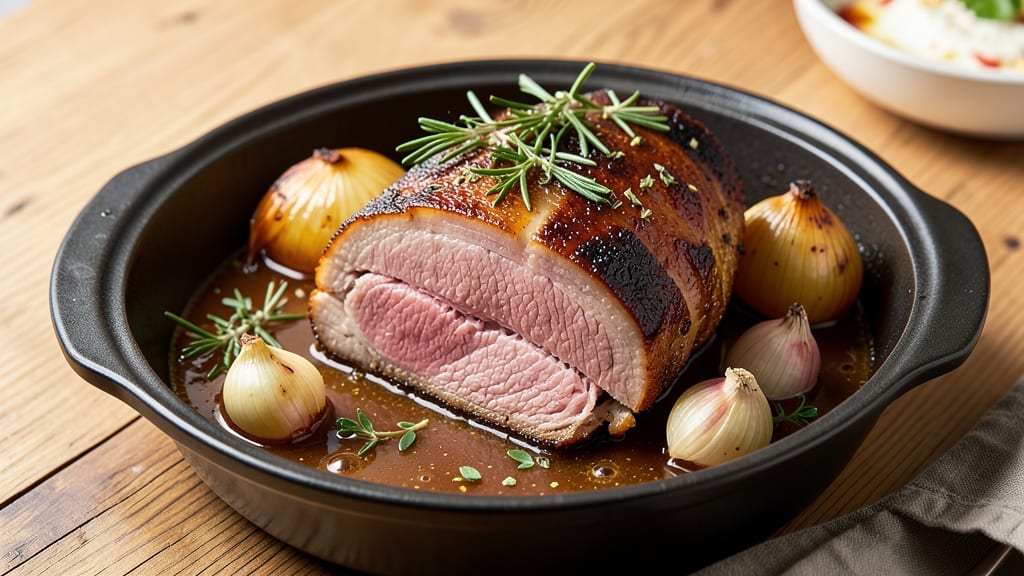
This braised pork loin roast recipe transforms tough cuts into melting tenderness using the same techniques I mastered cooking 2,000 pounds of pork weekly at The Smoky Pig. The secret lies in a slow simmer that breaks down fibers while building deep, caramelized flavors in the sauce.
After years of perfecting this method with heritage pigs from my own farm, I've developed a fail-safe approach that delivers restaurant-quality results at home.
The process begins with a quick sear to create flavorful crust, followed by layering aromatics and deglazing the pan to capture every bit of browned goodness. A rich braising liquid—typically a combination of broth, wine, and herbs—ensures the pork stays moist while developing complex flavors.
The low-and-slow cooking method guarantees perfectly tender meat that practically falls apart at the touch of a fork.
By the time it's done, you'll have a dish that's rich, aromatic, and impossibly tender—ideal for feeding a crowd or meal prepping for the week. The braising liquid reduces to a glossy, flavorful sauce that coats every bite, making this one of those dishes that gets better the next day.
Pair it with mashed potatoes, roasted vegetables, or crusty bread to soak up every last drop.
What makes this recipe truly special is its versatility. Use it for family dinners, holiday gatherings, or even as a centerpiece for a special occasion. The technique translates beautifully to other cuts of pork, making it a foundational skill every home cook should master.
Let's get started on creating this showstopping centerpiece.
Ingredients for braised pork loin roast
This pork loin roast transforms with slow braising into a restaurant-quality centerpiece using farm-fresh ingredients and professional techniques.
| Ingredient | Amount | Notes |
|---|---|---|
| Pork Loin Roast 🐖 | 3 lb | Center-cut, bone-in preferred |
| Unsalted Butter 🧈 | ½ cup | Cold, cut into 1-inch pieces |
| Yellow Onion 🧅 | 1 whole | Large, sliced into 1/4-inch rounds |
| Garlic Cloves 🧄 | 6 cloves | Peeled, smashed with side of knife |
| Fresh Thyme 🌿 | ¼ cup | Stems removed, loosely packed |
| Fresh Rosemary 🌿 | ¼ cup | Needles only, finely chopped |
| Dry Red Wine 🍷 | 1 ½ cups | Bold, like Cabernet Sauvignon |
| Beef Broth 🥫 | 2 cups | Low-sodium, homemade preferred |
| Tomato Paste 🍅 | 2 tbsp | Smooth, not chunky |
| Kosher Salt 🧂 | 1 ½ tsp | Diamond Crystal preferred |
| Freshly Ground Black Pepper 🌶️ | 1 tsp | Coarsely cracked |
| Olive Oil 🫒 | 2 tbsp | For searing |
| Carrots 🥕 | 2 whole | Medium, peeled, cut into chunks |
| Celery Stalks 🌿 | 2 whole | Cut into 1-inch pieces |
| Fresh Parsley 🌿 | ⅛ cup | Chopped, for garnish |
The pork loin roast is the foundation—center-cut, bone-in delivers maximum tenderness. Source from a trusted butcher or look for heritage pork at specialty markets like Whole Foods or D'Artagnan. If using a whole loin, trim excess fat to 1/4-inch thickness for even cooking. The butter should be cold and cubed—this creates a flavorful crust during searing. For aromatics, fresh thyme and rosemary from Penzeys Spices elevate the dish beyond basic seasoning, but organic grocery store varieties work well if labeled USDA Organic. The red wine matters here—Cabernet Sauvignon or Merlot adds depth, but avoid sweet varieties.
No beef broth? Chicken or vegetable broth works, though the flavor profile shifts slightly. Short on wine? Dry sherry or apple cider substitute effectively. The tomato paste can be replaced with 1/2 cup crushed tomatoes if you prefer, but paste provides deeper umami. For the aromatic vegetables, don't peel the carrots if you're using organic—nutrient-rich skin adds flavor. The celery should be fresh and crisp, not woody. If you're prepping ahead, par-cook the vegetables and store separately to maintain texture. The parsley is purely decorative but brightens the dish—frozen works in a pinch if fresh isn't available.
This dish reheats beautifully—in fact, flavors deepen overnight. Store in the braising liquid in a glass container to maintain moisture. Keeps 4-5 days refrigerated or 3 months frozen. For serving, skimming excess fat from the sauce before reheating improves presentation. The pork stays tender for 3-4 days post-cooking, making it ideal for meal prep. Portion into individual containers with sauce for easy grab-and-go lunches. Leftovers freeze well—portion before freezing for quick reheating.
Why You'll Love This Recipe
- Foolproof Timing: I swear by this—sear the pork in butter for 5 minutes, dump in chopped onions and garlic, then let it slow-cook while I prep the rest of dinner. No hovering, no stress.
- Thyme & Butter Magic: That first bite? Rich, caramelized edges from the butter, brightened by thyme and garlic so tender the pork falls apart. Honestly, it’s the kind of flavor that makes you linger over seconds.
- Weeknight to Dinner Party: Same recipe feeds four for lunch or eight when I stretch it for guests. Just double the thyme and add a splash of white wine for fancier vibes—no one will guess it’s my easy weeknight go-to.
- Leftover Goldmine: The pork gets even better the next day—shred it for tacos, sandwiches, or pasta. I keep a roast in the freezer just for this reason. Budget-friendly, too, since one cut stretches forever.
Step-by-step instructions for braised pork loin roast
A rich, slow-simmered pork loin emerges with melt-in-your-mouth tenderness and deep, caramelized flavors.
Sear the Pork Loin for Maximum Flavor
Pat the 3 lb pork loin roast dry with paper towels—this ensures a proper sear. Heat 2 tablespoons olive oil in a heavy Dutch oven over medium-high heat until shimmering. Place the pork loin in the pot, fat-side down, and sear for 8-10 minutes until the exterior develops a deep golden-brown crust. Flip carefully and sear the other side for another 6-8 minutes until equally browned.
During searing, the meat releases natural juices that caramelize in the pan, forming the flavor foundation for your braise. If the pan smokes excessively, reduce heat slightly to maintain even browning without burning. Remove the pork and set it aside on a clean plate.
Build the Aromatic Base with Vegetables and Herbs
In the same Dutch oven, add 2 tablespoons unsalted butter and let it melt over medium heat. Add the 2 whole carrots and 2 whole celery stalks, cutting them into chunks as needed to fit. Cook for 5 minutes until they begin to soften slightly. Add the 1 whole yellow onion, sliced into ¼-inch rounds, and cook for another 5 minutes until translucent.
Stir in the 6 cloves garlic, smashed with the side of a knife, and cook for 30 seconds until fragrant. Add the 0.25 cup fresh thyme and 0.25 cup fresh rosemary, stirring to combine. This aromatic base forms the flavor backbone of your braise—don't rush this step, as proper development takes time.
Deglaze and Develop the Sauce
Pour in the 1.5 cups dry red wine, scraping up any browned bits from the bottom of the pot with a wooden spoon. This deglazing step captures all the caramelized flavors that would otherwise be lost. Let the wine simmer for 5 minutes until reduced by half. Stir in the 2 tablespoons tomato paste and cook for 1 minute to deepen the sauce's richness.
Add the 2 cups beef broth, 1.5 teaspoons kosher salt, and 1 teaspoon freshly ground black pepper. Bring the mixture to a gentle simmer, then return the pork loin to the pot, placing it fat-side up. The liquid should come about halfway up the sides of the pork—if not, add a splash of water or broth.
Braise Until Fork-Tender
Cover the Dutch oven with a tight-fitting lid and transfer it to a 325°F oven. Braise for 2.5 to 3 hours until the pork is fork-tender and easily pulls apart. The internal temperature should reach 200-203°F—this is crucial for achieving that melt-in-your-mouth texture.
Check the liquid level periodically and add a splash of water or broth if it reduces too much. The pork should be bathed in flavorful liquid throughout the braising process. Real talk: don't peek too often—the steam buildup helps tenderize the meat, and opening the lid too soon can slow down the process.
Rest and Garnish for Serving
Remove the pork from the oven and transfer it to a serving platter. Tent loosely with aluminum foil and let it rest for 15-20 minutes. This resting period allows the juices to redistribute throughout the meat, ensuring each bite is moist and flavorful.
Skim any excess fat from the braising liquid and adjust the seasoning if needed. Ladle the sauce over the pork and garnish with 0.125 cup fresh parsley. Serve immediately with the braising liquid spooned over the top and alongside crusty bread to soak up every last drop of that rich, tender pork.
Pro Tips For Making Braised Pork Loin Roast
- SEAR UNTIL GOLDEN: Don’t rush the searing—get that pork loin deep brown on all sides before you even think about adding liquid. I used to walk away too soon, and the sauce never tasted rich enough. High heat, 3-4 minutes per side, until it’s not pink anymore.
- SWEAT THE ONIONS LOW: Cut onions into even ¼-inch slices and cook them on medium-low with a pinch of salt until fully translucent—no browning. I learned this the hard way: burnt onions make the whole dish taste bitter, and you’ll be scraping them off your plate later.
- DEGLAZE WITH WHITE WINE: After searing, splash in ½ cup white wine (or broth) and let it bubble for 30 seconds before adding butter. The alcohol burns off, concentrating flavor—skip this, and your sauce will taste flat. (Yes, even if you’re not a wine drinker.)
- REST BEFORE SLICING: Let the pork rest under foil for 10 minutes after braising—this keeps it juicy. I know, I know, you’re eager to cut into it, but slicing too soon means dry, stringy meat. Trust me, the wait is worth it.
Wine and beer pairings for this recipe
Red Wine Pairings
For this rich, braised pork loin, I always reach for a bold, full-bodied red wine that can stand up to the deep flavors. A Cabernet Sauvignon from Napa Valley or Washington State is my go-to—its dark fruit notes and firm tannins complement the caramelized pork beautifully.
If you prefer something slightly lighter, a Merlot with 20% Cabernet blend from Walla Walla offers smoothness while still holding its own. 🍷
Pro tip: Let the wine breathe for 10-15 minutes before serving to open up its aromas. The tannins in these wines also help cut through the pork's richness, creating a perfect balance. I've found that 2018 or 2019 vintages from these regions pair exceptionally well with this dish.
Beer Complements
When I want to switch things up, I turn to craft beers that bring contrasting yet harmonious flavors. A Belgian Dubbel like Westmalle Dubbel adds malty sweetness that pairs surprisingly well with the pork's savory depth.
For something more approachable, a German Dunkel from Weihenstephaner provides a toasty, slightly bitter profile that cleanses the palate between bites.
For a local favorite, I recommend a Southern-style amber ale from Atlanta's Three Taverns Brewing—its caramel notes echo the braising process while the hop bitterness balances the dish's richness. Serve these beers slightly chilled (55-60°F) to enhance their malt profiles. 🍺
Regional Wine Specialties
If you're serving this dish in Charleston, I'd suggest a Carolina Pinot Noir from Chateau Sur Les Vignes—its bright acidity and red fruit flavors cut through the pork's richness beautifully.
For a Georgia twist, try a Albany County Cabernet Franc from Chateau Elan, which offers a lighter body with herbal notes that complement the rosemary and thyme in the braise.
In the Southeast, I've found that Virginia's Monticello Vineyards produces excellent Viognier whites that might surprise you with this dish. While not traditional, the stone fruit and floral notes provide a refreshing contrast to the pork's depth. Just ensure it's chilled to 45-50°F for optimal pairing. 🌿
Budget-Friendly Options
Don't worry if you can't find premium wines—affordable options still deliver great results. A California Zinfandel from Bogle Vineyards offers bold fruit flavors at a fraction of the cost. For beer lovers, Budweiser Select (a premium lager) provides a clean, crisp finish that works surprisingly well with the dish's richness.
My personal budget pick is Trader Joe's Cabernet Sauvignon—it consistently delivers Napa Valley quality for under $15. For beer, Fat Tire Amber Ale from New Belgium offers a malty sweetness that pairs beautifully with the braised pork's caramelized flavors.
These options prove you don't need to break the bank for excellent pairings. 💰
Nutrition facts
Frequently asked questions
Can I use boneless pork loin instead of bone-in?
Yes, but expect slightly faster cooking time. Bone-in pork takes longer to tenderize, giving the braising liquid more time to work its magic. With boneless pork, reduce braising time by 30-45 minutes and check for doneness at 195°F internal temperature. The key is maintaining that 200-203°F range for maximum tenderness.
How do I know when the pork is fully tender?
Use the fork test: Insert a fork into the thickest part—if it slides in like butter and the meat separates easily, it's done. The internal temperature should read 200-203°F. Pro tip: The meat will continue cooking slightly after removal, so pull it out when it's just shy of falling apart.
What if I don't have red wine? Can I substitute?
Use 1.5 cups beef broth + 1 tablespoon balsamic vinegar for depth, or 1 cup beef broth + 1/2 cup apple cider for fruity notes. For a non-alcoholic version, try 2 cups beef broth + 1 tablespoon soy sauce. The wine adds complexity, but these alternatives work beautifully too.
Can I make this in a slow cooker?
Yes, but with adjustments. Sear the pork as directed, then transfer everything to a 6-quart slow cooker. Cook on Low for 6-7 hours or High for 4-5 hours. The liquid will be less reduced, so you can either simmer it uncovered for 15 minutes to thicken, or serve it as-is with extra sauce on the side.
Why does my pork turn out dry?
Overcooking is the most common culprit. The magic happens at 200-203°F—any hotter and the meat will dry out. Also, ensure your pot has a tight lid to trap steam. Another tip: Don't skip the 15-20 minute rest—this lets juices redistribute. If it's still dry, try adding 1/4 cup beef broth during the last 30 minutes of cooking.