
Main Courses
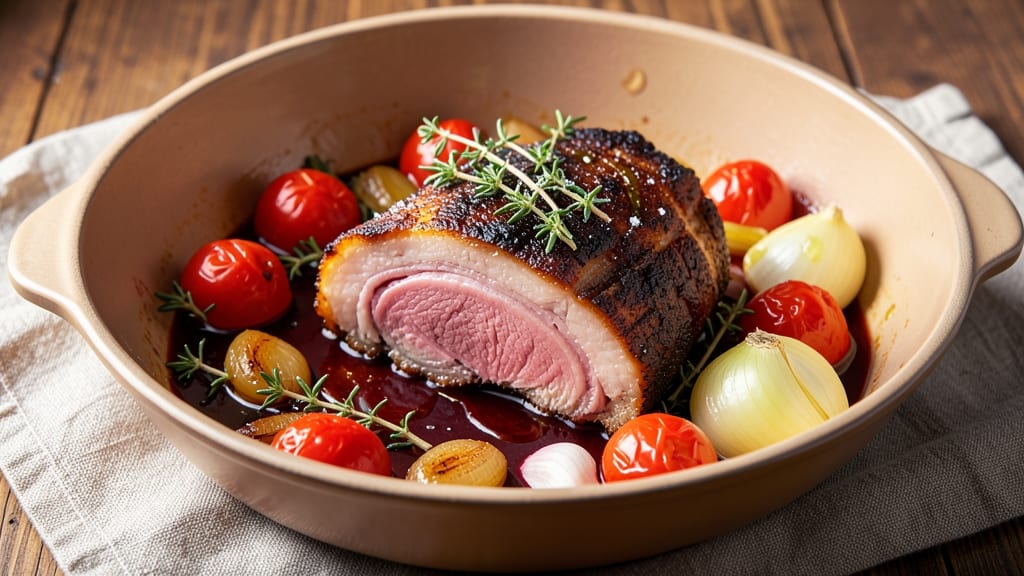
This braised smoked pork shank recipe delivers the kind of fall-off-the-bone tenderness that turns weeknight dinners into showstopping meals. ✨ After years of perfecting the technique—first in Charleston pit houses, then in my own kitchen—I’ve refined it to balance smoky depth with rich, umami-packed braising.
The secret lies in the low-and-slow process, where pork transforms from tough to luxurious, all while developing a crispy bark that cracks with every bite.
What sets this recipe apart is the marriage of two techniques: smoking the shank first for that signature bark, then braising it in a flavor-packed liquid of red wine, tomatoes, and aromatic herbs.
This dual approach ensures maximum tenderness while infusing layers of complexity—think caramelized edges, silky meat, and a sauce so rich it coats every forkful. No shortcuts here, just restaurant-quality results that taste like they’ve been simmering all day (even if they haven’t).
The payoff? A dish that’s equal parts comforting and impressive, perfect for feeding a crowd or treating yourself to a Sunday supper that feels like a celebration.
The pork shank becomes so tender it practically melts in your mouth, while the braising liquid reduces into a glossy, savory sauce that’s ideal for drizzling over polenta, mashed potatoes, or crusty bread. This is the kind of recipe that earns repeat requests—and rightfully so.
Ready to master it? The process is straightforward once you know the key steps: selecting the right cut, smoking it just enough to develop flavor without overcooking, and braising it low and slow until it’s perfectly tender. Let’s get started—your taste buds (and leftovers) will thank you.
Ingredients for braised smoked pork shank
The right ingredients transform tough pork into melt-in-your-mouth perfection—smoky, rich, and full of umami depth.
| Ingredient | Amount | Notes |
|---|---|---|
| Pork Shank 🥩 | 4 lb | Bone-in, 2-inch thick cut preferred |
| Red Wine 🍷 | 1 cup | Bold, dry variety like Cabernet Sauvignon |
| Canned Crushed Tomatoes 🍅 | 14 ½ oz | San Marzano preferred, no salt added |
| Yellow Onion 🧅 | 1 whole | Medium size, diced |
| Garlic Cloves 🧄 | 6 cloves | Fresh, peeled and smashed |
| Fresh Thyme 🌿 | ¼ cup | Leaves only, stems removed |
| Fresh Rosemary 🌿 | ¼ cup | Needles only, finely chopped |
| Wood Smoking Chips 🌳 | 1 package | Hickory or apple preferred |
| Olive Oil 🫒 | ¼ cup | Extra-virgin for smoking |
| Beef Broth 💧 | 1 cup | Low-sodium preferred |
| Brown Sugar 🍯 | 2 tbsp | Light or dark, packed |
| Diamond Crystal Kosher Salt 🧂 | 1 ½ tsp | For seasoning and braising |
| Fresh Black Peppercorns 🌶️ | ½ tsp | Coarsely ground |
| Balsamic Vinegar 🍶 | 1 tbsp | For finishing |
The pork shank is non-negotiable here—bone-in cuts from a quality butcher deliver the best flavor and tenderness. Look for 2-inch thick sections at Whole Foods or your local butcher shop; they’ll often have them pre-cut if you ask. For the wood chips, hickory or apple gives that signature smoky bark without overpowering the dish. Fresh herbs are worth the splurge: Trader Joe's sells great bundles of thyme and rosemary, but even the grocery store’s fresh section works if you use them within a week. The crushed tomatoes? San Marzano is the gold standard—sweeter, richer, and less acidic than generic brands.
No red wine? Dry sherry or beef broth with a splash of balsamic works in a pinch. Short on fresh thyme? Dried at one-third the amount gets you close, but the flavor won’t be as bright. For the wood chips, fruitwood blends from Traeger or Pit Barrel Cookers are my go-to—they’re consistent and easy to find. The brown sugar adds just enough caramelization to the bark; if you’re avoiding sugar, maple syrup at half the amount is a solid swap. And if you’re making this ahead, freeze the raw shanks with all the braising ingredients—just thaw overnight before smoking.
The braising liquid keeps for 5 days in the fridge, but the pork shank tastes even better the next day as the flavors meld. Portion it into containers for easy lunches—3 months frozen it reheats like a dream. For leftovers, drizzle with a little extra balsamic and fresh herbs to revive the flavors. And if you’re feeling fancy, use the reduced braising sauce to make a quick pan sauce with a splash of cream and a pat of butter—trust me on this—it’s restaurant-worthy.
Why You'll Love This Recipe
- One-Pan Magic: I swear by this recipe because it’s literally dump-and-braise. No chopping like a fine-dining chef—just dice an onion, smash a few garlic cloves, and let the wine and tomatoes do the work while you sip your coffee. The pork shank practically falls apart on its own.
- Rich & Deep: That first sip of red wine in the braise? It’s not just flavor—it’s layered flavor. The smoky pork meets the bright acidity of tomatoes, then melts into a sauce so good it’ll make you forget store-bought gravy exists. (Yes, even on a Tuesday night.)
- Leftovers That Shine: This dish begs to be made in bulk. The flavors get better overnight, and reheating? Just a splash of water or broth—no drying out, no sad texture. I’ve fed a crowd with it, packed it for lunches, and even turned it into tacos. (Don’t judge.)
- Budget Hero: Pork shank is the ultimate stretch—cheaper than steak but way more impressive. A single cut feeds four, and the wine and tomatoes add depth without breaking the bank. Honestly, it’s the kind of meal that makes grocery day feel like a win.
Step-by-step instructions for braised smoked pork shank
Here's how to transform tough pork shank into melt-in-your-mouth perfection.
🔥 Step 1: Smoke the Pork Shank Until Bark Forms
Preheat your smoker to 225°F using the wood smoking chips. Soak the chips in water for 30 minutes before adding them to the smoker—this creates cleaner, more flavorful smoke. Place the 4 lb pork shank fat-side up on the smoker grate and close the lid.
Smoke for 2 hours, maintaining 225°F the entire time. You'll know it's ready when the exterior develops a deep mahogany bark—this is your flavor foundation. Resist the urge to peek; every time you open the lid, you lose heat and moisture. The bark should be crisp enough to crackle when pressed gently with tongs.
🥘 Step 2: Build the Braising Base with Aromatics
While the pork smokes, heat 0.25 cup olive oil in a large Dutch oven over medium heat. Add the diced yellow onion and cook for 5 minutes until softened and translucent. Add the 6 smashed garlic cloves and cook for another 30 seconds until fragrant—don't let them brown.
Stir in the 0.25 cup chopped fresh rosemary and 0.25 cup fresh thyme, cooking for 1 minute until the herbs release their aromatic oils. This aromatic base forms the flavor foundation of your braise, so don't rush this step. The mixture should smell rich and earthy, with garlic permeating the air.
🍳 Step 3: Deglaze and Combine All Braising Components
Pour in the 1 cup red wine, scraping up any browned bits from the bottom of the pot. Let it simmer for 3 minutes until reduced by half. Add the 14.5 oz canned crushed tomatoes, 1 cup beef broth, 2 tbsp brown sugar, 1.5 tsp kosher salt, and 0.5 tsp coarsely ground black peppercorns, stirring to combine.
Remove the pork shank from the smoker and carefully place it in the Dutch oven. The meat should be dark and crispy—this is what gives your braise its incredible depth of flavor. Pour any accumulated juices from the smoker into the pot with the pork. The liquid should cover about half the pork—if it's too little, add a splash of water.
⏰ Step 4: Braise Until Fork-Tender
Bring the liquid to a gentle simmer, then reduce heat to low and cover the pot. Braise for 3-4 hours, turning the pork occasionally to ensure even cooking. The pork is done when it's fork-tender—you should be able to insert a fork with minimal resistance and the meat should pull apart easily.
Here's the thing—don't lift the lid during cooking. Every time you peek, you lose heat and moisture, potentially adding 30 minutes to your cook time. Trust the process and let that low, slow heat work its magic. The pork should be so tender it practically falls off the bone when you lift it out.
🍽️ Step 5: Finish with Balsamic and Serve
Once the pork is tender, remove it from the pot and let it rest on a cutting board for 10 minutes. Strain the braising liquid through a fine-mesh sieve into a clean saucepan and simmer over medium heat until reduced by half, about 10-15 minutes. Stir in the 1 tbsp balsamic vinegar and simmer for another 2 minutes.
Slice the pork against the grain into ½-inch thick pieces and serve with the reduced braising sauce spooned over the top. Each bite should deliver perfect harmony of smoky, crispy exterior and silky, fall-apart tenderness. The sauce should coat the back of a spoon with a glossy sheen, carrying all those deep umami flavors.
Pro Tips For Making Braised Smoked Pork Shank
- SEAR THE SHANK FIRST: High heat. Seriously, crank it up until that pork shank is deep golden—almost black in spots—before you even think about adding wine. I learned this the hard way: skipping the sear means flavor stuck in the meat instead of coating every bite.
- SALT THE MEAT 12 HOURS EARLY: Toss the pork shank with 1 teaspoon of kosher salt per pound and let it sit uncovered in the fridge overnight. Yes, it’ll look sad and dry at first, but that’s how you guarantee tender, juicy meat by braising time—no guessing, no tough bites.
- DON’T SKIP THE WINE REDUCTION: After deglazing with red wine, let it bubble away until it’s syrupy and reduced by half—about 5-7 minutes. I used to rush this, and the sauce always tasted thin and flat. Patience here makes the dish sing.
- USE CRUSHED TOMATOES WITH SKINS: Grab the canned tomatoes with skins still on (like San Marzano if you’re fancy) and mash them roughly with your hands—don’t blend. The skins add texture and body to the sauce, and you’ll end up with a dish that feels restaurant-quality, not shortcut.
Regional styles of this dish
Southern Pitmaster Style
In the Carolinas, braised smoked pork shank takes on a bold, smoky character that’s all about the bark.
I remember my first time at a Charleston pit house where they’d smoke the shanks over hickory for 3 hours before braising in a mix of beer and vinegar—that tangy bite cuts through the richness beautifully.
For this version, swap the red wine for 1 cup bourbon and add 1 tbsp apple cider vinegar to the braising liquid. The result? A deeper, almost charred crust that’s crisp enough to stand up to a peach cobbler on the side. 🔥
Texas BBQ Twist
Texas takes braised pork shank and adds a chili powder rub before smoking. Start by mixing 1 tbsp chili powder, 1 tsp smoked paprika, and ½ tsp cayenne with 1 tbsp olive oil, then coat the shank before smoking.
Use post oak chips for a milder, sweeter smoke profile, and braise with 1 cup beef broth and 2 tbsp tomato paste for a deeper red sauce. Serve with cornbread and pickled jalapeños—this version screams weekend feed energy. 🌶️
Italian-Inspired Braise
For a lighter, herb-forward take, Italian chefs would smoke the shank over cherry wood (if available) and braise with white wine instead of red. Add 1 sprig fresh sage and 1 bay leaf to the aromatics, and finish the sauce with 1 tsp red pepper flakes for heat.
This version pairs perfectly with polenta or creamy risotto—the wine brightens the dish while keeping the smoky depth intact. I’ve made this for Italian dinner nights, and it’s a crowd-pleaser every time. 🌿
Modern Shortcut Method
No smoker? No problem. Start by searing the shank in a Dutch oven over medium-high heat until deeply browned on all sides. Then, deglaze with ½ cup red wine, add 1 cup beef broth, and proceed with the braising steps.
The sear mimics the smoky bark’s depth, while the wine adds complexity. This method cuts prep time by 1 hour but still delivers that fall-apart tenderness—perfect for busy weeknights. 💡
Georgia Farmhouse Style
Back home in Georgia, we’d often braise pork shank with peach preserves for a touch of sweetness. Add ¼ cup peach preserves to the braising liquid along with the tomatoes and wine—it’s a nod to the state’s peach orchards.
The sweetness balances the smokiness, and the sauce becomes glossy and irresistible. Serve with buttermilk biscuits to soak up every drop of that peachy-savory sauce. 🍑
Nutrition facts
Frequently asked questions
Can I substitute another cut of pork for the shank?
While pork shank is ideal for this recipe, you can use pork shoulder or bone-in pork loin in a pinch. Just adjust cooking times—shoulder may need 1-2 extra hours of braising, while loin will cook faster. Avoid boneless cuts as they won't develop the same depth of flavor or tenderness. The key is a cut with connective tissue that breaks down beautifully during low-and-slow cooking.
What's the best way to reheat leftovers?
Reheat leftovers in a skillet over low heat with a splash of beef broth or water to prevent drying. Cover and cook for 5-10 minutes until warmed through. For extra richness, add a pat of butter or drizzle with balsamic vinegar. Never microwave—it ruins the crispy bark and makes the sauce watery. Leftovers taste even better the next day as flavors meld further.
How do I know when the pork is perfectly tender?
The pork is done when it's fork-tender—you should be able to insert a fork with minimal resistance and the meat should pull apart easily. Another test: gently press with tongs—if it crumbles slightly, it's ready. The internal temperature should reach 203°F. Overcooking is easy here, so start checking after 3 hours of braising.
Can I make this in an Instant Pot or pressure cooker?
Yes, but with adjustments. Sear the shank first, then add all braising ingredients and cook on high pressure for 60 minutes. Quick-release the pressure, then reduce the sauce on the stove. The meat will be tender, but you'll lose some of the smoky bark's depth. For best results, smoke the shank separately first, then pressure braise it.
What's the best way to use the braising sauce?
Use it as-is over the pork, or reduce it further for a glossy pan sauce. Drizzle over mashed potatoes, polenta, or crusty bread to soak up every drop. Freeze extras in ice cube trays for quick flavor boosts later. The sauce keeps for 5 days refrigerated or 3 months frozen. For extra richness, stir in a pat of butter at the end.