
Main Courses
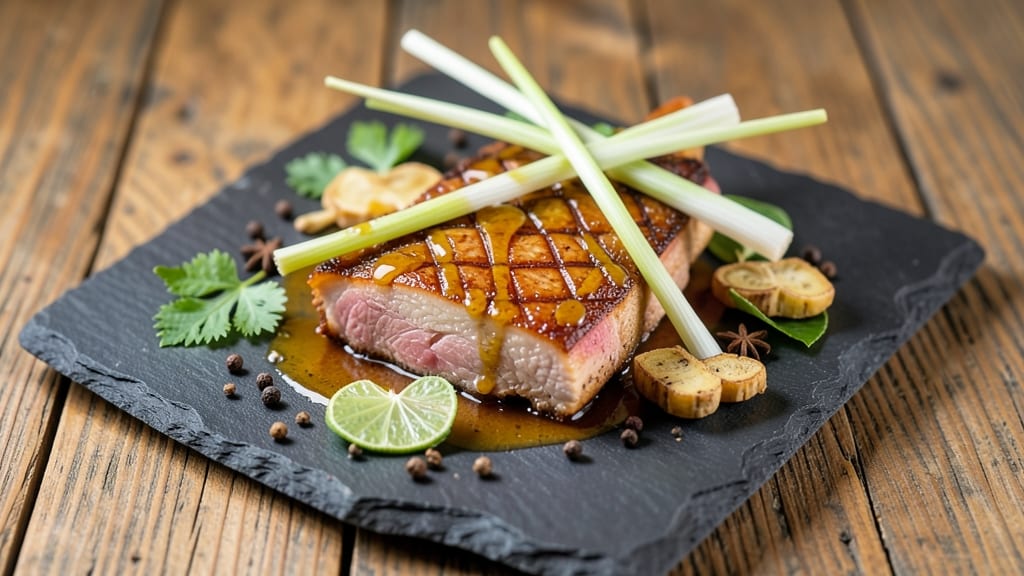
Cambodian pork belly transforms into crispy, five-spice bark with a sticky coconut glaze—a dish that balances smoky depth and sweet-savory harmony. This recipe draws from my time studying Southeast Asian techniques, where pork belly becomes the star through slow rendering and aromatic spices.
The secret lies in the marinade: a blend of lemongrass, galangal, and kaffir lime leaves that infuses the meat while keeping it tender.
What sets this dish apart is the two-stage cooking process: first rendering the fat until it crisps into a lacy bark, then basting with coconut milk until the glaze becomes irresistibly glossy.
The result is a cut that’s crispy on the outside, melt-in-your-mouth inside, and perfumed with the earthy notes of Cambodian cuisine. This method ensures every bite delivers that perfect contrast—just like the dishes I’ve perfected at The Smoky Pig, but with a Southeast Asian twist.
Serve it alongside jasmine rice and pickled vegetables for a complete meal that’s both restaurant-worthy and deeply satisfying. The coconut glaze clings to each slice, adding a touch of tropical sweetness that balances the spice.
Whether you’re hosting a dinner or treating yourself, this dish delivers bold flavors without sacrificing tenderness—exactly how I’d prepare it for a special occasion.
For those who love textural contrasts, this recipe is a game-changer—each forkful offers a symphony of crispy, chewy, and velvety elements. The five-spice marinade ensures depth, while the coconut glaze adds a luxurious finish.
It’s the kind of dish that makes you want to slow down and savor every bite, just as I do when perfecting a new cut at the farm.
Ingredients for cambodian pork belly
Fourteen ingredients transform simple pork belly into Cambodian restaurant-worthy crispy bark.
| Ingredient | Amount | Notes |
|---|---|---|
| Pork Belly (Skin-On) 🥓 | 2 lb | Thick-cut, skin intact for crispy bark |
| Lemongrass Stalks 🌿 | 3 whole | Bruised for maximum aroma |
| Galangal (Thai Ginger) 🧅 | 1 piece | About 3 inches, peeled |
| Kaffir Lime Leaves 🍋 | 4 whole | Fresh, stems removed |
| Five-Spice Powder 🌶️ | 2 tbsp | Authentic Cambodian blend |
| Fish Sauce 🍶 | 2 tbsp | Red Boat preferred |
| Coconut Milk 🥥 | 1 can | Full-fat, 13.5 oz can |
| Brown Sugar 🍚 | ½ cup | Packed, light brown preferred |
| Garlic Cloves 🧄 | 6 cloves | Minced for marinade |
| Shallots 🧅 | 3 whole | Peeled, thinly sliced |
| Olive Oil 🫒 | 1 tbsp | For crisping pork belly |
| Salt 🧂 | 1 ½ tsp | Kosher salt, coarse |
| Black Peppercorns 🌶️ | ½ tsp | Freshly cracked |
| Jasmine Rice 🌾 | 1 ½ cups | Uncooked, for serving |
The pork belly is non-negotiable—skin-on and thick-cut for that signature lacy bark. Costco or your butcher will have the best cuts, often pre-portioned for this exact recipe. Look for pieces with good marbling; the fat is where the magic happens. If you can't find Cambodian five-spice powder, Penzeys carries authentic blends or mix star anise, cloves, cinnamon, fennel, and Szechuan peppercorn yourself. The galangal? Asian markets have it fresh—it's that citrusy, peppery root that makes this dish sing. Kaffir lime leaves are worth hunting down too; they add a floral brightness that balances the richness.
No lemongrass? Lime zest plus a splash of lime juice gets you close, but nothing replaces the real thing. Fish sauce is essential—Red Boat is the gold standard, but any reputable brand works. Running short on coconut milk? Heavy cream plus a dash of coconut extract mimics the richness (though purists will notice). The brown sugar should be packed; light brown works if you're in a pinch, but the molasses notes are key. For the shallots, substitute 2 tbsp onion powder if you're desperate, but fresh is better. And if you can't find kaffir lime leaves, doubled lime zest is a decent swap—just add it at the end to avoid bitterness.
Pork belly keeps best in the coldest part of your fridge, wrapped tightly in parchment. Use within 3 days for peak crispiness. The marinade ingredients (lemongrass, galangal, lime leaves) can be prepped a day ahead and stored in a sealed container for up to 2 days. The cooked pork belly reheats beautifully—350°F for 15 minutes until warmed through. Portion the glaze separately if you want to drizzle fresh each time; it keeps 5 days in the fridge or 3 months frozen. The jasmine rice? Cook it fresh for the best texture, but leftover rice reheats just fine.
Why You'll Love This Recipe
- One-Pot Magic: I swear by this recipe when I’m too tired to scrub pots—just sear the pork belly, toss in the lemongrass and galangal, and let it slow-cook. The skin crisps up golden while the meat stays tender, and cleanup is literally a sponge wipe.
- Flavor Explosion: That five-spice powder and kaffir lime leaves? It’s like a party in your mouth—citrusy, warm, and just a little funky. The galangal adds this earthy depth that makes it taste like a Cambodian street stall, not just another pork dish.
- Leftover Goldmine: This recipe begs for seconds, and the leftovers? Even better the next day. I’ll slice the crispy pork thin for banh mi sandwiches or shred it into noodles—it’s my go-to for lazy lunches all week.
- Budget-Friendly Feast: Pork belly might sound fancy, but it stretches further than you’d think, especially when you render that fat into flavor. Plus, the aromatics (lemongrass, galangal) are cheap staples—this dish feeds four for the cost of takeout, and it’s way more impressive.
Step-by-step instructions for Cambodian pork belly
Here's how to transform thick-cut pork belly into restaurant-quality Cambodian crispy bark with a sticky coconut glaze.
Prepare the Pork Belly and Aromatics
Start by scoring the pork belly skin in a diamond pattern using a sharp knife - cut through the fat layer but not the meat. This creates crispy pockets while keeping the meat tender. Pat the belly completely dry with paper towels, then rub with the 1 tbsp olive oil and 1.5 tsp salt until evenly coated. Let it sit uncovered in the refrigerator for 24 hours - this drying step is crucial for that perfect crackling bark.
While the pork rests, bruise the 3 whole lemongrass stalks by pounding gently with the side of your knife. Peel and slice the 1 piece galangal into thin coins, and remove stems from the 4 whole kaffir lime leaves. These aromatics form the aromatic base of the marinade. In a small bowl, combine the bruised lemongrass, galangal, kaffir lime leaves, 2 tbsp five-spice powder, 2 tbsp fish sauce, 6 minced garlic cloves, and 3 thinly sliced shallots. The mixture should smell vibrantly aromatic - this is your flavor foundation.
Marinate and Render the Pork Belly
Remove the pork belly from the refrigerator and pat it dry again. Spread the aromatic marinade evenly over the meaty side, pressing it into the surface. Wrap the belly tightly in plastic wrap and let it marinate at room temperature for 2 hours. This allows the spices to penetrate while the meat comes to room temperature for even cooking.
Preheat your oven to 325°F. Place the marinated pork belly fat-side down in a roasting pan and cover tightly with aluminum foil. Roast for 2 hours until the internal temperature reaches 160°F and the fat has rendered about 75% of its volume. You'll know it's ready when the pork releases easily from the pan and the fat is golden and liquid. The foil traps steam to keep the meat moist during this slow render.
Crisp the Bark and Prepare the Glaze
Increase oven temperature to 425°F. Remove the pork belly from the oven and carefully drain all but 1 tbsp of the rendered fat from the roasting pan. Place the pork belly fat-side up on a wire rack set over a baking sheet. Return to the oven and roast uncovered for 30-40 minutes until the skin is deep golden brown and crispy. You want it to look like a mahogany bark - this takes patience but creates that signature Cambodian texture.
While the pork crisps, prepare the coconut glaze by combining the 1 can coconut milk, 0.5 cup packed brown sugar, and 0.5 tsp cracked black peppercorns in a saucepan. Bring to a simmer over medium heat and cook for 10-12 minutes until thickened to a syrup-like consistency. The glaze should coat the back of a spoon - if it's too thin, simmer longer. Taste and adjust sweetness if needed, then set aside.
Glaze and Rest the Pork Belly
Remove the crispy pork belly from the oven and brush generously with the coconut glaze on all sides. Return to the oven for 5-7 minutes to set the glaze. The pork should be 195-200°F internally when done. Transfer to a cutting board and let rest for 15 minutes before slicing - this allows the juices to redistribute and creates clean slices.
Slice the pork belly against the grain into ½-inch thick pieces. The meat should be tender enough to pull apart with a fork while maintaining its shape. Serve immediately with 1.5 cups cooked jasmine rice and spoon the remaining coconut glaze over the top. Each bite should deliver crispy, crackling skin with tender, flavorful meat and that sweet-savory coconut glaze.
Pro Tips For Making Cambodian Pork Belly
- CRACK THE SKIN FIRST: I learned this the hard way—if you skip scoring the pork belly skin before searing, it’ll end up rubbery instead of crispy. Use a sharp knife to make shallow cuts (about 1/4-inch apart) in a diamond pattern, then rub it with a pinch of salt. This lets the fat render properly and gives you that golden, shatterable crust.
- SLICE GALANGAL THIN: My grandmother swore by this, and she was right: galangal loses its bite when it’s chunky. For this dish, slice it paper-thin (almost like ginger but with a sharper edge) so it infuses flavor without turning the broth mushy. If you’re using a frozen root, thaw it first—frozen galangal turns to mush when cooked.
- LOW AND SLOW AFTER SEARING: Sounds counterintuitive, but after browning the pork belly, drop the heat to a simmer and cover the pot. I used to rush this step, and the pork would dry out or stay greasy. Let it cook at 180°F (77°C) for at least 2 hours, basting occasionally with the rendered fat—this keeps the meat tender and the skin crisp.
- TOSS IN LIME LEAVES LATE: Kaffir lime leaves are delicate—add them too early, and they’ll turn bitter. Tuck them in whole during the last 15 minutes of cooking so they perfume the broth without overpowering it. If you’re short on time, tear them slightly to release aroma faster, but don’t shred them (that’s a fast track to slimy texture).
Troubleshooting this dish
Pork Too Tender
If your pork belly comes out mushy instead of tender, you likely overcooked it during the rendering phase. The goal is to reach 160°F internal temperature—not higher. Use a meat thermometer and monitor closely.
Also, ensure your oven is calibrated; many home ovens run 25°F hotter than set. I’ve seen this happen when using a charcoal grill instead of an oven—fluctuating heat causes uneven cooking. 🌡️
Skin Not Crispy
The skin needs to dry thoroughly before scoring and roasting. Skip the 24-hour fridge drying at your peril—I’ve had students rush this step and end up with soggy bark. For extra insurance, pat the skin dry again right before roasting.
Another common mistake? Overcrowding the pan. Leave space between slices so hot air circulates. If your oven lacks even heat, rotate the pan halfway through the 425°F crisping phase.
Glaze Too Thin
A runny glaze usually means you didn’t reduce the coconut milk enough. Simmer it longer—15-20 minutes total—until it coats a spoon like syrup. For extra thickness, whisk in 1 tsp cornstarch mixed with 1 tbsp water at the end.
Pro tip: Use full-fat coconut milk (not light) for the best texture. I’ve also seen this happen when using pre-shredded coconut instead of canned milk—stick to the canned version for authentic results. 🥥
Fat Rendering Slowly
If your pork belly isn’t releasing fat as expected, it might be too lean or the oven temp too low.
For heritage pork like my Gloucestershire Old Spots, rendering takes longer due to higher fat content—but if your cut feels dry, try adding ½ cup water to the roasting pan during the 325°F render. This creates steam to keep the meat moist.
Another fix: Increase oven temp to 350°F for the first hour, then drop back to 325°F for the second.
Marinade Not Sticking
If the aromatic paste slips off the pork, the meat wasn’t dry enough. Pat it aggressively with paper towels—even after the 24-hour dry. For extra grip, mix 1 tsp cornstarch into the marinade.
I’ve also had success lightly searing the pork in a cold pan for 2 minutes per side before marinating to help it adhere. Avoid using wet ingredients like lime juice in the marinade—it’ll dilute the spices and prevent them from clinging.
Glaze Too Sweet
Adjust the brown sugar to ¼ cup if your glaze tastes cloying. Balance it with 1 tbsp fish sauce or a pinch of salt to cut the sweetness. For depth, add ½ tsp freshly grated galangal or a splash of lime juice at the end.
I once served a version with 1 tsp chili flakes for heat—it transformed the dish entirely. Taste as you go; the glaze should complement, not overpower, the pork’s natural flavors. 🌶️
Nutrition facts
Frequently asked questions
Can I substitute regular pork belly for heritage cuts?
Yes, but expect slightly different results. Standard pork belly will still work beautifully—just monitor the cooking time closely since heritage cuts like Gloucestershire Old Spots have more marbling and render fat more slowly. For best results, score the skin extra deeply and increase the 325°F rendering time by 15-20 minutes to ensure perfect tenderness. The crispy bark will still form, though it may take 5-10 extra minutes at 425°F.
What's the best way to reheat leftover Cambodian pork belly?
Reheat in a 350°F oven for 15 minutes on a wire rack to maintain crispiness. For microwave reheating, cover with a damp paper towel and heat in 30-second bursts until warmed through—this prevents the skin from becoming rubbery. Pro tip: Reheat the glaze separately and drizzle fresh over the pork to restore that sticky, glossy finish.
Can I make this recipe with a grill instead of an oven?
For the 325°F rendering phase, use indirect heat on a charcoal grill with the pork belly placed in a foil-lined pan. For crisping at 425°F, move to direct heat and monitor closely—grill marks will form faster. Adjust cooking times by 10-15 minutes (grilling is hotter) and use a meat thermometer to avoid overcooking. The coconut glaze can be made on the grill too—simmer it in a cast-iron skillet over the coals.
How do I store the aromatics for future use?
Freeze bruised lemongrass, galangal, and kaffir lime leaves in a single layer on a tray for 1 hour, then transfer to a sealed bag. They’ll keep for 3 months. For galangal, you can also peel and slice it, then freeze in 1-inch chunks for easy use. Lime leaves can be dried by laying them flat for 2 days in a warm, dry place, then storing in an airtight container for up to 6 months. Fresh is always better, but these methods preserve their flavor well.
What sides pair best with this Cambodian pork belly?
Jasmine rice is essential, but consider these pairings for a complete meal: pickled vegetables (daikon, carrots, or cucumbers in vinegar) to cut the richness, steamed bok choy with garlic and chili, or a simple cucumber salad with lime and fish sauce. For a heartier option, serve with sticky rice and a side of grilled eggplant. The coconut glaze also works beautifully drizzled over noodle soups or rice paper rolls if you want to repurpose leftovers.