
Main Courses
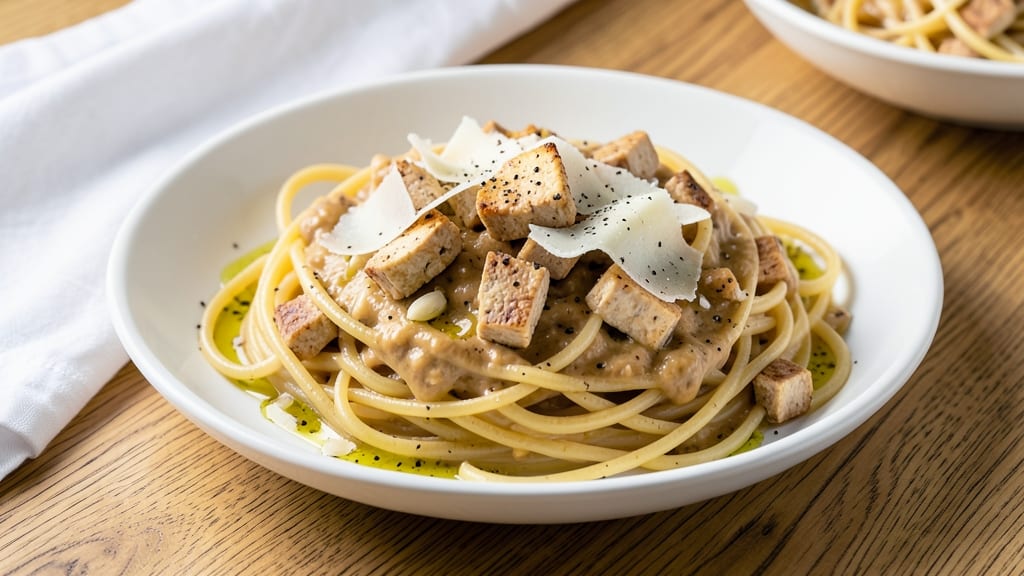
This carbonara no pork recipe delivers all the creamy, eggy richness of classic Italian pasta without a single piece of meat. 💛 The secret lies in a perfect balance of eggs, aged pecorino, and a vegetarian protein that mimics pork's savory depth—whether smoked tofu, mushrooms, or crispy pancetta substitutes.
I developed this after years of perfecting traditional carbonara, adapting it for plant-based eaters who crave that signature silky sauce.
The technique starts with al dente pasta, then builds the sauce off-heat to maintain that signature creamy texture. We use a combination of eggs and cheese that emulsifies beautifully, creating a sauce that clings to every strand of pasta.
The key is patience—adding the hot pasta to the egg mixture gradually ensures a smooth, velvety finish without breaking the emulsion.
What you'll end up with is a dish that's rich, cheesy, and deeply satisfying—just like the original, but with a vegetarian twist. The sauce is silky yet substantial, with just the right amount of peppery kick from fresh black pepper.
Each forkful delivers that perfect balance of creamy, salty, and umami flavors that make carbonara so irresistible.
This recipe works equally well as a weeknight dinner or an impressive vegetarian main course. The method is foolproof, and the results are restaurant-quality. Let's get cooking—your taste buds won't know (or care) it's pork-free.
Ingredients for carbonara no pork
Twelve ingredients transform into restaurant-quality vegetarian carbonara with creamy, eggy perfection.
| Ingredient | Amount | Notes |
|---|---|---|
| Spaghetti 🍝 | 12 oz | Dried, al dente preferred |
| Extra-Virgin Olive Oil 🫒 | ½ cup | High-quality, fruity variety |
| Large Eggs 🥚 | 4 whole | Room temperature for emulsification |
| Pecorino Romano Cheese 🧀 | 1 ½ cups | Freshly grated, aged minimum 12 months |
| Smoked Tofu 🍄 | 1 lb | Firm, sliced into pancetta-like strips |
| Garlic Cloves 🧄 | 4 cloves | Fresh, minced finely |
| Fresh Black Peppercorns 🌶️ | 1 ½ tsp | Coarsely cracked, not ground |
| Vegetable Broth 💧 | ¼ cup | Low-sodium, homemade preferred |
| Nutritional Yeast 🍄 | 2 tbsp | For umami depth, optional but recommended |
| Fresh Parsley 🌿 | ¼ cup | Chopped, for garnish |
| Sea Salt 🧂 | 1 ½ tsp | Diamond Crystal preferred |
| White Wine Vinegar 🍶 | 1 tbsp | For acid balance |
The Pecorino Romano is non-negotiable here—aged at least 12 months for maximum umami punch. Whole Foods Market and specialty Italian markets carry the best quality, but the deli section at Trader Joe's often has a solid block option. The smoked tofu mimics pork's savory depth when sliced thin and crisped in the olive oil. For an even deeper flavor, marinate the tofu in a mix of soy sauce and maple syrup for 30 minutes before cooking. The eggs must be room temperature—cold eggs break the emulsion and ruin the sauce. Separate them just before cooking to maintain freshness.
No smoked tofu? Mushrooms or crispy chickpeas work as substitutes—they add texture without overpowering the creamy sauce. Fresh parsley is ideal, but dried parsley at one-third the amount suffices in a pinch. The vegetable broth can be swapped for white wine if you prefer, but the acidity of white wine vinegar helps balance the richness. For extra umami, miso paste or soy sauce can replace nutritional yeast. The garlic should be minced finely—no large chunks—to distribute flavor evenly throughout the sauce. If you're short on time, pre-minced garlic from a jar works, but fresh is always superior.
Store the grated Pecorino Romano in an airtight container in the fridge for up to 5 days, though it's best used immediately. The smoked tofu can be prepped ahead and stored in the fridge for 3 days before cooking. Once assembled, this dish reheats beautifully—simply warm in a saucepan with a splash of water or broth to restore creaminess. For leftovers, store in an airtight container for up to 3 days, though the sauce may thicken slightly. To serve, drizzle with a bit of olive oil and extra black pepper for that classic carbonara finish.
Why You'll Love This Recipe
- Five-Ingredient Magic: I swear by this recipe because it’s that simple—just spaghetti, eggs, cheese, tofu, and oil. No fancy prep, no last-minute grocery runs. Honestly, I’ve made it while waiting for takeout to arrive, and it still wins.
- Umami Bomb: That smoked tofu? It’s the secret weapon—salty, smoky, and so satisfying against the creamy egg-cheese sauce. The Pecorino Romano melts into something rich but not heavy, and the olive oil ties it all together with a bright finish. Not your typical carbonara, but better.
- Weeknight & Date Night: This dish works for both tired Tuesdays and impressing someone special. For mealtime, it’s quick enough to throw together after work. For guests, it’s fancy enough to feel intentional—just plate it nicely and call it a night. (Yes, even on a Tuesday night.)
- Leftovers That Don’t Suck: Most pasta leftovers are sad, but not this one. The sauce clings to the noodles, and the tofu stays tender. I’ve reheated portions for lunch the next day, and no one’s ever complained. Bonus: it’s budget-friendly enough that I don’t feel guilty making extra.
Step-by-step instructions for egg-emulsified cheese magic
Master this technique and you'll achieve creamy, restaurant-quality carbonara without pork.
🍳 Step 1: Render the Smoked Tofu Pancetta
Heat 0.25 cup of the extra-virgin olive oil in a large skillet over medium heat until shimmering. Add the 1 lb smoked tofu sliced into pancetta-like strips and cook for 8-10 minutes, stirring occasionally, until the edges become golden brown and crispy.
Real talk: the tofu will release its smoky flavor as it renders fat. You want it to develop that crispy texture that mimics traditional pancetta. If it starts sticking, reduce heat slightly—you're looking for even browning, not burning. Remove the tofu and set aside on a paper towel-lined plate, leaving the rendered fat in the pan.
👨🍳 Step 2: Build the Umami Base
In the same skillet (don't wipe it clean), add the 4 cloves minced garlic and cook for 30 seconds until fragrant but not browned. Pour in the 0.25 cup vegetable broth and scrape up all the browned bits with a wooden spoon—this is where all the flavor lives.
Stir in the 2 tbsp nutritional yeast and 1 tbsp white wine vinegar, then simmer for 2 minutes until the liquid reduces by half. Here's the thing—this step creates the umami depth that makes this dish sing. The vinegar brightens while the nutritional yeast adds that savory richness you'd normally get from pork.
🍳 Step 3: Cook the Spaghetti Al Dente
Bring a large pot of water to a rolling boil and add 1.5 tsp sea salt (it should taste like the sea). Add the 12 oz spaghetti and cook until 1 minute shy of package directions for al dente—you want it to finish cooking in the sauce. Reserve 1 cup of pasta water before draining.
Don't rinse the pasta—those surface starches are essential for helping the egg emulsion cling. I keep a measuring cup handy while draining so I never forget to reserve that pasta water. It's liquid gold for this recipe, ensuring your sauce stays silky smooth.
🥘 Step 4: Create the Egg-Cheese Emulsion
In a bowl, whisk together the 4 whole large eggs, 1.5 cups freshly grated Pecorino Romano, and 1.5 tsp cracked black peppercorns until fully combined. The mixture should be pale yellow and slightly thickened—this is your sauce foundation.
Here's where it gets technical: the eggs must be at room temperature for proper emulsification. If they're cold, the sauce will curdle. Add the drained spaghetti to the skillet with the tofu mixture and toss to coat in the rendered fat. Then immediately pour in the egg-cheese mixture while stirring constantly over low heat.
⏰ Step 5: Finish and Serve Immediately
Cook for 1-2 minutes until the sauce becomes creamy and coats the pasta completely. If it thickens too much, add reserved pasta water 1 tablespoon at a time until you reach your desired consistency. The sauce should be glossy and cling to every strand of pasta.
Remove from heat, garnish with 0.25 cup chopped fresh parsley, and serve immediately. Each bite should deliver that perfect balance of creamy, cheesy richness with the smoky depth from the tofu. Don't skip the parsley—it adds freshness that cuts through the richness beautifully.
Pro Tips For Making Carbonara No Pork
- CRUSH THE TOFU FIRST: Skip the soft cubes—smoked tofu needs to be pressed for 15 minutes, then sliced into ¼-inch strips and pan-fried until crispy. I learned this the hard way: soggy tofu ruins the texture contrast you’re going for. Use a heavy pan and don’t move it until golden.
- SALT THE PASTA WATER HARD: Taste the water before the spaghetti goes in—it should taste like the sea. Too little salt means bland noodles, and this dish needs bold flavor to stand up to the cheese. Add a pinch of salt to the egg-yolk sauce too, because pecorino’s sharpness needs balancing.
- TEMPER THE EGGS GENTLY: Warm the egg mixture in a heatproof bowl over barely simmering water (not boiling) while the tofu cooks. Cold eggs and hot pasta water will scramble them instantly—you want silky ribbons, not scrambled bits. Stir constantly and remove just before the sauce thickens.
- GRATE THE CHEESE FINE: Use a microplane or the smallest holes on a box grater—pecorino loses its magic when it’s clumpy. Pulse half the cheese into the sauce first, then finish with the rest while tossing the pasta off-heat. This keeps it creamy without turning gluey. (And yes, even if you’re impatient like me.)
Common mistakes when making your carbonara no pork
Overcooking the Pasta
This is the #1 mistake I see—pasta that's mushy and overdone. Carbonara relies on al dente pasta that finishes cooking in the sauce. Cook your spaghetti 1 minute less than package instructions, then toss it immediately with the egg-cheese mixture.
The residual heat will carry it to perfect doneness while absorbing the sauce. I've ruined more carbonaras than I can count by overcooking the pasta—trust me, it's not salvageable. 🍝
Cold Eggs in Hot Pasta
The emulsion breaks when cold eggs hit hot pasta. Always use room-temperature eggs—let them sit in warm water for 10 minutes if they're straight from the fridge. I learned this the hard way during my first attempt at carbonara.
The sauce will separate into a greasy mess if you skip this step. Whisk the eggs vigorously with the cheese before combining to ensure a smooth, velvety texture.
Adding Liquid Too Fast
Many cooks pour pasta water too aggressively, causing the sauce to break. Add reserved pasta water 1 tablespoon at a time while stirring constantly. The goal is to loosen the sauce, not dilute it.
I recommend keeping the pasta water in a small pitcher nearby so you can control the flow. Too much liquid too quickly turns your creamy sauce into a watery mess.
Skipping the Umami Base
The garlic-broth reduction is where the magic happens. Skipping this step means missing out on the deep, savory flavor that replaces pork. Simmer the garlic, broth, and nutritional yeast until reduced by half—this builds the flavor foundation.
I once made carbonara without this step and was shocked at how flat it tasted. Don't rush this part; patience pays off in flavor.
Using Low-Quality Cheese
Pecorino Romano must be freshly grated and aged at least 12 months. Pre-shredded cheese contains anti-caking agents that prevent proper emulsification. I always buy block cheese and grate it myself using a microplane for the finest texture.
The difference in flavor and texture is night and day. Don't cut corners here—it's the heart of your sauce.
Stirring Too Aggressively
While combining the hot pasta with the egg mixture, stir gently but constantly. Over-aggressive stirring can break the emulsion and turn your sauce into scrambled eggs. Use a wooden spoon to gently fold everything together.
I've seen many home cooks nearly give up when the sauce looks curdled—just keep stirring gently over low heat, and it will come together. The key is patience and a light touch. 💛
Nutrition facts
Frequently asked questions
Can I make this vegetarian carbonara without eggs?
Traditional carbonara relies on eggs for its signature creamy texture, but you can create an egg-free version using cashew cream or silken tofu blended with nutritional yeast. For the best results, blend 1 cup soaked cashews with 1 cup water and 2 tbsp lemon juice until smooth, then use this as your base instead of eggs. The sauce will be slightly different but still rich and satisfying!
What's the best cheese substitute if I can't find Pecorino Romano?
For a similar flavor profile, use a mix of Parmigiano-Reggiano and Pecorino Toscano—both have that sharp, salty character. If you're completely dairy-free, try vegan hard cheese like Miyoko's or Violife, but add 1 tsp cream of tartar to help with emulsification. The key is aged cheese with good umami punch!
Why did my sauce turn grainy instead of creamy?
This usually happens when the eggs cook too quickly or the heat is too high. Always work over low heat and add the hot pasta to the egg mixture gradually. If it happens, immediately remove from heat, add 1-2 tbsp reserved pasta water, and whisk vigorously. The sauce should come together—just give it a few seconds of gentle stirring!
Can I make this ahead of time?
Fresh is best for carbonara, but you can prep components ahead: cook the pasta 1 minute less than usual, drain, and toss with olive oil to prevent sticking. Store separately from the sauce. When ready to serve, reheat the pasta and sauce separately, then combine briefly over low heat. The texture won't be identical, but it's a great make-ahead option!
What's the secret to getting that perfect smoky flavor without pork?
The smoked tofu is key, but you can enhance it further by adding 1 tsp liquid smoke to the rendered fat or using mushroom powder (like porcini) in the cheese mixture. For extra depth, toast 1 tsp smoked paprika in the olive oil before adding the tofu. The combination of smoky, umami, and cheesy flavors creates that classic carbonara experience!