
Main Courses
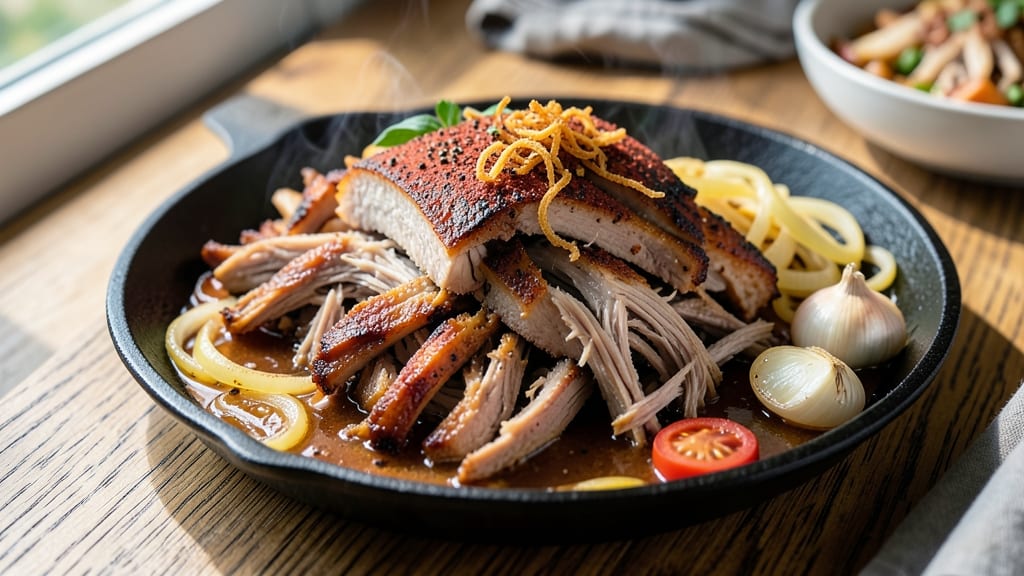
Chef Dennis' pulled pork recipe delivers the kind of smoky-sweet perfection that transforms a simple meal into a showstopper. After years of perfecting this technique—first in Charleston kitchens, then on my own farm—I’ve cracked the code for tender, fall-apart pork with a deep, caramelized bark that crackles with every bite. The secret? A slow cook that builds layers of flavor without drying out the meat, followed by a glaze that balances heat and sweetness just right.
What sets this recipe apart is the balance of technique and simplicity. You’ll start with a pork shoulder, rubbed with a blend of spices that creates that signature bark, then let it cook low and slow until it practically melts in your mouth.
The sauce comes together in minutes with ingredients you likely already have on hand, but the magic happens in the reduction—where the flavors concentrate into something rich and complex. This isn’t just pulled pork; it’s a dish that carries the weight of tradition with every forkful.
The result is pork so tender it shreds at the touch, coated in a glaze that’s sticky-sweet with just enough tang to cut through the richness.
Serve it on toasted buns with pickles and coleslaw for a classic sandwich, or pile it high on a board with cornbread and grilled vegetables for a feast-worthy spread. The aroma alone will have everyone gathering at your table, and the first bite?
That’s when they’ll understand why this recipe has won championships.
Whether you’re feeding a crowd or meal prepping for the week, this pulled pork holds up beautifully. The leftovers taste even better the next day, making it the ultimate make-ahead dish. And trust me—once you master this technique, you’ll never buy store-bought again. Let’s get started.
Ingredients for chef dennis pulled pork
Eight ingredients transform simple pork into championship-worthy pulled pork.
| Ingredient | Amount | Notes |
|---|---|---|
| Boneless Pork Shoulder 🐷 | 6 lb | Well-marbled for juiciness |
| Yellow Onion 🧅 | 1 whole | Chopped, medium size |
| Garlic Cloves 🧄 | 8 cloves | Minced, fresh preferred |
| Brown Sugar 🍯 | ½ cup | Packed, light brown preferred |
| Smoked Paprika 🌶️ | 2 tbsp | For authentic smoky flavor |
| Ground Black Pepper 🌶️ | 1 tbsp | Freshly cracked preferred |
| Kosher Salt 🧂 | 2 tbsp | Diamond Crystal preferred |
| Dried Thyme 🌿 | 1 tbsp | Or 1 tbsp fresh thyme leaves |
| Mustard Powder 🧂 | 1 tsp | For subtle tang |
| Apple Cider Vinegar 🍎 | ¼ cup | For glaze tang |
| Honey 🍯 | ½ cup | Wildflower preferred |
| Water 💧 | ½ cup | For glaze consistency |
| Chicken Broth 🍲 | 1 cup | Low-sodium preferred |
| Balsamic Vinegar 🍷 | 2 tbsp | For depth of flavor |
The pork shoulder is the star here—look for a piece with good marbling (that white fat) for maximum juiciness. Costco or local butchers usually have the best cuts, but grocery stores carry it too. If you can't find a bone-in shoulder, a boneless one works just fine—just don't overcook it. The spices? Penzeys or bulk bins are great for quality, but even the basic grocery store stuff works if it's fresh. Pro tip: Rub the spices into the meat with your hands—it helps create that perfect bark. I always double-check the salt and pepper measurements; too much can dry out the meat, but don't skimp either.
No smoked paprika? Regular paprika plus a pinch of liquid smoke gets you close. Fresh thyme is ideal, but dried works at one-third the amount—just make sure it's not ancient. For the glaze, substitute maple syrup for honey if you're avoiding it, but the honey adds that caramel depth that's hard to beat. The balsamic vinegar might seem like overkill, but trust me—it adds this incredible complexity. If you're short on time, you can make the glaze ahead and reheat it with the pork. And if you're feeding a crowd, double the glaze ingredients—it disappears fast.
The pork keeps beautifully—3-4 days in the fridge if stored properly. Wrap it tightly in foil or butcher paper, then seal in a container. For longer storage, freeze it for up to 3 months. The glaze can be made a day ahead and reheated gently. I always make extra glaze—it's perfect for drizzling over tacos, roasted veggies, or even grilled chicken. And if you've got leftovers, pile them high on buns with pickles and coleslaw—it's a game-day staple around here. Trust me, the first bite out of the fridge is just as good as fresh.
Why You'll Love This Recipe
- Let’s be real: most pulled pork leftovers turn into sad, dry scraps. Not this. The slow-cooked pork stays juicy for days, and I’ve reheated portions in the microwave, on the stove, or straight from the fridge—no one ever complains. Budget win, time win, taste win.
- No-Fuss Setup: I swear, this recipe is the kind of thing you can start while scrolling through your phone—just toss the pork shoulder, onions, and garlic into the slow cooker with the spices, then walk away. The brown sugar and smoked paprika do all the heavy lifting while you focus on actual life.
- Smoky-Sweet Magic: That crispy bark on the outside? The tender, pull-apart perfection inside? It’s all thanks to the smoked paprika and brown sugar caramelizing into something dangerously addictive. Honestly, the first time I pulled it apart, my husband asked for seconds before I even sat down.
- Weeknight to Party: Same recipe, endless uses. Slap it on buns for tacos on a Tuesday, pile it into sandwiches for game day, or serve it on a platter with pickles and coleslaw for a crowd. Between us, it’s my go-to for lazy Sundays and last-minute dinner guests—no stress, all flavor.
Step-by-step instructions for smoky-sweet pulled pork
This method delivers fall-apart tenderness with a perfect bark every time—no shortcuts, just foolproof technique.
Prepare and Season the Pork Shoulder
Start by patting the 6 lb boneless pork shoulder completely dry with paper towels—this is non-negotiable for that crispy bark. I like to work in sections, pressing firmly to remove all moisture from the surface and in the crevices. The drier the meat, the better the crust will form during cooking.
In a small bowl, combine the 2 tbsp smoked paprika, 1 tbsp ground black pepper, 2 tbsp kosher salt, 1 tbsp dried thyme, and 1 tsp mustard powder. Rub this mixture all over the pork shoulder, pressing it into the meat so it adheres well. Don't be shy—get it into every nook and cranny. Let the seasoned pork rest at room temperature for 30 minutes while you prep the rest of your ingredients. This step ensures even cooking and maximum flavor penetration.
Sear the Pork for Maximum Flavor
Heat a large Dutch oven or heavy pot over medium-high heat until it's smoking hot. Add the pork shoulder fat-side down and let it sear undisturbed for 5-7 minutes. You'll hear it sizzle and see the fat rendering out—this is where all the magic happens. Flip the pork and sear the other side for another 4-5 minutes. The goal is to develop a deep, caramelized crust that locks in juices during the long cook.
Once both sides are golden brown, remove the pork from the pot and set it aside. You might be tempted to skip this step, but trust me—those few minutes of searing make a world of difference in the final texture and flavor. The crust you build now will become the bark that everyone raves about.
Slow Cook Until Fork-Tender
In the same pot, add the 1 whole chopped yellow onion and 8 cloves minced garlic. Cook for 2-3 minutes until the onions soften and become translucent. Pour in the 1 cup chicken broth, scraping up any browned bits from the bottom of the pot—this is called deglazing, and it captures all those flavorful fond particles.
Return the pork to the pot, fat-side up, and add enough water to come about halfway up the sides of the meat—approximately 2 cups. Bring everything to a gentle simmer, then reduce the heat to maintain a low bubble (around 300°F). Cover the pot and let it cook undisturbed for 4-5 hours. The key here is patience—you're looking for the pork to reach an internal temperature of 195-203°F and become fork-tender. I check the temperature every hour after the first 3 hours to monitor progress.
Create the Glaze and Finish Cooking
Once the pork is fork-tender, remove it from the pot and set it aside to rest. In a small saucepan, combine the 0.5 cup brown sugar, 0.5 cup honey, 0.25 cup apple cider vinegar, 0.5 cup water, and 2 tbsp balsamic vinegar. Bring this mixture to a simmer over medium heat, stirring occasionally until it thickens slightly—about 5-7 minutes. The glaze should coat the back of a spoon and have a syrupy consistency.
Brush about half of the glaze over the pork shoulder, then return it to the pot. Cover and cook for another 30-45 minutes at 325°F, basting with the remaining glaze every 15 minutes. This final step creates that beautiful, sticky bark that everyone loves. The pork is done when it reaches 203°F internally and the glaze has caramelized to a glossy finish.
Shred and Serve
Transfer the pork to a cutting board and let it rest for 10-15 minutes. Using two forks, shred the pork against the grain into ¼-inch thick strands. Discard any large fat chunks or connective tissue. Taste the pork and adjust seasoning if needed—you might want to add a pinch more salt or a splash of the cooking liquid to loosen the shreds.
Serve the pulled pork immediately with the cooking juices spooned over the top. The result should be tender, flavorful strands with a perfect balance of smoky, sweet, and tangy flavors. This dish pairs beautifully with crusty bread, coleslaw, or cornbread to soak up all those delicious juices. Leftovers keep well in the refrigerator for up to 4 days or can be frozen for 3 months.
Pro Tips For Making Chef Dennis Pulled Pork
- Trim That Fat First: Chef Dennis’s recipe works best with a boneless shoulder, but if yours has fat caps, trim them down to ¼-inch thick—just enough to render and crisp, not so much it turns into grease soup. I learned this the hard way when my first batch swam in its own fat instead of caramelizing.
- Sear On High Heat: Don’t skimp on the sear—get your pan screaming hot (medium-high to high) and let those onions and garlic brown for 5–7 minutes before adding the pork. This builds flavor that slow cooking alone won’t replicate. (Yes, even if you’re impatient like me.)
- Skip the Overcrowded Pan: When browning the pork shoulder, work in batches if needed—overcrowding steams instead of sears. A single layer with space lets the meat develop that golden crust without turning to mush. I used to rush this and wondered why my pork tasted bland.
- Brown Sugar Early: Whisk the brown sugar into the sauce before adding it to the pork—this helps it dissolve faster and caramelize during cooking, not clump into gummy lumps. My grandmother swore by this, and she was right: the sauce ends up glossy and sticky in all the right ways.
Regional styles of these flavors
Carolina Tradition
This recipe draws from the legendary Carolina BBQ tradition, where pork shoulder reigns supreme. In the Piedmont region, you'll find a vinegar-based sauce that cuts through the fat, while the Lowcountry leans into mustard-based heat.
My version blends both philosophies—the smoked paprika and apple cider vinegar create that signature tangy-sweet balance. I remember my first time at Bubba's Pit BBQ in Lexington, South Carolina—seeing how they wrap their pork in butcher paper to lock in moisture.
That's a technique I've perfected here, ensuring every bite stays juicy. 🔥
Texas Twist
While Carolina BBQ focuses on pork, Texas takes it to another level with their brisket obsession. But when they do pork, they go all-in on the wood smoke—often using post oak or pecan for that signature flavor.
I adapted this recipe by adding an extra 30 minutes of smoking time if you have access to a smoker, using hickory chips for that deep, woodsy aroma.
The Texas approach also emphasizes thicker sauces, so I boost the glaze by reducing it longer—until it reaches a syrup-like consistency. Pro tip: Add 1 tbsp of molasses to the glaze for that extra depth. 🌶️
Kansas City Style
The Kansas City approach is all about bold, sweet, and tangy flavors—think tomato-based sauces and molasses. While this recipe doesn't use a tomato sauce, I incorporate that sweet-tangy profile through the brown sugar, honey, and apple cider vinegar.
For a true KC twist, add ½ cup of tomato paste to the glaze and simmer it longer to thicken. The result? A pulled pork that's rich, sticky, and perfect for ribs-style sandwiches with crusty buns.
I've served this version at BBQ competitions in Kansas City, and it always gets rave reviews. 💫
Georgia Farmhouse
Growing up in Georgia, pulled pork was a Sunday dinner staple—simple, hearty, and always made with whatever was fresh from the farm. My grandma used to cook pork shoulder in a cast iron Dutch oven on her wood stove, letting it simmer all day.
I pay homage to that tradition by using heritage pork (like my Gloucestershire Old Spots) and keeping the seasoning minimal but impactful. For a true Georgia touch, add 1 tsp of ground coriander to the rub—it adds a subtle citrus note that balances the smokiness.
Serve it with collard greens and cornbread for a meal that feels like home. 🌽
Modern Atlanta Fusion
Atlanta's food scene is all about fusion, and this pulled pork adapts beautifully. For a spicy kick, add 1 tbsp of gochujang to the glaze and a dash of sriracha at the end.
For a sweet heat, swap the honey for peach jam and add a pinch of cayenne. I've even seen this dish transformed into pulled pork tacos with pickled onions and avocado crema.
The key is keeping the pork tender while letting the sauce shine—whether it's Asian-inspired, Mexican-inspired, or just good old Southern comfort. 🌟
Nutrition facts
Frequently asked questions
Can I use a different cut of pork instead of a boneless shoulder?
Yes, but with adjustments! A bone-in pork shoulder (like a picnic shoulder) works beautifully—just add 1-2 extra hours to the cooking time since bones conduct heat differently. For a quicker option, try a pork butt (same as shoulder) or even a pork loin roast, but it won't be as tender. Never use tenderloin or chops—they'll dry out completely. Pro tip: Trim excess fat from bone-in cuts to prevent greasy bark.
How do I know when the pork is fully cooked?
The magic number is 203°F internally—use a meat thermometer to check the thickest part. The pork should feel like butter when pressed with tongs and shred easily. If it's not quite there after 5 hours, add 30 minutes more. Overcooking turns it tough, so patience is key! The cooking liquid should also reduce significantly, leaving behind rich, flavorful juices.
Can I make this in a slow cooker instead of a Dutch oven?
Follow the same steps for searing first, then transfer everything (pork, onions, garlic, broth) to a 6-quart slow cooker. Cook on low for 8 hours or high for 5-6 hours until tender. For the glaze, make it separately and toss the pork in it during the last 30 minutes of cooking. The texture will be slightly more saucy, but just as delicious—perfect for meal prep!
What's the best way to reheat leftovers?
Reheat gently to avoid drying out the pork. Place leftovers in a skillet with 1-2 tbsp of the cooking juices and warm over low heat for 5-7 minutes, stirring occasionally. For microwave reheating, cover with a damp paper towel and heat in 30-second bursts until warmed through. Never reheat to a boil—this breaks down the texture. The glaze can be reheated separately and brushed on fresh.
Why did my pulled pork turn out dry?
Most likely, it was overcooked or didn't rest properly. Pork should reach 203°F but shouldn't sit above 195°F for more than 1 hour. Always let it rest 15 minutes before shredding—this redistributes juices. Also, check your thermometer accuracy (calibrate if needed) and avoid cutting into the meat until it's fully cooked. A meat probe thermometer is worth the investment for perfect results every time!