
Main Courses
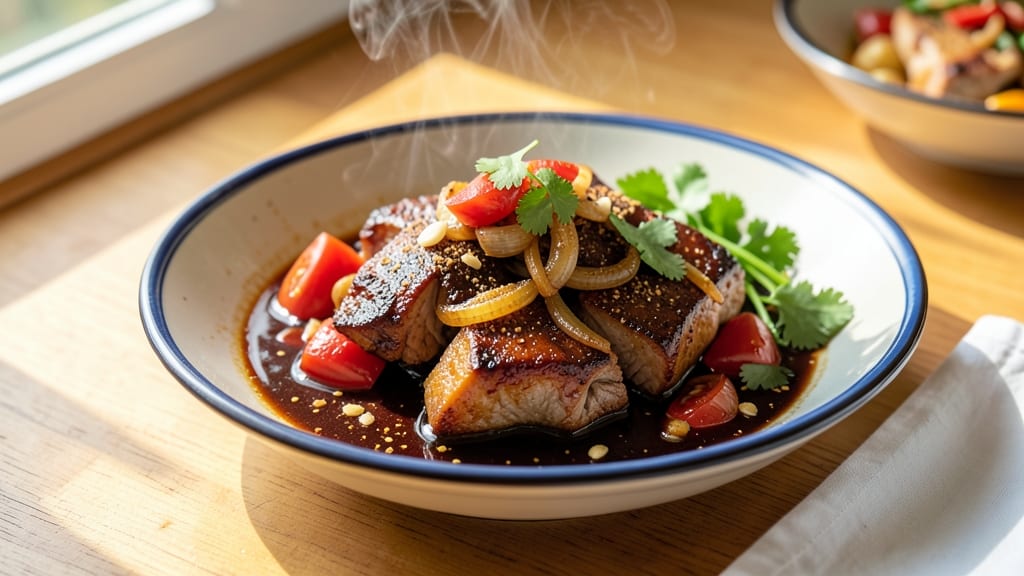
This Indian-style chilli pork recipe transforms humble pork into a fragrant, spice-crusted masterpiece that tastes like a home away from home. 🌟 The secret lies in a marinade of five-spice powder and tamarind that creates an irresistible crust, while slow-cooked tomatoes develop a deep, tangy richness that balances the heat.
After years of perfecting this dish, I've simplified it without sacrificing authenticity—just 30 minutes of prep followed by hands-off cooking.
The recipe draws from North Indian traditions where pork is braised with aromatic spices until tender yet firm, creating that perfect texture where every bite offers both succulent meat and flavorful crust.
What makes this version special is the tamarind paste that adds a subtle sourness, cutting through the richness while enhancing the spice complexity. The slow cooking process allows all those spices to meld together, creating layers of flavor that develop with each passing hour.
By the time you serve this dish, you'll have pork that's fall-apart tender yet holds its shape, coated in a glossy, spice-encrusted exterior that's impossible to resist.
The aroma alone will have everyone gathering around the table, and the first bite delivers that perfect balance of heat, sweetness, and umami that defines great Indian comfort food. Serve it with steamed basmati rice and a cooling cucumber raita to complete the meal.
This recipe works equally well for weeknight dinners or special occasions, scaling beautifully for crowds. The leftovers actually taste better the next day as the flavors continue to develop. Let's create this restaurant-quality chilli pork at home—where every bite tells a story of spice, patience, and love for bold flavors.
Ingredients for chilli pork recipe indian style
The secret to this restaurant-style chilli pork lies in these aromatic ingredients.
| Ingredient | Amount | Notes |
|---|---|---|
| Pork Shoulder 🍖 | 1 ½ lb | Cut into 1.5-inch cubes |
| Five-Spice Powder 🌶️ | 2 tbsp | Ground fresh for best flavor |
| Tamarind Paste 🍯 | ½ cup | Adjust for tanginess preference |
| Tomatoes 🍅 | 2 cups | Chopped, ripe but firm |
| Onion 🧅 | 1 whole | Finely chopped, yellow or red |
| Garlic Cloves 🧄 | 6 cloves | Minced, fresh preferred |
| Ginger 🌿 | 1 tbsp | Freshly grated, peeled |
| Green Chilies 🌶️ | 2 whole | Slit lengthwise, seeds removed |
| Cumin Seeds 🌿 | 1 tsp | Toasted lightly in oil |
| Ground Cumin 🌶️ | 1 tsp | For depth of flavor |
| Turmeric Powder 🌿 | ½ tsp | Freshly ground preferred |
| Garam Masala 🌶️ | 1 tsp | For aromatic finish |
| Olive Oil 🫒 | ½ cup | For searing and cooking |
| Salt 🧂 | 1 ½ tsp | Adjust to taste |
| Water 💧 | 1 cup | For braising liquid |
The pork shoulder is non-negotiable—it stays tender and flavorful through slow cooking. Ask your butcher for bone-in pieces if available, as they add depth to the broth. For five-spice powder, Penzeys or local Indian markets carry the best blends, but don't stress if you can't find it—substitute with equal parts cinnamon, cloves, fennel, star anise, and pepper. Tamarind paste is key for that signature tang; Trader Joe's sells it pre-packaged, or look for tamarind pods at Asian grocery stores. The tomatoes should be ripe but firm—San Marzano cans work perfectly if you're short on time.
No tamarind? Lemon juice or vinegar at half the amount gets you close, though it won't be identical. Fresh ginger and garlic are ideal, but dried will work in a pinch (use half the amount). For heat control, remove green chili seeds entirely for mild, or keep them for extra kick. The cumin seeds should be toasted in oil for 30 seconds before grinding—that aroma is everything. If you're missing garam masala, mix equal parts cinnamon, cardamom, cloves, and black pepper. And trust me on the olive oil—use good quality for searing, not the cheap stuff.
This dish tastes even better the next day as flavors meld. Store leftovers in an airtight container for up to 5 days in the fridge, or freeze for 3 months. I always double the batch—it reheats beautifully and makes for amazing sandwiches. For serving, pair with steamed basmati rice and a simple cucumber raita to balance the richness. The spices keep well in your pantry for 6 months if stored in airtight containers away from light.
Why You'll Love This Recipe
- One-Pot Magic: I swear by this recipe when I’m too tired to scrub a million dishes—just toss everything into one pot, let it simmer, and walk away. The five-spice powder does all the heavy lifting while you sip tea.
- Tamarind Tang Twist: That tamarind paste? It’s the secret weapon—sweet, sour, and just a little funky, cutting through the richness of the pork like a knife. My husband licks the spoon when I make this.
- Leftover Goldmine: This dish actually improves overnight, so I always double the batch. Cold or reheated, it’s the star of my lunchbox for days—no sad, dry leftovers here.
- Budget-Friendly Feast: Pork shoulder stretches for miles, and the spices cost pennies. Honestly, it’s my go-to when I need to feed the family without breaking the bank—plus, the onions caramelize into sweet little pockets of flavor.
Step-by-step instructions for chilli pork Indian style
Here's how to make this bold, aromatic dish with layers of spice and tang.
🔥 Step 1: Sear the Pork for Maximum Flavor
Heat the 0.5 cup olive oil in a heavy-bottomed pot over medium-high heat until shimmering. Add the 1.5 lb pork shoulder cubes in batches, being careful not to overcrowd the pan. Let them sear for 3-4 minutes per side until they develop a deep golden-brown crust—this is where all the flavor begins.
Once all the pork is browned, remove it from the pot and set it aside. You want to keep the rendered fat in the pot—this is liquid gold for building your sauce. If the fat starts smoking, reduce the heat slightly. The pork should release easily from the pan when ready to flip.
🍳 Step 2: Bloom the Spices and Build the Base
In the same pot with the pork fat, add the 1 tsp cumin seeds and let them sizzle for 30 seconds until they release their nutty aroma. Add the 1 whole onion (finely chopped), 6 cloves garlic cloves (minced), and 1 tbsp ginger (freshly grated). Cook for 4-5 minutes until the onion softens and becomes translucent.
Stir in the 2 whole green chilies (slit lengthwise), 2 tbsp five-spice powder, 1 tsp ground cumin, and 0.5 tsp turmeric powder. Cook for another 1 minute until the spices are fragrant and the raw taste disappears. You're building the aromatic foundation of this dish—don't rush this step.
🥘 Step 3: Simmer with Tangy Tomato and Tamarind
Add the 2 cups tomatoes (chopped) and 0.5 cup tamarind paste to the pot. Stir well to combine, then pour in the 1 cup water. Bring everything to a gentle boil, then reduce heat to low and let it simmer for 10 minutes until the tomatoes break down and the sauce thickens slightly.
Return the seared pork to the pot, nestling it into the sauce. Sprinkle with the 1.5 tsp salt and 1 tsp garam masala. The tamarind will add that signature tangy depth while the tomatoes provide a rich, slightly sweet contrast. Stir gently to coat the pork evenly in the sauce.
⏰ Step 4: Braise Until Tender and Flavorful
Cover the pot and let it simmer on low heat for 1 hour to 1 hour 15 minutes, until the pork is fork-tender and easily pulls apart. You'll know it's ready when the meat releases from the bone with minimal resistance and the sauce has thickened to a glossy consistency.
Check occasionally and add a splash of water if the sauce becomes too dry. The pork should be falling-off-the-bone tender while maintaining its shape. The longer it braises, the more the flavors meld together—this is where patience pays off.
🍽️ Step 5: Finish and Serve with Confidence
Once the pork is perfectly tender, remove the pot from heat and let it rest for 5 minutes. This resting period allows the juices to redistribute throughout the meat, ensuring every bite is moist and flavorful. Taste and adjust the seasoning if needed—you might want to add a bit more salt or tamarind paste to suit your preference.
Serve this rich, aromatic chilli pork hot over steamed basmati rice or with crusty naan bread. The five-spice crust adds a unique depth of flavor, while the tangy tomato sauce cuts through the richness beautifully. Each bite delivers a perfect balance of spice, tang, and tender pork—this is comfort food at its finest.
Pro Tips For Making Chilli Pork Recipe Indian Style
- Brown the Pork First: Don’t skip the sear—cut the pork shoulder into 2-inch chunks and cook them in a hot pan with 1 tablespoon oil until deeply browned on all sides. I used to rush this, and the dish always tasted flat; the Maillard reaction is what builds that deep, caramelized flavor that cuts through the tamarind’s tang.
- Bloom the Five-Spice: Toast the five-spice powder in the same pan you browned the pork for 30 seconds until fragrant. This releases the spices’ oils and makes them sing—skip it, and you’ll just be masking the flavor with powder instead of unlocking it.
- Control the Tamarind Heat: Tamarind paste is sour, not sweet—balance it with a pinch of sugar (½ teaspoon) if your paste tastes aggressively sharp. Also, dilute it with 2 tablespoons water before adding to the pot; undiluted paste will clump and make the sauce gluey.
- Simmer Low and Slow: After adding tomatoes and onions, reduce heat to medium-low and let the chili bubble gently for 45 minutes. I learned this the hard way—boiling it too hard turns the pork rubbery and the sauce watery. A lid helps, but crack it occasionally to let steam escape.
Common mistakes when making this recipe
Overcrowding the Pan
I've made this mistake more times than I care to admit—adding all the pork cubes at once to the searing pan. This causes the temperature to drop dramatically, leading to greasy, unevenly browned meat instead of that beautiful golden crust we want.
The key is working in batches: 2-3 pieces at a time is perfect. Let me share my trick: Use a slotted spoon to remove the pork once it's browned, then add fresh cubes to the same hot oil. This keeps your kitchen smelling amazing and ensures maximum flavor extraction. 🔥
Skipping the Cumin Bloom
That 30-second sizzle of cumin seeds might seem insignificant, but it's absolutely critical. When I first tried this recipe, I rushed past this step and ended up with a dish that lacked depth. Those toasted cumin seeds release their nutty aroma, which forms the aromatic base for everything that follows.
Take your time here—let the seeds pop and smell incredible before adding any other ingredients. Trust me, your taste buds will thank you.
Using Too Much Tamarind
Tamarind paste is what gives this dish its signature tangy kick, but it's easy to overdo it. I once made a batch so sour my family refused to eat it! Start with the 0.5 cup called for, taste as you go, and add more gradually if needed.
If you're unsure, remember you can always balance it with a pinch of sugar or more pork fat. The goal is a bright, balanced tang—not a mouth-puckering experience. 🌶️
Not Enough Braising Time
Pork shoulder needs patience to become tender. I've seen people pull this dish off the stove after just 45 minutes thinking it's done, only to end up with tough, chewy meat. The magic happens between 1 hour to 1 hour 15 minutes of gentle simmering.
Use the fork test: If the pork falls apart easily, it's ready. If not, give it another 15 minutes. The longer it cooks, the more the spices penetrate and the meat becomes irresistibly tender.
Ignoring the Resting Period
This is one of those cooking steps that seems unnecessary until you skip it. After braising, letting the pork rest for 5 minutes (covered) allows the juices to redistribute throughout the meat.
I learned this lesson the hard way when I served pork that was still releasing juices onto the plate. That resting time ensures every bite is moist and packed with flavor. It's a small step that makes a huge difference in the final texture. ⏰
Using the Wrong Pork Cut
While pork tenderloin might seem like an obvious choice, it's actually too lean and will dry out during the long braising process. The pork shoulder is non-negotiable here—it has just the right amount of fat and connective tissue that breaks down during cooking, resulting in that perfect tender-yet-firm texture.
If your butcher suggests substitutes, politely decline and stick with the shoulder. The flavor and texture payoff is worth it. 🍖
Nutrition facts
Frequently asked questions
Can I substitute chicken or beef for pork in this recipe?
While the technique works for chicken or beef, pork shoulder is ideal because of its fat content and connective tissue that creates that perfect tender-yet-firm texture. For chicken, reduce cooking time by 15-20 minutes and use thighs instead of breast. For beef, increase braising time to 2-2.5 hours to fully tenderize the meat. The spice blend will still shine, but the texture will differ.
What's the best way to store leftovers?
Store in an airtight container in the fridge for up to 5 days—it actually tastes better the next day as flavors deepen. For longer storage, freeze for 3 months in portions. Reheat gently in a saucepan with a splash of water or microwave in 1-minute intervals to prevent drying. The sauce will thicken further when reheated, so add water if needed.
How can I make this dish less spicy?
Remove all seeds and membranes from the 2 green chilies before cooking, and reduce the five-spice powder to 1 tbsp. For extra mildness, add 1 tbsp honey or sugar at the end to balance heat. If using store-bought five-spice, check the label—some blends contain more pepper than others. Always taste as you go and adjust gradually.
What are good side dishes to serve with this?
Steamed basmati rice is classic, but also try fluffy jeera rice or garlic naan for scooping up the sauce. For contrast, serve with cooling cucumber raita or a simple onion salad. The tangy yogurt or crisp vegetables balance the rich, spiced pork beautifully. My personal favorite is a side of pickled mango chutney to cut through the heat.
Can I make this in a slow cooker?
Sear the pork first, then transfer everything to your slow cooker and cook on low for 6-7 hours or high for 3-4 hours. The slow cooker's gentle heat enhances the spice infusion. Just add 0.25 cup water extra to prevent drying. The texture will be even more tender, though slightly less caramelized on the edges.