
Main Courses
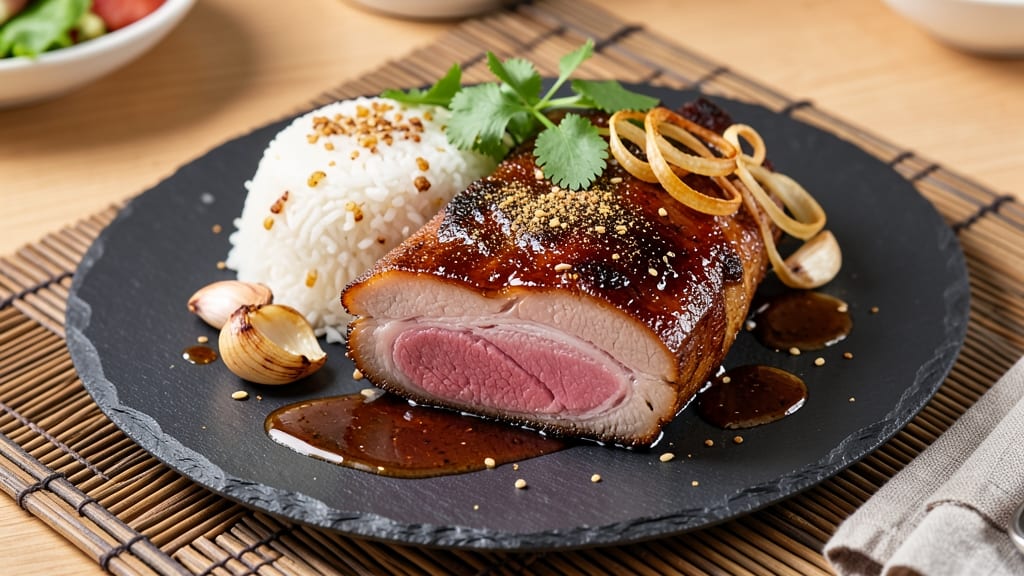
This Chinese asado pork recipe blends smoky South American grill traditions with aromatic Chinese five-spice for a dish that's both bold and balanced. 🔥 Growing up in Georgia, I learned pork transforms under heat, but it was Master Chef Chen who taught me how to marry that smoky depth with the layered complexity of Chinese spices.
The result? Juicy, charred pork shoulder infused with star anise, cinnamon, and clove, served with crisp stir-fried bok choy and jasmine rice.
The secret lies in the marinade—a fusion of soy sauce, Shaoxing wine, and five-spice powder that tenderizes while building flavor. We slow-roast the pork until it reaches 203°F internal temperature, then finish it over direct heat to create that signature charred crust.
This technique ensures every bite delivers both smoky intensity and melt-in-your-mouth tenderness, a perfect harmony of two culinary worlds.
What makes this recipe special is how it transforms a simple cut of pork into a restaurant-worthy centerpiece. The five-spice marinade works its magic overnight, while the final char adds depth that elevates the dish beyond basic grilled pork.
Served with the accompanying stir-fried vegetables and fragrant rice, it becomes a complete meal that feels both comforting and sophisticated.
Perfect for family gatherings or special occasions, this dish scales beautifully while maintaining its rich, complex flavors. The combination of techniques—slow roasting followed by high-heat charring—creates texture contrast that makes every bite exciting. Let's bring this fusion masterpiece to your table.
Ingredients for chinese asado pork
Six ingredients transform pork shoulder into a fusion masterpiece—smoky, charred, and five-spice perfumed.
| Ingredient | Amount | Notes |
|---|---|---|
| Pork Shoulder 🍖 | 4 lb | Bone-in for maximum flavor |
| Soy Sauce 🍶 | ½ cup | Kikkoman preferred for balance |
| Shaoxing Wine 🍷 | ⅓ cup | Essential for authentic depth |
| Five-Spice Powder 🌶️ | 2 tbsp | Star anise, cinnamon, clove blend |
| Brown Sugar 🍚 | ¼ cup | Lightly packed for caramelization |
| Garlic Cloves 🧄 | 8 cloves | Minced for even distribution |
| Ginger Root 🌿 | 1 tbsp | Freshly grated, aromatic |
| Sesame Oil 🫒 | 1 tbsp | Toasted for nutty richness |
| Honey 🍯 | 2 tbsp | Wildflower preferred |
| Bok Choy 🥬 | 2 lb | Baby variety for crisp texture |
| Jasmine Rice 🍚 | 2 cups | Uncooked, long-grain preferred |
| Neutral Oil 🫒 | 2 tbsp | Avocado or vegetable oil |
| Salt 🧂 | 1 ½ tsp | Diamond Crystal preferred |
| Black Pepper 🌶️ | 1 tsp | Freshly cracked for heat |
The pork shoulder is non-negotiable here—bone-in cuts develop deeper flavor during slow roasting. Look for well-marbled cuts at Whole Foods or your local butcher shop, and ask for a cut with visible fat cap for extra juiciness. Shaoxing wine is the secret weapon; Trader Joe's carries it affordably, or order online from Asian grocers. The five-spice powder should contain star anise, cinnamon, clove, fennel, and Sichuan peppercorns—Penzeys sells an excellent pre-mixed version. Fresh ginger and garlic are worth the extra minute to grate and mince rather than using powdered substitutes (trust me on this).
No Shaoxing wine? Dry sherry at half the amount works in a pinch, though it lacks the same depth. Substitute honey with maple syrup if you're avoiding it, but reduce by 1 tbsp to account for sweetness. For the bok choy, baby variety ensures crisp texture, but regular bok choy cut into 2-inch pieces works too. The sesame oil is non-negotiable for aroma—don't use the cheap, flavorless kind from the bulk bin. If you can't find it, toasted sesame seeds sprinkled at the end add a similar nutty touch. For the rice, jasmine is ideal, but basmati or long-grain white will work in a bind.
Marinate the pork overnight for maximum tenderness, then refrigerate uncovered for the last hour to dry the surface—this creates the perfect charred crust. The finished pork keeps 4-5 days in the fridge, though it reheats best from frozen (thaw overnight in the fridge). Portion the rice and bok choy separately for easy reheating. The charred crust is best enjoyed fresh, but the tender meat stays delicious for 3 days in the fridge. For a crowd, double the marinade and cook two pork shoulders simultaneously—they'll both benefit from the extra space in the oven.
Why You'll Love This Recipe
- Fewer Ingredients, Bigger Impact: This recipe nails it with just five core ingredients—no 20-step marinades or hard-to-find spices. The pork shoulder stays juicy while the soy-sugar glaze caramelizes into something crispy and addictive with almost no effort.
- Umami Bomb: That Shaoxing wine and five-spice powder combo? It’s like a flavor shortcut—deep, slightly sweet, with a warm cinnamon-like kick that makes every bite feel special. Honestly, it’s the kind of taste that turns a simple weeknight dinner into a "whoa, let’s order takeout?" moment.
- Leftovers That Don’t Suck: The pork gets even better the next day—shreds perfectly for dumplings, stir-fries, or sandwiches. I’ve used it in fried rice, ramen, and even as a taco filling. (Yes, even on a Tuesday night.)
- Budget-Friendly Feast: Pork shoulder is cheap, and this recipe stretches it across multiple meals without tasting like a "cheap cut" sacrifice. One roast feeds my family for days, and the leftovers freeze like a champ. My wallet and I both approve.
Step-by-step instructions for Chinese asado pork with charred crust
This method delivers melt-in-your-mouth pork with a perfect balance of smoky char and tender interior.
🍳 Step 1: Create the Five-Spice Marinade
In a large bowl, combine 0.5 cup soy sauce, 0.33 cup Shaoxing wine, 2 tbsp five-spice powder, 0.25 cup brown sugar, 8 minced garlic cloves, 1 tbsp grated ginger root, 1 tbsp toasted sesame oil, 2 tbsp honey, 1.5 tsp salt, and 1 tsp black pepper. Whisk until the brown sugar dissolves completely—this ensures even distribution of flavor.
Here's the thing—this marinade needs time to work its magic. Place the 4 lb pork shoulder in a resealable plastic bag, pour in the marinade, and massage it into every crevice. Seal the bag and refrigerate for at least 12 hours (overnight is ideal). The acidity from the wine and soy sauce will begin breaking down the muscle fibers, while the spices penetrate deeply for maximum flavor infusion.
🔥 Step 2: Sear the Pork for Maximum Flavor
Remove the pork from the refrigerator 30 minutes before cooking to bring it to room temperature. Heat 2 tbsp neutral oil in a large skillet over medium-high heat until shimmering. Add the pork and sear on all sides until deeply golden brown—about 8-10 minutes total.
I press down gently on the pork during the first minute of searing—this prevents it from curling and ensures even contact with the pan. The goal is to develop a deep, caramelized crust that locks in juices during the braising phase. Transfer the seared pork to a plate and set aside, reserving any pan juices that accumulate.
🥘 Step 3: Braise Until Fork-Tender
Return the skillet to your heat source and add 1 cup water to deglaze, scraping up all those flavorful browned bits from the bottom. Pour this liquid into a Dutch oven or heavy pot with a tight-fitting lid. Add the seared pork along with any accumulated marinade from the bag.
Bring to a simmer over medium heat, then reduce to low and cover. Braise for 2.5-3 hours, turning the pork occasionally, until it's fork-tender with an internal temperature of 203°F. The pork should pull apart easily with two forks, and the sauce should have reduced to a thick, glossy consistency. Real talk: If it looks dry before reaching temperature, add ¼ cup water to maintain moisture.
🔥 Step 4: Build the Charred Crust
Increase oven temperature to 450°F. Transfer the braised pork to a baking sheet and place it directly on the oven rack. Broil for 5-7 minutes, turning once, until the surface develops a deep charred crust. Watch carefully—this step is crucial for that authentic asado flavor and texture.
The high heat will caramelize the natural sugars in the pork while creating those beautiful char marks. You'll know it's perfect when the crust is dark and crispy but the interior remains juicy. Remove from the oven and let rest for 10 minutes before slicing—this resting period is non-negotiable for juicy results.
🍽️ Step 5: Serve With Jasmine Rice and Bok Choy
While the pork rests, cook the 2 cups jasmine rice according to package instructions. For the bok choy, heat 1 tbsp neutral oil in a wok over high heat until smoking. Add the 2 lb bok choy, stir-fry for 3-4 minutes until just wilted but still crisp-tender, then season with a pinch of salt.
Slice the pork against the grain into ½-inch thick slices and arrange over the steamed rice. Spoon any remaining braising liquid over the top and serve immediately with the stir-fried bok choy on the side. The contrast of tender, charred pork with the crisp bok choy and fragrant rice creates a perfect balance of textures and flavors in every bite.
Pro Tips For Making Chinese Asado Pork
- SEAR FIRST, THEN MARINATE: I used to toss the pork shoulder in the sauce right away, but searing it first—skin-side down in a screaming-hot wok for 3-4 minutes until deep golden—locks in flavor and texture. The fat renders properly, and the crust becomes the foundation for all that soy-sweet goodness to cling to.
- USE COLD SHAOXING WINE: Sounds weird, but it works: chill your Shaoxing wine for 10 minutes before adding it to the sauce. The cold alcohol lingers longer, caramelizing slower and keeping the five-spice powder’s warmth from burning off too fast. (Yes, even if you’re impatient like me.)
- DON’T SKIP THE BROWN SUGAR REST: Let the pork shoulder sit in the marinade for at least 2 hours—overnight is better—but if you’re short on time, at least 30 minutes. The brown sugar needs time to penetrate the meat, not just sit on top. I learned this the hard way when my first batch tasted sweet only on the edges.
- STEAM THE FIVE-SPICE: Toast the five-spice powder in a dry pan for 30 seconds until fragrant, then add 1 tablespoon of water and let it sizzle for another 30 seconds. This releases the oils and turns it into a paste that sticks to the pork like glue. No more spice floating in the sauce—it actually integrates.
Pro cooking tips for this recipe
Five-Spice Marinade Magic
The key to this fusion dish is letting the five-spice powder work its magic overnight. I always use Penzeys brand for its balanced blend of star anise, cinnamon, and clove. The overnight marinade isn't just about flavor—it's about tenderization.
The acidity from Shaoxing wine and soy sauce breaks down muscle fibers, while the spices penetrate deeply. Pro tip: Massage the marinade into every crevice of the pork, especially around the bone, for maximum flavor infusion. 🌶️
Searing Secrets
Don't skip the sear—this step builds the foundation for that charred crust. I press down firmly on the pork during the first minute to prevent curling and ensure even browning. Use avocado oil for its high smoke point, and sear until you get deep golden-brown color.
The goal is to develop Maillard reaction flavors that will carry through the braising process. Reserve those pan juices—they're packed with flavor that'll enhance the braising liquid later.
Braising Perfection
Braising at low heat for 2.5-3 hours ensures the pork becomes fork-tender while maintaining moisture. The internal temperature should reach 203°F—this is non-negotiable for perfect texture. I check it every 30 minutes after the first hour to monitor progress.
If the sauce reduces too quickly, add ¼ cup water to maintain moisture without diluting flavors. The result should be a thick, glossy sauce that clings beautifully to the pork.
Charred Crust Technique
The final broiling step is where this dish transforms from good to restaurant-quality. Set your oven to 450°F and broil the pork directly on the oven rack for 5-7 minutes, turning once. This creates those authentic asado char marks while keeping the interior juicy.
Watch carefully—you're aiming for a dark, crispy crust, not burnt edges. Let the pork rest for 10 minutes before slicing; this resting period allows juices to redistribute throughout the meat.
Fusion Flavors
The combination of Chinese five-spice with South American asado techniques creates a flavor profile that's both familiar and exciting. The smoky char from the broiler complements the aromatic spices perfectly. I often add a final drizzle of toasted sesame oil before serving to enhance the nutty depth.
This dish proves that fusion cooking isn't about compromising—it's about creating something even better than the sum of its parts.
Equipment Essentials
You'll need a few key tools for this recipe: a Dutch oven for braising (I use All-Clad Stainless), a cast iron skillet for searing (my Lodge 12-inch is perfect), and a baking sheet for the final broiling step.
A meat thermometer is absolutely essential for monitoring the internal temperature accurately. If you're short on time, you can use a slow cooker on low for the braising phase, though oven braising gives better control over the process. 🔥
Nutrition facts
Frequently asked questions
Can I substitute pork shoulder with pork loin for this recipe?
The recipe is designed specifically for pork shoulder because its fat content and connective tissue create the perfect tender, juicy texture when slow-braised. Pork loin is leaner and will dry out during the long cooking time. If you must use loin, reduce the cooking time by about 30 minutes and monitor closely to avoid toughness. For best results, stick with pork shoulder—it's worth the investment for this dish!
What's the best way to store leftovers?
Store the charred pork in an airtight container in the refrigerator for up to 4-5 days. The pork reheats best when frozen and thawed overnight in the fridge. For the braising sauce, freeze it separately in ice cube trays for easy portioning—just thaw and reheat gently. The bok choy and rice should be stored separately and reheated with a splash of water to maintain texture.
How do I adjust this recipe for a crowd?
Double the marinade and cook two pork shoulders simultaneously for a crowd of 12. Use a larger Dutch oven or braise each pork in separate pots. For sides, quadruple the bok choy and rice quantities. Pro tip: Cook the rice in batches using a rice cooker or large pot to avoid overcrowding. The key is maintaining proper heat distribution—never overcrowd your cooking equipment!
Can I make this recipe without Shaoxing wine? Use dry sherry at half the amount (about 0.16 cup) as a substitute. For a non-alcoholic version, replace it with apple cider vinegar plus 1 tbsp extra honey to balance the acidity. The wine adds depth, but these alternatives will still create delicious results. Just
Why does the pork need to rest before slicing?
The 10-minute rest is crucial because it allows the meat's juices to redistribute throughout the muscle fibers. When you slice immediately after cooking, those juices would run out, leaving you with dry meat. This resting period also helps the charred crust set properly, giving you that perfect balance of smoky exterior and tender interior in every bite.