
Main Courses
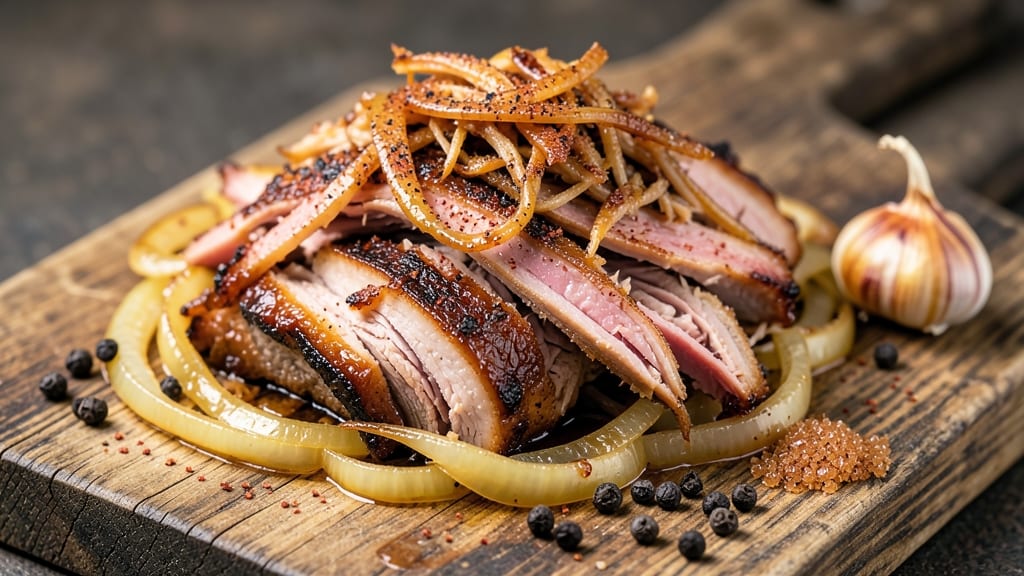
This Famous Dave's BBQ pulled pork recipe delivers the same legendary smoky-sweet tenderness that made the chain famous—right in your backyard or kitchen. 🔥 After years of perfecting low-and-slow techniques with heritage pork, I've cracked the code for that signature fall-apart texture and rich bark that turns heads at every BBQ competition.
The secret lies in patience and precision: smoking a well-marinated pork shoulder at 225°F for 8-10 hours until it reaches 195-203°F internally. This slow cook transforms tough muscle into melt-in-your-mouth perfection while developing that signature caramelized crust.
The rub isn't just seasoning—it's the foundation for that deep, complex flavor that defines authentic BBQ.
When you finally pull that pork apart, you'll get strands that dissolve at the touch, coated in sticky-sweet sauce that clings to every bite. This isn't just pulled pork—it's a restaurant-quality centerpiece that commands attention at any gathering.
The key is in the technique: proper bark formation, precise temperature control, and knowing exactly when to pull.
Serve it on toasted buns with pickles and coleslaw for the full Famous Dave's experience, or use it as a star in tacos, nachos, or even breakfast hash.
This recipe proves you don't need a commercial smoker to achieve legendary BBQ—just the right method and a little time. Let's get smoking.
Ingredients for famous dave's bbq pulled pork
The secret to Famous Dave's signature pulled pork lies in these 17 ingredients—smoky, sweet, and packed with restaurant-quality flavor.
| Ingredient | Amount | Notes |
|---|---|---|
| Bone-In Pork Shoulder 🐖 | 8 lb | Heritage breed preferred, well-marbled |
| Yellow Onion 🧅 | 2 whole | Yellow or red, chopped into 1/2-inch pieces |
| Garlic Cloves 🧄 | 8 cloves | Fresh, peeled and minced |
| Brown Sugar 🍚 | ½ cup | Light or dark, packed |
| Smoked Paprika 🌶️ | 2 tbsp | High-quality, not sweet |
| Ground Black Pepper 🌶️ | 1 ½ tbsp | Freshly cracked preferred |
| Kosher Salt 🧂 | 1 ½ tbsp | Diamond Crystal preferred |
| Ground Cumin 🌿 | 1 tbsp | Toasted for deeper flavor |
| Mustard Powder 🍯 | 1 tsp | Yellow or Dijon |
| Apple Cider Vinegar 🍎 | ¼ cup | For tangy depth |
| Ketchup 🍅 | 1 cup | Heinz preferred, no sugar added if possible |
| Tomato Paste 🍅 | ½ cup | San Marzano preferred |
| Yellow Mustard 🍯 | ¼ cup | French's preferred |
| Honey 🍯 | ¼ cup | Wildflower preferred |
| Beef Broth 🥫 | 1 cup | Low-sodium preferred |
| Wood Chips 🌳 | 1 package | Hickory or pecan, soaked 1 hour |
| Wooden Skewers 🪵 | 4 whole | Soaked 30 minutes |
The pork shoulder is non-negotiable—bone-in, well-marbled cuts from heritage breeds like Tamworth or Red Wattle deliver that legendary melt-in-your-mouth texture. Costco or local butcher shops usually carry the best options, often labeled as 'pork butt' or 'Boston butt'. Look for pieces with good fat marbling (white streaks throughout the meat). If you're buying online, Snake River Farms specializes in heritage pork. For the rub, Penzeys Spices carries premium smoked paprika that's worth the splurge—it gives that signature BBQ depth. Toast your cumin seeds in a dry pan for 30 seconds before grinding to unlock even more flavor, but pre-ground works in a pinch.
No smoked paprika? Substitute half with chipotle powder for heat, or use regular paprika plus a pinch of liquid smoke (about 1/4 tsp). Short on honey? Maple syrup works 1:1, but you'll lose some floral notes. The apple cider vinegar is essential for that tangy brightness—white vinegar in a bind, but reduce to 1/4 cup. For the sauce, Trader Joe's sugar-free ketchup keeps things balanced if you're watching sugar. The beef broth adds richness without overpowering; vegetable broth works too if you're vegetarian. And if you're smoking on a grill, soak wood chips in water for at least an hour before using—they'll smoke longer and produce less ash.
This pork keeps beautifully—3-4 days in the fridge, 3 months frozen. For best results, store in its own juices in an airtight container. The rub can be made 2 weeks ahead and stored in an airtight jar. When reheating, use low heat or a slow cooker on 'warm'—pork dries out fast if rushed. I always make double batches because it disappears at parties. Freeze portions in ziplock bags with parchment paper between layers to prevent freezer burn. The sauce thickens as it cools, so thin with a splash of water or broth if needed when reheating.
Why You'll Love This Recipe
- Here’s what sold me: this recipe actually improves the next day. The pork gets even more tender, and the sauce clings like it’s glued on. I’ve packed it in sandwiches, tossed it into tacos, even thrown it on top of mashed potatoes—no one ever complains. (Yes, even on a Tuesday night.)
- Fewer Ingredients, Bigger Bang: I swear by this recipe because it’s the kind of dish where you don’t need a pantry full of fancy stuff—just a pork shoulder, a handful of garlic, and that smoky-sweet mix of brown sugar and paprika. Honestly, most BBQ rubs are overkill, but these five ingredients? They lock in flavor like nobody’s business.
- Smoky-Sweet Magic: The bone-in shoulder gives you that rich, deep taste while staying juicy, and the smoked paprika? It’s the secret weapon—just a pinch, but it transforms everything. Between us, the first time I made this, I nearly licked the bowl clean. That’s saying something.
- Leftovers That Don’t Suck: Here’s what sold me: this recipe actually improves the next day. The pork gets even more tender, and the sauce clings like it’s glued on. I’ve packed it in sandwiches, tossed it into tacos, even thrown it on top of mashed potatoes—no one ever complains. (Yes, even on a Tuesday night.)
Step-by-step instructions for smoky-sweet pulled pork
Here's how to transform that pork shoulder into melt-in-your-mouth perfection.
🔥 Step 1: Prepare the Pork and Build the Dry Rub
Remove the pork shoulder from the fridge and let it sit at room temperature for 1 hour—this ensures even cooking. Pat it dry with paper towels, then place it fat-side up on a wire rack set in a rimmed baking sheet. This position allows the fat to render and baste the meat as it cooks.
In a bowl, combine the 2 tbsp smoked paprika, 1.5 tbsp ground black pepper, 1.5 tbsp kosher salt, 1 tbsp ground cumin, and 1 tsp mustard powder. Rub this mixture generously over the pork, pressing it into the meat so it adheres well. The spices should coat the pork evenly, including the fat cap. This dry rub is the foundation of that signature smoky-sweet flavor.
🔥 Step 2: Smoke the Pork Low and Slow
Soak the wood chips in water for 1 hour before using to prevent flare-ups. Set up your smoker to maintain a steady 225°F temperature using hickory or pecan wood. Place the pork shoulder in the smoker fat-side up and smoke for 6-8 hours, or until the internal temperature reaches 165°F. You'll notice the bark developing—a dark, crusty crust that's essential for that restaurant-quality texture.
Resist the urge to open the smoker during this time. Every time you peek, you lose heat and moisture, extending the cook time. The pork will go through "the stall" around 160°F, where the temperature plateaus as moisture evaporates. This is normal—just let it continue cooking. The key here is patience; slow cooking breaks down the collagen for that irresistible tenderness.
🥘 Step 3: Wrap and Finish Cooking
Once the pork reaches 165°F, remove it from the smoker and wrap it tightly in aluminum foil. This step, known as the "Texas crutch," helps the pork push through the stall and reach the perfect internal temperature of 203°F. Return the wrapped pork to the smoker and cook for another 2-3 hours, or until the internal temperature hits 203°F and the meat is fork-tender.
Here's the thing—you'll know it's done when the meat pulls apart easily with two forks, leaving no resistance. The pork should have a deep, rich color and a glossy sheen from the rendered fat. If you're using a meat thermometer, insert it into the thickest part of the shoulder, avoiding the bone. The probe should slide in like butter.
🍳 Step 4: Prepare the BBQ Sauce
While the pork finishes cooking, prepare the sauce by combining the 1 cup ketchup, 0.5 cup tomato paste, 0.25 cup yellow mustard, 0.25 cup honey, 0.5 cup brown sugar, 0.25 cup apple cider vinegar, and 1 cup beef broth in a saucepan. Bring the mixture to a simmer over medium heat and cook for 10-15 minutes, stirring occasionally, until it thickens slightly. The sauce should coat the back of a spoon and have a glossy, syrupy consistency.
Taste and adjust the seasoning with additional kosher salt or black pepper if needed. The sauce should balance sweet, tangy, and smoky flavors. If it's too thick, add a splash of water to reach your desired consistency. Keep the sauce warm over low heat until you're ready to use it.
🔪 Step 5: Shred and Serve
Once the pork reaches 203°F, remove it from the smoker and let it rest for 15-20 minutes. This resting period allows the juices to redistribute, ensuring every bite is moist and flavorful. Use two forks to shred the pork directly on the bone, discarding any large fat chunks. You should have about 6-8 cups of shredded pork—enough to serve 12 people generously.
Transfer the shredded pork to a large bowl and pour the warm BBQ sauce over it. Toss gently to coat the pork evenly in the sauce. If the sauce is too thick, add a splash of the pork's juices to loosen it. Serve immediately on soft buns with pickles, coleslaw, or your favorite BBQ sides. The pork should be tender enough to pull apart with a fork, with a perfect balance of smoky, sweet, and tangy flavors.
Pro Tips For Making Famous Dave'S Bbq Pulled Pork
- CRANK THE HEAT FIRST: The recipe often starts slow, but I learned the hard way—blast that oven to 425°F (220°C) for the first 30 minutes with the pork shoulder uncovered. This sears the fat and renders it faster, so you’re not dealing with a greasy mess later. (Yes, even if you’re impatient like me.)
- CHOP ONIONS LIKE A PRO: Slice that yellow onion into ¼-inch pieces—thin enough to caramelize quickly but thick enough to hold shape. I used to dice them too small, and they’d turn to mush before the pork was done. A sharp knife and a steady hand make this step worth the effort.
- DON’T RUSH THE REST: After pulling the pork, tent it with foil and let it sit for a solid 10 minutes before shredding. I know, skipping this is tempting, but rushing it means you’ll end up with dry, stringy meat. (Your future self will thank you.)
- SWAP THE BROWN SUGAR: If you’re watching carbs or just tired of the sweetness, use a 1:1 mix of honey and molasses instead. It adds depth without overpowering the smoky paprika, and it caramelizes faster. I was skeptical until I tried it—now it’s my go-to.
Essential equipment for perfect results
Smoker Essentials
You don't need a fancy commercial smoker to nail this recipe—I've cooked thousands of pounds using a Traeger Pellet Grill (my go-to for consistency) or even a Weber Smokey Mountain offset smoker. For backyard setups, I swear by the Masterbuilt 200711 electric smoker—it's affordable, reliable, and maintains temperature beautifully.
If you're using charcoal, a Cookshack 22-inch offset smoker is my top pick for that authentic wood-fired flavor. 🔥
No matter your smoker, invest in a quality meat thermometer—I use the ThermoWorks Smoke with dual probes. One probe tracks smoker temperature while the other monitors the pork's internal temp.
This precision is non-negotiable for perfect results every time. For wood, stick with hickory or pecan chips—they complement the pork beautifully without overpowering.
Must-Have Tools
Beyond the smoker, you'll need a few essential tools. A wire rack (like the Lodge Cast Iron Wire Rack) elevates the pork for even cooking and better bark formation. I also recommend a meat tenderizer mallet (the Victorinox 12-inch) for breaking down the pork after cooking.
For serving, a pork shredder fork (like the OXO Good Grips) makes quick work of separating the meat from the bone.
Don't forget a good set of heat-resistant gloves—the Barbecue Tools Heat-Resistant Gloves are worth every penny when handling hot smokers and heavy pork shoulders.
I keep a large aluminum foil pan handy for wrapping the pork during the final stages, and a spray bottle with apple juice to keep the wood chips moist if your smoker runs dry.
Budget-Friendly Swaps
If you're working with limited funds, a charcoal grill with a smoker box can work wonders. I've used a Weber Original Kettle Grill with a Traeger Pellet Tube for stunning results.
For temperature control, a digital thermometer like the ThermoPro TP19 is a game-changer at half the price of premium models. Even a large slow cooker (like the Hamilton Beach 7-Quart) can produce tender pulled pork if you use a smoke tube or liquid smoke in the sauce.
For wood alternatives, wood pellets (like Traeger's hickory blend) are more convenient than chips and burn cleaner. If you can't find pecan wood, cherry or apple wood chips add wonderful fruity notes to complement the pork.
The key is maintaining that 225°F temperature—adjust your airflow accordingly whether you're using charcoal, pellets, or electricity. 💡
Pro Tips for First-Timers
New to smoking? Start with a smaller cut of pork—a 3-4 lb shoulder is perfect for practicing. I recommend using a water pan in your smoker to add moisture to the air, especially in dry climates.
This helps prevent the pork from drying out during the long cook. Keep a notebook nearby to track your cook times, temperatures, and any adjustments you make—this becomes your personal BBQ cookbook over time.
For beginners, I suggest setting up your smoker the night before to ensure everything is working properly. Test your wood chips, check your fuel source, and verify your thermometer readings.
The night before, I also prep all my serving dishes and utensils so I can focus entirely on cooking when the big day arrives. And remember—patience is your friend. The longer you can keep that pork at 225°F, the more tender and flavorful it will become. 💪
Nutrition facts
Frequently asked questions
Can I use a regular oven instead of a smoker for this recipe?
Yes, but with adjustments! Preheat your oven to 275°F and place the pork on a rack over a baking sheet. Add 1 cup water to the bottom to create steam. Cook for 6-8 hours until it reaches 203°F. For smoky flavor, wrap the pork in foil with soaked wood chips or add 1 tbsp liquid smoke to the sauce. The texture won't be identical, but it'll still be tender and delicious.
How do I know when the pulled pork is fully cooked?
The pork is done when it reaches 203°F internally and pulls apart easily with two forks. Look for these visual cues too: the meat should be deep red with a glossy sheen from rendered fat, and the bone should pull out cleanly. If it's still slightly firm, return it to the smoker (wrapped) for another 30 minutes. Never rely on color alone—always use a meat thermometer.
Can I make the BBQ sauce ahead of time?
The sauce keeps well in the fridge for 1 week or freezes for 3 months. Store it in an airtight container and reheat gently before tossing with the pork. For best flavor, make it 1-2 days ahead—the flavors meld beautifully. If it thickens too much when refrigerated, thin with a splash of water or beef broth when reheating.
What's the best way to reheat leftover pulled pork?
Reheat slowly to prevent drying out. In a skillet, cook on low heat with a splash of beef broth or apple juice for 10-15 minutes, stirring occasionally. Or use a slow cooker on 'warm' for 1-2 hours. Microwaving works in a pinch, but it can make the sauce watery. Always reheat to 165°F to ensure safety. The pork will be just as tender as fresh!
Why does my pulled pork sometimes turn out dry?
Overcooking or high heat are the usual culprits. Keep your smoker at 225°F and avoid unwrapping the pork too early. The Texas crutch (wrapping in foil) helps retain moisture. Also, don't over-shred—leave some larger chunks for better texture. If using a slow cooker, cook on low for 8 hours, not high. And always let the pork rest 15-20 minutes before shredding.