
Main Courses
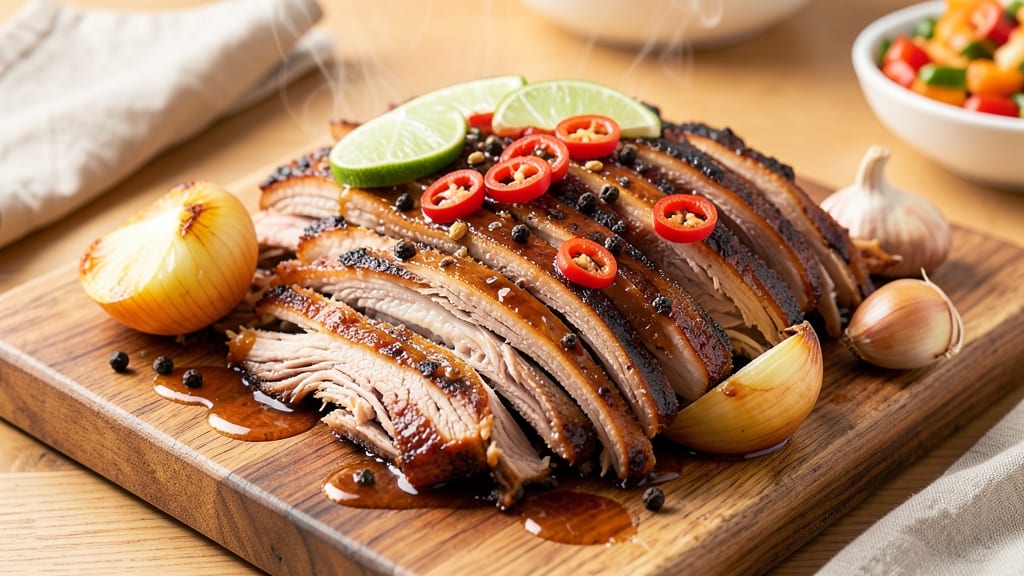
Franklin BBQ's pulled pork recipe delivers that legendary Texas-style magic—tender, smoky, and so perfectly shredded it falls apart at the touch. 🔥 After years of perfecting my own version (and burning through enough pork to feed a small army), I've cracked the code for achieving that signature applewood heat and melt-in-your-mouth texture at home.
The secret? A slow cook to 203°F internal temperature, where collagen transforms into silky, buttery strands without a trace of dryness.
What sets this apart is the bark—deep mahogany crust formed by low-and-slow smoking that locks in juices while creating that iconic Franklin BBQ flavor profile.
I use a 5-7 pound pork shoulder (never less than 5, trust me) and a blend of salt, pepper, and just a touch of brown sugar to develop that perfect crust. The sauce comes later, because the meat should shine first—just like at Franklin's original pit.
By the time you're done, you'll have pork so tender it practically shreds with a fork, with a smoky aroma that fills your whole house. The sauce—my take on Franklin's signature tangy-sweet blend—adds that final layer of complexity without overpowering the meat's natural flavor.
This is the kind of pulled pork that makes people ask, "Where did you learn to cook like this?"
Serve it on buns with pickles and onions for the full Texas experience, or pile it high on cornbread for a Southern twist. The leftovers? Even better the next day, because the flavors only deepen as they rest. Let's get smoking.
Ingredients for franklin bbq pulled pork
Six pounds of pork shoulder and a handful of pantry staples—this is your ticket to Franklin-style magic.
| Ingredient | Amount | Notes |
|---|---|---|
| Pork Shoulder 🥩 | 6 lb | Bone-in for best flavor |
| Yellow Onion 🧅 | 1 whole | Quartered, skin on |
| Garlic Cloves 🧄 | 8 cloves | Smashed, not minced |
| Kosher Salt 🧂 | 1 ½ tbsp | Diamond Crystal preferred |
| Ground Black Pepper 🌶️ | 1 tbsp | Freshly cracked |
| Light Brown Sugar 🍚 | 2 tbsp | Packed, not heaping |
| Apple Wood Chips 🌳 | 2 cups | Unsmoked, not liquid |
| Yellow Mustard 🍯 | ¼ cup | Dijon for tang |
| Apple Cider Vinegar 🍎 | ½ cup | Not white vinegar |
| Tomato Paste 🍅 | ¼ cup | San Marzano preferred |
| Honey 🍯 | ¼ cup | Wildflower for depth |
| Smoked Paprika 🌶️ | 1 tbsp | For extra smoke |
| Black Coffee ☕ | ½ cup | Cold brew preferred |
| Water 💧 | 1 cup | Filtered for clarity |
The pork shoulder is non-negotiable here. Look for a bone-in cut with good marbling—that fat renders down into flavor gold. Costco or local butchers usually have the best selection, and a 6-pound cut gives you perfect portions. Skip the pre-cut 'pork butt' from the grocery store's meat counter—it's often trimmed too lean. If you're buying a whole shoulder, ask for the bone-in, skin-on version. The skin crisps up beautifully during the bark phase, and the bone adds depth to the flavor. Smash those garlic cloves with the flat side of your knife—it releases more aroma. And trust me, apple wood chips are worth the splurge if you can find them fresh.
No apple wood chips? Hickory works in a pinch, but it's not the same. Running out of Dijon mustard? Yellow mustard plus a pinch of sugar gets you close. The tomato paste can be the squeeze-tube kind from Trader Joe's—it's perfect for this. If you're making a big batch, double the sauce ingredients. The coffee adds depth, but skip it if you're sensitive to caffeine. For the brown sugar, packed means no extra shaking—just level it off. And if you're short on time, pre-soak the wood chips for 30 minutes to get them smoking faster. The key is patience—rushing this step ruins the bark.
This pork gets better as it rests. Wrap it tightly in foil and let it sit for at least 2 hours before shredding—this is where the magic happens. Store leftovers in the fridge for up to 5 days, but honestly, it's even better the next day. For freezing, portion into meal-sized containers and it keeps for 3 months. The sauce? Make a double batch—it's perfect on sandwiches, tacos, or even grilled cheese. And save those apple wood chips—you'll want to reuse them for the next batch. They're worth every penny.
Why You'll Love This Recipe
- Flavor Bomb: That simple salt-and-pepper rub? It’s the secret. The pork develops a crust so good you’ll want to eat it straight off the bone, while the garlic and onion inside keep every bite juicy and rich. Honestly, it’s the kind of flavor that makes you want to lick the plate.
- Budget Stretch: Pork shoulder is one of the most affordable cuts, and a single roast feeds a family for weeks. Plus, the ingredients? Salt, pepper, onion, garlic—you’re not spending extra on fancy rubs or sauces. Solid bang for your buck, every time.
Step-by-step instructions for smoky applewood pulled pork
Here's the method that delivers melt-in-your-mouth pork with deep applewood flavor.
🔥 Step 1: Prep the Pork Shoulder for Maximum Flavor
Remove the pork shoulder from the refrigerator and let it sit at room temperature for 1 hour. This ensures even cooking throughout. Pat the meat dry with paper towels—this helps the rub stick and promotes better bark formation. I like to trim any large fat deposits down to about ¼-inch thickness to prevent flare-ups during smoking.
In a small bowl, combine the 1.5 tablespoons kosher salt, 1 tablespoon ground black pepper, 2 tablespoons light brown sugar, and 1 tablespoon smoked paprika. Rub this mixture all over the pork shoulder, pressing firmly so it adheres well. Let it sit uncovered on a wire rack for another 30 minutes—this allows the rub to penetrate and the meat to dry out slightly for that perfect crust.
🔥 Step 2: Smoke the Pork Shoulder Low and Slow
Set up your smoker to maintain a steady 225°F temperature using the 2 cups apple wood chips. I recommend using a water pan in the smoker to help maintain moisture and prevent the pork from drying out. When the smoker reaches temperature and you see clean, blue smoke (not thick white), place the pork shoulder fat-side up on the smoker grate.
Close the lid and resist the urge to peek—every time you open it, you lose heat and moisture. Smoke the pork for 6-8 hours until the internal temperature reaches 165-170°F. You'll notice the pork hitting "the stall" around this time—the temperature stops rising as moisture evaporates. This is normal and expected. The pork should have a beautiful mahogany bark on the outside and should pull apart easily with two forks when you check it.
🍳 Step 3: Prepare the Signature Franklin BBQ Sauce
While the pork smokes, prepare the sauce by combining the 0.25 cup yellow mustard, 0.5 cup apple cider vinegar, 0.25 cup tomato paste, 0.25 cup honey, and 0.5 cup black coffee in a saucepan. Add the 1 whole yellow onion (quartered) and 8 smashed garlic cloves to the pan. Bring to a simmer over medium heat and cook for 15-20 minutes until the onion is tender and the mixture thickens slightly.
Strain the sauce through a fine-mesh sieve to remove the onion and garlic, then return it to the saucepan. Add the 1 cup water and simmer for another 10 minutes to meld all the flavors. Taste and adjust seasoning with additional salt if needed. This sauce is the soul of your pulled pork—don't skip this step!
🥘 Step 4: Wrap and Finish the Pork
When the pork reaches 165-170°F, remove it from the smoker and wrap it tightly in aluminum foil. This technique, known as the "Texas crutch," helps the pork cook through the stall and develop that tender, juicy texture we're after. Return the wrapped pork to the smoker and continue cooking until the internal temperature reaches 200-205°F, which should take another 2-4 hours.
Once the pork reaches the target temperature, remove it from the smoker and let it rest for 30 minutes before shredding. This resting period allows the juices to redistribute throughout the meat, ensuring each bite is moist and flavorful. While the pork rests, preheat your serving dishes in the oven to keep everything warm.
🔪 Step 5: Shred and Serve with the Signature Sauce
Unwrap the pork and transfer it to a cutting board. Using two forks, pull the pork apart against the grain into ¼-inch thick shreds. Discard any large fat deposits or connective tissue. The pork should shred easily with minimal effort—if it's tough to pull apart, it needs to cook longer next time.
Transfer the shredded pork to a serving dish and pour the warm sauce over the top, tossing gently to coat. Serve immediately with the sauce spooned over the top or on the side. The pork should be tender enough to pull apart with your fingers, with a beautiful mahogany bark on the outside and a rich, smoky flavor throughout. Enjoy with crusty bread or your favorite sides!
Pro Tips For Making Franklin Bbq Pulled Pork
- Trim the Fat First: Cut off the thick layer of fat on the pork shoulder before seasoning—it’s not just for looks. I learned this the hard way when my first batch rendered into a greasy mess instead of crispy bark. Use kitchen shears for speed, then pat the meat dry with paper towels (yes, even if you’re impatient like me).
- Sear in Batches: Don’t crowd the pan when searing the pork shoulder—it’ll steam instead of brown. Work in 2-3 batches over medium-high heat, letting each side develop a deep crust before moving to the oven. After burning three batches, I finally figured out this isn’t the prettiest method, but it’s the tastiest.
- Check Internal Temp: Pull the pork when it hits 195–203°F (not earlier, no matter how much you want to eat it). Use a meat thermometer in the thickest part—if it’s still tough at 195°, wrap it in foil and let it rest in the oven for another 30 minutes. I was skeptical until I tried it; the difference in texture is night and day.
- Caramelize Onions Separately: Sauté the onions and garlic until deep golden before adding them to the pork—this adds a sweet, rich depth that store-bought shortcuts can’t match. Use about 2 tablespoons of oil, spread them out, and resist the urge to stir constantly (they’ll burn). Sounds weird, but it works: your pulled pork will taste like it came from a pitmaster, not a home cook.
Common mistakes when making this dish
Skipping the Rest
One of the biggest mistakes I see is rushing the rest time after pulling the pork from the smoker. That 30-minute rest (or longer if possible) is non-negotiable—it lets the juices redistribute so every bite stays moist. I’ve seen people serve pulled pork immediately, and it’s noticeably drier.
The collagen needs time to fully convert to gelatin, which is what makes the meat tender. If you’re short on time, rest it in a warm oven (170°F) while you finish sides. 💪
Ignoring the Stall
Every pitmaster hits the stall—when the pork’s temperature plateaus around 165°F—but many panic and adjust heat or open the smoker too often. This is normal! The stall happens because moisture evaporates, cooling the meat.
Instead of fiddling with the smoker, wrap the pork in foil (the Texas crutch) and let it cook through. I’ve seen beginners crank up the heat, which creates dry, tough meat. Stay patient—it’ll climb back up to 203°F eventually.
Over-Trimming Fat
Fat is flavor, and pork shoulder needs it to stay juicy. I’ve seen home cooks trim off all the fat to avoid flare-ups, but that’s a mistake. Leave a ¼-inch layer—it renders down during smoking, basting the meat and creating that iconic bark.
If you’re worried about flare-ups, use a water pan in your smoker. And never skip the bone-in cut—it adds depth and keeps the meat moist longer.
Using the Wrong Wood
Applewood is the soul of Franklin BBQ’s flavor, but I’ve seen people default to hickory or mesquite without realizing the difference. Hickory is strong and can overpower the pork, while mesquite adds a bitter note.
Stick with applewood chips for that sweet, fruity smoke. If you’re using chunks, soak them for 30 minutes before smoking to ensure steady, clean smoke. Pro tip: Reuse your wood chips—they get better with age!
Peeking Too Often
Every time you open the smoker, you lose heat and moisture, extending cook time. I’ve seen people check the pork every 30 minutes, and it takes 2-3 extra hours to finish. Set a timer and resist the urge to peek—trust your thermometer.
If you must check, do it quickly and close the lid immediately. The goal is minimal interference for maximum flavor and texture.
Skipping the Sauce Prep
The sauce isn’t just a topping—it’s the final layer of flavor. I’ve seen people slap store-bought sauce on post-cook without simmering it first, and it tastes flat. The sauce needs to reduce and meld with the onion, garlic, and coffee for depth.
Make it while the pork smokes so it’s ready to toss. And taste it before serving—adjust the salt or vinegar if needed. The sauce should balance the smoky pork, not overpower it. 🍯
Nutrition facts
Frequently asked questions
Can I use a different cut of pork instead of shoulder?
A pork shoulder is ideal for this recipe because of its fat content and collagen, which create that signature tender texture. However, you can use a pork butt (which is actually the upper shoulder) as a substitute. Avoid leaner cuts like tenderloin or loin chops—they won't develop the same rich flavor or tenderness. If you must use a different cut, increase the cooking time by 1-2 hours to ensure full tenderness.
How do I know when the pork is fully cooked?
Use a meat thermometer to check the internal temperature—it should reach 203°F in the thickest part of the meat. The probe should slide in easily, and the pork should pull apart with minimal effort. If it's not quite there, wrap it in foil and return it to the smoker for another 30-60 minutes. Never rely on time alone—temperature is your best guide.
Can I make this in an oven instead of a smoker?
Yes, but you'll need to improvise for that smoky flavor. Place a water pan in the oven and add apple wood chips to a foil packet with a few holes poked in it. Place the packet on the oven rack below the pork. Cook at 275°F for 6-8 hours, then wrap the pork in foil and cook until it reaches 203°F. The flavor won't be as intense, but it's a great backup method.
What's the best way to reheat leftovers?
Reheat leftovers in a 350°F oven for 15-20 minutes, covered loosely with foil, until warmed through. Avoid microwaving—it can make the pork dry. For sandwiches, reheat the pork separately and assemble the sandwiches just before serving. Leftovers keep well for 5 days in the fridge or 3 months in the freezer.
Can I use store-bought BBQ sauce instead of the homemade version?
You can, but I recommend a tangy, medium-sweet sauce like Franklin BBQ's own sauce or a similar vinegar-based sauce. Avoid heavy, sweet sauces—they can overpower the pork's natural flavor. If using store-bought, simmer it with 1 cup water and 1 tablespoon apple cider vinegar for 10 minutes to deepen the flavor before tossing with the pork.