
Main Courses
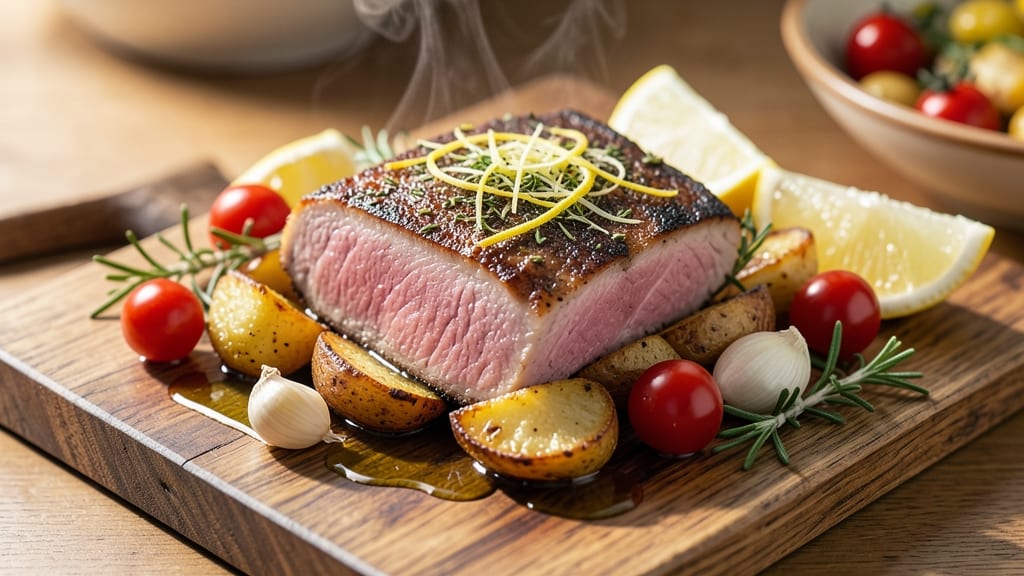
This Mediterranean pork loin recipe transforms a simple roast into a restaurant-worthy centerpiece with crispy edges and aromatic herb crust. 🌟 After years of perfecting roasting techniques at The Smoky Pig, I've developed a method that balances tender meat with bold flavors—no fancy equipment required.
The secret lies in a marinade of lemon, garlic, and Mediterranean herbs that infuses every bite while creating that coveted caramelized crust.
The recipe begins with a 30-minute marinade that tenderizes the pork while building layers of flavor—bright lemon, pungent garlic, and earthy rosemary.
You'll roast it at high heat to achieve those crispy edges while keeping the interior juicy, a technique I've refined through hundreds of pounds of pork at my restaurant. The result is a dish that's elegant enough for dinner parties but simple enough for weeknight meals.
What makes this recipe stand out is how it captures Mediterranean essence without being overly complicated. The herb crust adds texture and aroma, while the lemon-garlic marinade ensures each slice is packed with bright, fresh flavors.
This isn't just another pork roast—it's a dish that transports you to a sunlit table in Greece or Italy with every bite.
Serve with roasted Mediterranean vegetables, a simple grain salad, or crusty bread to soak up the juices. The leftovers reheat beautifully, making this an ideal meal for feeding a crowd or preparing ahead. Let's get started on creating your perfect herb-crusted roast.
Ingredients for mediterranean pork loin
Six ingredients transform this pork loin into a Mediterranean masterpiece with crispy edges and aromatic herb crust.
| Ingredient | Amount | Notes |
|---|---|---|
| Center-Cut Pork Loin 🍖 | 2 ½ lb | Bone-in, 1.5-inch thick |
| Fresh Lemon Juice 🍋 | ½ cup | From 2-3 lemons, freshly squeezed |
| Garlic Cloves 🧄 | 8 cloves | Smashed, not minced |
| Extra-Virgin Olive Oil 🫒 | ⅓ cup | High-quality, fruity variety |
| Fresh Rosemary 🌿 | ¼ cup | Finely chopped, stems removed |
| Fresh Thyme Leaves 🌿 | 2 tbsp | From 4-5 sprigs, stems removed |
| Dried Oregano 🍃 | 1 tsp | Mediterranean blend preferred |
| Diamond Crystal Kosher Salt 🧂 | 2 tsp | For marinade and crust |
| Freshly Ground Black Pepper 🌶️ | 1 tsp | Coarsely ground |
| All-Purpose Flour 🌾 | ¼ cup | For herb crust |
| Panko Breadcrumbs 🍞 | ¼ cup | For extra crunch |
| Unsalted Butter 🧈 | 2 tbsp | Cold, cubed for crust |
The pork loin makes all the difference here—center-cut, bone-in, and 1.5 inches thick ensures even cooking and maximum flavor. Look for a piece with good marbling at Whole Foods or your local butcher shop. If you can't find bone-in, a boneless loin works too, but trim excess fat to avoid flare-ups. The herb crust needs that fat to render for crispiness, so don't skip it. For a restaurant-quality roast, butcher-cut loins from specialty markets are worth the splurge—they're often pre-portioned and ready to cook.
No fresh rosemary? Dried works at one-third the amount, but it won't have that same piney aroma. The lemon juice can be bottled, but fresh is brighter—Trader Joe's sells organic lemons year-round if you're in a pinch. For the herb crust, panko plus flour gives you the perfect texture, but if you've got crushed cornflakes, they add a nice crunch too. Short on butter? Olive oil works too, but butter gives that golden crust. The garlic should be smashed—not minced—so it infuses the meat without turning it mushy.
Marinate the pork for no more than 30 minutes—longer can make it tough. Store any unused marinade in the fridge for up to 3 days, but don't reuse it for cooking. The herb crust keeps well in the fridge for 2 days if wrapped tightly in plastic. For leftovers, reheat in a 350°F oven with a splash of water to keep it moist. This roast reheats beautifully—even better the next day once the flavors meld. Freeze portions for up to 3 months if you're prepping ahead.
Why You'll Love This Recipe
- One-Pan Magic: That’s right—just the pork, a splash of lemon, a few garlic cloves, and a sprig of rosemary. No chopping, no fussing, no extra dishes. The olive oil does all the work while you sip wine and pretend you’re on a Greek island.
- Herb-Citrus Bomb: The rosemary and lemon juice turn this pork into something ridiculously good—bright, aromatic, with that perfect balance of savory and zing. Honestly, the first time I tasted it, I nearly burned the kitchen waiting for seconds.
- Weeknight or Fancy Feast: Same recipe, different vibes. Toss it on the table with crusty bread for a lazy Sunday brunch or plate it with roasted veggies for a dinner that feels special. Between us, it’s the kind of dish that works for both.
- Leftovers That Don’t Suck: Slice it cold the next day, and it’s still delicious—great for wraps, salads, or even a quick pasta toss. (Yes, even on a Tuesday night.) And since pork loin is budget-friendly, you’re not breaking the bank for a meal that feeds four.
Step-by-step instructions for herb-crusted Mediterranean pork loin
Here's how to transform simple ingredients into a showstopping roast with perfect crispy edges.
👨🍳 Step 1: Create the Lemon-Garlic Marinade
In a bowl, whisk together the 0.5 cup fresh lemon juice, 0.33 cup extra-virgin olive oil, 2 tsp diamond crystal kosher salt, and 1 tsp freshly ground black pepper. This bright, zesty base is what makes Mediterranean flavors pop. Add the 8 smashed garlic cloves and mix until they're fully incorporated—you'll smell that aromatic punch immediately.
Next, stir in the 0.25 cup finely chopped fresh rosemary and 2 tbsp fresh thyme leaves, plus the 1 tsp dried oregano. The herb combination gives this pork that classic Mediterranean character. Pour the marinade into a large resealable bag and add the 2.5 lb center-cut pork loin. Seal the bag and massage the marinade all over the meat, making sure it gets into every crevice. Refrigerate for at least 4 hours (overnight is even better)—this ensures deep flavor penetration and tender meat.
👨🍳 Step 2: Build the Herb Crust
After marinating, remove the pork from the fridge and let it sit at room temperature for 30 minutes. This prevents shocking the meat when it hits the hot oven. Pat the pork dry with paper towels—this is crucial for that perfect crispy crust. In a separate bowl, combine the 0.25 cup all-purpose flour, 0.25 cup panko breadcrumbs, and the 2 tbsp cold cubed unsalted butter. Rub this mixture all over the pork, pressing firmly so it adheres well.
Here's the thing—don't skip pressing the crust on. I press down gently on the pork with my fingers, making sure every inch gets coated. This ensures maximum crispiness when it roasts. Place the coated pork on a wire rack set inside a rimmed baking sheet—this allows hot air to circulate underneath for even cooking.
🔥 Step 3: Roast to Golden Perfection
Preheat your oven to 425°F while the pork comes to room temperature. When ready, roast the pork loin for 25 minutes. After this initial sear, reduce the oven temperature to 350°F and continue roasting for another 30-35 minutes. You're aiming for an internal temperature of 145°F when measured with an instant-read thermometer in the thickest part of the meat.
Watch for that beautiful golden-brown crust forming—this is your signal that it's getting crispy. If you notice the crust browning too quickly, tent the pork loosely with foil to prevent burning while it finishes cooking. The high initial heat creates that crispy exterior we're after, while the lower temperature ensures the interior stays juicy.
⏰ Step 4: Rest and Slice
Remove the pork from the oven and let it rest on a cutting board for 15 minutes. This resting period is non-negotiable—it allows the juices to redistribute throughout the meat. If you skip this, you'll end up with dry slices. While it rests, tent it loosely with foil to keep it warm.
Slice the pork against the grain into ½-inch thick pieces. Each slice should have that gorgeous crispy crust on the outside and tender, juicy meat inside. The lemon-herb marinade should be detectable in every bite, with a perfect balance of bright citrus and earthy herbs. Serve immediately with roasted vegetables or a fresh Mediterranean salad to complete the meal.
Pro Tips For Making Mediterranean Pork Loin
- Sear First, Then Roast: Hit the pork loin with a screaming-hot pan—no oil yet—until it’s golden in spots. This locks in juices before the olive oil bath. I used to skip this and ended up with bland, dry meat that tasted more like a slow cooker experiment.
- Zest the Rosemary: Tear the rosemary sprigs with your hands (don’t chop them) and rub the leaves and the woody stems over the pork. The stems add depth, and the texture stays intact. I learned this the hard way after my first batch tasted like I’d used a sprig of twigs instead of herbs.
- Don’t Overcrowd the Pan: If you’re searing multiple pieces, work in batches—even if it means an extra 2 minutes. Crowding steams the pork instead of browning it, and you’ll end up with a sad, pale slab. Trust me, your future self will notice the difference.
- Acid First, Oil Last: Whisk the lemon juice and garlic into the olive oil after searing, not before. The acid cuts through fat better when it’s hot, and the garlic infuses faster. I was skeptical until I tried it—now it’s non-negotiable for bright, flavorful pork.
Storing and reheating your leftovers
Refrigerator Storage
Store your cooked Mediterranean pork loin in an airtight container with a splash of fresh lemon juice to keep it moist. I like using glass Pyrex containers because they preserve flavor better than plastic.
Keep it refrigerated for up to 4 days—the flavors actually deepen overnight as the herbs meld together. Always let it cool completely before storing to prevent condensation, which can make the meat soggy. 💪
Freezer Prep Tips
For longer storage, wrap the pork tightly in plastic wrap first, then place it in a freezer bag with 1 inch of headspace to prevent freezer burn. Label with the date—this roast stays delicious for up to 3 months.
When ready to eat, thaw it overnight in the fridge for even cooking. I've found that freezing works best when the meat is fully cooled and wrapped airtight. 🥶
Oven Reheating
My preferred method is reheating in a 350°F oven for 10-15 minutes with a ¼ cup of water or broth in the pan. This keeps the crust crispy while warming the meat evenly.
Cover loosely with foil to prevent drying, but uncover for the last 2 minutes to maintain that golden texture. The lemon-herb flavors come alive when reheated properly—it's almost as good as fresh! 🔥
Microwave Shortcut
For quick meals, use the microwave on 50% power for 2-3 minute intervals, stirring between each. Add 1-2 tablespoons of water to prevent drying. This method works best for small portions—larger pieces may not reheat evenly. The texture won't be as crispy, but it's perfect for busy weeknights. 💡
Leftovers Magic
Turn leftover pork into Mediterranean pork sandwiches with tzatziki sauce and crusty bread, or chop it for pasta dishes with tomato sauce and olives.
The herb crust adds amazing texture to grain bowls too. I often make extra just for these creative uses—the flavors only get better with time. 🌟
Crust Preservation
To maintain that crispy crust when reheating, broil the pork for 2-3 minutes at the end of any reheating method. Just watch it closely—broiling can happen fast!
A quick blast of heat restores that golden crunch while keeping the inside juicy. This is my secret for restaurant-quality leftovers every time. ✨
Nutrition facts
Frequently asked questions
Can I use boneless pork loin instead of bone-in?
Yes, boneless pork loin works perfectly! Just trim any visible fat to prevent flare-ups during roasting. The bone-in version adds extra flavor, but boneless is more convenient for slicing and serves well with Mediterranean sides like roasted vegetables or a fresh salad.
How do I adjust the recipe for a smaller crowd?
For 4 servings, reduce the pork to 1.5 lb and halve all marinade ingredients. The cooking time remains the same—just monitor for 145°F internal temperature. Keep the herb crust proportions identical for maximum flavor impact.
Can I grill this Mediterranean pork instead of roasting?
Grill over medium-high heat for 10-12 minutes per side, basting with extra marinade. For crispy edges, finish under a broiler for 2-3 minutes. The herb crust works beautifully on the grill too—just press it on firmly before cooking.
What if my pork loin comes out dry?
Dry pork usually means overcooking or skipping the rest time. Always use a meat thermometer (145°F internal temp) and let it rest 15 minutes before slicing. For extra moisture, brush with olive oil during the last 5 minutes of cooking.
Which Mediterranean sides pair best?
Try roasted eggplant and zucchini with olive oil and oregano, or a quinoa salad with cucumbers, feta, and lemon. For a complete meal, add warm pita bread and tzatziki sauce**—the herbs complement the pork beautifully.