
Main Courses
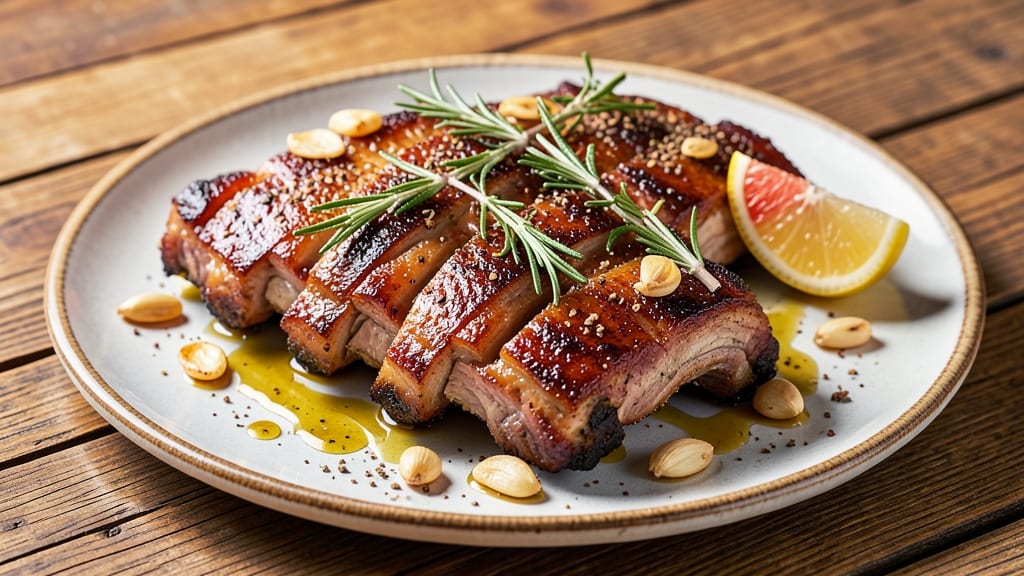
This Mediterranean pork ribs recipe transforms simple pork into tender, herb-infused masterpieces with a bright lemon glaze that'll have your guests reaching for seconds. 🌟 I developed this technique after years of perfecting Mediterranean flavors in my Charleston kitchen, where the scent of lemon and rosemary fills the air as soon as the ribs hit the grill.
The secret lies in the marinade—a blend of garlic, oregano, and lemon that tenderizes while building layers of aromatic flavor.
What sets these ribs apart is the two-stage cooking process: slow-braising to melt the connective tissue, followed by a high-heat finish to create that signature Mediterranean crunch.
The zesty lemon glaze, brushed on during the last minutes of cooking, adds a tangy contrast that cuts through the richness of the meat. This method delivers restaurant-quality results without requiring a professional kitchen—just a good oven or grill and about 3 hours of hands-off time.
By the time you serve these ribs, you'll have perfectly tender meat with crisp edges, all coated in that bright, herby glaze. The aroma alone will make your home smell like a Mediterranean taverna, while the flavors deliver that perfect balance of smoky, tangy, and aromatic.
These ribs work beautifully as a centerpiece for family dinners or festive gatherings, and they pair perfectly with crusty bread to soak up every last bit of that delicious glaze.
The beauty of this recipe is its versatility—serve it with a Greek salad for a complete meal, or pair it with roasted vegetables and a crisp white wine to elevate any occasion.
The technique scales easily, so whether you're cooking for four or twelve, these Mediterranean pork ribs will become your new signature dish. Let's get started on creating something truly memorable.
Ingredients for mediterranean pork ribs
Herb-infused ribs with a zesty lemon glaze—just eight ingredients transform simple pork into Mediterranean magic.
| Ingredient | Amount | Notes |
|---|---|---|
| Pork Ribs 🍖 | 3 lb | Baby back ribs preferred |
| Fresh Rosemary 🌿 | ½ cup | Chopped, stems removed |
| Garlic Cloves 🧄 | 6 cloves | Minced for marinade |
| Dried Oregano 🍃 | 2 tbsp | Mediterranean blend preferred |
| Lemon Juice 🍋 | ½ cup | Freshly squeezed |
| Olive Oil 🫒 | ¼ cup | Extra-virgin for richness |
| Honey 🍯 | ¼ cup | Wildflower preferred |
| Salt 🧂 | 2 tbsp | Diamond Crystal preferred |
| Black Pepper 🌶️ | 1 tbsp | Freshly ground |
| Red Wine Vinegar 🍷 | 2 tbsp | For tangy balance |
| Butter 🧈 | ½ cup | Unsalted, melted |
| Zest of 1 Lemon 🍋 | 1 tbsp | For bright finish |
| Crushed Red Pepper 🌶️ | ½ tsp | Optional for heat |
The ribs are the star, so baby back ribs are ideal—they're meatier and more flavorful than spare ribs. I always grab mine from Costco or my local butcher shop, where they cut them fresh. Look for ribs with good marbling and bright red color. Fresh rosemary is non-negotiable here—it's the heart of that Mediterranean aroma. If you can't find it fresh, dried works in a pinch (use half the amount), but trust me on the fresh stuff. The garlic should be fresh too—those minced garlic jars just don't cut it for this recipe.
No fresh rosemary? Dried rosemary at half the amount works, but you'll lose some of that piney depth. Short on honey? Maple syrup is a great swap, though it'll add a slightly different flavor profile. The red wine vinegar can be swapped for balsamic vinegar if you prefer a sweeter tang. For the glaze, if you're avoiding honey, agave nectar works well too. The butter in the glaze is key—don't skip it. It adds richness that cuts through the acidity of the lemon. If you're feeling adventurous, add a pinch of smoked paprika to the marinade for an extra layer of complexity.
Marinate the ribs overnight for maximum flavor—it's worth the wait. Store the marinade in a sealed container in the fridge. The ribs themselves can be prepped a day ahead and kept in the fridge, sealed in a bag with the marinade. For the glaze, make it fresh before serving so it stays bright. These ribs reheat beautifully—just wrap them in foil and warm in the oven for 15 minutes. They're even better the next day, so make extra if you can. The glaze keeps for 3 days in the fridge, so you can make it ahead too.
Why You'll Love This Recipe
- One-Pan Magic: I swear by this recipe when I’m too wiped to scrub pots—just ribs, rosemary sprigs, and a splash of lemon juice on a sheet pan. The garlic and oregano do all the heavy lifting while you sip wine and pretend you’re on vacation.
- Herb Bomb Flavor: That crispy rosemary crust? Chef’s kiss. The lemon juice cuts through the richness, and the oregano gives it that sun-drenched Mediterranean vibe—like a bite of Greece without the plane ticket. My picky teen actually licks the plate.
- Weeknight or Guest Night: Same recipe, endless uses. Slap these on the table for a lazy Sunday brunch with eggs, or double the batch for a crowd (they disappear faster than my willpower at a bakery). The leftovers? Even better cold in salads—yes, really.
- Budget-Friendly Feast: Pork ribs are cheaper than chicken thighs at my grocery store, and this recipe stretches them far. A handful of fresh rosemary and a few cloves of garlic make it feel fancy, but the cost? Ridiculously low. My wallet and my taste buds win.
Step-by-step instructions for Mediterranean pork ribs
Let's create ribs with a perfect balance of Mediterranean herbs and zesty lemon glaze.
👨🍳 Step 1: Make the Herb Marinade
In a large bowl, combine the 0.5 cup chopped fresh rosemary, 6 minced garlic cloves, 2 tbsp dried oregano, 0.5 cup lemon juice, 0.25 cup olive oil, 0.25 cup honey, 2 tbsp salt, 1 tbsp black pepper, and 2 tbsp red wine vinegar. Mix until the rosemary is fully distributed and the marinade has a vibrant green hue.
Here's the thing—this marinade does double duty as both flavor enhancer and tenderizer. The acidity from the lemon juice and vinegar helps break down the tough rib fibers, while the honey adds natural sweetness that caramelizes beautifully during cooking. Let the marinade sit for 5 minutes to allow the flavors to meld before using.
🥘 Step 2: Coat and Marinate the Ribs
Pat the 3 lb pork ribs dry with paper towels—this ensures the marinade sticks and promotes better browning. Place the ribs in a large resealable plastic bag and pour the marinade over them. Seal the bag and massage the marinade into the ribs, making sure every surface is coated. This step is crucial for even flavor distribution.
Refrigerate the bagged ribs for at least 4 hours (overnight is even better). I like to flip the bag every few hours to ensure all sides get equal marinating time. The longer they marinate, the more tender and flavorful they'll become—just don't exceed 24 hours as the acidity can start to break down the meat too much.
🔥 Step 3: Preheat and Sear the Ribs
Preheat your oven to 300°F and place a rack in the lower third of the oven. Line a baking sheet with aluminum foil and place a wire rack on top. This setup allows heat to circulate evenly around the ribs for perfect cooking.
Remove the ribs from the marinade (reserve the marinade for basting) and place them on the wire rack, bone-side down. Transfer the baking sheet to the preheated oven and bake for 2 hours. After 1 hour, brush the ribs with the reserved marinade and flip them bone-side up. This basting step adds extra flavor and helps create that beautiful caramelized crust.
🍳 Step 4: Create the Lemon Glaze
While the ribs are baking, make the lemon glaze by combining 0.5 cup melted butter, 1 tbsp lemon zest, and 0.5 tsp crushed red pepper in a small saucepan. Cook over low heat for 2-3 minutes, stirring constantly until the mixture is smooth and slightly thickened. The glaze should have a bright yellow color and a citrusy aroma that fills your kitchen.
Real talk: Don't rush this step. The low heat prevents the butter from burning while allowing the lemon zest to infuse its bright flavor. If the glaze starts to separate, whisk vigorously to re-emulsify it. This glaze is what ties all the Mediterranean flavors together with that perfect tangy finish.
🔥 Step 5: Glaze and Finish the Ribs
After the ribs have baked for 2 hours, increase the oven temperature to 425°F. Brush the ribs generously with the lemon glaze, making sure to coat all sides. Return them to the oven and bake for an additional 10-15 minutes until the glaze is bubbly and the ribs are deeply caramelized.
You'll know they're done when the edges are deep golden brown and the glaze has set into a glossy finish. The internal temperature should reach 195-203°F in the thickest part of the meat. Let the ribs rest for 10 minutes before serving—this allows the juices to redistribute, ensuring each bite is moist and flavorful.
Pro Tips For Making Mediterranean Pork Ribs
- CRANK UP THEN DROP TEMP: Pork ribs need that initial sear for flavor, but after the first 10 minutes at 425°F (yes, that’s hot), cut the heat to 275°F. I learned this the hard way—burnt rosemary and tough meat when I ignored the temp shift. The low-and-slow finish is where the collagen melts into tender perfection.
- SMASH THOSE GARLIC CLOVES: Don’t just mince—smash the garlic cloves flat with the side of your knife first. This releases more oil and flavor into the ribs during cooking. I was skeptical until I tried it; now I can taste the difference, especially when the lemon juice hits later.
- SALT THE RIBS TWICE: First, salt them generously before searing (about 1.5 teaspoons per pound), then hit them again after the initial cook. The second round locks in moisture while the oregano and rosemary stick better. I skip this when I’m lazy, but the ribs are noticeably juicier when I don’t.
- USE LEMON ZEST NOT JUST JUICE: The zest adds a bright, aromatic punch that the juice alone can’t match. Sprinkle it over the ribs in the last 15 minutes of cooking—it’s the thing that makes these ribs taste Mediterranean and not just "pork with herbs." (Yes, even if you’re impatient like me, wait for those last minutes.)
Storing and reheating your leftovers
Refrigerator Storage
Your cooked Mediterranean pork ribs stay fresh for 3-4 days when stored properly in the fridge. After resting, wrap them tightly in butcher paper or aluminum foil—this preserves moisture better than plastic wrap.
Place in an airtight container or resealable bag, then refrigerate at 40°F or below. The glaze will keep its brightness longer if you store it separately in a small container. 🌿
Freezer Prep Tips
For longer storage, freeze ribs for up to 3 months. First, let them cool completely, then wrap individually in plastic wrap followed by butcher paper. Place in a freezer bag, squeezing out excess air.
Label with the date—trust me, you'll forget! When ready to cook, thaw overnight in the fridge before reheating. Never microwave-thaw ribs; it creates uneven cooking.
Oven Reheating Method
My preferred way to reheat these ribs is in the oven at 300°F for 15-20 minutes. Wrap them in fresh butcher paper and place on a baking sheet. The paper helps maintain moisture while the heat gently revives the glaze.
Add 1-2 tablespoons of water to the pan to create steam—this prevents dryness. The ribs should reach 165°F internal temperature when done. ✨
Grill Reheating Trick
If you have outdoor access, reheating on the grill adds smoky depth. Preheat to medium heat (350°F), wrap ribs in foil, and grill for 10-12 minutes**, flipping once. For extra flavor, brush with a mix of 2 tbsp olive oil and 1 tbsp lemon juice before grilling.
This method works best when ribs are thawed—never reheat frozen directly on the grill.
Glaze Refresh
The lemon glaze loses some brightness when stored, so revive it before serving. Warm 2 tbsp of the reserved glaze in a small saucepan with 1 tbsp butter over low heat. Add ½ tsp lemon zest and brush over reheated ribs.
This quick step restores that restaurant-quality shine. I always keep a small jar of the original glaze ingredients in my freezer for emergencies!
Serving Seconds
These ribs reheat so well they're perfect for meal prep. Store portions in individual containers with a small cup of glaze on the side. When reheating, add 1 teaspoon of water or broth to each container to maintain moisture.
The glaze can be reheated separately and drizzled over at the table—this keeps it vibrant for presentation. Leftovers make amazing sandwiches the next day with crusty bread! 💡
Nutrition facts
Frequently asked questions
Can I use spare ribs instead of baby back ribs for this recipe?
Yes, but you'll need to adjust the cooking time. Spare ribs have more connective tissue and fat, so they'll need about 30-45 extra minutes of slow cooking. The marinade and glaze will still work beautifully—just monitor the internal temperature closely, aiming for 195-203°F in the thickest part. The flavor profile remains Mediterranean, but the texture will be slightly meatier.
How do I know when the ribs are fully cooked?
Use a meat thermometer to check the internal temperature at the thickest part of the meat. For perfect tenderness, aim for 195-203°F. The ribs should also pull away from the bone slightly and have a deep golden-brown color. If they're still firm after reaching this temperature, they need 10-15 more minutes with the oven door slightly open to let moisture escape.
Can I make this recipe in a slow cooker?
Marinate the ribs as directed, then place them in your slow cooker with 1 cup of water or broth**> and cook on low for 6-8 hours (or high for 4-5 hours). After cooking, transfer to a baking sheet, increase oven temp to 425°F, and apply the lemon glaze for 10-15 minutes to create that signature caramelized finish. The slow cooker method is perfect for hands-off prep!
What's the best way to serve these Mediterranean pork ribs?
These ribs shine as a centerpiece for family dinners or festive gatherings. Pair them with a fresh Greek salad, roasted Mediterranean vegetables, or warm pita bread to soak up the glaze. For drinks, a crisp Assyrtiko white wine or sparkling lemon-infused water complements the bright flavors. The ribs also make amazing sandwiches the next day with crusty bread and a sprinkle of fresh oregano.
Why did my ribs turn out dry?
Dry ribs usually happen from overcooking or not resting properly. Always let the ribs rest for 10 minutes after cooking—this allows juices to redistribute. If they're still dry, try increasing the marinating time to 24 hours next time, which helps tenderize the meat. Also, avoid cutting into the ribs until they've rested completely. For extra moisture, brush with a little more glaze during the final 10 minutes of cooking.