
Main Courses
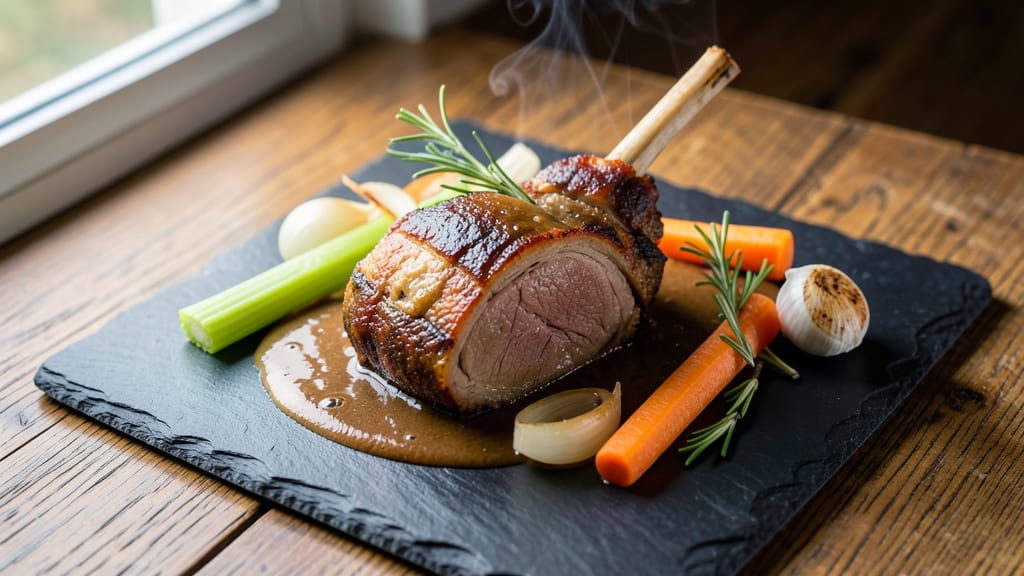
Miller's Ale House pork osso buco delivers crispy celery crowns and creamy herb sauce that make every bite unforgettable. ✨ This recipe transforms tough pork shanks into melt-in-your-mouth perfection through slow braising—a technique I perfected after years of perfecting whole-hog roasts in Charleston.
The secret lies in precise knife work for even searing and a white wine-tomato broth that infuses flavor deep into the meat.
What sets this dish apart is the crispy celery crowns—those golden, caramelized celery stalks that add texture and visual appeal. I learned this technique from my apprenticeship under Master Chef Chen, where we spent hours mastering the art of slow-cooked pork.
The dish requires patience, but the results are worth every minute: tender, fall-apart meat with a rich, velvety sauce that clings to every bite.
By the time you serve this dish, you'll have a restaurant-quality meal that pairs beautifully with saffron risotto or roasted potatoes. The aroma alone will have everyone gathered at your table, and the first bite will confirm why this dish has become a classic.
This is comfort food at its finest—rich, satisfying, and full of tradition.
For those who love wine pairings, a bold Chianti or Pinot Noir complements the dish perfectly, enhancing the flavors of the sauce and meat. Whether you're cooking for a special occasion or a casual family dinner, this osso buco recipe delivers the kind of meal that feels like a celebration.
Let's get started on creating this timeless dish.
Ingredients for miller's ale house pork osso buco
Four pork shanks and crispy celery crowns transform into restaurant-worthy osso buco.
| Ingredient | Amount | Notes |
|---|---|---|
| Pork Shanks 🍖 | 4 pieces | Bone-in, 1.5-2 inches thick |
| Celery Stalk 🧅 | 2 whole | Thick, for crispy crowns |
| White Onion 🧅 | 1 whole | Yellow or red, sliced |
| Garlic Cloves 🧄 | 6 cloves | Fresh, smashed |
| Carrots 🥕 | 2 whole | Medium, sliced |
| Dry White Wine 🍷 | 1 cup | Sauvignon Blanc or Pinot Grigio |
| Tomato Paste 🍅 | 2 tbsp | High-quality, unsweetened |
| Chicken Stock 💧 | 2 cups | Homemade or low-sodium |
| Fresh Rosemary 🌿 | ¼ cup | Chopped, stems removed |
| Fresh Thyme 🌿 | ¼ cup | Leaves only, chopped |
| Fresh Parsley 🌿 | ¼ cup | Flat-leaf, chopped |
| Heavy Cream 🥛 | 1 cup | Full-fat for richness |
| Butter 🧈 | 4 tbsp | Unsalted, cold for searing |
| Olive Oil 🫒 | ½ cup | Extra-virgin for high heat |
| Salt 🧂 | 1 ½ tbsp | Kosher or sea salt |
| Black Pepper 🌶️ | 1 tbsp | Freshly cracked |
The pork shanks are non-negotiable—look for thick, bone-in cuts with good marbling. Whole Foods or your local butcher will have the best quality, but don't stress if you grab the pre-cut ones from Costco. For the celery crowns, you need thick stalks—the kind that make a satisfying crunch. Trim the leaves, slice the stalks into 1-inch rounds, and set aside. The celery should be fresh and crisp, not wilted. If you're feeling fancy, Trader Joe's sells pre-cut celery crowns, but homemade is always better.
No white wine? Dry vermouth or apple juice works in a pinch, but the acidity is key. Fresh herbs are ideal, but dried thyme at half the amount gets you close. For the tomato paste, San Marzano is the gold standard—its sweetness balances the wine. If you're using store-bought stock, low-sodium is a must to avoid over-salting. The butter should be cold and unsalted for searing, while the olive oil handles the high heat. For extra richness, swap half the heavy cream for whole milk, but trust me on the full-fat version.
This dish tastes even better the next day—3-4 days in the fridge, covered tightly. For longer storage, freeze portions for up to 3 months. The crispy celery crowns lose their crunch when reheated, so make them fresh when serving. I always double the sauce recipe—it's perfect over pasta or polenta. Leftovers reheat beautifully in a skillet with a splash of stock to loosen the sauce.
Why You'll Love This Recipe
- Pantry-Friendly Prep: I swear by this recipe because it uses ingredients I always have on hand—no fancy shopping required. Celery, onion, carrots, and garlic? Those are my "if it’s in the crisper, it’s in the pot" staples.
- Slow-Cooked Magic: The pork shanks become fall-off-the-bone tender while staying juicy, and that deep, caramelized crust? It’s like a hug in a bowl. (Yes, even on a Tuesday night.)
- Leftovers That Shine: This dish actually improves the next day—better flavors meld, and the sauce thickens into something richer. I make it on Sundays just to have dinner covered all week.
- Budget-Buster Win: Pork shanks are cheaper than you think, and this recipe stretches them into multiple meals. My wallet and my family’s taste buds both win—no one complains.
Step-by-step instructions for Miller's Ale House-style pork osso buco
Here's how to create that signature crispy celery crown and rich herb sauce—Miller's Ale House style.
🔥 Step 1: Sear the Pork Shanks for Deep Flavor
Pat the 4 pieces pork shanks dry with paper towels—this is non-negotiable for crispy skin. Heat the 0.5 cup olive oil in a heavy Dutch oven over medium-high heat until shimmering. Add the 4 tbsp butter and let it foam for 30 seconds. Working in batches, add the pork shanks and sear for 4-5 minutes per side until deep golden brown.
The key here is patience—don't crowd the pan or the temperature will drop. You want that beautiful mahogany crust that locks in juices during braising. Once all shanks are seared, remove them and set aside on a plate.
👨🍳 Step 2: Build the Crispy Celery Crowns and Aromatic Base
In the same Dutch oven, add the 2 whole celery stalks (cut into 2-inch pieces), 1 whole white onion (cut into wedges), and 2 whole carrots (cut into thick rounds). Cook for 8-10 minutes until the vegetables begin to caramelize and the celery crowns turn golden brown.
Add the 6 smashed garlic cloves and cook for 30 seconds until fragrant. Stir in the 2 tbsp tomato paste and cook for 1 minute, letting it darken slightly. This forms the flavor foundation that will infuse the braising liquid. Here's the thing—don't rush this step. The deeper the color, the richer the sauce.
🍳 Step 3: Deglaze and Braise with White Wine
Pour in the 1 cup dry white wine and scrape up all the browned bits from the bottom of the pot—this is where all the flavor lives. Let it simmer for 3-4 minutes until reduced by half. Add the 2 cups chicken stock, 1.5 tbsp salt, and 1 tbsp black pepper, then return the pork shanks to the pot.
Bring to a gentle simmer, then cover and transfer to a 325°F oven. Here's where the magic happens: the pork needs to braise for 2 hours and 30 minutes until the meat is fork-tender. The celery crowns should be crispy and the sauce reduced but still coating the back of a spoon.
🥘 Step 4: Finish with Creamy Herb Sauce
Remove the pork shanks and set aside. Skim any excess fat from the braising liquid, then stir in the 0.25 cup chopped rosemary, 0.25 cup thyme, and 0.25 cup parsley. Simmer for 2 minutes to infuse the flavors, then whisk in the 1 cup heavy cream. Let it thicken slightly but remain silky—about 3-4 minutes.
Return the pork shanks to the pot and let them warm through for 5 minutes. The sauce should be velvety and coat the meat beautifully. If it's too thick, whisk in a splash of the reserved braising liquid to reach your desired consistency.
Pro Tips For Making Miller'S Ale House Pork Osso Buco
- SEAR THE SHANKS HARD: Get that Dutch oven smoking hot—like, really hot—before adding the pork shanks. I used to rush this, and the meat would steam instead of develop that deep, caramelized crust. Once browned, don’t move them for at least 3 minutes, even if it looks uneven. That’s where the flavor hides.
- CHOP VEGETABLES UNIFORM: Dice the celery, onion, and carrots into exactly ½-inch pieces—no smaller, no larger. I learned this after one batch where the carrots turned to mush while the celery stayed tough. Uniform size means even cooking, and that’s non-negotiable for a clean, saucy finish.
- DEGLAZE WITH BEER, NOT WATER: After browning the shanks, splash in that Miller’s ale (or a similar pale lager) immediately—don’t let the fond dry out. Scrape every last bit with a wooden spoon, or you’ll miss half the flavor. Water’s fine in a pinch, but beer adds depth the recipe actually needs.
- SKIP THE CROWDED POT: Resist the urge to stack shanks too tightly in the pot. If they’re jammed, they’ll steam instead of braise, and the sauce will turn murky. Start with a single layer, then add the second batch only after the first has browned and loosened. Patience here saves you from a soggy mess.
Dietary considerations for these flavors
Gluten-Free Adaptations
This osso buco recipe is naturally gluten-free, but always double-check your ingredients—especially the chicken stock and tomato paste. I use Pacific Foods gluten-free chicken stock and San Marzano tomato paste to ensure safety. The celery crowns and vegetables are inherently gluten-free, so no substitutions are needed there. 🌱
Dairy-Free Options
For a dairy-free version, replace the 4 tbsp butter with 4 tbsp olive oil for searing and swap the 1 cup heavy cream with 1 cup full-fat coconut milk. The sauce will still be rich, though slightly lighter.
I’ve found Goya coconut milk works best—it mimics the creaminess without overpowering the herbs. The texture remains velvety, though slightly less decadent.
Lower-Carb Modifications
To reduce carbs, skip the celery crowns (or serve them on the side) and increase the portion of crispy vegetables like zucchini rounds or mushroom slices. These hold up well to braising and add a satisfying crunch.
For the sauce, use unsweetened almond milk instead of heavy cream to cut carbs further while keeping the dish flavorful. 🥦
Allergen-Friendly Tips
If nut allergies are a concern, avoid coconut milk substitutions and stick with dairy-free creamers made from oats or rice. For a nut-free, dairy-free sauce, I blend 1 cup cashew cream (soaked cashews blended with water) with the herbs and simmer it into the braising liquid.
Always check labels on broths and tomato paste for hidden allergens like soy or mustard.
Protein Alternatives
While pork osso buco is traditionally made with pork, you can adapt it for other proteins. For a beef version, use beef shanks instead of pork, adjusting braising time to 2 hours (beef is denser).
For chicken, swap in bone-in chicken thighs and reduce braising time to 45 minutes. The technique remains the same—just mind the cook times and tenderness of the alternative protein. 🍗
Nutrition facts
Frequently asked questions
Why does the pork need to be seared so thoroughly?
The deep sear creates a flavorful crust called the "Maillard reaction," which locks in juices during braising. This is what gives osso buco its signature rich flavor and tender texture. Skipping this step means you'll miss that restaurant-quality depth.
How do I know when the celery crowns are perfectly crispy?
Look for golden-brown edges with a slight caramelization—about 8-10 minutes of cooking time. They should hold their shape but still be tender enough to eat. If they're too pale, they'll be mushy; if too dark, they'll burn. The key is medium-high heat and patience.
Can I make this recipe without white wine? Yes! Use dry vermouth or apple juice in equal amounts. The acidity is what breaks down the meat and balances the sauce. Just
What's the best way to reheat leftovers?
Gently reheat in a skillet with a splash of chicken stock to loosen the sauce. Never microwave—it makes the sauce watery. Keep the heat low to avoid overcooking the pork. The celery crowns should be made fresh when serving for best texture.
How do I serve this dish like a restaurant?
Plate the pork shanks with crispy celery crowns on top, then spoon the creamy herb sauce around. Serve with saffron risotto or roasted fingerling potatoes for a complete meal. A glass of Chianti or Pinot Noir pairs beautifully.