
Main Courses
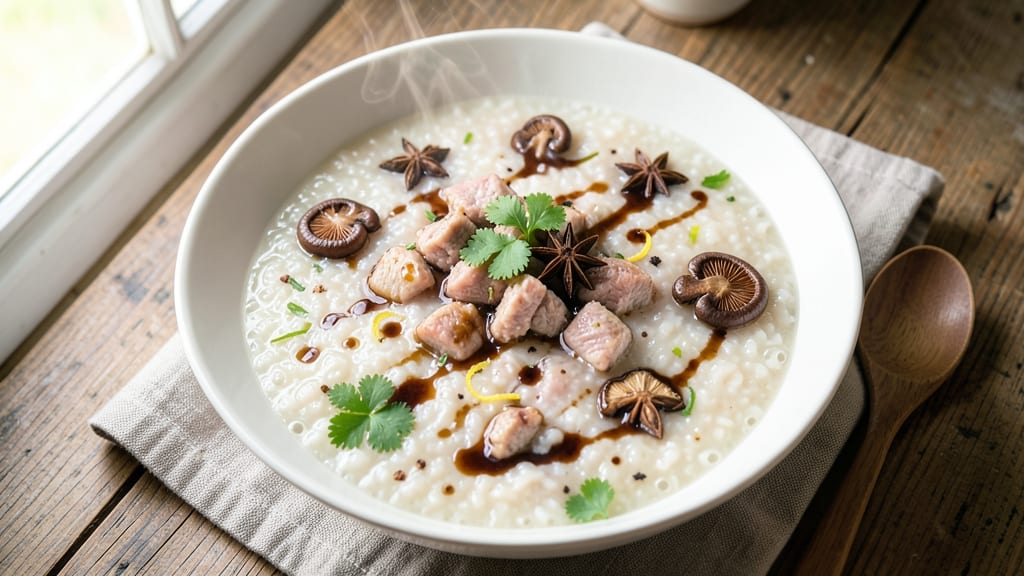
This minced pork congee recipe transforms simple ingredients into a velvety porridge that balances tender pork, aromatic star anise, and delicate rice. The slow simmering process creates that signature silky texture while developing deep, savory flavors that linger.
As someone who grew up in Georgia surrounded by pork-centric family meals, I know how a dish like this can turn an ordinary day into a comforting experience.
The foundation of great congee lies in proper preparation—soaking the rice first ensures a smooth, creamy consistency rather than a grainy one. Minced pork cooks down to melt-in-your-mouth tenderness, while star anise infuses warmth without overpowering.
This recipe delivers restaurant-quality results with just a few simple techniques and a touch of patience. The secret? Letting everything simmer low and slow until the rice breaks down completely.
What you'll end up with is a bowl of fragrant, silky porridge where each spoonful combines tender pork, delicate rice, and aromatic spices in perfect harmony. The texture is unmistakably comforting—creamy yet light, with just enough body to satisfy.
This dish works equally well as a light breakfast or a soothing dinner, especially on cooler evenings when you crave something warm and nourishing.
For extra depth, I recommend finishing with a drizzle of soy sauce and fresh scallions, but the beauty of congee lies in its adaptability. You can easily customize it with ginger, chili oil, or even a soft-boiled egg for added richness.
Let's get started on creating this classic dish that's as comforting as it is delicious.
Ingredients for minced pork congee
Simple ingredients that transform into a fragrant, velvety porridge with melt-in-your-mouth pork and star anise aroma.
| Ingredient | Amount | Notes |
|---|---|---|
| Jasmine Rice 🍚 | 1 cup | Uncooked, long-grain preferred |
| Minced Pork 🥩 | 1 lb | Ground or finely chopped |
| Star Anise 🌿 | 2 whole | For aromatic depth |
| Dried Shiitake Mushrooms 🍄 | 4 whole | Rehydrated for umami |
| Soy Sauce 🍶 | ½ cup | Light or all-purpose |
| Dried Ginger 🌶️ | 1 tsp | Ground for warmth |
| Fresh Ginger Root 🧅 | 1 tbsp | Finely grated, optional |
| Green Onions 🧅 | 3 whole | Thinly sliced, for garnish |
| Sesame Oil 🫒 | 1 tbsp | For finishing aroma |
| Salt 🧂 | 1 tsp | Adjust to taste |
| Water 💧 | 6 cups | Filtered preferred |
| Vegetable Oil 🫒 | 1 tbsp | For cooking pork |
The star anise and dried shiitake are non-negotiable for that signature depth. Whole Foods or Asian markets carry the best quality star anise—look for pods that smell strongly aromatic. Dried shiitake should be plump and dark brown; soak them in hot water for 20 minutes to rehydrate. For the rice, jasmine or short-grain is ideal—it breaks down beautifully. I always buy mine in bulk from Costco since it lasts months in the pantry. Fresh ginger is a nice touch, but dried works perfectly if you're in a pinch.
No star anise? Cinnamon sticks or fennel seeds can mimic the warmth, though not the exact flavor. Substitute dried shiitake with cremini mushrooms if needed, but they won't have the same umami punch. Short on sesame oil? Toasted sesame seeds sprinkled at the end work just as well. The minced pork can be swapped for ground chicken or turkey, though pork's fat content gives that signature richness. For a vegetarian version, use shredded king oyster mushrooms instead—trust me, it's delicious.
This reheats beautifully—just add a splash of water to loosen it up. Keeps for 4-5 days in the fridge, freezes for 3 months if you make a big batch. I always double the recipe and portion it into containers for quick breakfasts. The pork mixture can be prepped ahead and frozen separately, then added fresh when cooking. Garnish with extra green onions and a drizzle of sesame oil right before serving—(that's the part everyone loves)
Why You'll Love This Recipe
- I swear by this trick: just grab pre-minced pork from the grocery store, and boom—no knife skills required. The star anise and shiitake soak up water while you stir, so even if you’re distracted (hello, Netflix), the rice still gets that silky texture.
- No Chopping Needed: I swear by this trick: just grab pre-minced pork from the grocery store, and boom—no knife skills required. The star anise and shiitake soak up water while you stir, so even if you’re distracted (hello, Netflix), the rice still gets that silky texture.
- Umami Bomb: That soy sauce and dried shiitake combo? It’s like a flavor explosion in a bowl. The pork browns fast, locking in deep, savory notes while the star anise adds a subtle, warm kick—like a hug for your taste buds.
- Leftovers That Don’t Suck: Congee actually tastes better the next day—honestly. Reheat it gently, and the rice gets even creamier. Pack it for lunch or freeze portions; it’s my go-to for lazy mornings or post-work slump-fighting.
Step-by-step instructions for minced pork congee
Here's how to transform simple ingredients into a velvety, aromatic congee with layers of ginger-spiced pork and shiitake depth.
Prepare the Aromatics and Rehydrate Shiitake
In a small bowl, combine the 1 cup jasmine rice and 6 cups water. Let it soak for 30 minutes at room temperature—this ensures even cooking and prevents gritty texture. While the rice soaks, place the 4 whole dried shiitake mushrooms in a heatproof bowl and cover with hot water. Let them soak for 20 minutes until plump and tender.
Finely grate the 1 tablespoon fresh ginger root using a microplane or fine grater. You'll want about 1 teaspoon of grated ginger—this adds bright, zesty warmth that balances the richness. Set aside the grated ginger and the rehydrated shiitake (drain and chop them into small pieces) for later use.
Cook the Minced Pork and Aromatics
Heat a large pot over medium-high heat and add 1 tablespoon vegetable oil. Once the oil shimmers, add the 1 lb minced pork and cook, stirring frequently, until the pork loses its raw color and turns light brown—about 5-6 minutes. This step is crucial for developing deep, meaty flavor.
Add the 2 whole star anise and 1 teaspoon dried ginger, stirring for 30 seconds until fragrant. The star anise will infuse the pork with its warm, licorice-like aroma. Pour in the 0.5 cup soy sauce and cook for another 1 minute, allowing the flavors to meld together.
Simmer the Congee to Perfection
Drain the rehydrated shiitake mushrooms and add them to the pot along with the grated ginger and the soaked rice (with its water). Stir everything together, then bring the mixture to a gentle boil over medium heat. Once boiling, reduce the heat to low and let it simmer uncovered for 45-50 minutes. Stir occasionally to prevent sticking and ensure even cooking.
After 45 minutes, the congee should have a smooth, creamy consistency with a slight sheen on top. If it's too thick, add ½ cup hot water at a time until it reaches your desired texture. The congee is ready when it's silky and slightly translucent, with the rice fully broken down and tender.
Finish with Sesame Oil and Garnish
Remove the pot from heat and let the congee sit for 5 minutes to allow the flavors to settle. Stir in 1 tablespoon sesame oil and 1 teaspoon salt, adjusting the salt to taste. The sesame oil adds a nutty aroma that elevates the dish, while the salt enhances all the flavors.
Thinly slice the 3 whole green onions and divide the congee among bowls. Garnish each serving with the green onions, their bright color and freshness contrasting beautifully with the rich, creamy congee. Serve immediately while hot, and enjoy the comforting, fragrant bowl of minced pork congee.
Pro Tips For Making Minced Pork Congee
- SAUTE PORK UNTIL DRY: I learned this the hard way—skipping this step means your congee will taste raw. Cook the minced pork on medium-high heat until it loses all moisture and turns golden, stirring constantly. If you rush it, the fat will splatter everywhere, and the pork will stay greasy instead of crisping up properly.
- SOAK SHIITAKES 10 MINUTES: Dried shiitake mushrooms need a quick soak in hot water to rehydrate, but don’t overdo it—10 minutes is enough. If you leave them too long, they’ll turn mushy and dilute the broth. Strain them, reserving the soaking liquid to add depth to the congee.
- STIR CONSTANTLY AFTER BOILING: Once the rice starts to thicken, resist the urge to walk away. Stirring every 30 seconds prevents burning and ensures the congee cooks evenly. I used to let mine sit for too long, and the bottom would stick—now I keep a spoon in hand the whole time.
- USE STAR ANISE EARLY: Toss the star anise into the broth before adding the rice—it needs time to infuse. If you wait until the end, the flavor will be weak and underdeveloped. Remove it before serving, or it’ll make the congee taste bitter. (Yes, even if you’re impatient like me.)
Troubleshooting great minced pork congee
Grainy Texture Fix
If your congee ends up grainy instead of silky, the rice likely didn't break down enough. Start by using short-grain jasmine rice—it's designed for creamy textures. Soak the rice for at least 1 hour before cooking to ensure it softens properly.
During simmering, stir gently every 10 minutes to prevent sticking to the pot's bottom. If it's still too thick after 45 minutes, add ½ cup hot water and let it cook another 10 minutes. 💡
Pork Too Dry
Overcooking the minced pork is the usual culprit here. Cook it just until it turns light brown (about 5-6 minutes)—any longer and it'll dry out. Keep the heat at medium-high for this step, then immediately add the star anise and soy sauce to lock in moisture.
If your pork tastes dry after simmering, try using ground pork shoulder instead of lean ground pork, as the fat content keeps it tender. 🥩
Weak Flavor Profile
Congee flavor builds during simmering, so don't rush this step. If your dish tastes bland, boost the aromatics: add an extra ½ teaspoon dried ginger or 1 more star anise pod.
For umami depth, increase the soy sauce to ⅔ cup or add 1 teaspoon fish sauce (if you're comfortable with seafood flavors). Let the congee simmer uncovered for the full 45-50 minutes—this allows the flavors to develop fully. 🌿
Burnt Bottom
Congee needs constant attention to prevent burning. Use a heavy-bottomed pot like a Le Creuset Dutch oven for even heat distribution. Keep the heat at low after the initial boil, and stir every 5-10 minutes.
If you notice brown spots forming, immediately add ¼ cup water and stir well. For extra insurance, place a heat diffuser under your pot to prevent hot spots. ⚡
Too Watery
If your congee ends up too thin, the rice-to-water ratio was likely off. For 1 cup jasmine rice, 6 cups water is ideal, but adjust based on your rice's absorption rate.
If it's still too watery after simmering, simmer uncovered on medium-low heat for an extra 10-15 minutes—the water will gradually evaporate. For a thicker consistency, use ½ cup less water next time, or add 1 extra tablespoon rice to the pot. 💧
Star Anise Bitterness
If your star anise flavor is too strong or bitter, you likely overcooked it. Remove the star anise pods after 10 minutes of simmering—they'll still infuse enough aroma without becoming bitter.
For a milder flavor, use 1 pod instead of 2, or substitute with ½ teaspoon ground cinnamon (though it won't be identical). If bitterness persists, strain the congee through a fine-mesh sieve before serving. 🌟
Nutrition facts
Frequently asked questions
Can I use regular ground pork or do I need special minced pork?
Regular ground pork works perfectly fine! The key is to look for ground pork shoulder (about 20-30% fat content) as it stays juicier during the long simmer. Avoid lean ground pork—it tends to dry out. If you can't find pork shoulder, ground chuck works too, but trim any visible fat first.
How do I make this congee spicier?
Add ½ teaspoon chili flakes when cooking the pork or stir in 1 tablespoon chili oil at the end. For heat lovers, try 1-2 slices of fresh chili (like Thai bird's eye) during simmering. Remove them before serving if you prefer milder heat.
Can I make this ahead of time?
Congee reheats beautifully. Store leftovers in an airtight container for up to 4 days in the fridge. Reheat gently on low heat with 2 tablespoons water per serving. For freezing, portion into single-serving containers—it keeps for 3 months. Just add a splash of water when reheating.
Why does my congee look different from the photos?
Congee texture varies based on simmering time and rice type. For a thicker version, reduce water by ½ cup; for thinner, add ½ cup hot water. If it's too grainy, your rice didn't break down enough—try soaking it 1 hour. The color should be creamy white with subtle pork and mushroom hues.
What's the best way to serve this?
This congee is perfect for breakfast or light dinner. Serve with steamed dumplings, pickled vegetables, or a soft-boiled egg on top. For extra richness, drizzle with extra sesame oil. In my Southern kitchen, we often pair it with cornbread—sweet and savory contrast!