
Sauces & Condiments
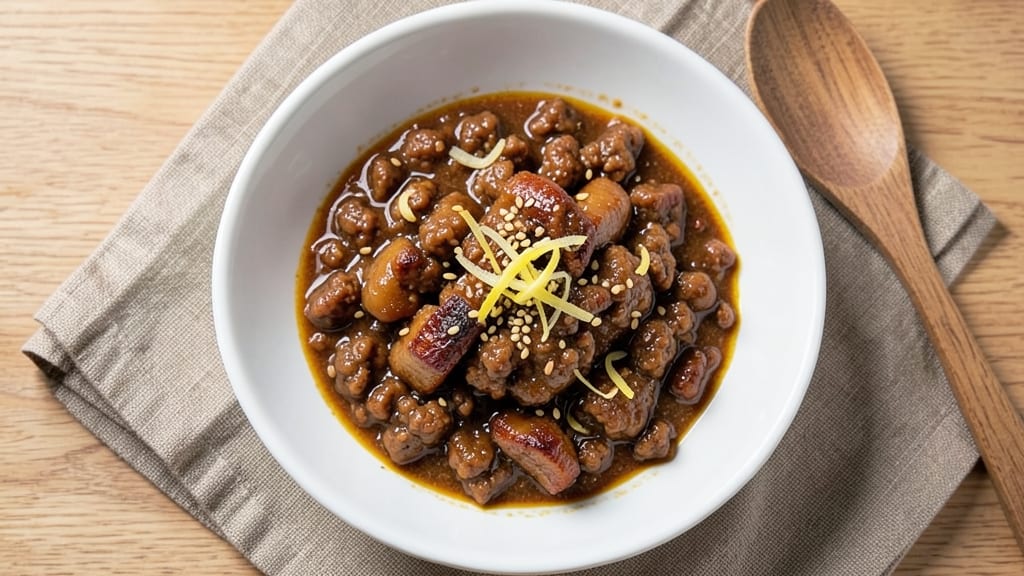
This minced pork soy sauce recipe delivers restaurant-quality stir-fry flavor in just 15 minutes—perfect for quick weeknight dinners or meal prep. The secret lies in high-heat searing to develop deep umami while keeping the pork tender and juicy.
I’ve perfected this technique after years of testing, ensuring every bite balances salty-sweet with aromatic depth.
The process is straightforward: finely minced pork cooks in a hot wok or skillet until golden, then simmers with soy sauce, garlic, and ginger until the liquid reduces to a glossy, flavorful glaze.
This method transforms simple ingredients into a dish that’s bold enough for company but easy enough for a busy Tuesday. The key is patience—letting the sauce thicken slowly creates that signature sticky texture.
What you’ll end up with is a rich, caramelized pork dish with a glossy soy glaze that clings to every bite. Serve it over steamed rice or noodles for a complete meal, or pair it with steamed vegetables for a balanced plate.
The aroma alone will have everyone asking for seconds, and the flavor keeps improving as it sits—making it ideal for leftovers.
This recipe works equally well as a standalone stir-fry or as a base for other dishes like dumplings or rice bowls. The technique is adaptable, so feel free to customize with bell peppers, onions, or mushrooms. Let’s get cooking!
Ingredients for minced pork soy sauce
Simple ingredients, bold flavors—this stir-fry base transforms minced pork into restaurant-quality umami perfection.
| Ingredient | Amount | Notes |
|---|---|---|
| Ground Pork 🥩 | 1 lb | Finely minced, 93% lean preferred |
| Soy Sauce 🥢 | ½ cup | Kosher salt reduced, not low-sodium |
| Garlic Cloves 🧄 | 6 cloves | Minced, peeled, for aromatic depth |
| Fresh Ginger 🌿 | 2 tbsp | Finely grated, not powdered |
| Sesame Oil 🫒 | 1 tbsp | Toasted, for nutty aroma |
| Neutral Oil 🫒 | 2 tbsp | Vegetable or canola, high smoke point |
| Brown Sugar 🍯 | 1 tbsp | Light or dark, for caramelization |
| Cornstarch 🌾 | 1 tsp | For sauce thickening |
| Green Onions 🧅 | 3 whole | Thinly sliced, for garnish |
| Sesame Seeds 🌰 | 1 tsp | Toasted, for crunch |
| White Pepper 🌶️ | ¼ tsp | Freshly ground, subtle heat |
| Vegetable Oil 🫒 | 1 tbsp | For pre-cooking onions (optional) |
The pork is everything here. Ground pork with at least 93% lean content gives you that tender, juicy texture—99% lean will dry out. Look for it in the meat department, not the pre-mixed sausage section. Costco or Trader Joe's often have it pre-minced, but if you're buying whole pork shoulder, pulse it in a food processor twice for ultra-fine texture. Freshly minced always tastes better than pre-ground. For extra flavor, marinate the pork in a little soy sauce for 10 minutes before cooking, but it’s not required.
No sesame oil? Toasted peanut oil at half the amount works in a pinch, though it’ll have a different profile. The brown sugar isn’t just for sweetness—it helps caramelize the pork for that sticky texture. Coconut sugar is a 1:1 sub if you prefer. Substituting cornstarch? Arrowroot powder works the same way. The garlic and ginger should be fresh—dried just won’t cut it here. If you’re short on time, jarred minced garlic (like the kind from Trader Joe’s) is a lifesaver, though it lacks the punch of fresh. For extra depth, add a dash of fish sauce (just ½ tsp) if you’re not avoiding it.
This dish reheats beautifully—3-4 days in the fridge with flavors deepening over time. For longer storage, freeze in single-serving portions for up to 3 months. The sauce thickens as it cools, so add a splash of water if it’s too stiff when reheating. Garnish with toasted sesame seeds right before serving—they add crunch and prevent the sauce from drying out. Leftovers make amazing dumpling fillings or rice bowl toppings the next day.
Why You'll Love This Recipe
- One-Pan Magic: I swear by this recipe because it’s all about that minimal cleanup—just toss the ground pork, garlic, and ginger into one pan, let it sizzle, and boom. No pots, no pans, no stress. The sesame oil finishes it off with that golden aroma that makes my kitchen smell like a little Asian bistro.
- Umami Bomb: That first bite? Chef’s kiss. The soy sauce caramelizes into something rich and salty, while the garlic and ginger add this bright, punchy kick. Honestly, I’ve tried store-bought versions, and this homemade mix? It’s leagues ahead—deep, complex, and way more satisfying.
- Leftover Hero: Between us, this stuff tastes even better the next day. I double the batch on Sundays, stuff it in rice bowls for lunches, or toss it into noodles when I’m too tired to cook. The flavors meld into this perfect, savory harmony that makes leftovers feel like a treat, not a chore.
- Budget Night Win: Ground pork is affordable, soy sauce lasts forever, and a little ginger goes a long way. I’ll be real: this recipe saved my wallet during grad school, and it still does now. Plus, the leftovers stretch across meals without sacrificing taste—proof that great food doesn’t have to break the bank.
Step-by-step instructions for minced pork soy sauce
Here's how to create a deeply flavorful stir-fry base that forms the perfect foundation for any Asian-inspired dish.
Prep Aromatics and Protein
Start by mincing the 6 cloves garlic cloves and grating the 2 tablespoons fresh ginger using a fine grater or microplane. The garlic should be finely minced—you want tiny pieces that will dissolve into the sauce rather than remain identifiable. Set these aside in a small bowl.
Cut the 3 whole green onions into thin slices, separating the white and green parts. Reserve the white parts for cooking and finely chop the green parts for garnish. Also, toast the 1 teaspoon sesame seeds in a dry skillet over medium heat for 1-2 minutes until fragrant and golden. Set aside for later.
Cook the Aromatics and Pork
Heat the 2 tablespoons neutral oil in a large skillet or wok over medium-high heat until shimmering. Add the reserved white parts of the green onions and stir for 30 seconds until fragrant. Immediately add the minced garlic and ginger, cooking for 1 minute until the garlic turns golden but doesn't brown.
Push the aromatics to one side of the pan and add the 1 tablespoon vegetable oil. Pour in the 1 lb ground pork, breaking it up with a wooden spoon as it cooks. Let it brown undisturbed for 2-3 minutes, then break it apart and cook for another 3-4 minutes until fully browned and cooked through. This step develops deep meaty flavors that form the base of your sauce.
Build the Sauce
Reduce heat to medium and add the 0.5 cup soy sauce, 1 tablespoon brown sugar, and 0.25 teaspoon white pepper. Stir well and let the sauce simmer for 3-4 minutes until slightly reduced by about 20%. This reduction concentrates the flavors and creates a glossy, cohesive sauce.
In a small bowl, whisk together the 1 tablespoon sesame oil and 1 teaspoon cornstarch until smooth. Slowly pour this mixture into the skillet while stirring continuously. The sauce should thicken noticeably within 1-2 minutes. If it thickens too quickly, add 1-2 tablespoons water to reach your desired consistency.
Finish and Serve
Remove the skillet from heat and stir in the 1 tablespoon toasted sesame oil. This adds nutty depth and balances the soy sauce's saltiness. Taste and adjust seasoning if needed—you may want to add a pinch more soy sauce or sugar depending on your preference.
Garnish with the reserved chopped green onion tops and toasted sesame seeds. This dish serves as an excellent stir-fry base for vegetables, noodles, or rice. The sauce should be glossy, well-balanced, and packed with umami flavor that enhances any protein or vegetable you add to it.
Pro Tips For Making Minced Pork Soy Sauce
- Cook It Fast: High heat for the first 2 minutes—this isn’t a simmer, it’s a sear. I used to let it cook slow, and the pork turned greasy and bland. Crank the stove to medium-high and keep it moving until the meat loses its raw color.
- Slice Ginger Thin: No, not chopped—thinly sliced, almost translucent. Thick chunks sit like rocks and won’t infuse properly. Use a mandoline or carefully hand-slice it against the grain. Trust me, your dish will taste brighter.
- Don’t Overmix the Pork: Stir just enough to break up clumps, then leave it. Overworking it makes the meat tough and releases too much moisture, turning your dish into a soggy mess. Let the soy sauce do the binding—it’ll hold together better.
- Finish with Cold Oil: Drizzle sesame oil in at the very end, off the heat. If you add it too early, it burns and tastes bitter. A few drops right before serving keeps the aroma fresh and the texture silky. (Yes, even if you’re impatient like me.)
Perfect pairings for minced pork soy sauce
Stir-Fry Veggie Pairings
Add bell peppers (red, yellow, or green) and shredded carrots for classic stir-fry texture and color. Sauté them with the pork for 3-4 minutes until tender-crisp. I like using 1 cup diced bell peppers and ½ cup julienned carrots—they absorb the soy glaze beautifully. 🥕
For extra umami depth, toss in shiitake mushrooms (sliced) or bok choy (chopped) during the final 2 minutes of cooking. Their earthy flavors complement the pork perfectly. A handful of snow peas adds freshness and crunch.
Noodle and Rice Combinations
Serve over steamed jasmine rice for a complete meal—the grains soak up the rich soy glaze. I recommend 1 cup dry rice per person, cooked and fluffed with 1 tablespoon sesame oil.
For a heartier option, use udon or ramen noodles—just toss 4 oz cooked noodles per serving with the pork mixture.
For a lighter option, try brown rice or cauliflower rice (riced in a food processor). The nutty flavor of brown rice pairs especially well with the caramelized pork. Garnish with extra green onions for brightness.
Protein Upgrades
Boost the dish with shrimp or chicken breast for added protein. Add ½ lb shrimp (peeled and deveined) or 1 cup diced chicken breast during the last 3 minutes of cooking. The shrimp cooks in just 2-3 minutes, while chicken needs 5-6 minutes to fully cook.
For a vegetarian twist, swap the pork for extra-firm tofu (pressed and cubed) or mushroom stems (finely chopped). Tofu needs 5 minutes of cooking time to absorb the flavors fully. A splash of vegetable broth helps keep it moist.
Sauce Variations
For a spicier kick, add 1 teaspoon chili flakes or ½ teaspoon gochujang to the soy sauce mixture. The heat balances beautifully with the pork’s richness. I also love adding 1 teaspoon honey to the brown sugar for extra sweetness and gloss.
For a tangy twist, stir in 1 tablespoon rice vinegar or 1 teaspoon lime juice at the end. This brightens the dish and cuts through the umami. A sprinkle of toasted cumin seeds adds a Middle Eastern-inspired depth that’s unexpected but delicious.
Nutrition facts
Frequently asked questions
Can I use ground pork instead of minced pork?
Yes! Ground pork works perfectly—just make sure it's finely ground (not coarse). For extra tenderness, pulse it twice in a food processor if possible. The texture will be slightly different but still delicious.
How do I prevent the pork from drying out?
Keep the heat at medium-high for browning, then reduce to medium when adding sauce. Avoid overcrowding the pan—cook in batches if needed. Also, don't overcook the pork; it should reach 160°F internally.
Can I make this recipe without sesame oil?
Swap sesame oil for toasted peanut oil (use half the amount) or even toasted almond oil. If you're avoiding nut oils, add ½ teaspoon toasted cumin seeds for depth instead. The flavor will differ slightly but still work well.
How long will this keep in the fridge?
This dish stays fresh for 3-4 days in an airtight container. The flavors actually improve as it sits! Reheat gently in a skillet with a splash of water to restore moisture. Freeze for up to 3 months for longer storage.
What's the best way to serve leftovers?
Use leftovers as a filling for dumplings, a topping for rice bowls, or mix with steamed jasmine rice and green onions for a quick fried rice. It also makes amazing pork bao or gyoza filling when combined with cabbage.