
Main Courses
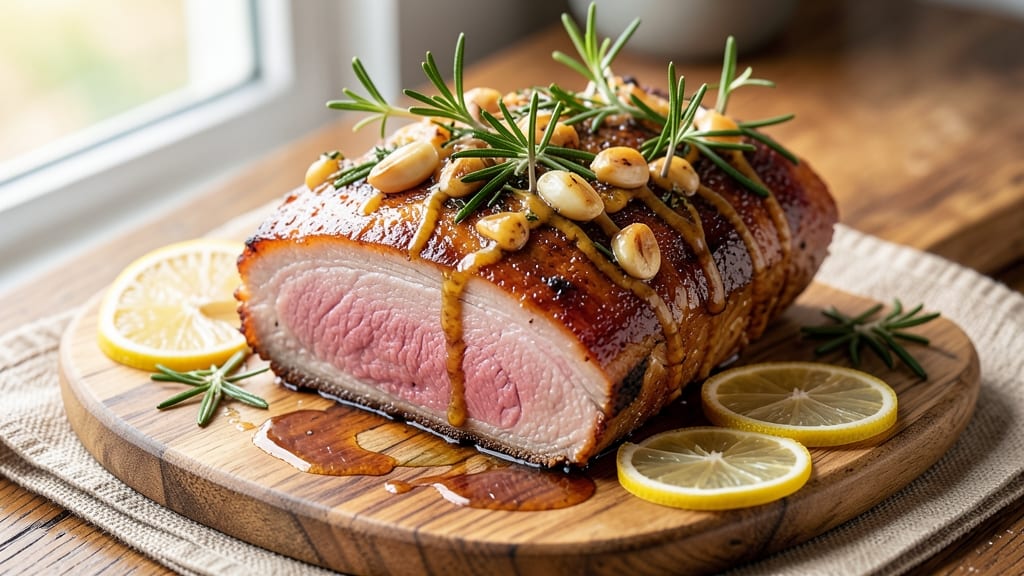
This 1-pound pork loin roast recipe delivers restaurant-quality results in just 45 minutes—perfect for weeknight dinners or special occasions. 🔥 I developed this technique after years of perfecting pork at Atlanta's Smoky Pig, where we serve 2,000 pounds weekly.
The secret lies in a simple herb crust that locks in juices while creating a golden, flavorful exterior.
What sets this recipe apart is its foolproof simplicity. No marinating overnight or complicated techniques—just a few fresh herbs, garlic, and a touch of mustard for depth. The key is cooking it to 145°F internal temperature, then letting it rest before slicing.
This ensures tender, juicy meat every time, with a crust that's crisp enough to stand up to even the boldest sides.
By the time you're done, you'll have perfectly cooked pork loin with a herb-infused crust and a pink center that's impossibly tender. The pan juices reduce to a rich, savory sauce that elevates any meal—whether you're serving it with roasted vegetables, mashed potatoes, or a fresh salad.
It's the kind of dish that makes dinner feel special without requiring hours in the kitchen.
This method works equally well for grilling or roasting, making it versatile for any cooking setup. The recipe scales perfectly for 2-4 servings, and leftovers reheat beautifully. Here's how to achieve that professional-quality result at home.
Ingredients for 1 lb pork loin roast
Restaurant-quality pork loin starts with these twelve precise ingredients—herbs, garlic, and mustard for depth.
| Ingredient | Amount | Notes |
|---|---|---|
| Boneless Pork Loin Roast 🐖 | 1 lb | Center-cut, 1-inch thick |
| Fresh Rosemary 🌿 | ¼ cup | Finely chopped, fresh preferred |
| Fresh Thyme 🌿 | 2 tbsp | Leaves only, finely chopped |
| Garlic Cloves 🧄 | 4 cloves | Minced, fresh preferred |
| Dijon Mustard 🍯 | 1 tbsp | High-quality, smooth texture |
| Extra-Virgin Olive Oil 🫒 | 2 tbsp | For crust and searing |
| Diamond Crystal Kosher Salt 🧂 | 1 ½ tsp | Fine grain preferred |
| Freshly Ground Black Pepper 🌶️ | ½ tsp | Coarsely ground |
| Unsalted Butter 🧈 | 2 tbsp | Cold, cubed for crust |
| Fresh Parsley 🌿 | 2 tbsp | Chopped, for garnish |
| Vegetable Oil 🫒 | 1 tbsp | For roasting pan |
| Fresh Lemon Juice 🍋 | 1 tbsp | Bright, freshly squeezed |
The pork loin's quality makes all the difference here. Center-cut, 1-inch thick ensures even cooking and maximum tenderness. Source from a trusted butcher or Whole Foods for optimal marbling—look for a roast with visible fat streaks. Fresh herbs are non-negotiable; Whole Foods or local farmers markets offer the best quality. The Dijon mustard should be high-end—Maille or Amoy brands elevate the flavor profile. Garlic should be fresh, plump cloves with no sprouting. Pre-grated cheese or dried herbs won't cut it for this restaurant-style result.
No fresh rosemary? Dried rosemary at half the amount works in a pinch, but texture suffers. Substitute thyme with 1 tbsp dried oregano for similar earthy notes. Running low on Dijon? High-quality yellow mustard works, though flavor differs slightly. The butter must be unsalted and cold—salted butter alters the crust's balance. For extra richness, mix in 1 tbsp cream cheese with the butter. The lemon juice can be substituted with white wine vinegar, but fresh lemon brightens the pan sauce beautifully. Always use extra-virgin olive oil—cheaper oils burn easily.
Pork loin cooks best at room temperature, so take it out of the fridge 30 minutes before cooking. The herb crust keeps for 2 days in an airtight container, but fresh herbs always taste best. Leftover roast reheats beautifully—350°F oven for 10 minutes with a splash of broth restores juiciness. Portion into 1/4-inch slices for elegant presentation. The pan sauce freezes well for up to 3 months—just reheat gently to preserve texture. For meal prep, slice and store with sauce separately to maintain crispness.
Why You'll Love This Recipe
- Foolproof Timing: I swear by this—no guesswork. Toss the pork in the oven at 375°F for about 20-25 minutes (per pound), and the internal temp hits 145°F without fail. That’s it. No stressing over overcooked meat or raw centers.
- Herb-Garlic Magic: The rosemary and thyme practically melt into the pork, while the Dijon mustard adds a tangy depth that makes every bite ridiculously good. Honestly, I’ve tried store-bought rubs, but this combo beats them every time.
- Leftovers That Win: This roast is so tender, it turns into the next day’s lunch or dinner without a fight. Slice it thin, toss with a little olive oil and salt, and you’ve got a sandwich or salad topper that’ll have everyone asking for seconds.
- Weeknight Hero: Between us, this is my go-to when I’m too tired to fuss. Minimal prep—just a quick rub of garlic, herbs, and mustard—then it’s hands-off while I chop veggies or set the table. No side dishes required, either; the pork shines alone.
Step-by-step instructions for herb-crusted pork loin roast
This method delivers perfectly juicy pork with a fragrant herb crust in under an hour.
👨🍳 Step 1: Prepare the Herb Crust Mixture
In a small bowl, combine the 0.25 cup fresh rosemary, 2 tablespoons fresh thyme, 4 minced garlic cloves, 1.5 teaspoons kosher salt, and 0.5 teaspoon black pepper. Pulse in a food processor until finely chopped, or finely chop by hand with a sharp knife. This ensures even distribution of flavors throughout the crust.
Add the 2 tablespoons unsalted butter and 1 tablespoon Dijon mustard to the herb mixture. Mix with a fork until the butter is completely incorporated and the mixture resembles coarse breadcrumbs. The butter will help create that golden, crispy crust while the mustard adds depth of flavor.
🍳 Step 2: Sear the Pork Loin for Maximum Flavor
Pat the 1 lb boneless pork loin roast completely dry with paper towels—this is crucial for achieving a crispy crust. Heat 1 tablespoon vegetable oil in a large oven-safe skillet over medium-high heat until shimmering. Place the pork loin in the skillet and sear on all sides for 2-3 minutes per side until deeply golden brown.
Remove the skillet from heat and immediately press the herb butter mixture firmly onto all sides of the pork, including the cut edges. The residual heat will help the crust adhere perfectly. Let the pork rest in the skillet for 5 minutes while you preheat the oven.
🔥 Step 3: Roast to Perfect Medium-Rare
Preheat your oven to 425°F while the pork rests. Place the skillet with the herb-crusted pork in the oven and roast for 15-18 minutes for medium-rare (internal temperature 140°F). The high heat ensures the crust develops quickly while keeping the interior juicy.
Here's the key: the pork will continue cooking after removal, so pull it out when it reaches 135°F internally. For medium doneness, aim for 145°F internal temperature. Let it rest for 5 minutes before slicing—this allows the juices to redistribute and prevents dry meat.
🍽️ Step 4: Finish with Lemon and Garnish
While the pork rests, drizzle 1 tablespoon fresh lemon juice over the top and around the skillet. This brightens the herb flavors and adds a refreshing contrast to the rich pork. Sprinkle with 2 tablespoons chopped fresh parsley for color and freshness.
Slice the pork into ½-inch thick medallions against the grain. Serve immediately with the pan juices spooned over the top. The crust should be golden and fragrant, the meat tender with just a hint of pink in the center, and the lemon juice will make each bite vibrant and balanced.
Pro Tips For Making 1 Lb Pork Loin Roast
- CRANK UP THE HEAT: I used to roast this at 375°F and wondered why my pork always felt dry by the end. Start at 425°F for 15 minutes—it sears the outside fast, locks in moisture, and gives that golden crust everyone wants. (Yes, even if you're impatient like me.)
- SLICE THYME FINE: Fresh thyme sprigs in a roast? Sounds fancy, but they burn before the meat’s done. Chop them tiny—like you’re trying to make them disappear—so they infuse the pork instead of turning to ash. Same goes for rosemary, but use half the amount.
- DON’T SKIP THE MUSTARD: That Dijon isn’t just for flavor—it’s the glue. Pat the pork dry first, then slather it on before adding herbs. The mustard creates a barrier that keeps the meat juicy and helps the crust stick. (I learned this the hard way when my roast came out bland and sad.)
- REST IT UNDER FOIL: Cutting into pork loin too soon is how you end up with a dry, sad slice. Transfer it to a tray, tent loosely with foil, and let it sit 5–10 minutes—the heat redistributes, and the juices stop pooling on the cutting board. (Your future self will thank you.)
Pro cooking tips for perfect results
Temperature Precision
Pork loin cooks best at 425°F for that perfect crust while keeping the interior juicy. I use a ThermoWorks Smoke thermometer to monitor both oven temp and internal pork temp—never guess!
The 145°F internal temperature rule is non-negotiable for food safety, but I pull mine at 135°F to let it carry over to perfect medium-rare. 🌡️
Resting is Sacred
Never skip resting—this is where the magic happens. After removing from the oven, tent the pork with foil and let it rest for 5-10 minutes. The juices redistribute during this time, ensuring tender slices.
I've seen home cooks slice immediately and end up with dry meat—don't be that person! The crust stays crisp while the interior stays moist.
Sear First, Roast Second
The secret to that golden crust is searing first. Pat the pork completely dry and sear in a hot skillet until deeply browned on all sides. This creates the Maillard reaction that builds flavor.
I use a 12-inch cast iron skillet from Lodge—it retains heat perfectly. After searing, press the herb butter crust firmly onto all sides while the skillet is still hot.
Herb Crust Tricks
For an extra-crispy crust, mix the herb butter with 1 tablespoon cornstarch before pressing it onto the pork. The starch helps create a lighter, crunchier texture. I also recommend using fresh herbs—dried herbs won't give the same vibrant flavor.
If you're short on time, pulse the herbs in a food processor for even distribution.
Pan Juice Magic
Don't pour out those precious pan juices! After removing the pork, place the skillet on the stovetop over medium heat and deglaze with 2 tablespoons water. Scrape up all the browned bits—they're packed with flavor.
Reduce until slightly thickened, then drizzle over the sliced pork. This simple step transforms ordinary pork into a restaurant-worthy dish. 💫
Grill Adaptation
For grill lovers, preheat your grill to 450°F and sear the pork directly on the grates. After searing, transfer to a grill-safe pan and finish under the broiler for 5 minutes to develop the crust.
The high heat works just as well as the oven. Just be ready to monitor closely—grill temps fluctuate more than ovens.
Nutrition facts
Frequently asked questions
Can I use a thicker or thinner pork loin than 1 lb?
This recipe works best with a 1-inch thick roast, but you can adjust for thickness: ½-inch thick cooks in 12-15 minutes, while 2-inch thick may need 25-30 minutes. Always use a meat thermometer—thicker cuts need longer resting times to ensure even doneness.
What's the best way to store leftovers?
Slice the pork into ½-inch medallions and store in an airtight container with the pan juices. Keep refrigerated for 3-4 days or freeze for up to 3 months. Reheat gently in a 350°F oven for 10 minutes with a splash of broth to restore moisture. Never microwave—it makes the meat rubbery!
How do I know when the pork is fully cooked?
Use a meat thermometer to check the internal temperature: 145°F for medium doneness, 160°F for well-done. The crust should be golden and crisp, while the meat should feel slightly springy when pressed. Never rely on color—pork can look cooked while still being underdone.
Can I substitute other herbs in the crust?
Swap rosemary for 1 tbsp dried sage or 1 tbsp fresh oregano, or add 1 tsp smoked paprika for depth. For a citrus twist, mix in 1 tbsp lemon zest with the butter. Just keep the total herb amount at 0.25 cup equivalent. The key is balancing earthy and bright flavors.
Why did my pork loin turn out dry?
Most likely, you sliced too soon or overcooked it. Always rest for 5-10 minutes before slicing, and pull the pork from the oven at 135°F for medium-rare. If using a thicker cut, reduce oven temp to 400°F to prevent overcooking. Dry meat often means the crust was too thick—press it firmly but thinly.