
Main Courses
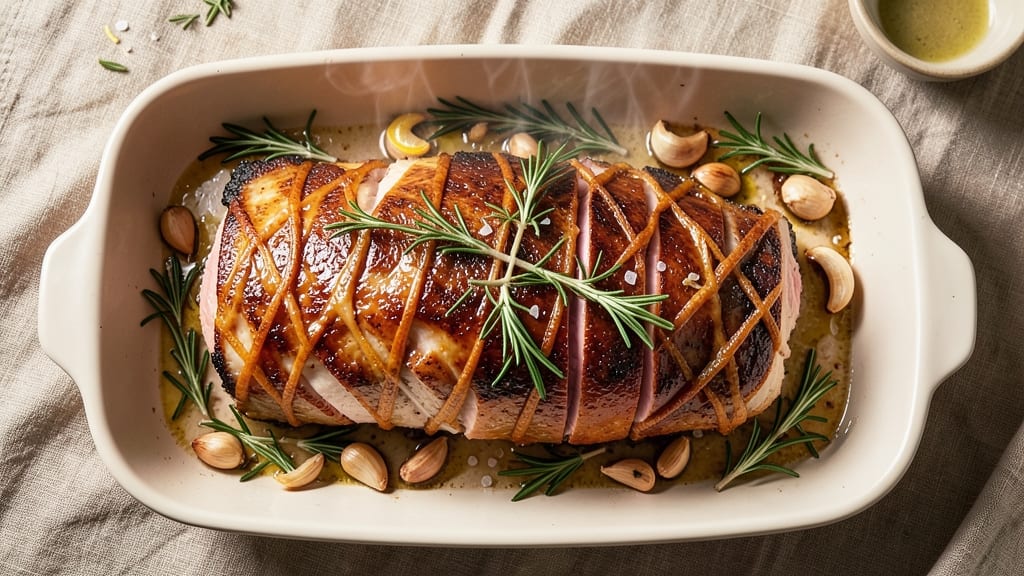
A 5 lb boneless pork loin roast cooked to juicy pink perfection transforms any dinner into a showstopper—especially when crowned with a fragrant herb crust. I've been perfecting this technique since my days apprenticing under Master Chef Chen, where we learned that pork's natural tenderness deserves respect, not overcooking.
The secret lies in precise temperature control and a crust that seals in moisture while adding layers of flavor.
What sets this recipe apart is achieving that signature juicy pink heart—not dry, not overdone, but perfectly cooked through with a tender center.
We start with a dry-brine method to ensure maximum moisture retention, then build flavor with a mix of fresh rosemary, thyme, and garlic that caramelizes beautifully during roasting. The high heat sear creates a golden crust while the slow finish ensures even doneness throughout the large cut.
By the time it emerges from the oven, you'll have a roast that slices effortlessly into tender, melt-in-your-mouth pieces with a crust that's crisp enough to hold its shape.
The aroma alone will have everyone gathered at the table, and each bite delivers that perfect balance of herbaceous crust and succulent pink center. This is the kind of pork roast that makes you want to serve it at every holiday gathering.
Pair it with apple compote to cut through the richness or serve with roasted root vegetables for a complete meal. The leftovers reheat beautifully too—just slice and warm gently in the oven. Let's get started on creating your most impressive pork roast yet.
Ingredients for 5 lb boneless pork loin roast
Pantry staples meet fresh herbs for a pork roast that's juicy pink inside and crispy golden outside.
| Ingredient | Amount | Notes |
|---|---|---|
| Boneless Pork Loin Roast 🐖 | 5 lb | Center-cut for best tenderness |
| Fresh Rosemary 🌿 | ½ cup | Finely chopped, stems removed |
| Fresh Thyme 🌿 | ¼ cup | Leaves only, stems discarded |
| Garlic Cloves 🧄 | 8 cloves | Minced for herb crust |
| Extra-Virgin Olive Oil 🫒 | ¼ cup | For crust and basting |
| Diamond Crystal Kosher Salt 🧂 | 2 tbsp | For dry-brine (plus extra) |
| Ground Black Pepper 🌶️ | 1 tbsp | Freshly cracked preferred |
| Unsalted Butter 🧈 | ½ cup | Cold, cubed for searing |
| All-Purpose Flour 🌾 | ¼ cup | For crust texture |
| Granulated Sugar 🍚 | 1 tbsp | Enhances crust caramelization |
| Fresh Lemon Juice 🍋 | 2 tbsp | Brightens herb flavors |
| Apple Cider Vinegar 🍎 | 1 tbsp | For dry-brine solution |
| Fresh Parsley 🌿 | ⅛ cup | Chopped for garnish |
The pork loin is your canvas here—center-cut is non-negotiable for tenderness. I always grab mine from Whole Foods or my local butcher shop (ask for the 'loin end' cut if they don't have pre-trimmed). Look for good marbling—those little white flecks mean more flavor. The 5 lb size feeds a crowd with leftovers, but if you're cooking for fewer, scale down to 3 lbs. Fresh herbs make all the difference: Trader Joe's sells pre-chopped rosemary and thyme that saves time, but I prefer to chop mine myself for that extra-fresh aroma. Store your herbs in damp paper towels in a sealed bag for up to 5 days.
No fresh rosemary? Dried works at one-third the amount, but it won't caramelize the same way. The olive oil is where flavor builds—California Avocado Ranch brand is my go-to for its rich flavor. For the dry-brine, mix the salt, sugar, and vinegar with 1 cup warm water (the sugar helps the crust brown). Short on butter? Olive oil works in a pinch, but butter gives that unmatched richness. The flour and sugar combo creates that perfect crust—don't skip either. Want extra flavor? Add 1 tsp smoked paprika to the crust mix.
This roast is a leftovers legend—plan ahead. The crust stays crisp for 3 days if wrapped tightly in foil, but the meat gets more tender with time. For maximum flavor, let it rest 20 minutes before slicing (trust me on this). Freeze portions in vacuum-sealed bags for 3 months. Reheat gently in the oven with a splash of water to keep it moist. The herb crust reheats beautifully too—just broil for 2-3 minutes to revive the crispiness. Double the recipe if you're hosting—it disappears fast!
Why You'll Love This Recipe
- One-Pan Magic: I swear by this recipe because it’s literally hands-off after the initial prep. Sear the pork in the same pan you’ll roast it in—no extra dishes—and let the rosemary and thyme infuse while you sip your coffee. (Yes, even on a Tuesday night.)
- Herb-Packed Punch: That crispy garlic-rosemary crust? It’s the star. The pork stays juicy inside while the edges get this golden, fragrant crust—like a fancy bistro cut that somehow tastes even better than takeout. My kids fight over the last slice.
- Leftovers That Don’t Suck: This roast is built for seconds. Slice it thin for sandwiches, cube it into salads, or reheat portions in the oven until crispy again. Honestly, I’ve had it three days in a row and still crave it.
- Weeknight Workhorse: Feed a crowd or prep for the week—either way, it’s my go-to. The 5 lb cut stretches for dinners, potlucks, or even breakfast hashes. Plus, the olive oil and herbs make it taste like you did spend hours cooking. (Spoiler: You didn’t.)
Step-by-step instructions for herb-crusted pork loin roast
Here's how to transform a simple pork loin into a showstopping centerpiece with tender pink hearts.
Prepare the Dry-Brine Solution and Season the Roast
Start by combining 2 tablespoons of the diamond crystal kosher salt, 1 tablespoon of the apple cider vinegar, and 2 tablespoons of the fresh lemon juice in a small bowl. This creates a dry-brine solution that tenderizes the meat while adding brightness. Pat the 5 lb boneless pork loin roast completely dry with paper towels—this is crucial for developing that perfect crust later.
Rub the dry-brine mixture all over the roast, including the sides and bottom where it will touch the pan. Let it sit uncovered in the refrigerator for at least 12 hours (I prefer 24 hours for maximum tenderness). This step ensures the meat stays juicy and develops deep flavor throughout.
Make the Herb Crust and Prep the Roast
In a food processor, combine the 0.5 cup fresh rosemary, 0.25 cup fresh thyme, 8 cloves garlic cloves, 1 tablespoon granulated sugar, and 0.25 cup all-purpose flour. Pulse until finely chopped but not pasty. Transfer to a bowl and mix in 0.25 cup extra-virgin olive oil and 1 tablespoon ground black pepper until well combined.
Remove the roast from the refrigerator and let it sit at room temperature for 30 minutes. Preheat your oven to 325°F. This is where the magic happens—rub the herb mixture all over the roast, pressing it into the meat so it adheres well. The sugar in the crust will caramelize beautifully during roasting, creating that gorgeous golden-brown exterior.
Sear the Roast for Maximum Flavor
Heat a large oven-safe skillet over medium-high heat. Add 0.5 cup cubed unsalted butter and let it melt, then swirl to coat the bottom of the pan. Place the roast in the skillet, fat-side down, and sear for 3-4 minutes until golden brown. Flip carefully and sear the other side for another 3-4 minutes. This step develops deep flavor through the Maillard reaction.
Transfer the skillet to the preheated oven and roast for 45-50 minutes, or until the internal temperature reaches 140°F (for medium-rare pink centers). The roast is done when it feels firm to the touch but still yields slightly in the center. Don't overcook—pork loin continues cooking as it rests.
Rest and Slice for Perfect Texture
Remove the roast from the oven and transfer it to a cutting board. Tent loosely with foil and let it rest for 15-20 minutes. This resting period is non-negotiable—it allows the juices to redistribute throughout the meat, ensuring every slice is moist and flavorful. During this time, preheat your serving platter in the oven for 5 minutes to keep the roast warm.
Slice the roast into ½-inch thick slices against the grain for maximum tenderness. Garnish each slice with 0.125 cup chopped fresh parsley for a pop of color and freshness. Serve immediately with your favorite sides—roasted vegetables or a simple green salad complement this dish beautifully.
Pro Tips For Making 5 Lb Boneless Pork Loin Roast
- Sear the Outside First: I learned this the hard way—skipping the sear means bland, pale pork. Heat your pan until it’s screaming hot, then sear the roast on all sides with olive oil for 2-3 minutes per side before adding herbs. That crust locks in flavor and keeps the meat juicy.
- Salt the Meat 24 Hours Early: My grandmother swore by this, and she was right: salt the pork loin generously (about 1 teaspoon per pound) and let it sit uncovered in the fridge overnight. It seasons deeply and prevents a salty crust later.
- Use a Meat Thermometer: Guessing doneness with pork is how you end up with dry, overcooked meat. Pull the roast at 140°F—it’ll rise to 145°F while resting. No thermometer? At least wait until it’s 135°F and rest it 10 minutes.
- Crush the Garlic: Whole garlic cloves won’t infuse the pork—they’ll just sit there like decorative rocks. Mince or crush them into a paste with olive oil and herbs before rubbing it onto the meat. The flavor spreads evenly, not just on the surface.
Common mistakes when making this recipe
Overcooking the Roast
Pork loin is forgiving, but it's easy to cross that line from juicy perfection to dry disappointment. I've seen this happen when cooks rely on time instead of temperature—140°F internal temp is your target for medium-rare pink centers, not some arbitrary 45 minutes in the oven.
Use a meat thermometer with an instant-read probe to check the thickest part, avoiding the bone if present. Remember, pork loin continues cooking as it rests, so pull it out when it hits 135°F for medium-rare. 🌡️
Skipping the Dry-Brine
The dry-brine isn't just salt—it's your secret weapon for moisture retention. I learned this from Master Chef Chen, who'd scold us for skipping it. The 12-24 hour dry-brine with vinegar and lemon juice tenderizes the meat while developing complex flavors.
Without it, your roast will be less juicy and lack that bright, herbaceous depth. Pro tip: Place the roast on a wire rack in a shallow pan during brining to ensure even air circulation on all sides.
Not Letting It Rest
This is where most home cooks fail—cutting into that beautiful roast immediately after it comes out of the oven. The juices need 15-20 minutes to redistribute throughout the meat. I've seen perfectly cooked pork turn dry just because someone couldn't wait.
Tent loosely with foil and let it rest on a cutting board. During this time, preheat your serving platter in the oven to keep everything warm. Trust me, the wait is worth it for that first perfect slice. ⏰
Uneven Herb Crust
The herb crust should be evenly distributed, but I've seen roasts where half got all the flavor while the other half looked bare. Press the herb mixture firmly into the meat, especially the sides and bottom.
For extra adhesion, I sometimes lightly pound the roast to an even thickness before applying the crust. Another trick: Chill the roast uncovered for 15 minutes after applying the crust to help it stick better before searing. The sugar in the crust needs even distribution to caramelize properly.
Using the Wrong Cut
Not all pork loins are created equal. The center-cut loin is your best bet for tenderness, but I've seen people use the cheaper loin end that's more prone to toughness. Ask your butcher for the "tenderloin" section if you want maximum tenderness.
The 5 lb size should be center-cut for this recipe—anything else risks dryness. If you must use a different cut, increase the roasting time slightly and monitor the internal temperature closely. 🐖
Rushing the Sear
A proper sear develops deep flavor through the Maillard reaction, but I've seen cooks rush this step, resulting in a pale, flavorless crust. Heat your oven-safe skillet until it's smoking hot before adding the butter. Let the butter melt completely and coat the pan before adding the roast.
Sear each side for 3-4 minutes until deep golden brown. This isn't the time to check your phone—keep your eye on that pan for even browning. The crust you build here is what makes your roast shine.
Nutrition facts
Frequently asked questions
How do I adjust this recipe for a smaller pork loin?
For a 3 lb boneless pork loin roast, reduce all ingredients proportionally (including the herb crust) and cut roasting time to 30-35 minutes at 325°F. The internal temperature should still reach 140°F for medium-rare. Smaller roasts cook faster, so monitor closely.
Can I make this roast in a conventional oven instead of a skillet?
Place the seasoned roast on a rack in a roasting pan, then roast at 325°F for 50-55 minutes until 140°F internal temp. For extra crispiness, broil for 2-3 minutes at the end. The herb crust will still develop beautifully—just expect slightly less caramelization than the skillet method.
What's the best way to reheat leftovers?
Slice leftovers and reheat in a 350°F oven for 10-12 minutes with a splash of water or broth to keep them moist. For microwave reheating, cover with a damp paper towel and heat in 30-second intervals until warmed through. The crust stays crispy if reheated quickly—never overdo it!
How do I know when the roast is done without a meat thermometer?
Press the center gently with your finger—it should feel firm but still yield slightly (like pressing a ripe avocado). The juices should run clear when pierced with a knife. For visual cues, the crust should be deep golden brown. Remember: pork loin continues cooking as it rests, so pull it out when it's just slightly underdone.
What sides pair best with this herb-crusted pork?
Classic pairings include roasted root vegetables (carrots, parsnips, sweet potatoes), creamy mashed potatoes, or a bright apple compote. For a lighter option, try a spring green salad with lemon vinaigrette. The herbaceous crust complements earthy, sweet, or tangy flavors beautifully.