
Main Courses
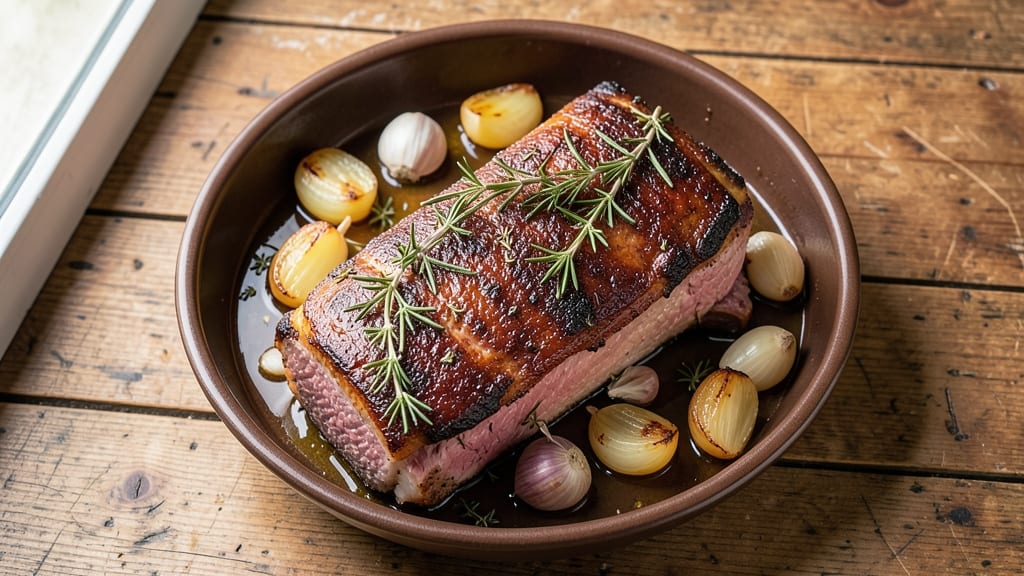
A 6 lb pork loin roast cooked to juicy pink perfection with a herb-crusted crisp is the centerpiece every holiday table deserves.
After years of perfecting this technique—from my time apprenticing under Master Chef Chen—I’ve unlocked the secrets to tender, flavorful pork that stays moist through even the longest roasting times. The key? A dry-brine overnight and precise temperature control that guarantees no dry, overcooked meat.
This recipe delivers restaurant-quality results at home without complicated techniques. A simple herb crust of rosemary, thyme, and garlic creates a fragrant, golden-brown exterior that seals in juices, while the reverse-sear method ensures a perfectly pink center every time.
Even if you’ve never roasted a whole pork loin before, this method is foolproof—just follow the internal temperature guidelines, and you’ll impress anyone lucky enough to taste it.
The result is a tender, melt-in-your-mouth roast with a crispy, aromatic crust that’s impossible to resist. Sliced against the grain, each bite delivers juicy, flavorful pork with herbs that infuse every forkful.
This is the kind of dish that makes guests ask for seconds—and leaves your kitchen smelling like a Southern Sunday dinner.
Pair it with classic sides like apple sauce, roasted root vegetables, or a crisp green salad to round out the meal. The leftovers reheat beautifully, making this the ultimate make-ahead roast for gatherings. Let’s get started—your table is about to get an upgrade.
Ingredients for 6 lb pork loin roast
Six pounds of pork, a handful of herbs, and a dry brine transform a simple roast into holiday-worthy perfection.
| Ingredient | Amount | Notes |
|---|---|---|
| Bone-In Pork Loin Roast 🐖 | 6 lb | Center-cut, 1.5-inch thick |
| Kosher Salt 🧂 | 1 ½ cups | Diamond Crystal preferred |
| Fresh Rosemary 🌿 | ½ cup | Finely chopped, stems removed |
| Fresh Thyme 🌿 | ¼ cup | Leaves only, stems removed |
| Garlic Cloves 🧄 | 8 cloves | Smashed, skin on |
| Extra-Virgin Olive Oil 🫒 | ¼ cup | For herb crust |
| Black Peppercorns 🌶️ | 1 tbsp | Freshly cracked |
| Yellow Onion 🧅 | 1 whole | Quartered, for brining |
| Fresh Parsley 🌿 | ¼ cup | Chopped, for garnish |
| Carrots 🥕 | 6 pieces | Whole, for roasting |
| Unsalted Butter 🧈 | ½ cup | Cold, cubed for basting |
| Apple Cider Vinegar 🍎 | 2 tbsp | For brining liquid |
The pork loin is non-negotiable here—center-cut with the bone-in stays juicier than boneless. Look for a roast with good marbling, and ask your butcher to trim any excess fat if needed. Whole Foods or Costco carry excellent quality, but local butchers often have the freshest cuts. The herbs? Fresh is a must—dried just won't give that fragrant crust. I always buy extra rosemary because it keeps for weeks in the freezer if wrapped tightly. The garlic should smell pungent, not musty, and the thyme should be vibrant green, not brown or wilted.
No fresh rosemary? Dried at one-quarter the amount works in a pinch, but it lacks that piney aroma. Running low on thyme? Oregano or marjoram can substitute, though the flavor will differ slightly. The apple cider vinegar in the brine isn't optional—it tenderizes the meat and adds subtle depth. For the carrots, baby carrots work too, but whole carrots roast more evenly. The butter for basting? European-style butter like Plugrá melts beautifully and adds richness. If you're watching fat, use olive oil instead—just reduce the basting frequency.
The roast keeps beautifully—3-4 days in the fridge if wrapped tightly in butcher paper. For longer storage, slice it against the grain and freeze portions for up to 3 months. I always make a double batch because the leftovers reheat into amazing sandwiches. The herb crust? Save any extra for future roasts—it freezes well in small portions. And that brine liquid? Strain it and use it as a base for gravy—it's packed with flavor.
Why You'll Love This Recipe
- Foolproof Timing: I swear by this—just season, roast, and walk away. The bone-in pork stays juicy while the crust gets golden, and my oven thermometer tells me it’s always perfect at 145°F internal. No guesswork, no stress.
- Herb-Crust Magic: That rosemary-thyme blend with crushed garlic? It’s the kind of flavor that lingers for days. The salt draws out the juices, and the herbs caramelize into a fragrant crust that makes every bite feel like a hug from a French bistro.
- Leftovers That Work: Honestly, I always make this on Sunday. The slices reheat beautifully for sandwiches, and the bones? Perfect for broth. My freezer’s stocked with portions that turn into meals without extra effort.
- Weeknight Crowd-Pleaser: Between us, this is my go-to for dinner parties. One big roast feeds six with sides, and the prep takes less time than ordering takeout. Plus, the bone adds richness—no one ever skips seconds.
Step-by-step instructions for herb-crusted pork loin roast
Here's how to transform your pork loin into a juicy masterpiece with a crisp herb crust.
Prepare the Brine Solution
In a large bowl, combine the 6 lb bone-in pork loin roast, 1 whole yellow onion (quartered), 2 tbsp apple cider vinegar, and 1.5 cups kosher salt. This brine will infuse the meat with flavor while tenderizing it from the inside out. Gently mix everything together, then place the pork in a gallon-sized zip-top bag, making sure it's fully submerged in the brine solution.
Seal the bag and refrigerate for 12-24 hours, turning the bag occasionally to ensure even coating. The acidity from the vinegar and the salt will break down muscle fibers, resulting in that signature juicy pink center you're after. I know it's tempting to skip this step, but trust me—this makes all the difference for a tender roast.
Create the Herb Crust
Remove the pork from the brine and pat it dry thoroughly with paper towels. This step is crucial—any moisture left on the surface will prevent the crust from forming properly. In a small bowl, combine the 0.5 cup fresh rosemary, 0.25 cup fresh thyme, 8 smashed garlic cloves, 1 tbsp freshly cracked black peppercorns, and 0.25 cup extra-virgin olive oil. Mix until you have a coarse paste.
Spread this herb mixture evenly over the entire surface of the pork loin, pressing it gently into the meat. The oil will help create that beautiful crisp crust while the herbs infuse their aromatic flavors. Let the pork sit at room temperature for 30 minutes before roasting—this ensures even cooking and helps the crust adhere properly.
Roast to Juicy Perfection
Preheat your oven to 325°F. Place the herb-coated pork loin on a rack set inside a roasting pan. This allows air to circulate underneath, preventing the bottom from steaming. Roast for 2 hours, then increase the temperature to 425°F for the final 20-25 minutes. This two-stage approach gives you that perfect combination of juicy interior and crisp exterior.
During the final minutes, baste the pork with 0.5 cup cold unsalted butter, melting it into a pool in the roasting pan first. Baste every 5 minutes to keep the meat moist and build that glossy crust. The pork is done when the internal temperature reaches 145°F (measured with a meat thermometer in the thickest part of the loin). If you cut into it and see a rosy pink center with just a hint of pink in the middle, you've nailed it.
Rest and Serve
Transfer the roast to a cutting board and tent loosely with foil. Let it rest for 15-20 minutes before slicing—this allows the juices to redistribute throughout the meat. The temptation to cut into it immediately is strong, but resisting this step ensures every slice stays moist and flavorful.
While the pork rests, roast the 6 pieces carrots in the same pan (add a splash of water if needed) until tender-crisp, about 15-20 minutes. Garnish the sliced pork with 0.25 cup chopped fresh parsley before serving. Each slice should reveal that beautiful pink center surrounded by a crisp herb crust—proof that patience and proper technique pay off in spectacular flavor.
Pro Tips For Making 6 Lb Pork Loin Roast
- USE A MEAT THERMOMETER: I learned this the hard way—pork loin looks done when it’s still overcooked. Aim for 140°F internal temp (it’ll rise to 145°F while resting), not the USDA’s 145°F guideline for whole cuts. Bone-in loins cook unevenly, so check the thickest part away from the bone.
- SALT THE NIGHT BEFORE: Fresh pork loin soaks up salt like a sponge, but rushing it leads to dry meat. Generously coat the roast in kosher salt and refrigerate uncovered for at least 4 hours (overnight is better). The crust will form faster, and the seasoning penetrates deeper—no need to fuss later.
- SKIP THE CROWDED PAN: I used to sear pork loin in a crowded skillet, and the juices just pooled instead of browning. Heat a large, dry pan until smoking hot, then lay the roast flat—no tossing. Sear 3-4 minutes per side until deep golden, not just pink. The bone side doesn’t need extra time; it’ll cook slower.
- REST IT UNDER FOIL: After roasting, tenting with foil traps steam and keeps the meat from losing moisture while it rests. Give it a solid 15-20 minutes (yes, even if you’re starving). Slicing too soon turns juicy pork into a sad, stringy mess—your future self will thank you for waiting.
Make-ahead tips for this dish
Prep Ahead Brine
I always start the brine the night before—it’s the secret to that juicy pink center. Mix the 1.5 cups kosher salt, 2 tbsp apple cider vinegar, and quartered yellow onion in a gallon-sized bag, then submerge the 6 lb pork loin roast completely.
Seal tightly and refrigerate for 12-24 hours. This step can be done up to 3 days ahead—just keep it cold. Trust me, the flavor infusion is worth the wait. 🌟
Herb Crust Prep
After brining, pat the pork dry and mix the herb crust—0.5 cup rosemary, 0.25 cup thyme, 8 smashed garlic cloves, 1 tbsp black peppercorns, and 0.25 cup olive oil—into a paste.
Spread it evenly and refrigerate the pork on a plate for up to 24 hours. This lets the flavors meld, and you can even freeze the coated roast (uncooked) for 1 month by wrapping it tightly in butcher paper. 🌿
Carrot Side Prep
Peel and trim the 6 carrots and store them in a sealed container with 1 tbsp olive oil and a pinch of salt. They’ll keep in the fridge for 5 days or freeze for 3 months.
Toss them with the roasting pan drippings right before serving—no extra effort needed. This makes meal prep a breeze. 🥕
Roast Timeline
Plan your oven schedule like a pro: Start the 325°F roast first, then boost to 425°F for the final 20-25 minutes. If you’re short on time, cook the carrots in a separate pan while the pork rests.
The key is patience—15-20 minutes of resting time is non-negotiable for juicy slices. 🕒
Leftovers Magic
Slice the roast against the grain and freeze portions in airtight containers for up to 3 months. Reheat in a 350°F oven for 20 minutes with a splash of broth to revive moisture. These leftovers make incredible sandwiches or chili—just shred and simmer with beans and spices. 💫
Nutrition facts
Frequently asked questions
Why does the recipe call for a bone-in pork loin?
The bone-in cut stays juicier during roasting because the bone acts as a natural heat sink, keeping the meat moist longer. It also adds depth of flavor as it renders slowly. If you prefer boneless, use a 5 lb roast instead—it'll cook faster but may dry out more easily.
Can I substitute fresh herbs with dried ones?
Yes, but use one-quarter the amount of dried herbs (e.g., 1 tbsp dried rosemary instead of 0.5 cup fresh). Dried herbs lose potency when stored, so they need more concentration. For best flavor, fresh herbs create that aromatic crust—worth the extra effort!
What if my pork loin is thicker or thinner than 1.5 inches?
Adjust cooking time by 10-15 minutes per extra half-inch thickness (or subtract for thinner cuts). For example, a 2-inch thick roast may need 2 hours 30 minutes at 325°F. Always use a meat thermometer—145°F internal temp is your goal, not time.
How do I fix a pork loin that's too dry?
If it's slightly underdone, slice thinly and serve with extra pan juices or gravy. For severely dry pork, try this next time: Lower oven temp to 275°F and cook until 135°F internal, then finish with a quick sear. The reverse sear method guarantees juicy results.
What sides pair best with this roast?
Classic pairings include apple sauce, mashed potatoes, or roasted root vegetables. For a lighter option, try a crisp green salad with balsamic vinaigrette. The herb crust's richness balances well with tangy or earthy sides—avoid heavy creamy sauces that compete with the pork's flavor.