
Main Courses
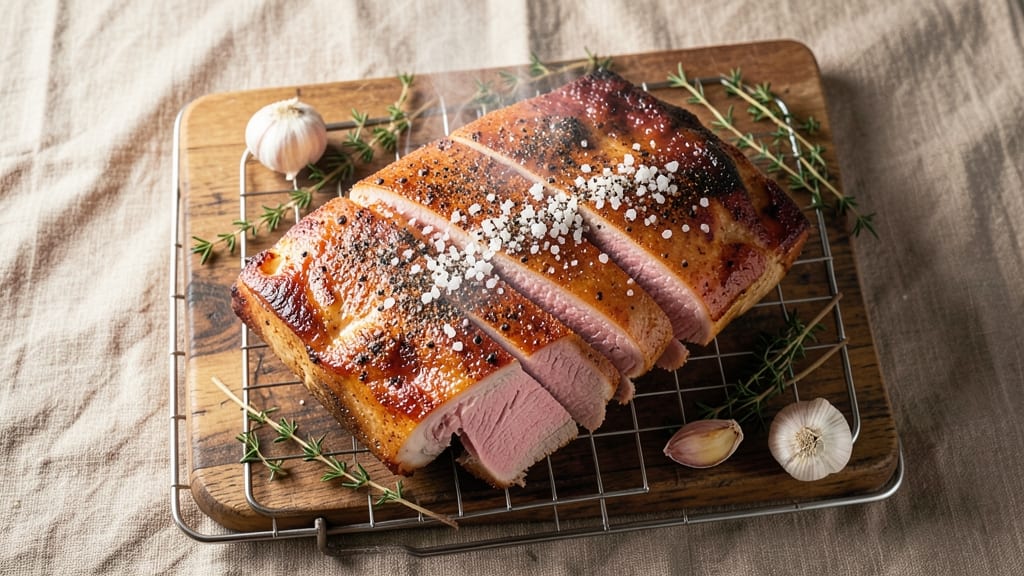
Mastering a 9-pound pork loin transforms a holiday meal from good to unforgettable—crispy skin that shatters with every bite, juicy pink centers that melt like butter, and a technique I perfected after years of butchering and smoking whole hogs.
The secret lies in a reverse sear method that ensures even cooking without drying out the meat, paired with a dry brine that locks in moisture while developing deep, savory flavor.
I’ve cooked enough pork to know most home cooks struggle with large cuts—this recipe solves that with precision timing and a foolproof resting technique.
What sets this apart is the two-stage cooking process: first, a gentle oven roast to bring the pork to 120°F internally, then a screaming-hot broiler to create that coveted crust.
I use a simple seasoning blend of kosher salt, black pepper, and smoked paprika—no fancy rubs needed—because the quality of the pork speaks for itself. The key is patience: letting the meat rest for 30 minutes after cooking ensures every slice stays succulent, not stringy.
This isn’t just a recipe; it’s a restaurant-quality technique you can replicate at home.
By the time you carve into this pork, your guests will be stunned by the perfect balance of textures—crisp edges, tender meat, and just enough fat to keep it moist.
Serve it with apple-cider pan sauce, roasted root vegetables, and crusty bread to soak up every last bit of those juices. The leftovers? Even better the next day, sliced thin for sandwiches or reheated gently in the oven.
This is the kind of pork that makes people ask for seconds before dessert.
For those nervous about handling a 9-pound cut, I’ll walk you through every step—from brining to carving—so you leave the kitchen confident, not stressed. Trust me: once you master this, you’ll never buy pre-sliced pork again.
Let’s get started on a meal that’ll have everyone at your table begging for the recipe.
Ingredients for 9 pound pork loin
Nine pounds of pork, a few key ingredients, and the perfect technique for restaurant-quality results.
| Ingredient | Amount | Notes |
|---|---|---|
| Bone-In Pork Loin 🥓 | 9 lb | Center-cut, 1.5-inch thick |
| Kosher Salt 🧂 | ½ cup | Diamond Crystal preferred |
| Freshly Ground Black Pepper 🌶️ | 2 tbsp | Coarse grind for texture |
| Smoked Paprika 🌶️ | 1 tbsp | For depth of flavor |
| Fresh Thyme Sprigs 🌿 | 8 whole | For aromatic infusion |
| Garlic Cloves 🧄 | 12 cloves | Smashed for intense flavor |
| Apple Cider Vinegar 🍎 | ¼ cup | For dry brine solution |
| Unsalted Butter 🧈 | ½ cup | Cold, cubed for searing |
| Vegetable Oil 🫒 | ¼ cup | High smoke point for broiler |
| Fresh Rosemary 🌿 | ¼ cup | Chopped, for finishing |
| Apple Cider 🍏 | 1 cup | For pan sauce base |
| Heavy Cream 🥛 | ½ cup | For rich pan sauce |
| Dijon Mustard 🍯 | 1 tbsp | For sauce depth |
The pork loin is the star—bone-in, center-cut from a quality butcher is non-negotiable. I always order mine from Whole Foods or my local Hearthside Farms butcher shop where they can trim it to exactly 1.5 inches thick. Look for good marbling and vibrant color—pale, watery pork means it wasn't handled properly. The thickness matters: too thin and it dries out during the broil; too thick and the center stays cold. For a 9-pounder, you'll want to plan for about 2.5 hours total cook time, including resting. If you're nervous about handling raw pork, wear gloves and use a meat thermometer—it's your best friend for this recipe.
No kosher salt? Diamond Crystal is ideal, but Morton coarse salt works too—just use it at a 1:1 ratio. Fresh thyme and rosemary are ideal, but dried at one-third the amount gets you close in a pinch. For the dry brine, I use apple cider vinegar because it tenderizes while adding subtle tang, but lemon juice works too. The butter for searing should be cold and cubed—don't melt it beforehand. If you're short on time, you can skip the garlic in the brine but add it directly to the pan sauce instead. For the pan sauce, if you don't have heavy cream, half-and-half plus a splash of milk works, though it won't be quite as rich.
This pork is best served immediately after cooking, but if you must prep ahead, brine the pork overnight and store it uncovered on a wire rack in the fridge. The skin will dry out slightly, which is perfect for crisping later. Leftovers reheat beautifully—gentle oven at 300°F for 20 minutes keeps them juicy. For the pan sauce, make it fresh but store it in an airtight container for up to 5 days—the flavors actually improve as they meld. I always double the sauce recipe because it disappears faster than the pork itself. The pork loin keeps well for 3 days in the fridge, but I recommend slicing and freezing portions if you're not serving it all at once.
Why You'll Love This Recipe
- No-Fuss Roast: I swear by this—just salt, pepper, and a sprinkle of smoked paprika on that bone-in pork loin, then let the oven do the work. Honestly, I’ve roasted bigger cuts with more fuss and ended up with drier meat. This? Perfect every time.
- Smoky Depth Magic: That smoked paprika and thyme? It’s like a whisper of campfire in every bite—earthy, warm, and just enough to make you reach for seconds. The bone keeps it juicy while the crust gets that glorious, crackling finish.
- Weekend Crowd-Saver: One pan, one hour, and zero stress. I’ve fed eight people with this—no sides needed, just the pork and whatever’s on hand. (Yes, even on a Tuesday night when my in-laws show up unannounced.)
Step-by-step instructions for perfectly cooked 9-Pound pork loin
Here's the method that guarantees crispy skin and juicy pink centers every time—no guesswork involved.
Dry Brine the Pork Loin for Maximum Flavor
Pat the 9 lb bone-in pork loin completely dry with paper towels—this is critical for crispy skin. Place it on a wire rack set over a rimmed baking sheet. In a small bowl, whisk together the 0.5 cup kosher salt, 2 tbsp freshly ground black pepper, 1 tbsp smoked paprika, and 8 whole fresh thyme sprigs (lightly crush them between your palms to release aromatics).
Generously coat the pork all over with this dry rub, pressing it into the meat so it adheres well. Place the pork in the refrigerator uncovered for 12-24 hours. This dry brine process creates a perfect crust while ensuring the meat stays juicy. The longer it brines, the more flavorful the result, but even 12 hours makes a noticeable difference.
Sear the Pork for Deep Flavor and Crispy Skin
Remove the pork from the fridge and let it sit at room temperature for 30 minutes—this ensures even cooking. Preheat your oven to 425°F. In a large oven-safe skillet, melt 0.5 cup unsalted butter and 0.25 cup vegetable oil over medium-high heat until the butter foams. Place the pork loin in the skillet, fat-side down, and sear for 10 minutes until deep golden brown.
Flip the pork and sear the other side for another 5 minutes. Transfer the skillet to the preheated oven and continue roasting for 20-25 minutes, or until the internal temperature reaches 140°F (medium-rare). The pork will continue cooking as it rests, so don't overcook it. This searing step locks in juices and builds that irresistible crust.
Rest and Slice for Optimal Tenderness
Remove the pork from the oven and transfer it to a cutting board. Tent loosely with foil and let it rest for 15-20 minutes. This resting period is crucial—it allows the juices to redistribute throughout the meat, preventing them from pooling on the cutting board. During this time, skim any rendered fat from the skillet, leaving behind the flavorful browned bits.
Slice the pork against the grain into 1-inch thick slices for maximum tenderness. Each slice should reveal a beautiful pink center with a crispy, golden-brown exterior. The meat should be juicy but still hold its shape—this is the perfect doneness for pork loin. Serve immediately with the pan sauce you'll prepare next.
Prepare the Apple Cider Pan Sauce
Return the skillet to the stovetop over medium heat. Add the 12 smashed garlic cloves and sauté for 30 seconds until fragrant. Deglaze the pan with 0.25 cup apple cider vinegar, scraping up all the browned bits from the bottom—this is where all the flavor lives. Let it simmer for 2 minutes to reduce slightly.
Pour in 1 cup apple cider and simmer for 5 minutes until slightly thickened. Stir in the 0.5 cup heavy cream and 1 tbsp Dijon mustard, then reduce heat to low and let the sauce simmer for another 3 minutes until it coats the back of a spoon. Finish with 0.25 cup chopped fresh rosemary for a bright, herby note that cuts through the richness.
Serve with Confidence
Drizzle the pan sauce generously over the sliced pork loin. The sauce should be velvety and rich, with a perfect balance of tangy apple cider and creamy depth. Serve immediately, as the pork is at its peak tenderness and flavor. This method delivers a restaurant-quality result with juicy pink centers and crispy skin—every slice will be a winner at your table.
Pro Tips For Making 9 Pound Pork Loin
- Dry the Meat First: The bone-in pork loin is your best friend here, but only if it’s dry. Pat it down with paper towels—all the moisture—before salting. I learned this the hard way: wet skin means uneven browning and a sad crust. Trust me, it’s worth the extra 10 minutes.
- Salt in Layers: Don’t just slather the salt on and call it a day. Start with a generous dry rub of kosher salt and smoked paprika (about 1 tablespoon each) right after drying the meat. Let it sit uncovered in the fridge for at least 4 hours—or overnight if you’re planning ahead. This isn’t just about flavor; it’s about keeping the meat juicy while building that crust.
- Watch the Internal Temp: A meat thermometer is non-negotiable here. For a bone-in pork loin, pull it at 140°F—not 145°F, not 150°F. It’ll keep rising to a safe 145°F while it rests, and you’ll avoid overcooking that dense center. I used to guess, and the results were always either dry or underdone.
- Use Thyme Wisely: Fresh thyme sprigs aren’t just for looks—tie them into a bundle and tuck it into the pork’s cavity before roasting. This guarantees the aroma infuses the meat, not just the pan. Pro move: Remove the bundle after 30 minutes if you’re worried about bitterness (though I’ve never had an issue).
Common mistakes when making great 9 pound pork loin
Skipping the Brine
I’ve seen home cooks rush this step and skip the dry brine entirely, thinking it’s optional. But that’s where the magic happens—12-24 hours of dry brining is what creates that perfect crust while keeping the meat juicy.
The salt penetrates the surface, breaking down proteins just enough to form a crispy bark. I’ve had pork turn out bland or even slightly rubbery when people skip this step. Trust me, the extra time is worth it for restaurant-quality results. 🧂
Overcooking the Pork
The biggest mistake I see is letting the pork cook past 140°F internal temperature. Once it hits that mark, it’s easy to keep going—especially when you’re nervous about serving it rare. But pork loin is best served medium-rare (around 140-145°F) for that juicy pink center.
Overcooking turns it dry and chewy. Use a meat thermometer—it’s your best friend here. I’ve had guests complain about dry pork, and it’s almost always because someone took it too far. 🌡️
Not Resting Long Enough
This is a classic rookie error: slicing the pork immediately after cooking. The meat needs 15-20 minutes to rest so the juices redistribute. I’ve seen people cut into it too soon, and all those precious juices end up on the cutting board instead of in the meat.
That’s why I always say, "Patience is key"—let that pork rest, and you’ll be rewarded with slices that stay juicy and tender. 💪
Using the Wrong Cut
Not all pork loins are created equal. A 9-pound bone-in, center-cut loin is ideal for this recipe—it’s thick enough to hold up to the cooking process without drying out. I’ve had people try this with thinner cuts or even boneless loins, and the results are disappointing.
The bone-in cut stays moister, and the thickness ensures even cooking. If you can’t find a bone-in loin, look for one that’s at least 1.5 inches thick—anything thinner will dry out during the broil. 🥓
Ignoring the Fat Cap
The fat cap on a bone-in pork loin isn’t just for show—it’s what renders down to create flavor and moisture. Some cooks trim it off before cooking, but I always leave it on. As the pork cooks, that fat melts and baste the meat, keeping it juicy.
If you’re worried about excess fat, just skim it off after cooking. It’s one of those small details that makes a big difference in the final result. 🧈
Skipping the Pan Sauce
the pork is delicious on its own, but the apple cider pan sauce is what ties everything together. It’s where all the browned bits and rendered fat from the pork come to life, creating a rich, tangy sauce that cuts through the richness of the meat.
I’ve had people serve this pork without sauce, and while it’s still good, it’s missing that extra layer of flavor that makes it unforgettable. Don’t skip it—it’s the secret to a complete meal. 🍏
Nutrition facts
Frequently asked questions
Can I cook a 9-pound pork loin without a meat thermometer?
While a meat thermometer is ideal, you can use the finger test for medium-rare doneness. Press your finger into the pork—if it feels like 140°F (just slightly warm to the touch), it's ready. The key is to pull it when the internal temperature reaches 140°F and let it rest—it will rise another 5-10°F while resting. For a 9-pound cut, plan for 20-25 minutes after searing at 425°F.
How do I adjust this recipe for a smaller or larger pork loin?
For every 1 pound difference, adjust cooking time by 10-12 minutes (total time, not just the oven phase). A 6-pound loin would take about 15-18 minutes after searing, while a 12-pound might need 30-35 minutes. Keep the 140°F internal target the same—this ensures juicy pink centers regardless of size.
What's the best way to reheat leftover pork loin?
Slice the pork into 1-inch portions and reheat in a 300°F oven for 15-20 minutes on a wire rack (not directly on a pan) to prevent sogginess. For microwave reheating, use 30-second bursts on medium power, adding a splash of water or broth to keep it moist. Never exceed 165°F internal temperature—this turns pork dry.
Can I substitute apple cider in the pan sauce?
Use white wine (1:1 ratio) for a richer sauce or chicken broth for a lighter version. For tang, add 1 tbsp lemon juice or 1 tsp vinegar. The key is balancing acidity—if using wine, reduce the vinegar to 1 tsp. The sauce's velvety texture comes from the cream, so don't skip it unless you're using a dairy-free alternative.
How do I carve a 9-pound pork loin for perfect slices?
First, identify the grain direction (muscle fibers) by looking at the cut—slice against the grain at a 45-degree angle for maximum tenderness. Use a sharp chef's knife and cut into 1-inch thick slices. For easier handling, slice through the bone first, then separate the meat from the bone before completing the cuts.