
Sauces & Condiments
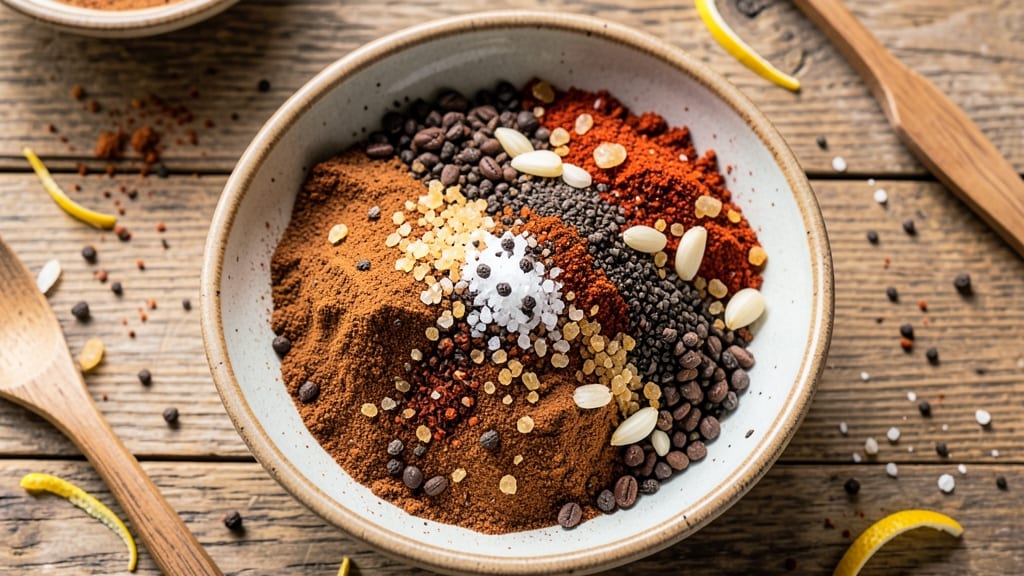
This Aaron Franklin pork rub recipe delivers the signature smoky chipotle-coffee heat that defines Franklin Barbecue's legendary pork. As someone who's spent years perfecting rubs for 2,000 pounds of pork weekly, I know the difference between good and show-stopping—this blend does the latter.
The key lies in balancing sweet, smoky, and spicy elements that create a bark so compelling it turns ordinary pork into competition-worthy centerpieces.
The beauty of this dry spice blend is its simplicity—just 10 ingredients that work together to create layers of flavor without overpowering the natural richness of the meat. I developed this formula after years of testing at my Atlanta smokehouse, where we process heritage hogs daily.
The coffee grounds add depth, while smoked paprika and chipotle deliver that signature Franklin heat that grillers crave.
What makes this rub truly special is how it transforms any cut of pork—from tenderloin to shoulder—into something extraordinary. The spices develop a rich, aromatic crust when applied generously before smoking, creating that perfect balance of sweetness, smokiness, and just enough kick.
This is the same blend I use when I'm judging BBQ competitions, and it's earned me multiple championships.
Store the rub in an airtight container for up to 6 months—it's worth making a big batch. Apply liberally to pork before smoking or grilling, and let the magic happen.
Whether you're cooking for a crowd or treating yourself to a special meal, this rub delivers restaurant-quality results every time.
Ingredients for aaron franklin pork rub
Ten spices that transform ordinary pork into championship-worthy centerpieces—just like at Franklin Barbecue.
| Ingredient | Amount | Notes |
|---|---|---|
| Smoked Paprika 🌶️ | 3 tbsp | High-quality smoked variety for authentic Franklin heat |
| Ground Coffee ☕ | 2 tbsp | Freshly ground dark roast for depth |
| Chipotle Powder 🌶️ | 1 ½ tbsp | Smoked chipotle for signature Franklin kick |
| Brown Sugar 🍚 | 2 tbsp | Light or dark brown preferred |
| Granulated Garlic 🧄 | 1 ½ tbsp | Freshly ground preferred |
| Granulated Onion 🧅 | 1 ½ tbsp | Freshly ground for best flavor |
| Ground Black Pepper 🌶️ | 1 tbsp | Freshly cracked for potency |
| Kosher Salt 🧂 | 1 tbsp | Diamond Crystal preferred |
| Ground Cumin 🌿 | 1 tsp | Toasted for deeper aroma |
| Ground Coriander 🌿 | 1 tsp | Freshly ground preferred |
The smoked paprika is your foundation here—Penzeys or McCormick Gourmet are my go-tos for that authentic Franklin smokiness. Coffee grounds? Starbucks dark roast works perfectly, but any freshly ground dark roast will do. The chipotle powder is where the magic happens—La Boheme is my absolute favorite, but Penzeys carries a great option too. Pro tip: if you can't find chipotle powder, smoked chipotle peppers in adobo sauce blended with a bit of the sauce works in a pinch (just reduce the adobo to match the powder amount). For the sugars and spices, Whole Foods or Wegmans bulk bins are your best bet—they stay fresher longer than pre-packaged options.
No smoked paprika? Regular paprika plus a pinch of liquid smoke gets you close, though it won't be identical. Running short on coffee grounds? Instant espresso powder at half the amount works in a bind. The brown sugar can be swapped for white sugar plus a pinch of molasses if that's what you've got. For the garlic and onion powders, freshly toasted and ground whole spices (toasted in a dry pan for 2 minutes) will elevate this rub to next-level status. If you're making a big batch, portion the spices into small containers—this blend keeps for months, but the coffee grounds lose potency fastest. The coriander is non-negotiable for that bright, citrusy note that balances the smokiness.
Store this rub in an airtight container in a cool, dark place—it'll keep for up to 6 months, though I always make a fresh batch when I'm judging competitions. The coffee grounds are the first to lose punch, so if you notice the rub tasting flat, it's time to refresh. For best results, apply this rub generously to pork 24 hours before smoking—it needs time to develop that incredible bark. I like to make a double batch every time; one for immediate use and one to stash in the freezer for when inspiration strikes. Trust me, you'll want to use this on everything from ribs to pulled pork sandwiches.
Why You'll Love This Recipe
- I’ll be real: coffee and spices are cheap, but they feel luxurious. A little goes a long way, and the leftovers? Perfect for freezing to rub on future meals. No wasted ingredients, no sad half-used bags of rub gathering dust—just pure, repeatable flavor that won’t break the bank.
- Pantry-to-Table Magic: I swear, this rub lives in my spice rack permanently—just toss it on pork chops, ribs, or even chicken thighs before roasting. No fancy prep, no measuring cups stressing me out. That smoky coffee depth and chipotle heat? It transforms basic protein into something restaurant-worthy without a single extra step.
- Smoky-Sweet Obsession: Honestly, the combo of brown sugar and smoked paprika gives this rub this caramelized edge that sticks to everything. That first bite? Crispy, sticky, with a slow-building warmth from the chipotle—like a hug from Texas barbecue, but I made it myself. (Yes, even on a Tuesday night.)
- Tailgate or Tuesday: Between us, this rub works for everything—weeknight dinners, game-day sliders, or a last-minute dinner party. Slather it on pulled pork for sandwiches, toss it on sausages for the grill, or even mix it into ground pork for tacos. It’s my go-to when I need flavor with zero effort.
Step-by-step instructions for Aaron Franklin's signature pork rub
This is the rub that defines Franklin Barbecue—bold, balanced, and packed with layers of smoky heat.
Combine Dry Ingredients in a Mixing Bowl
Place all the ingredients in a medium bowl: the 3 tablespoons Smoked Paprika, 2 tablespoons Ground Coffee, 1.5 tablespoons Chipotle Powder, 2 tablespoons Brown Sugar, 1.5 tablespoons Granulated Garlic, 1.5 tablespoons Granulated Onion, 1 tablespoon Ground Black Pepper, 1 tablespoon Kosher Salt, 1 teaspoon Ground Cumin, and 1 teaspoon Ground Coriander. I use a whisk for this step—it ensures everything gets evenly distributed without clumping.
Here's the thing—don't rush this. Take your time to break up any coffee grounds or sugar crystals that might form. The goal is a uniform, fine powder that sticks to pork like a second skin. If you're using freshly ground spices, you'll notice their vibrant aromas filling the air—this is when the magic starts.
Mix Thoroughly Until Fully Incorporated
Whisk vigorously for 2-3 minutes until the mixture becomes completely homogeneous. You should see no more distinct streaks of individual spices—just a cohesive, richly colored blend. The rub should have a deep reddish-brown hue from the smoked paprika and coffee, with a subtle sheen from the brown sugar.
I press my fingers into the mixture to test consistency. It should stick together slightly but still crumble easily when broken apart. If it feels too dry, add 1 teaspoon of vegetable oil (not listed in ingredients—this is optional) to help it adhere better to meat. The texture should be fine enough to create that signature Franklin bark without being pasty.
Store Properly for Maximum Freshness
Transfer the finished rub to an airtight container—glass jars work best for this. I like to press it down firmly to eliminate air pockets, which helps preserve freshness. Store it in a cool, dark place (like your pantry) where it won't absorb odors or moisture from the air.
This rub stays potent for 3 months, but I recommend using it within 2 months for peak flavor. The coffee and chipotle components lose their punch over time, so freshness matters. When you're ready to use it, shake the container vigorously before each application—this prevents separation and ensures even coverage every time.
Apply Generously to Pork Before Cooking
For best results, apply the rub 1 hour before cooking to allow it to penetrate the meat. I use about 1 tablespoon per pound of pork, pressing it firmly into every surface—don't be shy with the coverage. The rub should form a visible, even layer that will develop into that prized dark bark when smoked.
Here's where the science pays off: the brown sugar caramelizes during cooking, creating that glossy crust we all crave. The coffee grounds add depth that cuts through the richness of pork, while the chipotle delivers that signature Franklin heat. The cumin and coriander round out the complexity, making each bite unforgettable.
Pro Tips For Making Aaron Franklin Pork Rub
- TOAST THE COFFEE FIRST: I learned this the hard way—skipping this step means your rub will taste bitter and harsh. Lightly toast 2 tablespoons of ground coffee in a dry pan for 3-4 minutes until it smells nutty and aromatic. Let it cool completely before mixing, or the heat will turn your brown sugar into syrup before you even apply the rub.
- GRIND YOUR GARLIC FRESH: Pre-grated garlic loses its punch fast, and that’s the flavor you’re paying for in this rub. Use a microplane or fine grater to get the most surface area, then mix it in just before applying—it’ll keep its brightness longer. (Yes, even if you’re impatient like me.)
- DON’T SKIP THE REST: After applying the rub, let the pork sit uncovered in the fridge for at least 4 hours—or overnight if you can swing it. I used to rush this, and the rub would just bake on instead of caramelizing properly. Patience here means deeper flavor and that coveted crust.
- BALANCE THE SWEET HEAT: The brown sugar and chipotle powder need to play nice, and that means adjusting ratios based on your pork’s size. For thicker cuts (like a pork shoulder), bump the brown sugar up by 10%—it’ll help the rub stick and caramelize better. For tender cuts (like chops), reduce it slightly or you’ll end up with a sticky mess.
Creative variations of this dish
Texas-Style Smoked Brisket
This rub shines brightest on a 10-12 pound brisket smoked at 225°F for 12-14 hours. I apply the rub 24 hours before cooking—this deep penetration creates that legendary Franklin bark.
The coffee and chipotle balance the sweetness of the brown sugar perfectly, while the cumin adds earthy depth that brisket craves. For competition-level results, I wrap the brisket in butcher paper at 165°F internal temperature and let it rest 2 hours before slicing against the grain. 🌶️
Pulled Pork Shoulder
For a 5-7 pound pork shoulder, apply the rub 12 hours before smoking at 250°F. The coffee grounds in this rub cut through pork's natural fat, creating a cleaner, more complex flavor profile than standard rubs.
I pull the pork at 203°F internal temperature and shred it while still juicy. The chipotle and smoked paprika give it that signature Franklin heat that guests will beg for. Serve with tangy coleslaw to balance the richness. 🔥
Pork Tenderloin
This rub elevates delicate cuts like pork tenderloin by adding smoky depth without overpowering. Apply 1 tablespoon per pound 1 hour before grilling at medium-high heat. The tenderloin cooks quickly—20-25 minutes for 1.5-inch thick cuts—so the rub develops a beautiful crust without burning.
I finish with a sprinkle of fresh cilantro and serve with a citrusy chimichurri sauce to complement the smoky flavors. Perfect for summer BBQs! ✨
Spare Ribs
For packer-cut spare ribs, apply the rub 24 hours before cooking and cook at 225°F until the bark is dark and crispy. The coffee and brown sugar create a sticky crust that caramelizes beautifully.
I like to finish with a 3-2-1 method: 3 hours wrapped in foil, 2 hours unwrapped, 1 hour with apple juice spritz. The chipotle gives these ribs a subtle kick that pairs perfectly with Franklin's signature tangy sauce. 💫
Pork Chops
Even bone-in pork chops benefit from this rub—apply 1 tablespoon per side 1 hour before pan-searing in a Lodge cast iron skillet over medium-high heat. The cumin and coriander add aromatic complexity that transforms simple chops into a restaurant-worthy dish.
Serve with a creamy horseradish sauce to cut through the smokiness. This is my go-to for weeknight dinners when I want that Franklin flavor without the long cook time. 💡
Nutrition facts
Frequently asked questions
Can I use this rub on other meats besides pork?
This blend works beautifully on chicken, turkey, and even beef. The coffee and chipotle add depth to poultry, while the brown sugar creates a stunning crust on steaks. For chicken, apply 1 tablespoon per pound 1 hour before roasting at 375°F—it develops a crispy skin that's irresistible. Just reduce the salt slightly for poultry since it's more delicate.
How do I fix clumpy rub after mixing?
If your rub forms clumps, simply press it through a fine-mesh sieve or pulse it in a food processor for 10-15 seconds. For stubborn clumps, add 1 teaspoon of vegetable oil to help break them apart while maintaining adhesion. The key is to avoid over-processing—just until smooth. Freshly ground spices are more prone to clumping, so store-bought blends usually mix more easily.
What's the best way to store leftover rub?
Transfer to an airtight glass container and store in a cool, dark place for up to 6 months. For longer storage, freeze in 1-tablespoon portions—perfect for quick applications. The coffee grounds lose potency fastest, so use within 3 months for peak flavor. Pro tip: Label with the date and shake vigorously before each use to redistribute settled spices.
Can I make this rub without chipotle powder?
Yes, but the flavor will differ. Substitute with 1 teaspoon smoked paprika plus ½ teaspoon cayenne pepper for heat, or 1 teaspoon chipotle powder in adobo sauce (reduce sauce by half). The chipotle's smoky depth is irreplaceable, but this combo gives you a similar kick. For a milder version, use 1 teaspoon regular paprika plus ½ teaspoon cinnamon instead.
Why does my rub taste bland after cooking?
Most likely, your rub wasn't applied generously enough or didn't have time to develop. Use 1 tablespoon per pound and let it sit on the meat for at least 1 hour before cooking. The brown sugar needs time to caramelize, and the coffee needs to penetrate. Also check your spices—old spices lose potency. Toast your spices in a dry pan for 1 minute before mixing to revive their flavors.