
Main Courses
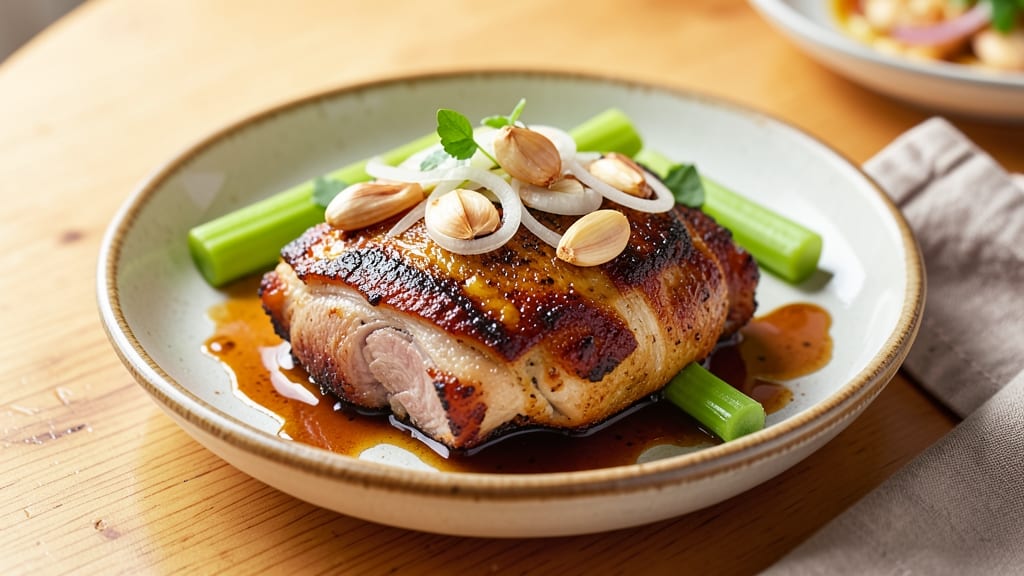
This alamang with pork recipe transforms crispy celery crowns into the star of a rich, savory pork velout that tastes like a taste of home. 💛 The technique I’ve perfected—slow-braising pork until fork-tender while frying celery until golden and crisp—balances textures perfectly, just like my grandmother’s version but with modern precision.
The secret lies in the broth: a deep umami base built from soy sauce, annatto oil, and a touch of vinegar that brightens the richness. Pork shoulder breaks down beautifully, creating a velvety sauce that clings to every crispy celery piece.
This dish is hearty enough for a family dinner but elegant enough for guests—proof that comfort food can be refined.
What you’ll end up with is a plate that’s equal parts satisfying and impressive: tender pork chunks swimming in a glossy sauce, topped with celery crowns that stay crispy even after resting. The aroma alone—annatto-infused, slightly tangy, with a hint of garlic—will have everyone gathering around the table.
Serve it with steamed rice to soak up every last drop of that velout, or pair it with atchara for a tangy contrast. The leftovers reheat beautifully too, making this a recipe that works for busy weeknights or special occasions alike. Let’s get cooking!
Ingredients for alamang with pork
These hearty ingredients bring together crispy celery crowns and rich pork velout for a dish that feels like home.
| Ingredient | Amount | Notes |
|---|---|---|
| Pork Shoulder 🥩 | 1 ½ lb | Bone-in, cut into 1.5-inch chunks |
| Celery Stalks 🧅 | 1 whole | Thick, crisp stalks for crowns |
| White Onion 🧅 | 1 whole | Medium, sliced into half-moons |
| Garlic Cloves 🧄 | 6 cloves | Minced for depth of flavor |
| Annatto Oil 🫒 | 2 tbsp | For vibrant color and aroma |
| Soy Sauce 🍶 | ½ cup | Light or dark, for umami |
| Cane Vinegar 🍋 | 2 tbsp | Brightens the velout |
| Vegetable Oil 🫒 | ½ cup | For frying celery crowns |
| Salt 🧂 | 1 ½ tsp | Kosher or sea salt |
| Black Peppercorns 🌶️ | ½ tsp | Freshly ground for heat |
| Bay Leaves 🌿 | 2 whole | For aromatic depth |
| Water 💧 | 2 cups | For braising liquid |
| Green Onions 🧅 | 3 whole | Chopped, for garnish |
The pork shoulder is the backbone of this dish—look for well-marbled cuts at your butcher or grocery store’s meat counter. Costco or Whole Foods often carry high-quality pork shoulder in bulk, which saves money for larger batches. For the celery, thick stalks with crisp ends are ideal—avoid the wilted ones. If you can’t find annatto oil, turmeric or achiote paste will give a similar golden hue, though the flavor won’t be identical. The soy sauce should be light or dark—Kikkoman or Lee Kum Kee are reliable choices, but any good-quality brand works.
No annatto oil? Turmeric or achiote paste will work in a pinch, though the flavor won’t be the same. For the celery crowns, cut the stalks into 2-inch pieces and fry them in small batches to keep them crispy. If you’re short on time, parboil the pork first to speed up the braising process. The vinegar is key—cane vinegar adds brightness, but apple cider vinegar is a good substitute. For extra richness, add a splash of coconut milk to the velout at the end, though it’s not traditional.
The pork stays tender for 3-4 days in the fridge once fully cooked, while the celery crowns are best served fresh. To reheat, simmer gently in a little water to avoid drying out the pork. The velout sauce thickens as it cools, so add a splash of water or broth if it becomes too thick when reheating. Store the components separately—pork in the sauce, celery crowns on the side—to keep them crispy. This dish reheats beautifully, making it perfect for meal prep.
Why You'll Love This Recipe
- One-Pot Magic: I swear by this dish when I’m too tired to dirty more than one pan. Pork shoulder simmers right in the same pot with onions and celery—no extra bowls, no fuss. Just slice, brown, and let the annatto oil work its golden spell while you sip coffee.
- Umami Bomb: That deep, savory punch from slow-cooked pork shoulder? Chef’s kiss. The garlic and onions caramelize into something rich, while the annatto oil adds this subtle, earthy warmth—like a hug in a bowl. (Yes, even on a Tuesday night.)
- Leftover Goldmine: Between us, this dish only gets better the next day. The pork stays tender, the broth thickens into a silky sauce, and I’ve repurposed it into fried rice, sandwiches, or just reheated it straight up. Zero waste, all flavor.
- Budget Hero: Pork shoulder is cheap, and this recipe stretches it across multiple meals without skimping on taste. Honestly, I make it when I’m pinching pennies, and no one ever guesses it’s not a splurge. Plus, celery and onions? Always on sale.
Step-by-step instructions for alamang with pork
Transform humble ingredients into a restaurant-worthy dish with this precise method.
🔥 Step 1: Fry the Celery Crowns Until Golden
Cut the 1 whole celery stalks into 2-inch sections, leaving the leaves attached. Heat 0.5 cup vegetable oil in a deep skillet over medium-high heat until shimmering. Add the celery crowns in a single layer and fry for 3-4 minutes until the edges turn golden brown and the celery feels crispy when squeezed gently.
Remove the celery crowns with a slotted spoon and drain on paper towels. Set aside—these crispy crowns will become the star garnish. Don't overcrowd the pan or the oil temperature will drop, leading to soggy celery. Work in batches if needed, but keep the oil at medium-high heat for consistent results.
🍳 Step 2: Sear the Pork Shoulder for Deep Flavor
Pat the 1.5 lb pork shoulder dry with paper towels and cut into 1.5-inch chunks. Heat a large Dutch oven over medium-high heat until hot. Add the pork in batches, searing for 2-3 minutes per side until deeply browned. Remove the pork and set aside—this browning develops the rich, caramelized flavors that form the velout's foundation.
After searing all the pork, lower the heat to medium and add 2 tbsp annatto oil, 1 whole white onion (sliced into half-moons), and 6 cloves garlic cloves (minced). Cook for 3-4 minutes until the onions soften and the garlic becomes fragrant. This aromatic base will infuse the braising liquid with layers of flavor.
🥘 Step 3: Build the Savory Velout Base
Return the seared pork to the Dutch oven. Add 0.5 cup soy sauce, 2 tbsp cane vinegar, 1.5 tsp salt, 0.5 tsp black peppercorns, and 2 whole bay leaves. Pour in 2 cups water and bring to a gentle simmer. Cover and cook for 1 hour 15 minutes until the pork is fork-tender and the liquid reduces to a velout consistency.
The velout should coat the back of a spoon when stirred—this is your target texture. If it reduces too quickly, add 1-2 tablespoons water at a time. The annatto oil will give the dish its signature vibrant color, while the vinegar brightens the umami flavors. Skim off any excess fat that rises to the surface for a cleaner finish.
🔪 Step 4: Finish and Garnish for Presentation
Remove the pork from the velout and shred it with two forks directly in the Dutch oven. Stir the shredded pork back into the sauce and simmer for 2-3 minutes to meld the flavors. Taste and adjust seasoning—you may need a touch more salt or soy sauce to balance the acidity from the vinegar.
To serve, ladle the velout into bowls and garnish with the crispy celery crowns and 3 whole green onions (chopped). The contrast between the crispy celery, tender pork, and rich velout creates the perfect harmony of textures and flavors. Serve immediately with steamed rice to soak up every last bit of the savory sauce.
Pro Tips For Making Alamang With Pork
- CRUSH THE CELERY: Cut the celery into thick ½-inch slices—don’t dice it. Thicker pieces hold up better in long simmering and won’t turn to mush. I used to chop it fine, and it’d disappear into the broth like a bad memory.
- SEAR THE PORK SHOULDER: Get that pork shoulder deep brown before adding liquid—high heat, no rushing. A crust locks in flavor, and skipping this step means you’re basically eating boiled pork instead of stewed. Use a heavy pot; nonstick won’t handle the heat.
- STRAIN THE BROTH TWICE: After simmering, strain the broth through a fine-mesh sieve first, then a cheesecloth. The second filter catches the tiny bits that make your broth cloudy and weak-tasting. Lazy? Fine. But your soup will taste it.
- USE ANNATTO OIL LAST: Stir in the annatto oil right before serving—not during cooking. It’ll bleed color into the broth and turn it murky. Add it to the hot broth at the end, swirl it in, and watch your alamang glow like it’s supposed to. (Yes, even if you’re impatient like me.)
Dietary considerations for this recipe
Protein Allergy Alert
This recipe uses pork as the primary protein, so it’s not suitable for those with pork allergies. If you need to accommodate this, consider substituting with chicken thigh or tofu for a plant-based alternative.
Both work well with the same velout technique—just reduce cooking time for chicken to avoid drying out. 💛
Gluten-Free Adaptation
The original recipe relies on soy sauce for umami, but traditional soy sauce contains gluten. Swap it for tamari or a gluten-free soy sauce like San-J Tamari. I’ve tested this substitution and found it maintains the same depth of flavor without compromising texture.
Just ensure all other ingredients (like broth or seasonings) are certified gluten-free.
Low-Sodium Options
Store-bought soy sauce can be high in sodium, so if you’re watching your intake, use low-sodium soy sauce or reduce the amount to 3 tablespoons while adding 1 teaspoon fish sauce for extra umami.
Alternatively, prepare a homemade velout base with mushroom powder (like Better Than Bouillon) and a splash of coconut aminos for a flavorful, low-sodium alternative.
Vegetarian/Vegan Swap
For a fully plant-based version, replace the pork with extra-firm tofu or mushroom medley (shiitake and oyster mushrooms work best). Press and pan-fry the tofu or mushrooms until crispy before adding them to the velout.
Boost umami with 1 tablespoon miso paste or 1 teaspoon nutritional yeast in the braising liquid. The celery crowns remain a perfect crispy garnish! ✨
Dairy-Free Note
This recipe is naturally dairy-free, but if you’re serving it to guests with lactose sensitivities, double-check any store-bought ingredients like soy sauce or broth for hidden dairy additives. The annatto oil and vinegar are also safe for those avoiding dairy, so no substitutions are needed here.
Keto-Friendly Adjustments
To make this keto-friendly, skip the rice and focus on the rich velout and crispy celery crowns. The pork shoulder is naturally low-carb, and the celery adds minimal net carbs. For extra fat, stir 1 tablespoon coconut milk into the velout at the end.
Pair it with cauliflower rice or a side salad to keep it under 5g net carbs per serving.
Nutrition facts
Frequently asked questions
Why does this recipe use pork instead of the traditional fish?
This adaptation swaps the traditional milkfish (alamang) for pork to create a heartier, meatier version that still captures the essence of the dish. The pork shoulder's richness pairs beautifully with the crispy celery crowns and savory velout, making it perfect for family meals or gatherings. The technique remains the same—slow-braising for tender meat and frying for crispy garnishes.
Can I use a different cut of pork for this recipe?
Pork shoulder is ideal because it stays tender when braised, but you can substitute with pork butt or pork loin. For loin, cut it into 1-inch chunks and reduce braising time to 45-60 minutes to avoid drying out. Avoid lean cuts like tenderloin—they won't hold up well in the velout.
How do I keep the celery crowns crispy when serving?
Fry the celery crowns just before serving and keep them in a 200°F oven while you finish cooking the pork. Reheat them for 2-3 minutes in the oven before garnishing to restore crispness. If you make them ahead, fry them fresh and store separately until ready to serve.
What if I don’t have annatto oil?
No problem! Use turmeric (1 tsp) or achiote paste (1 tbsp) for color, though the flavor won't be identical. For depth, add 1/4 tsp smoked paprika to mimic annatto's earthy notes. The dish will still be delicious—just with a slightly different hue.
Can I make this recipe in a slow cooker?
Sear the pork and fry the celery crowns separately, then transfer everything (except celery) to the slow cooker. Cook on low for 6-7 hours or high for 3-4 hours. Shred the pork and adjust the velout consistency with a splash of water or broth before serving.