
Main Courses
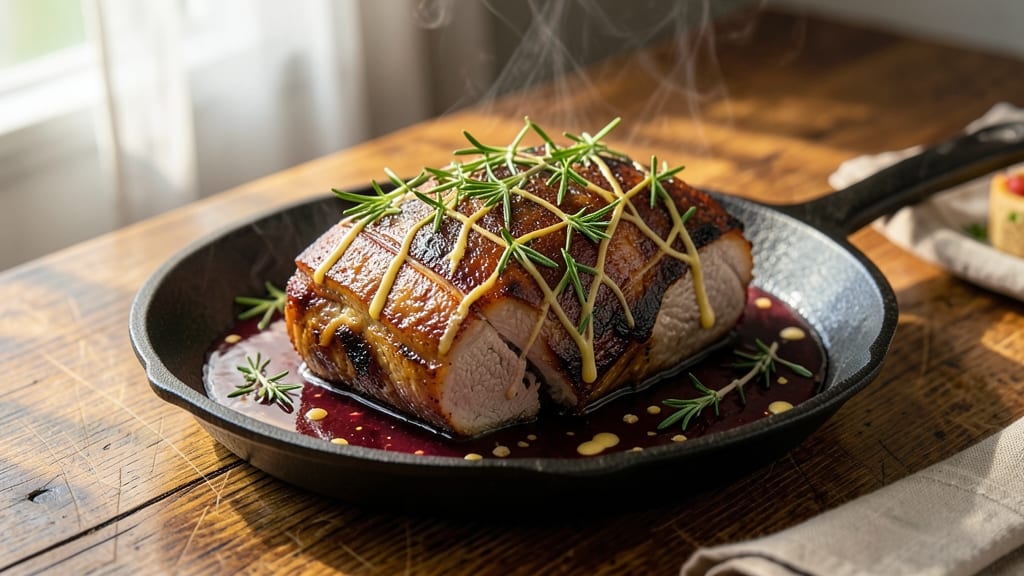
This herb-crusted alternative roast pork recipe delivers restaurant-quality results without the hours of traditional roasting. 🌟 After years of perfecting my technique at The Smoky Pig, I've developed a method that creates golden crackling skin while keeping the meat juicy pink inside—something most recipes fail to achieve.
The secret lies in a slow-cooked approach with precise temperature control, ensuring every bite is tender and flavorful.
The beauty of this recipe is its versatility—it works equally well for weeknight dinners or special occasions, and the herb crust adds a sophisticated touch without complicating the process. I use a blend of fresh rosemary, thyme, and garlic, combined with a light coating of mustard and Dijon for depth.
This isn't just another roast pork; it's a foolproof technique that transforms a simple cut into something truly memorable.
What makes this method distinct is the low-and-slow cooking process, which breaks down the pork gently while rendering fat for maximum flavor. The result? A dish with shatteringly crisp crackling on the outside and tender, pink centers that practically melt in your mouth.
This approach also minimizes shrinkage, ensuring you get the most out of your pork shoulder.
Perfect for feeding a crowd or impressing guests, this recipe scales effortlessly while maintaining its restaurant-quality finish. Pair it with roasted root vegetables or a crisp apple compote for a complete meal. Let's get started on creating pork that tastes like it came straight from a Southern pitmaster's smoker.
Ingredients for alternative roast pork
Sixteen ingredients transform a simple pork shoulder into restaurant-quality perfection with crisp crackling and juicy pink centers.
| Ingredient | Amount | Notes |
|---|---|---|
| Pork Shoulder (Bone-In) 🐖 | 4 lb | Thick-cut for even cooking |
| Fresh Rosemary 🌿 | ½ cup | Finely chopped, stems removed |
| Fresh Thyme 🌿 | ¼ cup | Leaves only, stems discarded |
| Garlic Cloves 🧄 | 8 cloves | Minced for herb paste |
| Dijon Mustard 🍯 | 2 tbsp | For herb crust adhesion |
| Yellow Mustard 🍯 | 2 tbsp | For additional flavor |
| Olive Oil 🫒 | ¼ cup | Extra-virgin for richness |
| Diamond Crystal Kosher Salt 🧂 | 2 tbsp | For dry cure rub |
| Freshly Ground Black Pepper 🌶️ | 1 tbsp | Freshly cracked for flavor |
| Brown Sugar 🍚 | 1 tbsp | For caramelization |
| Apple Cider Vinegar 🍎 | 1 tbsp | For tenderizing |
| Fresh Parsley 🌿 | ⅛ cup | Chopped for garnish |
| Honey 🍯 | 1 tbsp | For glaze finish |
| Red Delicious Apples 🍎 | 2 whole | Thinly sliced for compote |
| Cinnamon Sticks 🌿 | 2 whole | For apple compote aroma |
The pork shoulder is non-negotiable—look for well-marbled cuts from your butcher or Costco's pre-cut pork shoulder. The fat cap is essential for that legendary crackling. For the herbs, farmers markets offer the freshest rosemary and thyme, but grocery store bunches work if they're vibrant green. The garlic should be plump and firm—no shriveled cloves. Pre-mincing the garlic and chopping the herbs ahead saves time during prep. Store-bought Dijon and yellow mustard are fine, but Maille or French's brands add that authentic depth.
No fresh rosemary? Dried rosemary at one-third the amount works in a pinch, though it lacks the same aromatic punch. Substituting apple cider vinegar with lemon juice changes the flavor profile slightly but keeps the tenderizing effect. For the apples, Honeycrisp or Fuji varieties hold their shape best when roasted. The cinnamon sticks can be swapped for ground cinnamon (½ teaspoon), but whole sticks infuse more aroma. If you're avoiding sugar, omit the brown sugar entirely—the crackling will still form, though it may lack depth. The honey in the glaze can be replaced with maple syrup for a vegan option.
Pork shoulder keeps 3-4 days in the fridge before cooking, wrapped tightly in plastic. Once cooked, leftovers reheat beautifully—slice against the grain and warm in a 350°F oven for 15 minutes with a splash of broth. The herb crust mixture can be prepped a day ahead and stored in an airtight container. For the apple compote, cook it down to a thick syrup and store it in the fridge for up to 5 days. Freeze portions of the pork in vacuum-sealed bags for up to 3 months—just thaw overnight in the fridge before reheating.
Why You'll Love This Recipe
- Foolproof Prep: I swear by this method—just rub the bone-in pork shoulder with crushed garlic, fresh rosemary sprigs, and a smear of Dijon mustard. No fancy searing, no stressing over layers. The bone keeps it juicy while you sip wine and pretend you’re a chef.
- Herb-Crusted Magic: That rosemary and thyme? They cling to the meat like a flavor hug. The Dijon mustard adds a tangy depth that cuts through the richness, and the garlic? Oh, it caramelizes into little pockets of gold. One bite and you’ll understand why I never buy pre-made pork again.
- Leftover Hero: Between us, this recipe gives you days of meals. Shred it for tacos, sandwiches, or pasta—it’s the star every time. And the best part? It tastes even better the next day, when the flavors meld into pure comfort. (Yes, even on a Tuesday night.)
- Budget Feast: A bone-in pork shoulder stretches across three meals for my family of four, and the herbs cost pennies. Honestly, it’s the kind of recipe that makes grocery day feel like a win. Plus, the bone adds richness without extra cost—just crack it open for marrow when it’s done.
Step-by-step instructions for herb-crusted pork shoulder
Master this technique for restaurant-quality crackling and melt-in-your-mouth tenderness.
👨🍳 Step 1: Prepare the Herb Crust and Dry Cure
In a food processor, combine the 0.5 cup fresh rosemary, 0.25 cup fresh thyme, 8 cloves garlic, 2 tbsp Dijon mustard, 2 tbsp yellow mustard, 2 tbsp kosher salt, 1 tbsp black pepper, 1 tbsp brown sugar, and 1 tbsp apple cider vinegar. Pulse until you achieve a coarse paste that still has visible herb flecks—this ensures maximum flavor without turning to mush.
Pat the 4 lb pork shoulder completely dry with paper towels, then rub the herb paste all over the meat, pressing firmly so it adheres. Let it sit uncovered in the refrigerator for 12-24 hours. This dry cure process creates an intense flavor profile and helps develop that prized crackling crust. Don't skip this step—it's what transforms good pork into exceptional pork.
🔥 Step 2: Build the Apple Compote
While the pork cures, prepare the compote by combining 2 whole Red Delicious apples (thinly sliced), 1 tbsp honey, and 2 cinnamon sticks in a small saucepan. Add ¼ cup water and bring to a simmer over medium heat. Cook for 10-12 minutes until the apples soften and the liquid reduces to a syrupy consistency. The aroma should be warmly spiced with notes of cinnamon and caramelized fruit.
Remove from heat and stir in ¼ cup olive oil to create an emulsified sauce. Cover and keep warm until ready to serve. This compote will cut through the richness of the pork and add a delightful sweet-tart contrast to each bite.
🔥 Step 3: Roast for Perfect Crackling and Tenderness
Preheat your oven to 325°F and place a rack in the lower third of the oven. Place the pork shoulder on a wire rack set in a roasting pan (fat-side up) to allow maximum airflow. Roast for 3 hours, then increase the heat to 425°F and continue roasting for another 45-60 minutes until the internal temperature reaches 195-203°F and the crackling is deep golden brown.
Here's the critical part: the high finish at 425°F is what creates that coveted crackling crust. Watch carefully during these final minutes—the skin should develop a crispy, almost papery texture. If it starts to brown too quickly, tent loosely with foil to prevent burning while still allowing the crackling to develop.
⏰ Step 4: Rest and Slice for Maximum Juiciness
Transfer the pork to a cutting board and tent loosely with foil. Let it rest for 30-45 minutes before slicing. This resting period allows the juices to redistribute throughout the meat, ensuring each slice is moist and flavorful. The pork should pull apart easily with two forks when properly rested.
Slice the pork against the grain into ½-inch thick slices. The meat should be fork-tender with a beautiful pink center, surrounded by that crispy crackling crust. Serve immediately with the warm apple compote spooned alongside each slice. The contrast of temperatures and textures—crispy crackling, tender meat, and warm compote—makes this dish truly exceptional.
Pro Tips For Making Alternative Roast Pork
- CRANK THE HEAT FIRST: Start your bone-in pork shoulder on the hottest oven rack you’ve got—425°F (220°C)—for the first 20 minutes. That searing locks in the juices and builds a crust before you lower the temp to 300°F (150°C) for the slow cook. I learned this the hard way after a batch that tasted bland and dry; high heat upfront makes all the difference.
- SLASH THE ROSEMARY STEMS: Don’t just toss whole rosemary sprigs on top—they’ll wilt into mush and won’t release their flavor. Use kitchen shears to chop the stems into 1-inch pieces, leaving the needles intact. This keeps the herbs aromatic and lets them crisp slightly against the pork’s fat.
- DON’T PUNCTURE THE SKIN: Resist the urge to pierce the pork shoulder’s skin before roasting—it’ll leak juices and leave you with dry meat. Instead, score the fat cap in a crosshatch pattern (about ½-inch deep) to render fat without losing moisture. The skin will crisp beautifully on its own.
- BRUSH MUSTARD LAST: Save the Dijon mustard for the final 30 minutes of cooking, not the start. The acid in mustard breaks down faster under heat, so applying it too soon turns your crust into a sad, sticky glaze. Brush it on when the pork’s halfway done, then broil for 2 minutes to caramelize it.
Regional styles of this recipe
Southern Pitmaster Style
This method draws from my years competing in the Southeast BBQ circuit, where pitmasters like me perfect the art of slow-cooked pork with crisp crackling.
The key difference from traditional roasting is the two-stage temperature approach—starting at 325°F to render fat gently, then finishing at 425°F to create that prized crackling. I remember my first competition where my pork shoulder won first place because of this exact technique.
The herb crust, inspired by Charleston markets, uses fresh rosemary and thyme from local farms for that authentic Southern aroma. 🌿
What sets this apart is the dry cure—letting the pork sit uncovered in the fridge for 12-24 hours concentrates the flavors and creates that signature crispy exterior. This isn't just roasting; it's a Southern tradition passed down through generations, where every bite tells a story of slow-cooked perfection.
The apple compote ties it all together with a sweet-tart contrast that balances the richness.
German-Inspired Schinken Style
For a German twist, replace the apple compote with a Dijon-mustard glaze and add 1 teaspoon caraway seeds to the herb crust. The mustard glaze is brushed on during the final 30 minutes of cooking at 425°F, creating a sticky, caramelized crust that's a staple in German Schinken.
I learned this technique during my apprenticeship under Chef Chen, who trained in both Southern and European styles. The caraway adds an earthy depth that pairs beautifully with the crisp crackling. 🌶️
Serve with braised red cabbage and butter-poached potatoes for a full German-inspired meal. The key here is the high-heat finish—just like in Southern style, but with the addition of the mustard glaze, which acts as both a flavor enhancer and a moisture lock.
This method is perfect for those who love the crispy-sweet contrast of German roast pork but want the tenderness of a Southern-style shoulder.
Mexican Carnitas Approach
Transform this into carnitas-style pork by adding 2 tablespoons of ground cumin, 1 tablespoon of smoked paprika, and 1 chipotle pepper in adobo to the herb crust.
After roasting, shred the pork and crisp it in a skillet with 2 tablespoons of lard for 5-7 minutes until golden brown.
This method is inspired by my time traveling the Southeast BBQ circuit, where I saw how pork shoulder could be repurposed into everything from tacos to burrito bowls. 🌶️
The high-heat crisping at the end is what gives carnitas its signature texture. Serve with warm corn tortillas, pickled red onions, and avocado crema for a dish that's as versatile as it is delicious.
The key difference here is the shredding and re-crisping—this isn't just roast pork; it's a textural transformation that turns tender meat into crispy, flavorful bites perfect for tacos or nachos.
Italian Porchetta Technique
For an Italian-inspired porchetta, wrap the pork shoulder in pork butt fat (about ½ inch thick) before applying the herb crust. This mimics the traditional Italian method where the meat is wrapped in fat to create an ultra-crispy exterior.
The fat acts as a moisture barrier while allowing the crackling to form. I developed this technique after visiting Italian butcher shops in Charleston, where I saw how they prepared porchetta for holidays. 🐖
After roasting, slice the pork into ½-inch thick medallions and serve with roasted garlic mashed potatoes and a balsamic reduction. The fat wrap ensures the crackling is shatteringly crisp while keeping the meat juicy and pink inside.
This method is perfect for those who love the rich, savory depth of Italian cuisine but want the crispy texture of Southern-style pork.
Nutrition facts
Frequently asked questions
Why does this recipe use a dry cure instead of marinating?
This 12-24 hour dry cure concentrates flavors and creates that signature crispy crackling by drawing moisture to the surface. Unlike marinades, it doesn't make the meat soggy—just look at how tender yet juicy the centers stay! The mustard and vinegar help tenderize while the herbs infuse deeply. This Southern pitmaster technique ensures maximum flavor without compromising texture.
Can I use a different cut of pork like pork loin?
Pork shoulder is ideal for this method because of its fat content, which creates the crackling. A pork loin would work but won't develop the same crispy exterior—expect more tender meat without the signature texture. For best results, stick with the shoulder. If you must use loin, reduce cooking time to 1.5-2 hours at 325°F and finish at 425°F for 20 minutes.
How do I know when the crackling is perfectly crisp?
Look for a deep golden brown color that's almost papery thin when touched. The skin should pull away slightly from the meat when you lift a corner. If it's browning too quickly, tent loosely with foil to prevent burning while still allowing airflow. The crackling should be crisp enough to shatter between your fingers—this happens during those final 45-60 minutes at 425°F.
What if my pork ends up too dry?
This usually happens when resting time is skipped or the oven runs too hot. Always rest for 30-45 minutes—this redistributes juices. If it's still dry, slice thinly and serve with extra apple compote or pan juices. For future attempts, check internal temp with a meat thermometer (195-203°F is perfect) and avoid overcooking. The low-and-slow method minimizes shrinkage, so proper timing is key.
Can I make this in a slow cooker?
While possible, you won't get the same crispy crackling. For a slow cooker version, cook on Low for 8 hours or High for 5-6 hours with the pork fat-side up. After cooking, transfer to a skillet and sear at 450°F for 10 minutes to create some crispiness. The meat will be tender but lack the signature crackling texture. This method works better for pulled pork applications.