
Main Courses
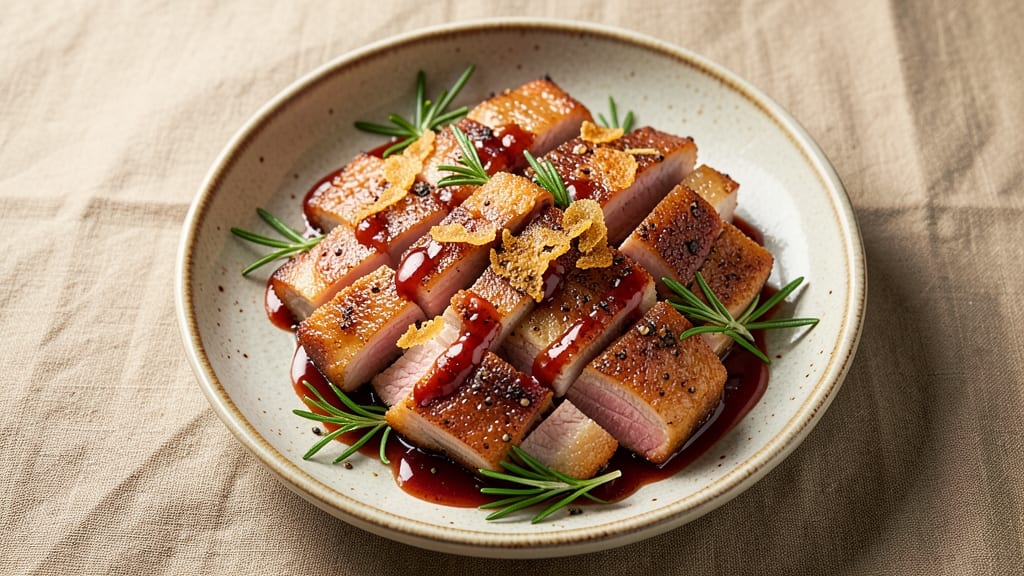
This American pork belly recipe delivers the ultimate contrast—shatteringly crisp crackling over melt-in-your-mouth, slow-roasted meat. After perfecting this technique at Atlanta's Smoky Pig, I've simplified it for home cooks while keeping the restaurant-quality results.
The secret? A precise scoring pattern and high-heat finish that transforms tough fat into golden, crispy layers without drying out the meat.
We start with a foolproof method that requires just five key steps: scoring, curing, slow roasting, basting, and the critical high-heat crisping phase. The curing process (using salt, sugar, and spices) tenderizes the meat while building flavor, while the slow roast develops that irresistible texture.
This isn't your average pork belly—it's a showstopper that commands attention at any table.
By the time you're done, you'll have pork belly that's crispy enough to stand up to forks and tender enough to cut with a spoon. The crackling should shatter like glass when you bite through it, revealing juicy, pink meat underneath.
This is the kind of dish that makes guests ask for seconds before they've even finished their first plate.
The beauty of this recipe is its versatility. Serve it as a centerpiece for holiday dinners, slice it for charcuterie boards, or use it to top tacos and bowls.
The leftovers reheat beautifully, making it perfect for meal prep. Let's get started on creating pork belly that'll have everyone wondering how you achieved such perfection.
Ingredients for american pork belly
Restaurant-quality pork belly starts with these precise ingredients and technique.
| Ingredient | Amount | Notes |
|---|---|---|
| Pork Belly 🐖 | 3 lb | Skin-on, thick-cut preferred |
| Diamond Crystal Kosher Salt 🧂 | ½ cup | For curing and seasoning |
| Granulated Sugar 🍚 | ¼ cup | Balances saltiness in cure |
| Ground Black Pepper 🌶️ | 1 ½ tbsp | Freshly cracked for depth |
| Smoked Paprika 🌶️ | 1 tbsp | For subtle smokiness |
| Fresh Rosemary 🌿 | ¼ cup | Chopped, stems removed |
| Fresh Thyme 🌿 | ⅛ cup | Leaves only, finely chopped |
| Extra-Virgin Olive Oil 🫒 | 2 tbsp | For scoring and basting |
| Brown Sugar 🍚 | 2 tbsp | For final crisping glaze |
| Cornstarch 🌾 | 2 tbsp | For ultra-crispy finish |
| Apple Cider Vinegar 🍎 | 1 tbsp | Enhances curing process |
| Garlic Cloves 🧄 | 4 cloves | Minced for cure mixture |
| Fresh Ginger 🌿 | 1 tbsp | Grated, for cure complexity |
The pork belly makes or breaks this dish—look for thick-cut pieces with plenty of fat marbling. Whole Foods or local butchers often carry the best quality, but don't overlook the meat department at Costco for bulk options. The skin should be thick (about 1/4-inch) and unbroken—any tears will prevent perfect crackling. For this recipe, you're aiming for about 3 pounds total, which serves 4 as a centerpiece with generous leftovers. If your piece is larger, trim it down to this size for even cooking. The fat-to-meat ratio should be roughly 50/50—if it's too lean, the crackling won't form properly.
No fresh rosemary? Dried works at one-third the amount, but fresh gives that bright, piney aroma that's essential. The apple cider vinegar might seem odd, but it's crucial for tenderizing the meat during the cure. Substitute white vinegar if needed, but don't skip it—it's what makes the meat silky. For the final crisp, the cornstarch is non-negotiable. Arrowroot powder works too, but cornstarch gives that signature shatter. The cure mixture (salt, sugar, spices) should be applied generously—about 1/4 cup per pound of meat. If you're short on time, you can reduce the cure to 4 hours (instead of overnight), but the flavor will be less developed.
This isn't a recipe for leftovers—it's a showstopper that deserves to be served fresh. However, if you must reheat, low oven (200°F) for 15 minutes is the only way to preserve that crisp. Store any unused pork belly in the fridge for up to 3 days before cooking, wrapped tightly in plastic. The cured meat can be prepped a day ahead and refrigerated. For the ultimate presentation, slice against the grain into 1/4-inch thick pieces. The crackling will stay crisp for about 30 minutes after slicing, so serve immediately. Freeze any extras for up to 2 months—just thaw overnight in the fridge before reheating.
Why You'll Love This Recipe
- I’ll be real: that first crack of the crust when you peel it back? Pure satisfaction. The Diamond Crystal kosher salt doesn’t just season—it transforms the pork belly into something crispy enough to stand up to a fork, while keeping the inside melt-in-your-mouth tender. No fancy techniques, just science (and a little patience).
- Salt-Crust Magic: I’ll be real: that first crack of the crust when you peel it back? Pure satisfaction. The Diamond Crystal kosher salt doesn’t just season—it transforms the pork belly into something crispy enough to stand up to a fork, while keeping the inside melt-in-your-mouth tender. No fancy techniques, just science (and a little patience).
- Sweet-Smoky Crunch: Here’s what sold me—the sugar isn’t just for sweetness. When caramelized with the smoked paprika and black pepper, it adds this deep, almost buttery richness that cuts through the fat. The pork belly ends up with layers of flavor: smoky on the outside, creamy inside, and a hint of sweetness that makes every bite worth it.
- Leftovers That Don’t Suck: Between us, most pork belly recipes leave you with sad, dry scraps. Not this one. The salt crust keeps it moist for days, so I can slice it thin for sandwiches, cube it into fried rice, or even toss it into ramen. Honestly, I’ve eaten it cold straight from the fridge—don’t judge.
Step-by-step instructions for American pork belly with crispy crackling
Here's how to transform simple pork belly into restaurant-quality perfection.
Prepare the Cure and Coat the Pork Belly
In a small bowl, combine the 0.5 cup Diamond Crystal Kosher Salt, 0.25 cup Granulated Sugar, 1.5 tbsp Ground Black Pepper, 1 tbsp Smoked Paprika, 4 cloves Garlic Cloves (minced), 1 tbsp Fresh Ginger (grated), and 1 tbsp Apple Cider Vinegar. Mix until the salt and sugar dissolve completely, creating a wet cure mixture.
Pat the 3 lb Pork Belly completely dry with paper towels—this is critical for crispy crackling. Rub the cure mixture all over the pork belly, including the fat cap and any crevices. Press the mixture into the meat so it adheres well. Place the pork belly in a non-reactive container, fat-side up, and refrigerate uncovered for 12-24 hours. This curing process draws out moisture and seasons the meat deeply, setting the foundation for that signature crispy exterior.
Score and Roast the Pork Belly
After curing, remove the pork belly from the refrigerator and let it sit at room temperature for 30 minutes. Preheat your oven to 325°F. Using a sharp knife, score the fat cap in a diamond pattern, cutting about ¼-inch deep without cutting into the meat. This scoring creates crispy crackling while allowing the fat to render evenly.
Place the scored pork belly fat-side up on a wire rack set over a baking sheet. Roast for 2 hours, basting with 2 tbsp Extra-Virgin Olive Oil every 30 minutes to promote even browning. The internal temperature should reach 160°F by the end of this stage. The pork belly will look golden but not yet crispy—this is just the first step toward that perfect texture.
Create the Crispy Glaze and Finish Roasting
In a small bowl, whisk together 2 tbsp Brown Sugar, 2 tbsp Cornstarch, and 0.25 cup Fresh Rosemary (chopped) with 0.125 cup Fresh Thyme (chopped). This mixture is your secret weapon for ultra-crispy crackling. Remove the pork belly from the oven and increase the temperature to 425°F. Brush the glaze mixture evenly over the fat cap, ensuring full coverage.
Return the pork belly to the oven and roast for an additional 30-45 minutes, or until the crackling is deep golden brown and crispy to the touch. The internal temperature should reach 170°F. The high heat at this stage caramelizes the sugars in the glaze, creating that irresistible crunch while keeping the meat silky and tender.
Rest and Serve
Once the pork belly reaches the desired internal temperature, remove it from the oven and transfer it to a cutting board. Tent loosely with foil and let it rest for 15-20 minutes. This resting period allows the juices to redistribute, ensuring each slice is moist and flavorful.
Slice the pork belly against the grain into ½-inch thick pieces. The crackling should be crisp enough to stand up on its own, while the meat underneath remains tender and juicy. Serve immediately with your favorite sides—think roasted potatoes, braised greens, or a fresh salad. The contrast between the crispy exterior and silky interior is what makes this dish truly special.
Pro Tips For Making American Pork Belly
- CRANK THE HEAT FIRST: That pork belly won’t render fat properly if you start slow. Get your pan screaming hot—we’re talking smoke coming out—before adding the meat. I used to take it easy, and half my batches ended up greasy instead of crispy. The first 3 minutes at max heat melt the fat fast and set up that perfect crust.
- SALT THE BELLY THE NIGHT BEFORE: Skip the rushed salting before cooking—this recipe needs a full 12-24 hours. Diamond Crystal kosher salt draws out moisture, but it takes time. Toss the belly in a mix of 1 cup salt per pound, then refrigerate uncovered on a wire rack. Trust me, the texture changes completely when you do this.
- DON’T SKIP THE SUGAR WASH: That granulated sugar isn’t just for flavor—it caramelizes into a sticky, glossy crust. Mix 2 tablespoons sugar with 1 tablespoon smoked paprika and a pinch of pepper, then pat it on after searing. The sugar needs direct heat to work its magic, so don’t brush it on too early.
- REST IT UNDER FOIL: The moment that pork belly hits the cutting board, cover it with foil and let it sit for 10 minutes. I know, you want to slice it now—but the fat will pool back into the meat instead of dripping everywhere. This keeps every bite juicy, not greasy. (Yes, even if you’re impatient like me.)
Flavor customization for this dish
Sweet & Smoky Glaze
Swap the brown sugar glaze for a honey-mustard-maple combo that caramelizes beautifully. Mix ¼ cup honey, 2 tbsp Dijon mustard, and 1 tbsp pure maple syrup, then brush it on during the final 425°F crisping stage.
The honey adds natural sweetness while the mustard cuts through the richness. I first tried this at a Georgia BBQ competition and it became an instant crowd favorite. 🔥
Spicy Asian-Inspired
Transform this into a fusion dish by adding 1 tbsp gochujang and 1 tbsp rice vinegar to the cure. For the final glaze, mix 2 tbsp soy sauce, 1 tbsp sesame oil, and 1 tsp sriracha.
Roast as directed, then finish with toasted sesame seeds. The umami from the soy sauce pairs perfectly with the crispy fat. This variation works especially well with steamed jasmine rice or cucumber salad. 🌶️
Herb-Infused Crisp
For a brighter flavor profile, add 1 tbsp fresh thyme and 1 tbsp fresh sage to the cure mixture. During the final crisping stage, make a glaze with 2 tbsp melted butter, 1 tbsp lemon zest, and 1 tsp lemon juice.
Brush it on just before serving—this keeps the crackling crisp while adding a citrusy brightness. The herbs from my farm always give this variation an extra layer of complexity. ✨
Garlic & White Wine
Elevate the dish with a white wine reduction glaze**. After the initial roast, deglaze the pan with ½ cup dry white wine and 2 minced garlic cloves, then reduce until syrupy. Brush this reduction over the pork belly during the final crisping stage.
The acidity from the wine cuts through the fat while adding depth. I developed this variation during my time in Charleston, where wine country is just a short drive away. 🍷
Smoked Paprika Rub
For a deeper smoky flavor, increase the smoked paprika in the cure to 2 tbsp and add 1 tsp cayenne pepper for heat. After scoring, rub the pork belly with 1 tbsp olive oil mixed with 1 tsp ground coriander before the final roast.
This variation has a Southwest BBQ vibe that works amazingly well with charro beans or cornbread. 🌶️
Maple-Bourbon Crisp
Add 1 oz bourbon to the cure mixture for a Southern twist. For the final glaze, combine 2 tbsp maple syrup, 1 tbsp bourbon, and ½ tsp cinnamon. Brush it on during the last 15 minutes of roasting.
The bourbon adds warmth while the maple syrup caramelizes beautifully. This is my go-to variation for holiday gatherings—it feels festive and special. 🍁
Nutrition facts
Frequently asked questions
How do I know if my pork belly has enough fat for crispy crackling?
Look for thick-cut pieces with a fat layer at least 1/4-inch thick covering the meat. The fat-to-meat ratio should be roughly 50/50—if it's too lean, the crackling won't form properly. Run your fingers over the skin: it should feel firm and unbroken, not thin or torn. For this recipe, a 3-pound piece with good marbling is ideal.
Can I skip the overnight curing step?
You can reduce the cure to 4 hours in a pinch, but the flavor won't develop as deeply. The curing process tenderizes the meat and draws out moisture, which is key for crispy crackling. If you're short on time, at least cure for 6 hours—this gives the salt and spices time to work their magic.
What's the best way to reheat leftover pork belly?
Use a low oven (200°F) for 15 minutes to preserve the crisp. Place the slices on a wire rack over a baking sheet to keep them crispy. Microwaving will make the crackling soggy, and frying can make it greasy. For best results, reheat only what you plan to serve immediately.
Why did my crackling turn out greasy instead of crispy? This usually happens if the pork belly wasn't fully dried before curing or if the oven wasn't hot enough during the final crisping stage.
What's the best way to slice pork belly for maximum crisp?
Slice against the grain into 1/4-inch thick pieces. The crackling stays crisp for about 30 minutes after slicing, so serve immediately. Use a sharp knife and work quickly to maintain that perfect texture. For presentation, arrange slices on a platter with the crackling side up.