
Main Courses
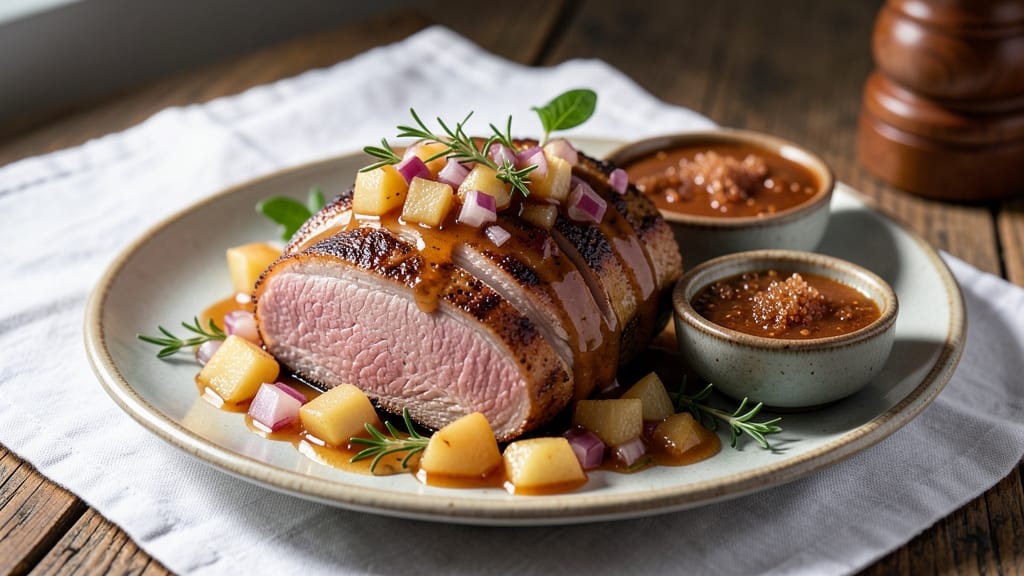
This apple chutney recipe for pork tenderloin transforms a simple weeknight meal into a restaurant-worthy experience with just a few carefully balanced ingredients.
The secret lies in caramelizing the chutney until it achieves that perfect sweet-tangy depth—where the natural sugars in apples melt into a glossy glaze that clings beautifully to tender pork.
I developed this pairing after years of perfecting pork dishes at The Smoky Pig, where we serve 2,000 pounds of it weekly, and this combination became an instant crowd-pleaser.
The magic happens in two stages: first, marinating the pork tenderloin in a blend of spices and apple cider to infuse flavor deep into the meat, then roasting it to medium-rare perfection while basting with the reduced chutney.
The result is a dish where every bite delivers juicy, tender pork with a glossy, caramelized crust that balances sweetness and acidity in every forkful. This isn't just a glaze—it's a flavor transformation that elevates pork from ordinary to extraordinary.
What makes this recipe truly special is its versatility. Serve it with roasted root vegetables for a complete autumnal meal, or pair it with creamy mashed potatoes to soak up every last drop of that sticky-sweet sauce.
The chutney's depth also makes it perfect for leftovers—it reheats beautifully, maintaining that perfect caramelized texture while keeping the pork impossibly moist. Trust me, once you try this combination, pork tenderloin will never taste the same again.
Here's where the real magic happens: the chutney's ability to caramelize without burning creates a natural glaze that locks in moisture while adding layers of complexity. We're talking about that perfect balance where the apples' natural sweetness meets the pork's savory richness, all tied together with a touch of spice.
This is the kind of dish that makes you want to slow down and savor each bite—no rushing, just pure, satisfying flavor. Let's get cooking.
Ingredients for apple chutney recipe for pork tenderloin
Sweet-tangy glaze meets juicy pork—just 13 ingredients transform this into a showstopper.
| Ingredient | Amount | Notes |
|---|---|---|
| Pork Tenderloin 🥩 | 1 ½ lb | Center-cut, trimmed of fat |
| Apples 🍎 | 3 medium | Honeycrisp or Fuji, peeled |
| Yellow Onion 🧅 | 1 whole | Medium size, finely chopped |
| Apple Cider Vinegar 🍏 | ½ cup | Bottled or homemade |
| Brown Sugar 🍚 | ½ cup | Packed firmly |
| Water 💧 | ½ cup | For caramelization |
| Fresh Ginger 🌿 | 1 inch | Peeled, thinly sliced |
| Garlic Cloves 🧄 | 3 cloves | Minced for depth |
| Ground Cinnamon 🌶️ | 1 tsp | For warmth |
| Ground Cloves 🌶️ | ¼ tsp | Whole or ground |
| Salt 🧂 | 1 tsp | Kosher or sea |
| Black Pepper 🌶️ | ½ tsp | Freshly cracked |
| Olive Oil 🫒 | 2 tbsp | For pork marinade |
The apples are non-negotiable—Honeycrisp or Fuji have that perfect balance of sweetness and tartness. Whole Foods or local orchards usually carry them in peak season, but any crisp apple works. For the pork, center-cut tenderloin is key—ask your butcher to trim the fat. The ginger and garlic? Fresh is a game-changer, but if you're in a pinch, dried works at half the amount. I always buy extra ginger because it freezes beautifully for months.
No apple cider vinegar? White vinegar plus 1 tsp apple juice concentrate gets you close. Brown sugar too expensive? White sugar with 1/4 tsp cinnamon works fine. The chutney's magic happens in the caramelization—don't rush it. For the pork marinade, I use olive oil and a pinch of salt to keep it simple. If you're feeling fancy, add a splash of dry sherry to the marinade. And trust me, the cloves are essential—they add that deep, aromatic punch that ties everything together.
This chutney keeps for 3 weeks in the fridge, but it actually gets better after a day or two as the flavors meld. The pork? Cook to 145°F internal temp, then let it rest 10 minutes—it'll stay juicy. For leftovers, I wrap the pork tightly with foil and reheat it in the oven with a splash of water. The chutney reheats beautifully too—just warm it gently on the stove and stir in a splash of water if it thickens too much.
Why You'll Love This Recipe
- One-Pan Magic: I swear by this trick—just sear the pork, toss in the diced apples and onions, then let the vinegar and sugar work their caramelized magic while you sip your coffee. No flipping, no fussing, just hands-off perfection.
- Sweet-Savory Balance: That tangy apple cider vinegar cuts through the pork’s richness while the brown sugar melts into the chutney for a jammy, sticky-sweet finish. Honestly? It’s the kind of bite you’ll crave even after the last bite.
- Leftovers Reinvented: Cold pork slices with chutney on toast? Yes, please. Or slice it thin for sandwiches—trust me, the flavor only gets better the next day. My lunchbox secret weapon.
- Crowd-Pleaser Budget Win: Pork tenderloin feeds four for under $15, and the apples-onion chutney stretches to three meals. Between us, this is the dish I make when friends drop by unexpectedly—no stress, all flavor.
Step-by-step instructions for apple chutney pork tenderloin
Here's how to create a stunning sweet-tangy glaze that transforms simple pork into showstopping perfection.
Prepare the Pork for Maximum Tenderness
Pat the 1.5 lb pork tenderloin completely dry with paper towels—this ensures a perfect sear later. Place it on a cutting board and make several shallow cuts at ¼-inch intervals along the length. These slashes allow the chutney to penetrate deeply during cooking, creating juicy, flavorful meat throughout.
In a small bowl, whisk together the 2 tbsp olive oil, 1 tsp salt, and 0.5 tsp black pepper. Rub this mixture all over the pork, including inside the slashes. Let it sit at room temperature for 15-20 minutes while you prepare the chutney. This resting time guarantees even cooking and helps the marinade adhere properly.
Build the Chutney Base
In a medium saucepan, combine the 3 medium peeled apples, 1 whole finely chopped yellow onion, 1 inch peeled sliced fresh ginger, and 3 minced garlic cloves. Cook over medium heat for 5 minutes, stirring occasionally, until the onions soften and become translucent. This foundational step develops the chutney's complex flavor profile.
Add the 0.5 cup apple cider vinegar and 0.5 cup brown sugar, stirring constantly. The mixture will bubble vigorously—this is normal. Let it simmer for 5 minutes until the sugar begins to dissolve and the apples start breaking down. The aroma will be intoxicating—this is where the magic begins.
Simmer to Perfect Consistency
Pour in the 0.5 cup water, then add the 1 tsp ground cinnamon and 0.25 tsp ground cloves. Reduce heat to low and let the chutney simmer uncovered for 20-25 minutes, stirring occasionally. You're looking for a thick, jam-like consistency that coats the back of a spoon. If it reduces too quickly, add 1-2 tablespoons water at a time.
Taste and adjust seasoning—you want a perfect balance of sweet, tangy, and spiced notes. The chutney should be vibrant and glossy with visible apple pieces. Here's the thing—this is your flavor foundation, so don't rush the simmering. The longer it cooks, the deeper the flavors develop.
Cook the Pork with Chutney Glaze
Preheat your oven to 400°F. Place the pork in a baking dish and spoon the warm chutney evenly over the top, pressing gently to ensure it seeps into the slashes. Cover the dish tightly with aluminum foil and bake for 20 minutes. This initial cooking phase ensures the pork reaches a safe internal temperature while absorbing maximum chutney flavor.
Remove the foil and increase the oven temperature to 425°F. Return the pork to the oven uncovered for 10-12 minutes until the internal temperature reaches 145°F and the chutney has caramelized to a deep amber color. The pork should be golden brown with a glossy, sticky glaze that's irresistible to the eye.
Rest and Serve for Maximum Juiciness
Transfer the pork to a cutting board and tent loosely with foil. Let it rest for 10-15 minutes before slicing. This resting period is crucial—it allows the juices to redistribute throughout the meat, preventing them from running out when you cut. The chutney will continue to thicken slightly during this time, creating an even more concentrated flavor.
Slice the pork into ½-inch thick medallions and spoon any remaining chutney from the baking dish over the top. Serve immediately with the caramelized glaze pooling beautifully on each slice. Each bite should deliver tender, juicy pork with a perfect balance of sweet, tangy, and spiced chutney that clings deliciously to every forkful.
Pro Tips For Making Apple Chutney Recipe For Pork Tenderloin
- Sear the Pork First: Hit the pork tenderloin with a quick, hot sear in a dry pan—just 2-3 minutes per side—before adding any liquid. This locks in juices and gives the chutney something to cling to later. I used to skip this, and the pork always ended up dry, no matter how long I rested it.
- Use Tart Apples Only: Granny Smiths or Braeburns are your friends here—skip the sweet varieties like Gala or Fuji. Their sharp acidity balances the brown sugar and vinegar, cutting through the pork’s richness. I learned this the hard way when my chutney tasted cloyingly sweet.
- Simmer the Chutney Low: Reduce the apple-onion-vinegar mix to a thick, syrupy consistency over medium-low heat—about 15-20 minutes. High heat burns the sugar and makes the chutney bitter. I’ve ruined this step twice, and trust me, you’ll taste the difference.
- Deglaze with Vinegar: After searing the pork, splash in ¼ cup of apple cider vinegar right away to scrape up the browned bits. Those bits pack flavor, and the vinegar cuts the bitterness. It’s not a lot of extra work, but it makes the chutney taste deeper. (Yes, even if you’re impatient like me.)
Pro cooking tips for great apple chutney recipe for pork tenderloin
Temperature Precision
Cooking pork tenderloin to perfection requires precise temperature control. Start by roasting the pork at 400°F for 20 minutes to ensure even cooking and flavor penetration. Then, crank the oven to 425°F for the final 10-12 minutes to caramelize the chutney beautifully.
I use a ThermoWorks Smoke thermometer to monitor both the oven temp and the pork's internal temperature—aim for 145°F. Overcooking dries out the meat, so resist the urge to peek! 🌡️
Chutney Caramelization
The secret to that irresistible glossy glaze lies in proper chutney reduction. Simmer the chutney uncovered on low heat for 20-25 minutes, stirring occasionally, until it reaches a thick, jam-like consistency. The sugar in the apples and brown sugar will caramelize naturally, creating that perfect sweet-tangy balance.
If it reduces too quickly, add 1-2 tablespoons water at a time. Pro tip: The longer you simmer, the deeper the flavor—don't rush this step!
Pork Prep Matters
Never skip the ¼-inch slashes along the pork's length—they allow the chutney to penetrate deeply, creating juicy, flavorful meat throughout. After making the slashes, let the pork sit at room temperature for 15-20 minutes before cooking.
This resting time ensures even cooking and helps the marinade adhere properly. I also recommend patting the pork completely dry before seasoning—this guarantees a perfect sear and prevents steam from interfering with the caramelization.
Resting for Juiciness
This is where many home cooks go wrong. After removing the pork from the oven, tent it loosely with foil and let it rest for 10-15 minutes before slicing. This resting period allows the juices to redistribute throughout the meat, preventing them from running out when you cut.
The chutney will continue to thicken slightly during this time, creating an even more concentrated flavor. Trust me, skipping this step results in dry, disappointing pork—don't make that mistake! ⏳
Equipment Essentials
You don't need fancy equipment, but a few key tools make this recipe foolproof. A cast iron skillet works wonders for searing pork if you prefer stovetop cooking, while a baking dish with high sides prevents chutney from spilling during roasting.
For temperature control, invest in a reliable meat thermometer—I swear by ThermoWorks Smoke. And don't forget a sharp knife for clean slices—my Dexter-Russell 12-inch slicing knife makes quick work of this. 🔪
Leftovers Strategy
This dish reheats beautifully, but the key is doing it right. Wrap leftover pork tightly in aluminum foil and reheat in a 350°F oven with a splash of water for 10-15 minutes.
For the chutney, warm it gently on the stove over low heat, stirring occasionally, and add 1-2 tablespoons water if it thickens too much. The chutney actually improves overnight as the flavors meld—store it in an airtight container in the fridge for up to 3 weeks. 💫
Nutrition facts
Frequently asked questions
Can I use this apple chutney with other proteins besides pork tenderloin?
This chutney pairs beautifully with chicken thighs, duck breast, or even grilled salmon. For poultry, reduce the cooking time by 5-7 minutes to avoid drying out the meat. With fish, use it as a glaze during the last 3-4 minutes of cooking to prevent overcooking.
What's the best way to store leftovers?
Store the pork and chutney separately in airtight containers. The pork keeps for 3-4 days in the fridge, while the chutney lasts 3 weeks and actually tastes better after flavors meld. For longer storage, freeze the chutney in ice cube trays for easy portioning.
Can I make the chutney ahead of time?
Yes! Prepare the chutney up to 3 days in advance—it develops deeper flavor when made ahead. Store it in an airtight container in the fridge. When ready to cook, simply warm it gently on the stove before using as a glaze. The chutney's texture will be slightly thicker after refrigeration.
Why did my chutney turn out too thick?
This usually happens from over-reducing. To fix it, stir in 1-2 tablespoons water while warming the chutney on low heat. For prevention, monitor the simmer closely and remove from heat if it reaches your desired consistency before reducing too much. The perfect chutney should coat the back of a spoon but still be spreadable.
What's the best way to serve this dish?
This pork tenderloin shines with classic sides like creamy mashed potatoes, roasted Brussels sprouts, or a crisp apple salad. For a complete meal, serve with a glass of dry Riesling or sparkling cider. The chutney's sweet-tangy profile also makes it perfect for sandwiches the next day!