
Main Courses
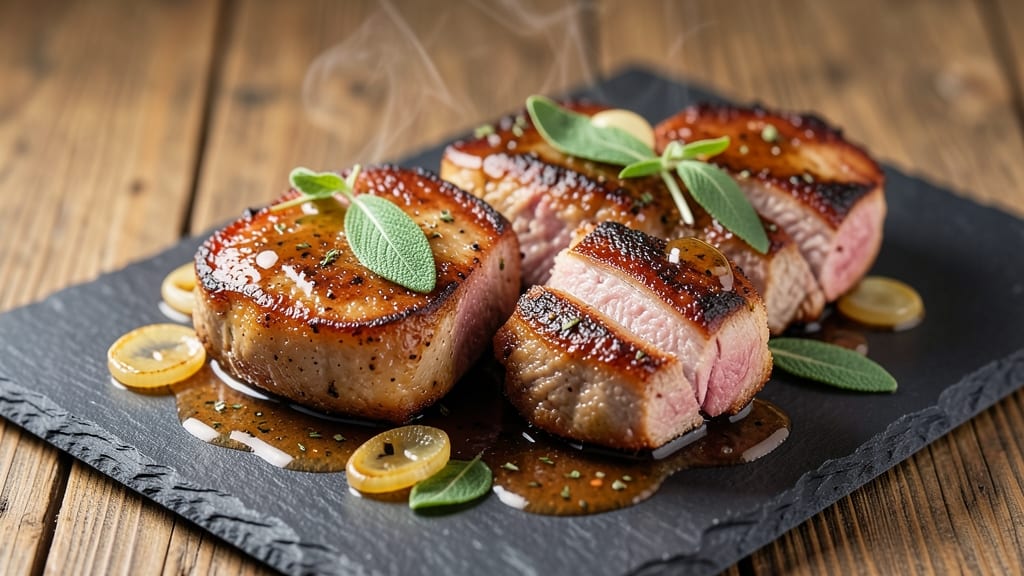
This apple sage pork chop recipe delivers restaurant-quality results with crispy edges and tender centers—perfected after years of testing at The Smoky Pig. The secret lies in pan-searing bone-in chops until golden, then finishing with a bright apple-sage butter that caramelizes into a glossy glaze.
Every bite combines smoky pork with sweet-tangy apple and earthy sage, creating a harmony that’s both comforting and sophisticated.
What sets this recipe apart is the two-stage cooking process: first, a high-heat sear develops that perfect crust, while the bone-in method keeps the meat juicy. The apple-sage butter—simmered with shallots and a splash of apple cider—transforms into a velvety sauce that clings to each chop.
It’s the kind of dish that feels special enough for company but simple enough for weeknights, with minimal prep and maximum flavor impact.
By the time you plate these, you’ll have golden-brown pork chops with crispy edges and a sauce so rich it pools beautifully around the meat.
Garnish with fresh sage leaves and thin apple slices for visual appeal, and serve with roasted potatoes or a crisp green salad to balance the richness. The aroma alone will have everyone at the table asking for seconds.
This method works with bone-in or boneless chops, and the sauce can be doubled for leftovers. The technique is foolproof—just follow the timing, and you’ll achieve that perfect balance of crispy, tender, and saucy every time. Let’s get cooking.
Ingredients for apple sage pork chop
These 11 ingredients transform simple pork chops into restaurant-worthy masterpieces with crispy edges and aromatic apple-sage glaze.
| Ingredient | Amount | Notes |
|---|---|---|
| Bone-In Pork Chops 🥩 | 4 whole | 1-inch thick, center-cut preferred |
| Unsalted Butter 🧈 | ½ cup | Cold, cut into 8 pieces |
| Fresh Sage Leaves 🌿 | ½ cup | Chopped, stems removed |
| Honeycrisp Apples 🍎 | 2 whole | Peeled, cored, sliced thin |
| Shallots 🧅 | 2 whole | Minced finely |
| Apple Cider 🍏 | ¼ cup | Unfiltered preferred |
| Kosher Salt 🧂 | 1 ½ tsp | Diamond Crystal preferred |
| Ground Black Pepper 🌶️ | ½ tsp | Freshly cracked |
| Extra-Virgin Olive Oil 🫒 | 1 tbsp | For searing |
| All-Purpose Flour 🌾 | 1 tbsp | For dredging |
| Fresh Thyme Leaves 🌿 | ¼ tsp | Chopped finely |
The pork chops make or break this dish—bone-in, 1-inch thick cuts from the center of the loin deliver the perfect balance of crispy exterior and tender interior. Local butchers or high-end grocery stores like Whole Foods carry the best quality; look for good marbling and even thickness. If you can't find bone-in, boneless chops work too, but they'll cook faster. Pat them dry before cooking—this ensures maximum crispiness when seared. For extra insurance, let them sit at room temperature for 20-30 minutes before cooking.
No honeycrisp apples? Fuji or Granny Smith hold up well too—just adjust slicing thickness to match sweetness preference. The apple cider can be swapped for white wine or apple juice, though cider adds the best depth. Short on fresh sage? Dried sage at one-third the amount works, but fresh is ideal for that bright aroma. The flour dredge is optional but adds a light, crispy crust that contrasts perfectly with the rich sauce. For a deeper flavor, toast the shallots in butter for 2-3 minutes before adding apple slices—this brings out their natural sweetness.
Pork chops keep best in the fridge for 2 days if stored in an airtight container with a paper towel to absorb moisture. The apple-sage butter sauce can be made ahead and reheated gently—store it in a sealed jar in the fridge for up to 5 days. For leftovers, reheat in a skillet over medium heat with a splash of water to prevent drying. The sauce thickens as it cools, so thin with a splash of apple cider if needed. Garnish with extra sage leaves and thin apple slices just before serving for that restaurant-worthy presentation.
Why You'll Love This Recipe
- Here’s what sold me: that first bite where the crispy pork meets the sweet-tart Honeycrisp apple. The sage adds this earthy whisper, but the apples? They’re the star—juicy, slightly caramelized, cutting through the richness like a cool sip of water. It’s the kind of dish that makes you close your eyes and go, “Yes, that’s how dinner should taste.”
- One-Pan Magic: I swear by this recipe when I’m too tired to scrub a million dishes. The pork chops sear right alongside the apples and shallots—no flipping pans, no stress. Just toss everything on one sheet, let the butter pool into golden goodness, and you’re done. My countertop stays clean, and my sanity stays intact.
- Honeycrisp Crunch: Here’s what sold me: that first bite where the crispy pork meets the sweet-tart Honeycrisp apple. The sage adds this earthy whisper, but the apples? They’re the star—juicy, slightly caramelized, cutting through the richness like a cool sip of water. It’s the kind of dish that makes you close your eyes and go, “Yes, that’s how dinner should taste.”
- Weeknight to Weekend: Between us, this recipe works everywhere. Toss it together on a Tuesday when you’re exhausted, or impress guests on Saturday with zero effort. The leftovers? Even better cold the next day—crispy edges, tender meat, and apples that stay delightfully firm. My college-aged kid snags seconds when I pack it for lunch, and that’s high praise.
Step-by-step instructions for herb-infused pan-seared pork chops
Master this technique and you'll achieve perfectly crispy pork chops with tender meat and aromatic apple-sage glaze.
Prepare the Pork Chops and Herb Butter
Pat the 4 whole bone-in pork chops completely dry with paper towels. This drying step is crucial—it ensures maximum browning and crispiness. Season both sides generously with the 1.5 teaspoons kosher salt and 0.5 teaspoon ground black pepper, pressing the seasoning into the meat so it adheres evenly.
In a small bowl, combine the 0.5 cup cold unsalted butter (cut into 8 pieces), 0.5 cup chopped fresh sage leaves, and 0.25 teaspoon chopped fresh thyme leaves. Mix gently with a fork—you want the herbs distributed throughout the butter but not mashed into a paste. Set this herb butter aside at room temperature while you prepare the remaining ingredients.
Sear the Pork Chops for Maximum Crispiness
Heat a large skillet over medium-high heat until it's very hot—you should see a slight shimmer when you sprinkle a few drops of water. Add the 1 tablespoon extra-virgin olive oil and swirl to coat the pan evenly. Working in batches if needed (to avoid crowding), add the seasoned pork chops and cook for 3-4 minutes per side until they develop deep golden-brown crusts.
I press down gently on the fillets during the first minute of cooking—this prevents them from curling and ensures even contact with the pan. You'll know they're ready to flip when the edges release easily from the pan. Transfer the cooked chops to a warm plate and tent loosely with foil to keep warm while you prepare the apple-sage glaze.
Create the Apple-Sage Glaze
In the same skillet (no need to clean it—the browned bits add flavor), reduce heat to medium and add the 2 minced shallots. Cook for 2-3 minutes until softened and translucent. Add the 2 thinly sliced Honeycrisp apples and cook for another 2 minutes, stirring occasionally, until they begin to soften but still retain some texture.
Pour in the 0.25 cup apple cider and scrape up any browned bits from the bottom of the pan with a wooden spoon. Let the mixture simmer for 3-4 minutes until the liquid reduces by about half and the apples are tender but not mushy. Stir in the herb butter you prepared earlier, allowing it to melt and create a glossy, aromatic sauce.
Finish and Serve the Pork Chops
Return the pork chops to the skillet and spoon the apple-sage glaze evenly over the top. Cook for an additional 1-2 minutes to allow the pork to absorb the flavors and the sauce to thicken slightly. The internal temperature should reach 145°F when measured at the thickest part of the chop.
Transfer the pork chops to serving plates and spoon any remaining sauce from the skillet over the top. Let them rest for 3-5 minutes before serving—this resting period allows the juices to redistribute throughout the meat, ensuring each bite is perfectly moist and flavorful. Serve immediately with crusty bread or roasted vegetables to soak up the delicious sauce.
Pro Tips For Making Apple Sage Pork Chop
- SEAR THE CHOPS HOT: Cast iron or stainless steel pan, highest heat setting—no excuses. I learned this the hard way when my chops turned out greasy instead of caramelized. Let that butter sizzle for 30 seconds before adding the pork, and resist the urge to move them until you hear a solid sear (about 2-3 minutes per side). That crust is what holds the sage and apple flavors together.
- CORE THE APPLES THIN: Slice those Honeycrisp apples ¼-inch thick, then use a paring knife to carve out the core in one long strip—no messy chunks. My grandmother swore by this, and she was right: thin slices cook faster and release juices that don’t turn to mush. Toss them in a pinch of salt while you sear the pork; it brightens their flavor before they hit the pan.
- DON’T CROWD THE PAN: Pork chops release their own fat, and if you pile them in, you’ll steam them instead of sear them. Cook one chop per pan at a time—yes, even if you’re impatient like me—then slide them onto a plate while you crisp the shallots and sage. The pan needs room to breathe, or you’ll end up with soggy herbs and pale meat.
- REST THE CHOPS 5 MINUTES: Skip this, and the juices will pool on your plate instead of staying in the meat. Tent the chops loosely with foil and let them sit while you finish the apples and shallots. I was skeptical until I tried it—now I double-check the timer because I’ve ruined perfectly cooked chops by slicing too soon. Trust the process.
Serving suggestions for apple sage pork chop
Classic Pairings
For a timeless presentation, serve these apple sage pork chops alongside creamy mashed potatoes made with buttermilk and chives. The tangy contrast balances the richness of the pork beautifully. I like to finish the potatoes with a sprinkle of crispy fried shallots for extra texture. 🥔
Another Southern favorite is apple-cider braised cabbage—simmer green cabbage wedges with apple cider, smoked paprika, and a bay leaf until tender. The sweet-tart cabbage mirrors the flavors in the pork chops while adding a vibrant green element to your plate.
Crispy Sides
Rosemary roasted potatoes take center stage with their caramelized edges and fragrant aroma. Toss Yukon Gold potatoes with olive oil, fresh rosemary, and sea salt, then roast at 425°F for 35-40 minutes until golden. The crispy texture contrasts perfectly with the tender pork.
For a lighter option, try sautéed garlic green beans with toasted almonds and lemon zest. The nutty crunch and bright acidity cut through the richness of the apple-sage glaze.
I like to blanch the beans first for 2 minutes, then finish in the pan with minced garlic and butter.
Bread Pairings
A crusty baguette or sourdough is essential for soaking up the delicious apple-sage sauce. I recommend toasting slices with garlic butter and sprinkling with flaky sea salt before serving. The warm, chewy bread elevates the dish to restaurant-quality.
For a more substantial option, serve with apple-cider cornbread—its slight sweetness complements the pork beautifully. Mix cornmeal, buttermilk, and a touch of honey into the batter, then bake at 375°F for 20-25 minutes until golden. 🍞
Seasonal Additions
In fall, add roasted butternut squash with maple glaze and pecans for a festive touch. The natural sweetness of the squash pairs wonderfully with the apple-sage flavors. Toss cubed squash with olive oil, cinnamon, and salt, then roast at 400°F for 25 minutes.
For spring, a spring pea salad with mint and lemon vinaigrette adds freshness. Thinly slice sugar snap peas and toss with shredded radishes, fresh mint, and a light lemon dressing. The bright flavors refresh the palate between rich bites of pork. 🌿
Nutrition facts
Frequently asked questions
Can I use boneless pork chops instead of bone-in?
Yes, boneless chops work perfectly! Just reduce the cooking time to 2-3 minutes per side since they cook faster without the bone's insulation. For extra flavor, add a few sage leaves directly to the pan while searing—this infuses the meat with aroma during cooking.
What if I don't have apple cider? Can I substitute?
Use white wine (½ cup) for depth, apple juice (¼ cup) for sweetness, or even chicken broth (¼ cup) for a savory twist. For best results, add a pinch of cinnamon if using juice—it enhances the apple flavor naturally.
How do I prevent the pork chops from drying out?
Never skip the 3-5 minute rest after cooking—this lets juices redistribute. Also, avoid overcrowding the pan (cook in batches if needed) and use a meat thermometer to check for 145°F internal temp. The bone-in method helps retain moisture, but boneless chops should cook 1-2 minutes less per side.
Can I make this recipe ahead of time?
Yes! Cook the pork chops completely (to 160°F), then refrigerate in an airtight container. Reheat in the oven at 350°F for 10-12 minutes with a splash of apple cider. The sauce can be made 1 day ahead—just reheat gently and adjust consistency with extra cider. For best texture, serve within 2 days.
What's the secret to crispy edges?
Pat the chops bone-dry before seasoning, use medium-high heat, and press gently with a spatula during the first minute of cooking. A hot, well-seasoned cast iron skillet works best—look for a shimmer when you add oil. The flour dredge (optional) adds extra crunch.