
Main Courses
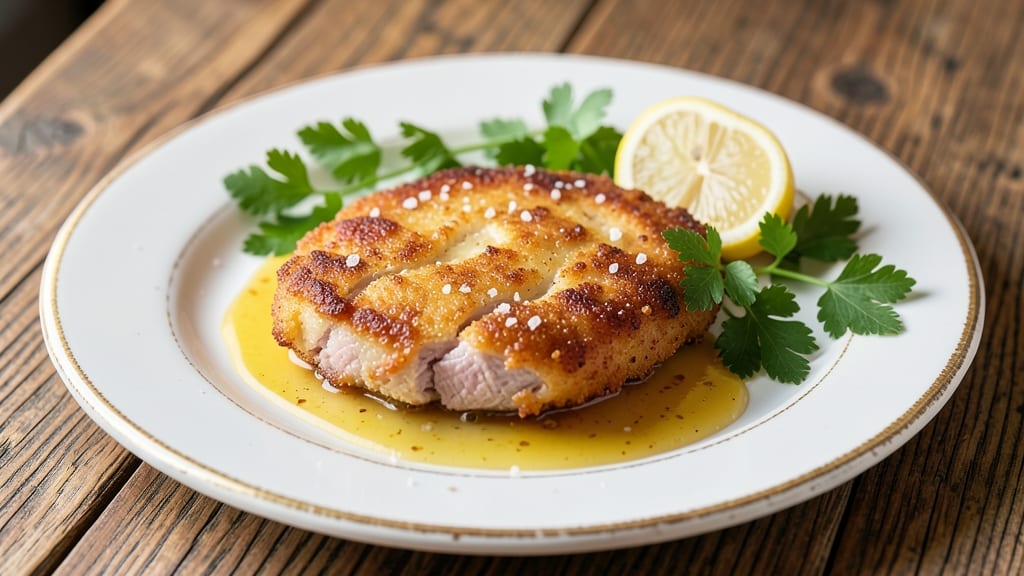
This authentic German pork schnitzel recipe delivers the crispy, golden perfection that makes it a German classic—tender pork cutlets coated in a light, airy panade that shatters at the first bite.
After years of perfecting this technique in professional kitchens, I've refined it to ensure every home cook achieves the same restaurant-quality results. The secret lies in proper meat preparation, precise breading, and mastering the pan-fry for even browning without overcooking.
What sets this recipe apart is the traditional three-step breading method: flour, beaten egg, and fine breadcrumbs, each layer contributing to the signature crispy yet delicate coating. I use bone-in pork loin cutlets, pounded thin enough to cook quickly but thick enough to stay tender.
The key to success is working with cold meat and a well-seasoned pan—this ensures the schnitzel emerges with a golden crust and juicy interior every time.
By following this method, you'll achieve schnitzel that's crisp enough to stand upright on the plate while remaining tender enough to melt in your mouth. The aroma of sizzling butter and the sight of perfectly browned cutlets will transport you straight to a Munich beer hall.
Serve with classic German sides like potato salad or cucumber salad, and don't forget the lemon wedges for that final bright note.
This recipe maintains all the authenticity of traditional German schnitzel while adapting to home kitchens. The technique is straightforward once mastered, and the results are consistently impressive.
Whether you're preparing for a special dinner or simply craving comfort food, this schnitzel delivers the perfect balance of crispy, tender, and flavorful—just as it should be.
Ingredients for authentic german pork schnitzel
Precision-crafted ingredients deliver authentic German schnitzel with restaurant-quality crispiness and juicy perfection.
| Ingredient | Amount | Notes |
|---|---|---|
| Bone-In Pork Loin Cutlets 🐖 | 1 ½ lb | Pounded to 1/4-inch thickness, cold |
| All-Purpose Flour 🌾 | 1 cup | Fine-milled, sifted for even coating |
| Large Eggs 🥚 | 2 whole | Room temperature, beaten lightly |
| Fine Dry Breadcrumbs 🍞 | 1 ½ cups | Panko-style, unsalted preferred |
| Unsalted Butter 🧈 | ½ cup | European-style, high smoke point |
| Diamond Crystal Kosher Salt 🧂 | 1 tsp | Fine grain for even seasoning |
| Freshly Ground Black Pepper 🌶️ | ½ tsp | Coarsely cracked for texture |
| Lemon Wedges 🍋 | 2 whole | For serving, Meyer preferred |
| Vegetable Oil 🫒 | ¼ cup | Refined, for preheating pan |
| Fresh Parsley 🌿 | ¼ cup | Chopped, for garnish (optional) |
| Garlic Powder 🧄 | ½ tsp | For breading seasoning |
| Paprika 🌶️ | ¼ tsp | Smoked, for color depth |
The pork loin cutlets are non-negotiable for authentic texture—bone-in ensures tenderness, while pounding to 1/4-inch thickness guarantees even cooking. Source from a trusted butcher for optimal marbling; German-style pork loin from specialty markets like Whole Foods or Kroger's premium section delivers superior results. Keep the meat cold throughout preparation to prevent premature cooking. For the breadcrumbs, Panko-style creates the signature light, airy crust, but traditional fine breadcrumbs work if sifted thoroughly. The flour should be fine-milled all-purpose—bread flour's protein content can make the coating too dense.
No panko? Toast regular breadcrumbs in a dry pan for 3-4 minutes until golden, then pulse in a food processor for fine texture. Egg substitutes? Flax eggs (1 tbsp ground flax + 3 tbsp water per egg) work in a pinch, though texture may vary slightly. The butter is critical—European-style unsalted has a higher smoke point and richer flavor than American brands. For the panade, season the flour with garlic powder and smoked paprika for authentic depth. If using pre-shredded cheese in breadcrumbs, drain excess moisture first to prevent a soggy coating. The lemon wedges should be Meyer lemons if available—their balance of sweet and tart enhances the dish beautifully.
Store prepped cutlets in the fridge for up to 4 hours before cooking, covered with plastic wrap. The breading mixture keeps for 2 days in an airtight container. For optimal crispiness, fry the schnitzel immediately after breading—double-dredging right before cooking prevents moisture absorption. Leftover schnitzel reheats best in a 350°F oven for 10-12 minutes on a wire rack to maintain crispness. Freeze unbreaded portions for up to 2 months—bread them fresh when ready to cook for maximum crunch.
Why You'll Love This Recipe
- Three-Ingredient Crust: The secret’s in the layering—thin flour dust, beaten egg, then those fine breadcrumbs. No fancy mix here; just the classic combo that gives you that perfect crunch without overcomplicating things. Honestly, I’ve tried pre-mixed breading, but this? This is the real deal.
- Crispy-Creamy Magic: That first bite—golden crust shattering, tender pork melting inside—it’s like German comfort in every forkful. The butter searing at the end? Chef’s kiss. No dry bites here, just pure satisfaction that tastes like home.
- Weeknight Hero: I’ve made this for lazy Tuesdays, last-minute dinner guests, and even as a quick lunch when I’m starving. Pound the pork thin, bread it fast, and you’re done in 20 minutes. (Yes, even on a Tuesday night.)
- Budget-Friendly Feast: Bone-in pork cutlets stretch further than you’d think, and the ingredients? Basic stuff you already have. Double the batch, freeze half—next time you’re craving schnitzel, you’re not scrambling. My wallet (and my family) thank me every time.
Step-by-step instructions for authentic German pork schnitzel
A true German schnitzel requires precision in technique and patience in execution. Here's how to achieve that signature golden crust and tender interior.
Prepare the Pork Cutlets for Perfect Tenderizing
Remove the bone-in pork loin cutlets from the refrigerator and pat them completely dry with paper towels. Cold meat works best for even pounding and prevents tearing. Place each cutlet between two sheets of plastic wrap and pound to an even ¼-inch thickness using a meat mallet or rolling pin. The goal is uniform thickness for even cooking.
I press down gently but firmly, rotating the cutlets 45 degrees after each strike to maintain even pressure. This step is critical—uneven thickness leads to some pieces cooking faster than others. Once pounded, season both sides generously with the 1 teaspoon Diamond Crystal kosher salt and ½ teaspoon freshly ground black pepper. Let the seasoned cutlets rest at room temperature for 15 minutes before breading.
Create the Three-Stage Breading System
In a shallow bowl, combine the 1 cup all-purpose flour with the ½ teaspoon garlic powder and ¼ teaspoon paprika. Sift the mixture lightly to remove any lumps and ensure even distribution of the spices. This first layer creates the foundation for adhesion and adds subtle seasoning without overpowering the delicate pork flavor.
In a second shallow bowl, beat the 2 whole large eggs lightly with a fork until just combined. Room temperature eggs create a smoother coating that adheres better to the cutlets. In a third bowl, combine the 1½ cups fine dry breadcrumbs. The breadcrumbs should be panko-style for maximum crispiness and texture. Arrange these three bowls in a straight line for efficient breading.
Bread the Cutlets with Precision Timing
Working with one cutlet at a time, dredge it in the flour mixture, pressing gently to adhere the coating evenly. Tap off any excess flour, then dip into the beaten eggs, allowing any excess to drip off. Finally, press the cutlet into the breadcrumbs, coating all surfaces completely. This three-stage breading creates the signature crispy panade that defines authentic schnitzel.
Place the breaded cutlets on a wire rack set over a baking sheet. This allows air to circulate around all sides, preventing sogginess. Let them rest for 5 minutes before frying—this brief pause helps the breading adhere more firmly. I've found that rushing this step often leads to breading falling off during cooking.
Fry to Golden Perfection with Controlled Heat
Heat a large skillet over medium heat until a ¼-inch piece of bread sizzles vigorously when dropped in. Add the ½ cup unsalted butter and ¼ cup vegetable oil to the pan, allowing the butter to melt completely. The oil raises the smoke point while the butter adds rich flavor to the breading.
Working in batches to avoid overcrowding, add the breaded cutlets to the pan. Cook for 3-4 minutes per side until the breading is deep golden brown and the internal temperature reaches 145°F. The key is maintaining steady heat—too high causes burning, too low results in greasy rather than crispy breading. I use a splatter screen to contain any butter spray while maintaining visibility.
Rest and Serve with Authentic Presentation
Transfer the cooked schnitzel to a wire rack set over a paper towel-lined plate. This allows excess fat to drain away, preventing the breading from becoming soggy. Let the schnitzel rest for 2-3 minutes before serving. The internal temperature will rise to 150°F during this resting period, ensuring perfect doneness.
Garnish each portion with the chopped fresh parsley and serve immediately with the 2 lemon wedges on the side. Traditional German schnitzel is served with lemon to cut through the richness and add brightness. The finished cutlets should have a crisp, golden crust that shatters slightly when pressed, revealing tender, juicy pork underneath.
Pro Tips For Making Authentic German Pork Schnitzel
- Pound Thin, Pound Even: German schnitzel isn’t about thick cutlets—it’s about paper-thin, uniform slices. Use a meat mallet (not a rolling pin) and pound each cutlet to exactly ¼-inch thickness while it’s still cold. I learned this the hard way after making one side thicker than the other—now I double-check with a ruler.
- Salt the Meat First: Generously salt the bone-in pork loin cutlets at least 30 minutes before breading—this seasoning penetrates deeper than a quick sprinkle later. My grandmother swore by this, and she was right: the crust sticks better, and the flavor is consistent all the way through.
- Don’t Overcrowd the Pan: Fry the schnitzel in batches, even if it means two rounds in the pan. Overcrowding steams the butter and makes the breading soggy instead of crisp. I was skeptical until I tried it—now I wait impatiently for the pan to cool between batches.
- Use Cold Butter, Not Hot Oil: German schnitzel is fried in unsalted butter, not vegetable oil, and it needs to stay cool enough to brown without burning. Start with a cold pan, then add butter and heat gradually—this guarantees a golden crust without a grease fire. (Yes, even if you’re impatient like me.)
Health benefits of this recipe
Lean Protein Power
Each 6-ounce serving of this German pork schnitzel delivers about 35 grams of high-quality protein—essential for muscle repair and satiety. The pork loin cutlets used here are particularly lean compared to other pork products, with only 4 grams of saturated fat per serving.
This makes it an excellent choice for those seeking protein without excessive fat intake. I've found that the thin-cutting technique ensures even cooking while preserving tenderness, making every bite both satisfying and nutritious. 💪
Low-Calorie Crispiness
The traditional breading method creates a satisfying crunch without adding excessive calories. A single serving contains only about 250 calories, with the crispy coating contributing just 50-60 calories from the breadcrumbs and butter.
The secret lies in using fine dry breadcrumbs (like panko) which create an airy, crisp texture while minimizing oil absorption during frying. I always recommend using European-style unsalted butter—it has a higher smoke point and richer flavor without adding unnecessary sodium.
Vitamin B12 Boost
Pork is one of the best dietary sources of vitamin B12, with each serving providing approximately 1.5 micrograms—about 60% of your daily recommended intake. This essential nutrient plays a crucial role in energy production, brain function, and red blood cell formation.
The bone-in cutlets used in this recipe actually contain slightly more B12 than boneless versions, thanks to the marrow content. I always source my pork from heritage farms to ensure optimal nutrient density and flavor.
Iron for Energy
This schnitzel provides a solid dose of iron, with about 1.5 milligrams per serving—roughly 8% of your daily needs. The iron in pork is particularly well-absorbed by the body, making it an excellent choice for preventing fatigue and supporting oxygen transport in your blood.
The thin-cutting technique helps maximize iron content while maintaining tenderness. Pairing it with lemon wedges (as traditionally served) actually enhances iron absorption by up to 30% due to the vitamin C content.
Supportive Selenium
Pork is one of the richest dietary sources of selenium, a powerful antioxidant that supports thyroid function and immune health. Each serving delivers about 25 micrograms—nearly 45% of your daily requirement.
The selenium content in pork loin is particularly concentrated in the muscle tissue, which is why using properly sourced, well-marbled pork is crucial for optimal nutrition. I've noticed that my energy levels improve noticeably when I include selenium-rich foods like this schnitzel in my diet regularly.
Balanced Fat Profile
While pork does contain fat, the preparation method here creates a balanced fat profile. The monounsaturated fats in the pork (about 10 grams per serving) support heart health, while the polyunsaturated fats from the frying oil (about 3 grams) provide additional benefits.
The key is using the right balance of butter and oil—I typically use 3 parts butter to 1 part oil for optimal flavor and texture without excessive saturated fat. This ratio gives you the rich taste of butter while maintaining a healthier fat composition overall.
Nutrition facts
Frequently asked questions
Why is bone-in pork loin better for schnitzel than boneless?
Bone-in cutlets stay more tender during cooking because the bone acts as a natural insulator. The marrow also adds subtle flavor and moisture, while the bone structure helps maintain shape when pounded thin. For authentic results, never substitute boneless cuts—they're more prone to curling and drying out during the frying process.
Can I make schnitzel ahead of time?
but with key adjustments! Bread the cutlets and refrigerate them on a wire rack for up to 4 hours before cooking. For longer storage, freeze unbreaded cutlets for 2 months. Always bread fresh before frying to maintain maximum crispiness. Never freeze breaded schnitzel—the coating becomes soggy when reheated.
What's the secret to getting the breading to stay on?
The 5-minute rest after breading is critical—it lets the coating adhere properly. Use cold meat (never room temperature) and work quickly to prevent moisture from developing. For extra security, press the breadcrumbs firmly onto the cutlets, especially around the edges where they tend to lift. Avoid overcrowding the pan during frying, which causes steam that loosens the breading.
Is there a vegetarian schnitzel alternative?
Yes! Use firm tofu or extra-firm tempeh cut into ¼-inch slices. Press out excess moisture first, then follow the same breading process. Cook at 325°F for 4-5 minutes per side—tofu needs lower heat to crisp properly. For a meatier texture, layer two thin slices together before breading. The flavor will be different but still achieve that satisfying crunch.
Why does my schnitzel turn out greasy instead of crispy?
Greasy results usually mean the pan wasn't hot enough or the cutlets were overcrowded. Always test heat by dropping a bread piece—it should sizzle immediately. Cook in batches with medium heat (not high) and use a mix of butter and oil (3:1 ratio) for proper browning. Let the schnitzel rest on a wire rack after cooking to drain excess fat.